
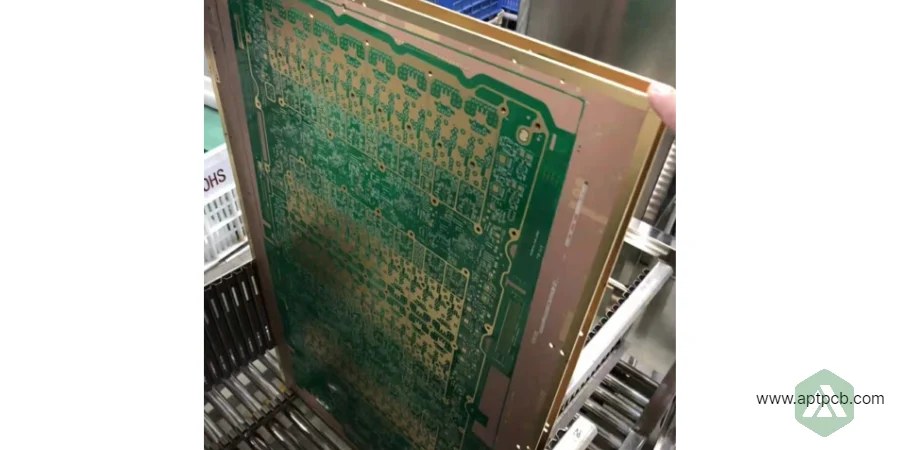
5G PCB assemblies integrate sub-6GHz and mmWave transceivers, antenna arrays, power amplifiers, and thermal solutions supporting smartphones, routers, industrial gateways, and fixed wireless access requiring gigabit throughput, <10ms latency, massive connectivity (100+ devices/cell), and efficient power management across consumer mobile devices, residential broadband alternatives, and industrial IoT platforms demanding reliable operation through 3-5 year lifecycles.
At APTPCB, we deliver specialized 5G assembly services implementing antenna-in-package, thermal interfaces, and validated RF performance with box build assembly capabilities supporting sub-6GHz through mmWave bands.
Implementing mmWave and Sub-6GHz Integration
5G NR supports sub-6GHz bands (n78, n79) for coverage and mmWave (n257-n261) for capacity requiring dual-mode implementations, phased antenna arrays for mmWave beamforming, and sophisticated RF front-ends managing multiple bands simultaneously. Integration challenges include mmWave signal integrity at 28-39GHz, antenna array calibration, and thermal management from high-power amplifiers. Inadequate implementation causes poor mmWave range limiting utility, sub-6GHz interference affecting throughput, or excessive power consumption reducing battery life — significantly impacting 5G performance and user experience.
At APTPCB, our assembly implements validated 5G architectures achieving multi-gigabit performance and regulatory compliance.
5G Integration Implementation
- Sub-6GHz MIMO Systems: 4x4 MIMO supporting n78/n79 bands achieving 2-3Gbps downlink in ideal conditions with ICT test validation.
- mmWave Antenna Arrays: Phased arrays with 16-64 elements enabling beamforming and beam steering tracking base stations.
- RF Front-End Integration: Filters, switches, and power amplifiers managing frequency bands while preventing interference.
- Antenna-in-Package Technology: AiP modules integrating mmWave antennas with transceivers in single packages.
- Thermal Interface Design: Vapor chambers or graphite spreaders managing 5-8W dissipation from 5G modems during peak operation.
Premium 5G Performance
Through advanced integration techniques and comprehensive RF testing coordinated with flying probe testing validation, APTPCB enables 5G devices achieving gigabit performance and network compatibility.
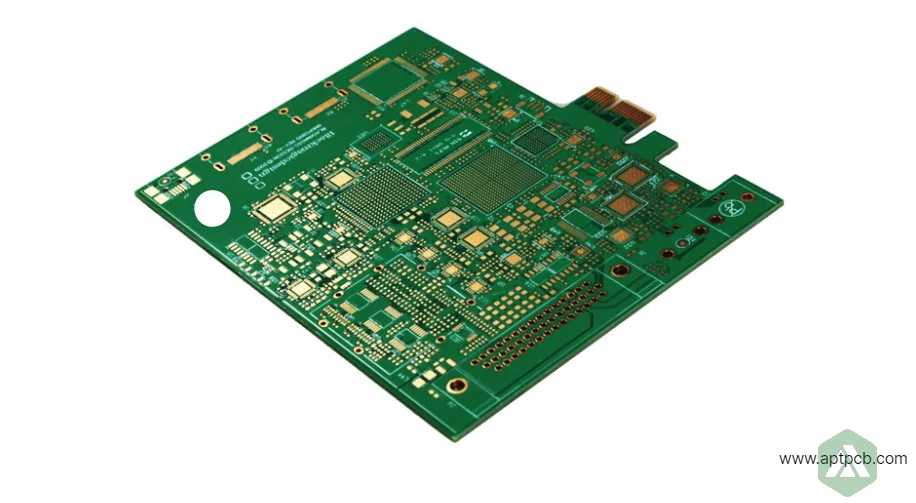
Managing mmWave Signal Integrity and Beam Management
Millimeter wave signals experience high path loss requiring continuous beam management tracking user movement and obstacles. mmWave challenges include maintaining >1Gbps throughput despite blockage, rapid beam switching (<10ms), and power efficiency despite continuous beam searching. Inadequate beam management causes frequent disconnections, reduced throughput from suboptimal beams, or excessive power consumption — significantly impacting mmWave utility and battery life.
At APTPCB, our manufacturing supports sophisticated beam management achieving reliable mmWave connectivity.
Beam Management Implementation
- Fast Beam Switching: <5ms beam switch time maintaining connectivity during user movement or rotation.
- Multi-Beam Tracking: Simultaneous tracking of multiple beams enabling diversity and fast handover between beams.
- Blockage Detection: Rapid detection of blocked beams triggering immediate beam search or fallback to sub-6GHz.
- Power-Efficient Beam Search: Optimized search patterns minimizing power consumption during beam acquisition.
Through validated beam management algorithms and comprehensive field testing, APTPCB enables mmWave implementations achieving practical gigabit connectivity.
Supporting Fixed Wireless and Industrial Applications
5G extends beyond smartphones into fixed wireless access replacing DSL/cable broadband and industrial IoT enabling factory automation. Fixed wireless requires outdoor-rated equipment with high-gain antennas achieving 500m-2km range while industrial 5G demands ultra-reliable low-latency communication (URLLC) supporting time-critical applications. Application-specific requirements influence form factor, ruggedization, and feature sets.
At APTPCB, we support diverse 5G applications with specialized manufacturing expertise.
Application-Specific Support
Fixed Wireless Access
- Outdoor-rated enclosures with IP65-67 protection surviving weather exposure.
- High-gain antennas (10-20dBi) achieving extended range from cell towers.
- Ethernet and WiFi interfaces distributing connectivity to home networks.
- PoE or solar power options supporting installation flexibility.
Industrial 5G IoT
- URLLC support achieving <1ms latency for factory automation and robotics.
- Time-sensitive networking (TSN) integration synchronizing industrial equipment.
- Extended temperature components (-40 to +85°C) surviving industrial environments.
- Network slicing supporting dedicated bandwidth for critical applications.
Through application-optimized designs coordinated with SPI inspection quality control, APTPCB enables 5G solutions across consumer, residential, and industrial markets.
Ensuring 5G NR Compliance and Carrier Certification
5G devices require 3GPP compliance testing plus carrier-specific certifications validating RF performance, protocol compliance, and network interoperability. Certification challenges include testing across dozens of bands, validating carrier aggregation, and demonstrating coexistence with LTE. Inadequate certification prevents network deployment, causes compatibility issues, or results in poor performance — significantly impacting market access and user experience.
At APTPCB, we support 5G certification ensuring carrier approval and network compatibility.
Certification Support
- 3GPP Compliance Testing: RF characterization, protocol validation, and performance testing per 3GPP specifications.
- Carrier Certification: AT&T, Verizon, T-Mobile certification programs validating network compatibility.
- GCF/PTCRB Certification: Global Certification Forum and PTCRB certification enabling multi-carrier support.
- Regional Approvals: FCC, CE, IC, and regional certifications covering 5G spectrum allocations.
Through comprehensive certification support and carrier coordination, APTPCB enables successful 5G product launches across global markets.