Quick-turn PCB manufacturing review with released fabrication data

Release-Gated Expedited Manufacturing

Quick-Turn PCB Manufacturing with a Defensible Schedule

Quick-turn PCB manufacturing is a controlled priority service, not a universal number of hours. APTPCB confirms an expedited schedule after fabrication data, stack-up, materials, process steps, quantity, test scope, engineering queries, and commercial terms are released—so buyers know what starts the clock and what can move it.

Release-Gated
Schedule Basis
PCB / PCBA
Separate Clocks
Order-Defined
Acceptance Evidence

Get an Instant Quote

Gerber / ODB++Fabrication Data
Stack-Up + DrillBuild Definition
Material StatusCritical Path
DFM / EQ ClosureRelease Gate
Bare BoardSchedule One
PCBASchedule Two
Test ScopeAgreed per Order
Change ControlSchedule Protection
Gerber / ODB++Fabrication Data
Stack-Up + DrillBuild Definition
Material StatusCritical Path
DFM / EQ ClosureRelease Gate
Bare BoardSchedule One
PCBASchedule Two
Test ScopeAgreed per Order
Change ControlSchedule Protection

Service scope

Quick Turn PCB Prototypes, Flex, Metal Core and HDI: What Ships Fast?

QuestionAnswer
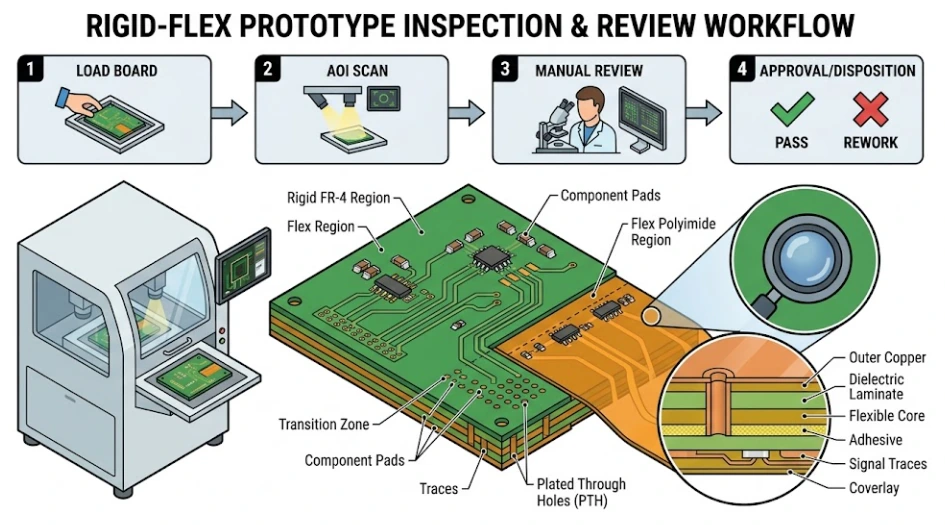
What does a quick turn PCB service cover?Bare-board fabrication and PCBA assembly are separate clocks with separate capacity. Rigid multilayer, HDI, flex and metal-core builds each carry a different critical path, so the schedule is quoted per construction rather than as one fixed number.
Which constructions can move fastest?Standard rigid multilayer prototypes move fastest. Flex, aluminium and metal-core, and HDI add a process step or a material lead time that sets a floor on the schedule.
What decides the real date?The released manufacturing package. Material availability, layer count, impedance control and final finish all gate the start, so the quote is only firm once the package is frozen.

Turn-Time Matrix

PCB Fabrication vs PCB Assembly: Two Different Clocks

Industry-typical ranges for released fabrication data. Your quotation locks a committed ship date after engineering review — complexity, not the marketing tier, sets the real clock.

Board TypeStandard BuildQuick-TurnWhat Extends the Clock
1–2 layer FR-41–2 days24 hoursNon-green solder mask, heavier copper, unusual thickness
4 layer FR-43–5 days2–3 daysImpedance coupons, ≥2oz copper, blind/buried vias
6–8 layer5–7 days72 hours – 5 daysSequential lamination, back-drilling, resin-filled vias
10+ layer / HDI8–12 days5–7 daysMicrovia stacking, multiple lamination cycles, CAF-critical spacing
Controlled impedance+1–2 days on baseIncluded in reviewTDR coupon build and validation, ±5% tolerance classes
Flex / rigid-flex7–10 days5–7 daysAdhesiveless laminate sourcing, stiffener cure cycles
Rogers / PTFE / RF7–12 days5–8 daysLaminate stock position, plasma desmear, hybrid press cycles
PCBA (assembly add-on)+2–5 days+1–3 daysComponent sourcing is the long pole — fabrication is rarely it

Critical-Path Matrix

What Determines a Quick Turn PCB Schedule?

A dependable expedited quotation turns each scheduling variable into a release condition. The clock begins only when the conditions named in the quotation are satisfied, including the released PCB stack-up where applicable.

WorkstreamWhat Must Be FrozenTypical Delay TriggerRelease EvidenceDecision Owner
Fabrication dataGerber or ODB++, NC drill, outline, fabrication drawing and revisionMissing layers, conflicting outlines, unreadable notes or revision mismatchManufacturing data set identified by revisionCustomer design owner
Stack-up and impedanceLayer order, finished thickness, copper, dielectric constraints and impedance structuresUnrealistic geometry, unspecified reference layers or unapproved stack-up adjustmentReleased stack-up and any approved CAM changesCustomer + PCB engineering
Material and finishExact material or approved equivalence rule, finish and compliance needsSupplier confirmation, uncommon construction, special finish or prohibited substitutionOrder-specific material status and substitution ruleProcurement + customer
Via and lamination planDrill types, via spans, filled/capped vias, microvia structure and lamination sequenceSequential lamination, stacked microvias, backdrill or ambiguous drill pairingReleased drill table and build sequencePCB engineering
Quantity and panelizationOrder quantity, delivery split, supplied panel or panel constraintsLate quantity change, poor panel utilization or assembly-rail conflictQuoted quantity and approved panel assumptionBuyer + manufacturing engineering
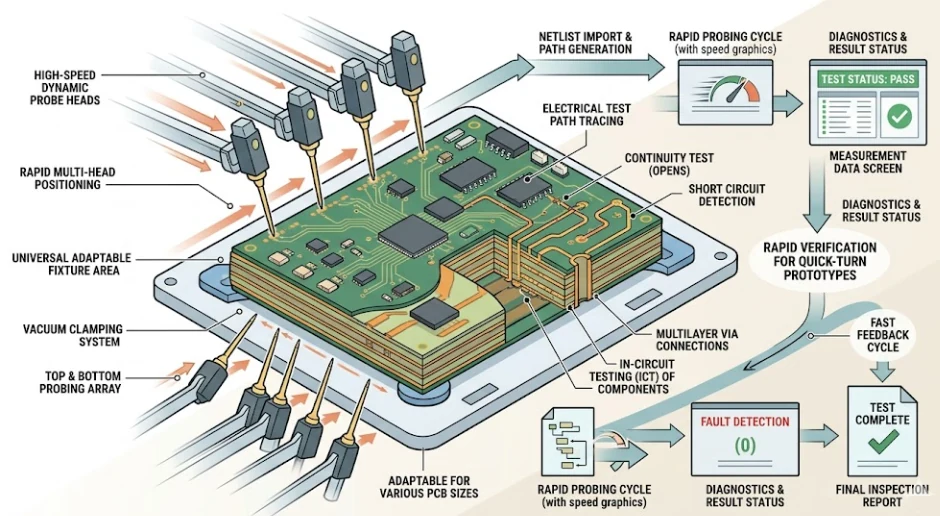
Inspection and testAcceptance class, electrical-test scope, impedance plan, reports and samplingUnspecified criteria, custom coupon, first-article hold point or added reportAgreed inspection and evidence planQuality + customer
PCBA packageBOM, CPL, drawings, approved alternates, programming and test requirementsUnreleased BOM, unavailable parts, polarity conflict or incomplete test assetsReleased assembly package and component statusCustomer + sourcing + assembly engineering
Commercial and logisticsPrice, terms, destination, shipment point and requested receive-by dateUnapproved quotation, export review, address change or transit assumptionCommercial release with logistics basisBuyer + supplier

A quoted duration should identify whether it ends at fabrication completion, factory shipment, carrier handoff, or customer receipt. Transit time is not the same as manufacturing time.

Two Linked Schedules

Which Quick Turn PCB Service Do You Need?

A turnkey request contains at least two critical paths. Fabrication can be released while component sourcing is still being resolved only when the interfaces, risks, and hold points are explicit.

PhaseClock Starts AfterCritical DependenciesWhat Can Reset the PlanQuote Should State
Bare-board fabricationPCB data, stack-up, materials, quantity, engineering queries and test scope are releasedMaterial, tooling, lamination, drilling, finish, inspection and routingDesign revision, material change, quantity change or added evidenceRelease milestone and factory-completion or shipment point
Component sourcingBOM revision, manufacturer part numbers and alternate rules are approvedAuthentic supply, lot/date-code needs, moisture handling and inbound inspectionPart shortage, customer substitution review or split deliveryConfirmed, pending and customer-supplied line items
SMT / THT assemblyBoards, complete kit, assembly drawing, CPL and workmanship criteria are availableStencil/program preparation, setup, reflow, selective soldering and rework limitsCPL conflict, polarity issue, missing parts or drawing changeIncluded process and assembly release milestone
Programming and testFirmware, fixtures, procedures, limits and pass/fail ownership are releasedFixture availability, debug boundary, test time and failure dispositionNew firmware, changed limits or incomplete golden sampleCoverage, records, sampling and customer responsibilities
Pack and logisticsPackaging, labeling, documentation, destination and shipping method are approvedCustom packaging, export documents, carrier cutoff and destination handlingAddress, incoterm, labeling or shipment-method changeCarrier handoff point and excluded transit risk

Compare the Offer, Not the Headline

Fixed Turnaround Claim vs Controlled Quick Turn Quotation

Two suppliers can advertise the same duration while pricing different scope. Use these fields to compare what is actually committed.

Quotation FieldHeadline-Only OfferControlled Quick-Turn Offer
Clock startImplied to begin at upload or paymentNamed technical and commercial release milestone
Included scopeFabrication, assembly, test and transit may be blendedBare board, PCBA, evidence and logistics shown separately
Material basisAvailability assumedExact material or approved equivalence and status stated
Engineering queriesNo rule for unresolved manufacturability questionsEQ closure and customer response responsibility defined
Inspection evidenceGeneric quality languageOrder-specific tests, reports, sampling and acceptance criteria
Change controlLate revisions handled informallyImpact review, stop point and re-release rule stated

Release Gate and Change Freeze

What Blocks a Quick Turn PCB Order?

The release gate is the moment the manufacturer has one internally consistent data set and authority to build it. Before that point, CAM/DFM review should identify missing drill pairs, conflicting dimensions, unsupported annular rings, stack-up or impedance conflicts, unclear tolerances, panel assumptions, and acceptance gaps. Minor CAM normalization may be documented, but any change that affects design intent requires customer approval.

After release, revision discipline protects both schedule and product. A new file, quantity, material, finish, test requirement, or delivery split can invalidate completed preparation or production. The efficient response is a controlled stop, impact assessment, revised evidence plan, and explicit re-release—not an undocumented promise to absorb every change without consequence.

Released quick-turn PCB job with revision and test controls

Technology Risk Matrix

Why Board Type Changes the Quick Turn Critical Path

Technology names alone do not establish feasibility or timing. Quote the construction, material, process and evidence that make each board type different, especially for high-frequency PCB builds.

Board FamilyMain Schedule DriversRFQ Inputs to AddConfirmation Before ReleasePossible Evidence
Standard FR-4Thickness, copper, finish, outline, quantity and test scopeComplete fabrication package and acceptable material ruleConstruction and material availabilityElectrical-test record and dimensional checks as ordered
Multilayer / controlled impedanceStack-up, dielectric choice, copper balance, impedance structures and couponsImpedance table with layers, geometry, target and toleranceReleased stack-up and agreed measurement planImpedance results and microsection when specified
HDI / microviaVia span, aspect ratio, stacking, fill/cap and sequential laminationVia map, drill table, pad geometry and lamination sequenceBuild sequence and microvia acceptance criteriaMicrosection or other agreed process evidence
RF / microwaveExact laminate, copper type, surface treatment, hybrid bond and RF geometryMaterial designation, stack-up, frequency context and critical structuresMaterial status and process routeMaterial documentation and agreed electrical measurements
Flex / rigid-flexFlex stack, coverlay, stiffeners, bend zones, adhesive and dimensional controlRigid/flex definition, bend use, stiffener drawing and impedance needsConstruction, tooling and bend-test requirementDimensional, continuity and bend evidence when ordered
Thermal, ceramic or heavy copperSubstrate, copper build, dielectric, metallization, isolation and mechanical processThermal/electrical targets, material, copper, finish and acceptance limitsSpecial-process availability and test methodThermal, isolation, dimensional or material evidence as agreed

Controlled Expedited Workflow

How Does a Quick Turn PCB Quote Get Released?

Each gate removes a known source of avoidable delay. The schedule is committed only after the critical assumptions are visible and owned.

01

Normalize the Data Package

Identify the governing revision and check that Gerber or ODB++, NC drill, outline, fabrication drawing and order specifications describe one board. Ucamco defines Gerber as a PCB design-data transfer format; it does not replace a complete fabrication specification.

02

Close Feasibility and DFM Questions

Review stack-up, drills, spacing, annular rings, copper balance, routing, tolerances, panel assumptions and special processes. Return intent-changing CAM proposals for approval before release.

03

Confirm Materials and Process Route

Tie the quotation to the exact material or approved equivalence rule, surface finish, lamination sequence, special tooling and outsourced process if any. Pending availability remains a schedule risk until confirmed.

04

Freeze Engineering Queries and Revisions

Record the resolved EQs, released files and approval authority. A later change follows impact review and re-release so production does not continue against mixed revisions.

05

Agree Inspection and Evidence

Define electrical test, impedance verification, dimensional checks, samples, reports, first-article holds and PCBA inspection or functional test where applicable. Evidence not named in the order is not assumed.

06

Commit the Schedule and Handoff Point

State the start milestone, working calendar, included operations, factory-completion or shipment point, component assumptions, customer response duties, exclusions and logistics basis in the quotation.

Standards and Evidence Boundary

What Acceptance Still Applies to an Expedited Build?

A quick-turn order still needs an agreed design and acceptance basis. Relevant references can include IPC-2221C for generic printed-board design, IPC-6012F for qualification and performance requirements for rigid printed boards, and IPC-9252B for electrical testing of unpopulated printed boards. The applicable product type, class, amendments, sampling, customer drawing and contract requirements must be stated for the order; a standard number alone is not a complete inspection plan.

For data exchange, Gerber and its attributes are maintained by Ucamco, while IPC-2581 provides a bidirectional PCB design and manufacturing data-exchange model. Whichever format is used, the released package must still identify drill data, board construction, notes, revisions and customer-specific requirements. For controlled-impedance PCBs, the measurement plan is also order-specific. For PCBA, workmanship, programming, functional test and system-level performance remain separate scopes that must be defined and validated by the responsible parties.

The evidence package should follow risk and purchase requirements. Electrical-test records, impedance results, dimensional data, microsections, material documentation, first-article records, AOI or X-ray results, programming logs, and functional-test data may be included when explicitly quoted. APTPCB does not treat every artifact as universal to every order.

Order-defined inspection evidence for quick-turn PCB manufacturing

FAQ

Quick Turn PCB: Questions Before You Commit

What does quick-turn PCB manufacturing mean?
Quick-turn PCB manufacturing is a priority production service with a project-specific schedule. The quoted clock should start only after fabrication data, stack-up, materials, quantity, test scope, engineering queries, and commercial terms are released.
When does the quoted quick-turn schedule start?
The start point is the release milestone stated in the quotation, not the first file upload. It normally requires technically usable data, resolved engineering queries, confirmed material availability, an agreed inspection plan, and commercial approval.
Which files are required for a quick-turn PCB quote?
Provide Gerber or ODB++ data, NC drill files, board outline, fabrication drawing, stack-up, material and finish requirements, controlled-impedance definitions, quantity, panel preference, acceptance criteria, and required reports. Add BOM, CPL, assembly drawings, programming files, and test requirements for PCBA.
Are bare-board fabrication and PCB assembly covered by one lead time?
They should be planned as separate but linked schedules. Bare-board fabrication depends on released PCB data and materials; assembly also depends on BOM release, component availability, stencil and program preparation, assembly process, and the agreed test scope.
Which design choices commonly extend an expedited PCB schedule?
Common critical-path drivers include nonstandard laminates or finishes, high layer count, sequential lamination, microvias, controlled impedance, rigid-flex construction, special coupons, tight mechanical tolerances, heavy copper, ceramic processes, and extensive documentation or testing.
Does DFM review happen before schedule release?
Yes. The manufacturer must establish that the supplied data are buildable and identify engineering queries before committing the production clock. Any CAM adjustment that changes customer intent should be returned for approval.
What quality evidence can be requested for a quick-turn PCB?
Evidence is order-defined. Depending on the board and risk, the quotation can identify electrical-test records, impedance results, dimensional checks, microsection evidence, material or finish documentation, inspection records, first-article data, or assembly inspection and functional-test results.
How do engineering changes affect the committed schedule?
A change after release may alter tooling, materials, panelization, programs, test coverage, or work already completed. The affected stage should be stopped, impact-reviewed, and re-released with a revised schedule before production continues.
How should material availability be handled in an urgent RFQ?
State the exact approved laminate or a controlled equivalence rule. The quotation should distinguish material already confirmed for the order from material that still requires supplier confirmation, and no substitution should be made without the agreed approval path.
What makes a quick-turn quotation comparable across suppliers?
Compare the release milestone, included fabrication and assembly scope, material assumptions, working-day calendar, test and documentation package, change-control rule, shipment point, logistics responsibility, and explicit exclusions—not only the headline duration.

RFQ Release Checklist

What Should You Submit for a Comparable Quote?

A complete RFQ lets engineering price the actual critical path and reduces the clarification loops that otherwise consume the schedule.

1. Governing PCB data and revision

Provide Gerber or ODB++, NC drill, board outline, fabrication drawing, readme if needed, and one clear revision identifier. State whether supplied panelization is mandatory or whether the manufacturer may propose a production panel.

2. Stack-up, material and impedance

Define layer order, finished thickness, copper, dielectric or exact laminate, surface finish, controlled-impedance structures and tolerances. If equivalents are allowed, state the electrical, thermal, mechanical and compliance properties that must remain equivalent.

3. Drill, via and mechanical requirements

Include finished-hole intent, plated/non-plated status, via spans, microvia stacking, via fill/cap, backdrill, slots, cutouts, countersinks, edge plating, dimensional tolerances and any press-fit requirements.

4. Quantity, split and schedule basis

State total quantity, acceptable overage, delivery split, requested factory-ship or receive-by date, destination and whether weekends or holidays are part of the requested calendar. Ask the quotation to identify its release milestone and handoff point.

5. Inspection, reports and hold points

Name the applicable drawing and acceptance criteria, electrical-test need, impedance plan, sampling, dimensional or microsection requirements, material documentation, first-article approval and any customer hold point. Link each report to a purchase requirement.

6. PCBA, programming and functional test

For assembly, add BOM with manufacturer part numbers, approved alternates, CPL, assembly drawings, polarity notes, stencil constraints, firmware, programming instructions, test procedure, fixtures or golden sample, pass/fail limits and failure-disposition owner. See the BOM preparation requirements before release.

7. Commercial and change-control assumptions

Confirm quotation validity, payment or credit release, incoterm, packaging and labeling, export or confidentiality requirements, approval contacts, and the rule for changes after release. These items can affect the committed schedule even when PCB data are complete.

RFQ Readiness Tool

Quick-Turn Critical-Path Checker

Choose a board family to see the inputs that must be confirmed before an expedited schedule can be released.

Check Your Release Inputs
Select a board type to review its main schedule drivers.

Comparable Global Scheduling

Define Factory Time and Transit Time for Every Destination

A global quick-turn quotation should separate technical release, manufacturing completion, carrier handoff, customs and final delivery assumptions.

North America
USA · Canada · Mexico

State the requested factory-ship or receive-by date, delivery address, carrier level and import responsibility. Keep manufacturing time separate from international transit and customs variability.

Release TimeCarrier HandoffImport Basis
Europe
Germany · UK · France · EU

Define the governing technical language, documentation package, material or compliance requirements, destination and incoterm before release. Added evidence should be priced and scheduled explicitly.

DocumentationIncotermTraceability
Asia-Pacific
Japan · South Korea · India · Southeast Asia

Align approval time zones, local holidays, component-source status, delivery split and destination handling. The quotation should identify who can approve engineering queries without delay.

Approval OwnerCalendarSplit Delivery
Middle East and Other Regions
Project-Specific Export and Logistics Review

Disclose export, confidentiality, end-use, labeling or documentation constraints during RFQ. The customer remains responsible for product-level regulatory, import and end-use compliance unless a written scope states otherwise.

Export ReviewEnd UseCustomer Scope

Request a Release-Gated Quick-Turn PCB Schedule

Send the released fabrication package, quantity, material and test requirements, requested milestone, destination, and PCBA files if applicable. We will review feasibility and return the schedule basis, assumptions, exclusions, and evidence scope with the quotation.