
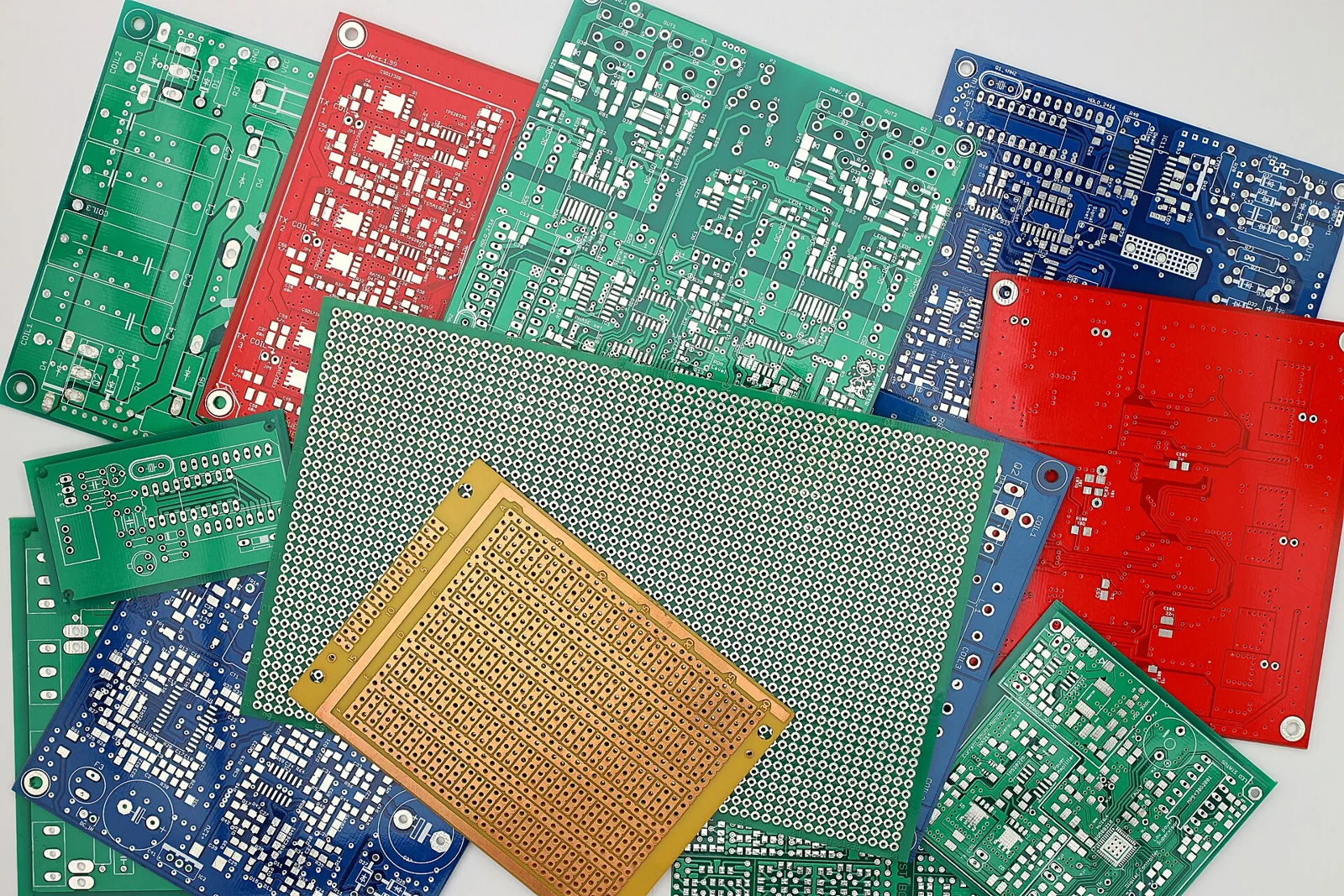
- A quick-turn PCB prototype should be reviewed as a compressed release path for a prototype-stage build, not as a universal promise that any urgent board can be fabricated on the same timeline.
- The most important distinction is simple:
prototypedescribes build purpose,quick-turndescribes schedule posture, andstandard lead timedescribes the default review and routing path. - The real difference between quick-turn and standard handling usually starts at intake clarity, route eligibility, and factory release discipline, not at some magical faster machine step.
- The safest way to discuss quick-turn timing is to separate the quote and DFM clock, the factory routing clock, and the shipping or customs clock.
Quick Answer
A quick-turn PCB prototype is easiest to manage when the board family is simple enough, the release package is already stable enough, and the validation intent is clear enough to avoid engineering-query loops. What changes versus standard lead time is mainly the routing posture after intake, not the underlying need for stackup clarity, DFM review, process-family selection, inspection, and shipment readiness.
Table of Contents
- What does quick-turn PCB prototype actually mean?
- What is the difference between prototype, quick-turn, and standard lead time?
- What changes between quick-turn and standard lead time?
- Why should lead time be split into three clocks?
- When is a prototype a good fit for quick-turn routing?
- What usually creates EQ or release holds?
- How should validation be handled on a quick-turn prototype?
- How should pricing be discussed?
- What should be frozen before requesting quick-turn?
- Next steps with APTPCB
- FAQ
- Public references
- Author and review information
What does quick-turn PCB prototype actually mean?
Here, quick-turn PCB prototype means:
- the board is being built for validation, bring-up, or early release learning
- the schedule is being compressed compared with the default path
- the release still depends on manufacturing clarity and route eligibility
That framing matters because many quick-turn articles confuse three different ideas:
- why the board is being built
- how urgently it needs to move
- whether the fabrication route is simple enough to accelerate
Those are not the same thing.
The better question is:
Is this prototype package stable enough and simple enough to move through a compressed release path without creating avoidable hold risk?
That question brings three related discussions into one structure:
- lead time review
- prototype release posture
- quick-turn versus standard routing differences
What is the difference between prototype, quick-turn, and standard lead time?
These terms need to stay separate.
| Term | What it mainly describes | What it does not prove |
|---|---|---|
| Prototype | Build purpose for validation, bring-up, or iteration | Automatic eligibility for the fastest route |
| Quick-turn | A compressed routing posture after engineering intake | That every board family can be accelerated the same way |
| Standard lead time | The default review and routing path | A slow or low-priority build by definition |
| NPI or pilot | A release-stage ramp posture with broader governance | A simple rush order |
| Production | Repeatable execution after release gates stabilize | A prototype with a larger quantity |
This distinction matters because many pages treat prototype and quick-turn as if they automatically authorize each other. They do not.
A first build can still be a prototype even when it is too underdefined for compressed routing. An urgent board can still miss quick-turn eligibility if the route has already drifted into HDI, RF, flex, rigid-flex, ceramic, or another special-process family.
What changes between quick-turn and standard lead time?
Quick-turn does not change the physics of PCB fabrication. It changes the release posture after intake.
| Review factor | Standard lead time path | Quick-turn path |
|---|---|---|
| Intake tolerance | More room for clarification loops | Needs a cleaner package before release |
| Stackup certainty | Can absorb slower clarification | Needs clearer layer, material, and impedance intent early |
| Board-family routing | More tolerant of ordinary queue behavior | Usually favors simpler process families first |
| Fabrication-note gaps | May be resolved through routine back-and-forth | More likely to trigger urgent EQ or hold if unclear |
| Assembly and test scope | Can sometimes be refined in parallel | Must be visible early if they affect release routing |
| Shipping posture | More likely to be treated as a later lane | Must stay separated from fab-time claims from the start |
The practical difference is not “the line moves faster no matter what.” The practical difference is:
the factory is trying to release a job with less uncertainty, not with less discipline.
That is why quick-turn belongs in a guide about release readiness, not only in a guide about speed.
Why should lead time be split into three clocks?
Lead time becomes much easier to explain when it is reduced to three separate clocks:
- quote and DFM intake
- factory routing and build execution
- shipping and customs
1. Quote and DFM intake clock
This includes:
- file completeness
- stackup clarity
- fabrication-note review
- assembly or BOM clarification where applicable
- engineering queries before release
This is the right place for a response commitment like DFM feedback within 24 hours. That statement belongs to intake speed, not to total fabrication or delivery time.
2. Factory routing clock
This starts after the package is clear enough to release.
It is affected by:
- board family
- stackup control
- HDI or special-process scope
- finish requirements
- assembly or test gates that belong to routing
This is the clock that changes most directly between standard handling and quick-turn posture.
3. Shipping and customs clock
This starts after factory release and includes:
- document readiness
- customs posture
- carrier choice
- transit conditions outside the factory itself
That is why shipping estimates should not be merged into fab-time promises unless the assumptions are explicitly separated and source-backed.
When is a prototype a good fit for quick-turn routing?
A prototype fits quick-turn routing most naturally when the board family is simple enough and the release package is stable enough to avoid clarification loops.
| Board-family posture | Why it is easier or harder to accelerate | Quick-turn reading |
|---|---|---|
| Baseline 1-2 layer or simpler FR-4 route | Lower structure complexity and fewer escalation points | Clearest starting point for urgent prototype routing |
| Multilayer with tighter stackup or impedance planning | More pressure on layer order, references, and fabrication notes | Still possible, but more conditional |
| HDI, RF, flex, rigid-flex, ceramic, or specialty material routing | Special-process questions appear earlier and more often | Should not inherit the same timing assumptions as a baseline board |
The common mistake is to call a board quick-turn capable only because it is urgent.
Urgency does not simplify:
- controlled-stackup ambiguity
- unresolved finish duty
- special via structures
- test-access gaps
- release-stage validation uncertainty
Quick-turn is strongest when the project already knows what the board is supposed to be.
What usually creates EQ or release holds?
Most urgent release holds come from ambiguous package definition, not from one dramatic machine failure.
| Input area | What should be explicit | Why it creates hold risk when vague |
|---|---|---|
| Stackup and board family | Layer roles, material family, controlled-structure intent, process branch | The route cannot be compressed if the construction family is still unclear |
| Fabrication package completeness | Gerbers, drill files, outline, finish, critical notes, tolerance assumptions | Front-end clarification loops eat the urgent schedule first |
| Impedance and finish notes | Whether the board needs controlled structure, special finish, or mixed-duty zones | Hidden requirements change the real route |
| Assembly and test scope | Whether the order is bare-board only or includes deeper validation expectations | Late test or assembly assumptions destabilize release |
| Shipment posture | Invoice data, customs assumptions, carrier selection | An urgent fab release can still lose time after the board is built |
A typical hold pattern looks like this:
the Gerbers are present, the order is marked urgent, and the board seems simple, but one critical note is still implied instead of explicit. That might be stackup shorthand, an unresolved impedance tolerance, an unstated finish-zone requirement, or a later-added expectation around electrical validation. At that point, the CAM or front-end team has to stop and ask what the board really is before routing can be compressed.
That is why quick-turn should be treated as a clarity test as much as a scheduling choice.
How should validation be handled on a quick-turn prototype?
Validation should be layered, not collapsed into one generic “tested” promise.
| Validation layer | What it answers | What it does not prove |
|---|---|---|
| DFM / DFT / DFA review | Is the package manufacturable, testable, and aligned enough to release? | Final field readiness |
| Fabrication and inspection gates | Did the board move through the intended process and basic quality checks? | Full functional behavior in the target system |
| Flying probe or similar electrical confirmation | Are opens, shorts, and basic connectivity issues screened without a fixture? | ICT-style fixture coverage or complete system validation |
| Functional or bring-up validation | Does the prototype behave as intended in the real application? | Production-release authority by itself |
For changing or lower-volume prototype work, flying probe is often easier to justify than ICT because it does not depend on fixture lock-in at the same stage.
That does not make flying probe “better” in every case. It means it is often a better fit for an unstable or early validation path.
The most useful engineering question is:
What is this prototype supposed to validate, and which gate is responsible for catching what kind of failure?
Related reading:
How should pricing be discussed?
Pricing should stay tied to complexity, route choice, and release burden, not to a universal expedite multiplier.
That means:
- avoid fixed public rush-fee formulas
- avoid pretending that all urgent orders share the same surcharge logic
- discuss what is increasing route complexity instead
The commercial posture usually changes when the board moves from a baseline prototype route into:
- tighter or more controlled multilayer stackups
- HDI or sequential build-up
- hybrid or specialty materials
- special finish or selective-finish requirements
- extra tooling, validation, or release-evidence burden
The safer question is not:
What is the quick-turn premium?
The safer question is:
Which project variables are forcing a more complex route than a baseline urgent prototype build?
What should be frozen before requesting quick-turn?
Before requesting quick-turn, freeze the items that change release routing:
- the intended board family and whether it is still a baseline prototype route
- the stackup and any controlled-structure assumptions
- fabrication notes, including finish and any critical constraints
- BOM, assembly, and test posture if the request is more than bare-board fabrication
- shipping and document assumptions if delivery timing matters beyond factory release
- the validation boundary between prototype learning, urgent routing, and later NPI or production handoff
If those items are still moving, the board may still be a prototype, but it is not yet a clean quick-turn request.
Next steps with APTPCB
If your quick-turn prototype is being slowed by stackup ambiguity, unresolved route escalation, incomplete fabrication notes, weak test-access planning, or confusion between prototype, quick-turn, and later NPI release posture, send the Gerbers, BOM, stackup intent, finish notes, and validation expectations to [email protected] or upload the package through the quote page. APTPCB's engineering team can return DFM feedback within 24 hours and point out whether the real hold sits in intake clarity, factory routing, or shipment readiness.
If the package still needs cleanup before release, review:
FAQ
Is quick-turn the same as prototype?
No. Prototype describes build purpose. Quick-turn describes schedule posture. A build can be one, the other, or both.
Does quick-turn mean the board skips DFM review?
No. DFM, DFT, and DFA belong at the front of the release path because urgent routing increases the cost of unresolved ambiguity.
Is a quick-turn prototype always the fastest possible PCB order?
No. A prototype can still be too underdefined or too complex for a clean accelerated route.
Can I combine fabrication time and shipping time into one promised lead time?
Not safely unless the assumptions are explicitly separated and source-backed. Factory routing and shipping are different clocks.
What usually causes the first hold on an urgent prototype?
The most common pattern is an unclear release package: unresolved stackup, implied impedance intent, vague finish notes, incomplete test planning, or unstable shipment assumptions.
Public references
APTPCB Quick-Turn PCB Services
Supports quick-turn as a distinct accelerated service posture rather than a universal build-time promise.APTPCB PCB Prototype Services
Supports prototype routing as a validation-stage posture instead of treating it as a synonym for urgent fabrication.APTPCB NPI Small Batch PCB Manufacturing
Supports separating prototype routing from later pilot and release-stage ramp posture.APTPCB Flying Probe Testing
Supports no-fixture electrical-test context for changing prototype validation work.APTPCB DFM Guidelines
Supports treating manufacturability review as an intake gate.
Author and review information
- Author: APTPCB PCB process content team
- Technical review: PCB prototype, release, DFM, and test-planning engineering team
- Last updated: 2026-05-08