
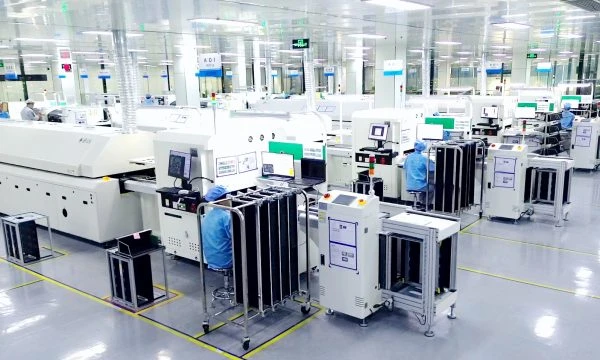
VALIDATION TO PILOT READINESS
Prototype PCB Manufacturing for Production-Intent NPI
High-reliability prototype circuit board fabrication and NPI engineering. When early bring-up moves toward pilot release, APTPCB reviews stackup physics, component sourcing, DFM/DFT rules, and inspection plans before quote handoff.
Get an Instant Quote
Where this page fits between quick-turn prototype and quote handoff
Prototype for validation
Production-intent prototype
Pilot and ramp handoff
When to stop treating the build as a simple quick prototype
- Performance depends on the real stack-up: Controlled impedance, HDI structures, thermal behavior, RF performance, or power integrity can no longer be approximated by a convenience stack. When speed is essential, evaluate our controlled quick-turn PCB fabrication gates.
- Assembly risk is now part of the decision: Fine-pitch parts, BGAs, bottom-terminated devices, mixed technology, or dense connectors require production-relevant assembly assumptions aligned with turnkey PCB assembly.
- Test access must be intentional: You need to define what will be inspected, probed, programmed, or functionally verified instead of relying on ad hoc bench validation only.
- Component choices need control: Approved manufacturers, alternates, lifecycle status, and package compatibility affect whether the next build is repeatable.
- Revision history matters: If manufacturing needs to know exactly what changed between spins, the build is no longer just a loose quick-turn exercise.
- The next step is a real quote or pilot lot: If cost, yield, sourcing, or ramp planning are under discussion, the data package should be treated as manufacturing-intent input.
Readiness checklist before quote handoff
- BOM: Clean manufacturer part numbers, reference designators, do-not-fit calls, approved alternates, and known supply risks are documented.
- Stack-up: Layer count, copper weights, material family, impedance requirements, finish, and any controlled structures are defined clearly enough for review.
- DFM: The design has been checked for fabrication limits, annular ring, mask strategy, panel assumptions, assembly spacing, and any process-sensitive features.
- DFT: Test points, programming access, inspection scope, and functional test expectations are identified, even if the final fixture plan is still evolving.
- Test coverage: The team knows what the build must prove at this stage and what risks remain intentionally untested.
- Revision control: Files, ECO status, revision names, and released documentation point to one unambiguous build state.
Role boundaries and next-step links
What to prepare for quote handoff
Preparing a production-intent prototype or NPI small batch?
Use this stage to tighten the build package, then move to quote when BOM, stack-up, DFM, DFT, and revision control are ready for review.
Frequently Asked Questions
Answers to the questions we hear most from hardware teams.
How is this page different from a standard quick-turn prototype page?
It focuses on the point where the build package needs manufacturing-intent discipline, not just speed for early learning.
Does a production-intent prototype mean the design is ready for volume release?
Not necessarily. It means the prototype is being prepared to reveal manufacturing and handoff risks earlier, with tighter control over materials, assembly assumptions, and documentation.
When should a team move from validation prototype to NPI small batch thinking?
When stack-up, sourcing, assembly, inspection, test access, or revision traceability begin to affect the next build decision rather than just the engineering experiment.
Why link DFM Guidelines and Components & BOM from this page?
Because stage readiness depends on both physical manufacturability and a controlled sourcing package before a clean quote handoff.
What should be stable before using the quote page?
At minimum, the team should have a reviewable BOM, stack-up intent, DFM and DFT assumptions, defined test coverage expectations, and one unambiguous revision state.
What criteria should engineering teams evaluate when selecting a prototype PCB manufacturer?
When selecting a prototype PCB manufacturer, hardware engineers must prioritize direct production-line compatibility over hobbyist gang-run pooling services. A dedicated prototyping partner must provide comprehensive engineering support, including 24-hour engineering query (EQ) resolution, automated netlist continuity verification, and strict IPC Class 2 or Class 3 compliance. Partnering with a manufacturer capable of transitioning quick-turn prototypes directly into volume fabrication eliminates costly requalifications and design revisions during production ramp-up.
How do hardware teams order PCB prototypes and prepare files for fast fabrication?
To order quick-turn PCB prototypes without tooling delays, engineers should provide complete Gerber RS-274X or ODB++ fabrication packages, drill charts specifying finished hole sizes and plating requirements, and an explicit layer stackup drawing. Preparing clean design data with validated annular rings, solder mask clearances (≥3 mil), and copper trace spacing prevents hold flags during automated DFM review, ensuring first-pass yield for rapid prototype delivery.
What special engineering considerations apply when building a flexible PCB prototype?
Fabricating a flexible PCB prototype requires distinct design and manufacturing tolerances compared to rigid boards. Engineers must specify adhesiveless polyimide laminates, calculate dynamic versus static bend radii (maintaining ≥10× flex thickness for dynamic motion), and orient copper grain along the bend axis. Prototyping workflows require pre-bake moisture degasification (per IPC/JEDEC J-STD-033) and precision laser-routed coverlays to ensure mechanical resilience and signal integrity under thermal stress.
Preparing a production-intent prototype or NPI small batch?
Use this stage to tighten the build package, then move to quote when BOM, stack-up, DFM, DFT, and revision control are ready for review.