
INDUSTRIAL
Industrial control
Identify interfaces, power, critical components, firmware version, test points, and operating conditions.
Mixed assemblyFirmware revisionFunctional test

FULL TURNKEY • CONSIGNED • HYBRID
Turnkey PCB assembly combines full-lifecycle electronic contract manufacturing (ECM) with high-precision bare board fabrication, authorized component procurement, IPC-A-610 Class 3 SMT/THT placement, automated inspection, and serialized delivery under one unified contract. Build verification is governed by our standardized <a href="/pcba/testing-quality">PCBA quality assurance</a> and automated <a href="/pcba/xray-inspection">3D X-ray inspection</a> protocols. APT delivers this as a China-based EMS provider, serving customers worldwide.
The choice depends on who owns purchasing, availability risk, and alternative-part approval—not only the assembly price.
APTPCB purchases PCBs and components against the approved BOM/AVL; the customer authorizes alternatives and commercial exceptions.
The customer supplies the agreed materials and is responsible for adequate quantity, provenance, and arrival against the production schedule.
Responsibility is assigned by BOM line: the customer may consign critical parts while APTPCB purchases the remaining items.
AGREED SCOPE
The actual scope is fixed in the quotation and order. Each phase requires approved inputs, an explicit release decision, and a defined deliverable.
Bare-board fabrication
The PCB is built to the approved Gerber/ODB++, stack-up, materials, surface finish, and acceptance requirements.
BOM, AVL, and component sourcing
MPNs, manufacturers, permitted sources, substitution rules, NCNR items, and excess-material ownership are defined before purchasing.
DFM/DFA and job preparation
Placement data, polarity, DNP instructions, panel, stencil, and access for inspection and test are reviewed before release.
SMT and THT assembly
Assembly follows the approved manufacturing data; special processes enter the order only when expressly agreed.
Inspection and testing
Methods are selected by defect risk, accessibility, and Pass/Fail criteria. One method does not automatically replace another.
Lot release and shipment
Before packing, we verify deviations, agreed records, identification, completeness, and packaging requirements.
SIX RELEASE GATES
The next phase begins after its inputs and open decisions are resolved, preventing changes from becoming hidden purchasing or lot risk.
RFQ review
File completeness, quantities, supply model, schedule, and required records.
Engineering release
DFM/DFA, BOM questions, assembly data, testability, and acceptance criteria.
Purchasing release
Approved MPNs and sources, alternatives, NCNR items, excess material, and ownership.
First-article release
Revision, orientation, DNP, marking, and selected process evidence before the lot continues.
Inspection and test
Methods, programs, Pass/Fail limits, and defect or deviation handling follow the agreed plan.
Lot release
Closed deviations, required records, packaging, identification, and shipment authorization.
PROJECT CONTEXT
A BOM alone is not enough for a reliable quotation. Power, RF, firmware, traceability, and final qualification needs determine the process, test access, and required records.
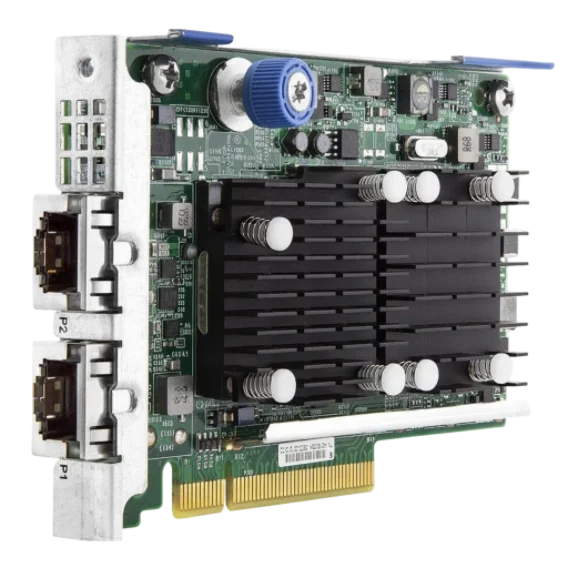
DECISIONS BEFORE ORDER
Sourcing and testing should not remain implicit. These decisions are fixed in the quotation, technical questions, and order.
IPC-A-610 addresses electronic-assembly acceptability, J-STD-001 soldered electrical and electronic assembly requirements, J-STD-033 moisture-sensitive component handling, and IPC-1782 traceability. The required revision, class, record level, and acceptance criteria must be specified by the customer and defined by contract.

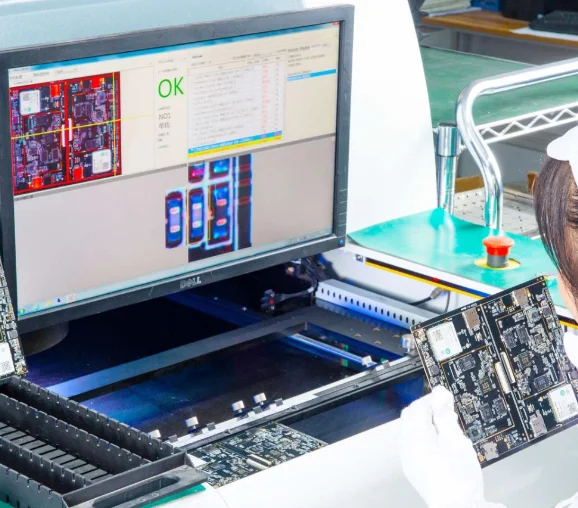
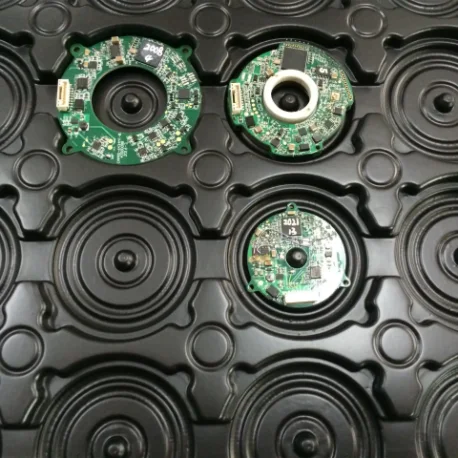
QUALITY AND RELEASE EVIDENCE
Quality is demonstrated through agreed criteria, verifiable records, and closed deviations—not an equipment list. No single inspection method proves final-product functionality by itself.
We compare MPN, manufacturer, quantity, packaging, identification, and agreed records. Discrepancies remain segregated until disposition.
Data revision, orientation, polarity, DNP, marking, and results from selected inspections are checked before the lot proceeds.
Agreed test results, deviations, rework, identifiers, completeness, and packaging are checked before shipment.
APTPCB performs the agreed PCBA manufacturing and control scope. Final-product system, EMC, environmental, safety, functional, and regulatory qualification remains the customer's responsibility unless expressly included in the contract.
Define power, interfaces, loads, firmware, operating conditions, calibration, and functional-test criteria.
Provide contractual requirements for changes, special characteristics, traceability, PPAP/APQP, and supplier release.
Define configuration control, cleanliness, traceability, records, and verification; device validation remains with the system manufacturer.
Provide stack-up, controlled-impedance nets, RF limits, shielding, software versions, calibration, and interface acceptance thresholds.
Agree programming, unique identifiers, regional BOM variants, labels, accessories, and packaging.
DECISIONS BEFORE BUILD
Compare quotations only when BOM, revision, quantity, test, documentation, and delivery terms are equivalent.
Materials
Before purchase
Release evidence
• Closed BOM questions
• Approved exceptions
• Purchasing authorization
Engineering
Before build
Release evidence
• DFM/DFA question list
• Approved process decisions
• First-article plan
Control
Per the agreed plan
Release evidence
• Results from agreed controls
• Programming status
• Deviation decisions
Delivery
Before carrier handoff
Release evidence
• Shipment authorization
• Packing list
• Agreed document package
Responsibility
Compare before RFQ
The agreement should cover
• Availability and NCNR risk
• Alternative-part rules
• Residual and excess materials
Cost
Transparent scope
For a valid comparison
• Same quantities and revisions
• Same test scope
• Same records and Incoterms
Concise answers on supply models, substitutions, testing, records, and responsibility boundaries.
Complete inputs reduce assumptions in pricing, sourcing, testing, and scheduling. Identify full-turnkey, consigned, or hybrid supply and send current revisions.