Robotics / Motion, feedback, control

Robot electronics.Close the control loop.

Controller, drive, sensor and power boards share one machine. Review their manufacturing requirements with the motion, feedback and integration constraints in view.

Control loop
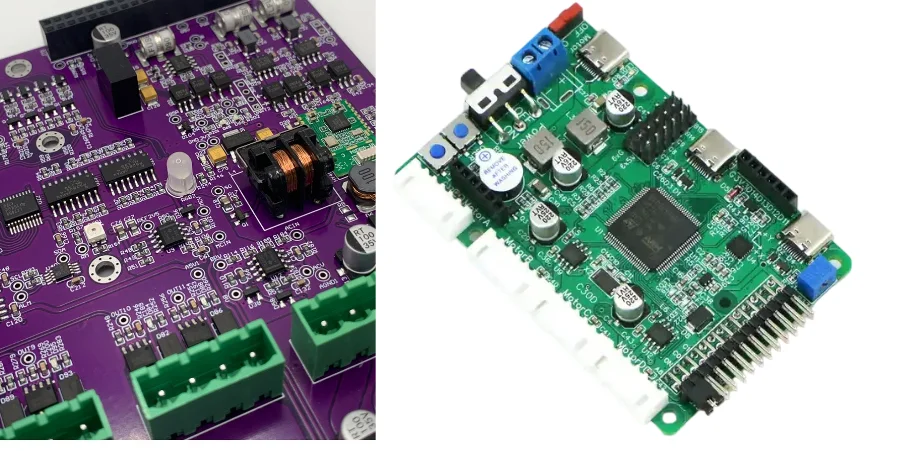
Robotics circuit board assemblies with processors, interface connectors and terminal blocks
Robotics assemblies / control, interface and connection hardware

01 / Through the control loop

Sense. Decide. Drive.

  1. 01

    Sense the machine

    Encoders, IMUs, cameras and ranging interfaces provide feedback and perception.

  2. 02

    Coordinate the response

    Controller boards combine real-time processing, fieldbus, IO and motion coordination.

  3. 03

    Actuate and return

    Drive stages deliver motor current while feedback and communication close the loop.

Modern robots are complex electronic systems on wheels, tracks, rails, and arms. From industrial robots and cobots to AGVs/AMRs, warehouse robots, service robots, medical robots and inspection platforms, every function depends on Robot PCBs and Robot PCB assemblies - motion control, power, sensing, safety, communication and user interaction.
As a dedicated PCB manufacturing and PCB assembly factory, APTPCB supports robotics OEMs, machine builders, integrators and startups with production-ready Robot PCBs and fully assembled Robot PCBAs. We cover a wide range of applications, including industrial robots, collaborative robots (cobots), SCARA robots, welding robots, painting robots, AGVs/AMRs, warehouse logistics robots, picking robots, service robots, medical robots, inspection robots, and special-purpose mobile platforms, plus associated controllers, chargers and base stations.

Robot Controller & Main Control PCB & PCBA Solutions

Robot controllers and main control boards are the 'brain' of the robot, coordinating motion, safety, communication and higher-level logic. Robot controller PCBs and main control PCBAs must manage real-time tasks, communicate with multiple subsystems and survive in electrically noisy environments.
APTPCB manufactures and assembles robot controller PCBs, CPU/SoC mainboards, motion control PCBs, I/O controller PCBAs and backplane PCBs for industrial robots, cobots, AGVs/AMRs and other robotic platforms.
With carefully fabricated and assembled Robot controller PCBs, APTPCB helps your robots maintain deterministic control loops, reliable communication to drives and sensors, and stable system operation over long service lifetimes.
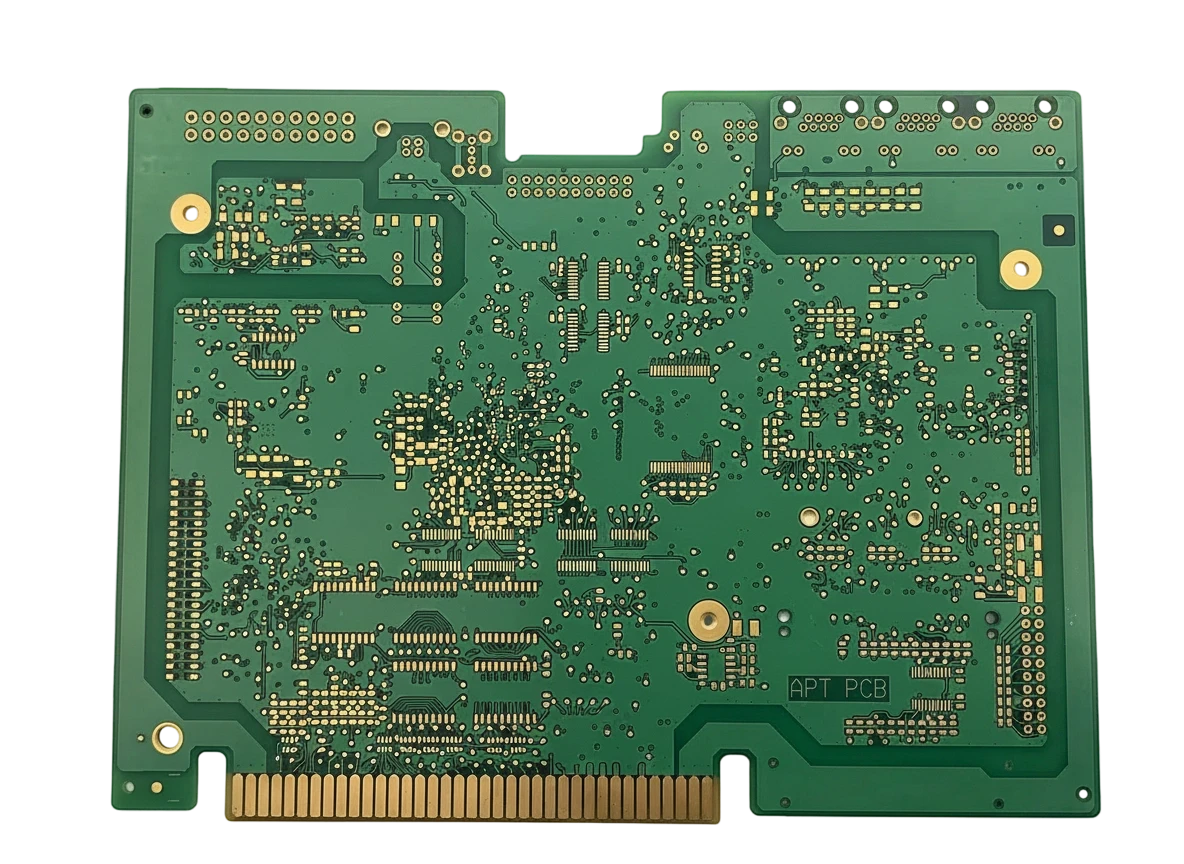
Bare green controller circuit board with dense component pads and mounting holes
Controller construction / package escape, mounting and connector locations
Manufacturing considerations
  • Real-Time Control & Processing: Multilayer Robot PCBs integrating MCUs/SoCs, FPGAs, memory and peripheral ICs for motion control, kinematics and safety logic.
  • Multi-Bus Communication Support: Integration of industrial Ethernet, CAN/CANopen, EtherCAT, PROFINET, Modbus, serial links and proprietary buses on robot controller boards.
  • Robust I/O & Interface Design: Digital and analog IO, encoder interfaces, safety signals and user I/O with appropriate isolation and protection on Robot controller PCBAs.
  • Backplane & Modular Designs: Boards designed as main controllers with plug-in motion or IO modules, or as backplanes for modular robot control architectures.

Scroll the table to review all columns.

Close the loop from perception to fieldbus

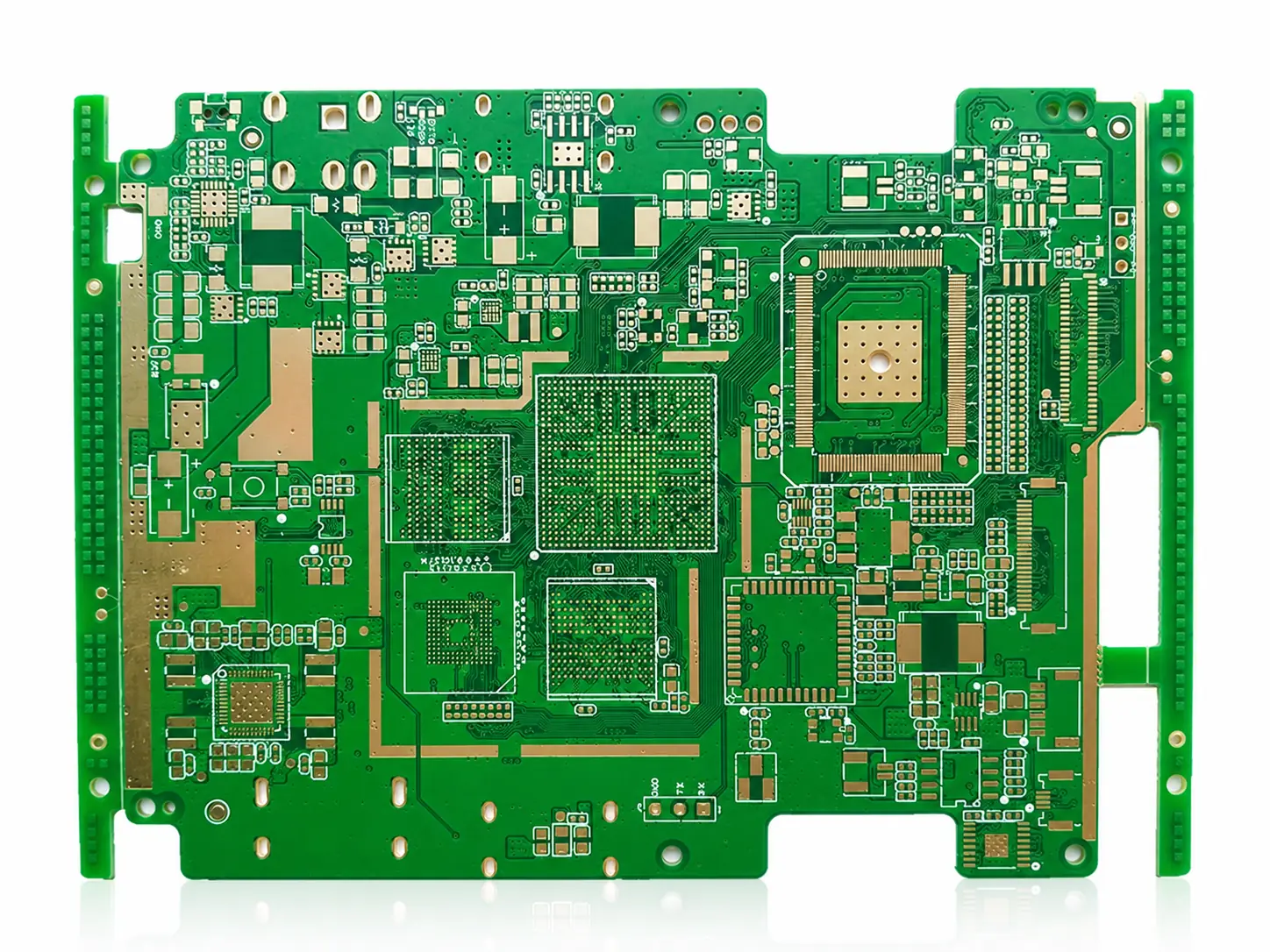
Bare green circuit board with dense routing and component footprints
Controller-board example: routing density and board interfaces should be reviewed together.

Sensor, Perception & Feedback PCBs for Robotics

Robots depend on sensors to understand their environment and internal state. Sensor PCBs and perception PCBAs interface with encoders, IMUs, LiDAR, 3D cameras, proximity sensors and more.
APTPCB manufactures encoder interface PCBs, IMU/odometry boards, LiDAR/radar interface PCBAs, depth/3D camera boards, proximity and range sensor PCBAs and multi-sensor fusion boards.
  • Low-Noise Sensor Front-Ends: PCBs for IMUs, encoders, force/torque and other sensors with careful analog layout and grounding to maintain signal quality.
  • High-Speed Vision & LiDAR Interfaces: Boards handling MIPI/CSI, USB, Ethernet or custom interfaces to cameras and LiDAR, integrated into Robot PCBs or modules.
  • Sensor Fusion & Pre-Processing Boards: PCBAs combining multiple sensors, pre-processing data near the sensors to reduce communication load and improve real-time behavior.
  • Environmental & Mechanical Considerations: Sensor board designs that fit into robot arms, end-effectors, mobile bases and protective housings, with attention to vibration and cable routing.
With well-manufactured sensor and perception PCBAs, APTPCB supports cleaner sensor data, more stable calibration and better performance of your robot's navigation, mapping and control algorithms.
Communication, Fieldbus & Networking PCBs for Robots

Robots are part of larger systems - from production lines and warehouses to cloud-connected fleets. Communication PCBs and networking PCBAs connect controllers, drives, sensors and higher-level systems.
APTPCB manufactures robot fieldbus/Ethernet PCBs, wireless communication boards, robot gateway PCBAs and edge-connect PCBs for robotic applications.
  • Industrial Communication Interfaces: PCBs supporting CAN, CANopen, EtherCAT, PROFINET, Modbus, Ethernet/IP and other fieldbuses used in robotics and automation.
  • Wireless Connectivity: Boards integrating Wi-Fi, Bluetooth, cellular or proprietary RF modules for mobile robot fleets and cloud connections.
  • Gateway & Edge Controller PCBAs: Robotics PCBs that act as gateways between robot networks and plant or cloud systems, handling protocol conversion and data aggregation.
  • Isolation & Protection: Transformer isolation, surge protection and filtering on communication ports for reliable operation in noisy industrial environments.
Through consistent communication and networking PCBAs, APTPCB helps your robots maintain stable communication with controllers, other robots and backend systems, supporting coordinated motion, monitoring and analytics.

02 / At the joint and wheel

Switching power beside sensitive feedback.

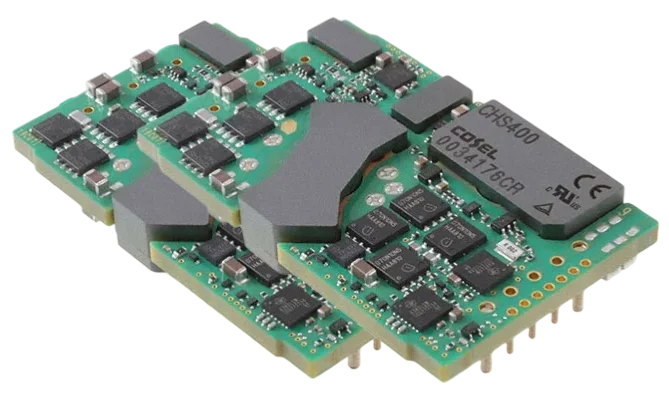
Populated circuit-board modules with processors and pin-header connections

Servo Drive, Motor Control & Power Stage PCBs

Robot joints and mobile platforms depend on precise, efficient motor control. Servo drive PCBs, BLDC driver boards and power stage PCBAs must handle high currents, fast switching, regeneration and continuous operation.
APTPCB manufactures servo amplifier PCBs, BLDC/stepper driver boards, joint motor controller PCBAs, wheel/traction drive PCBAs and auxiliary motor control boards for industrial and mobile robots.
With robust servo and motor control PCBAs, APTPCB helps your robots achieve smooth movement, accurate positioning and reliable torque delivery, even under heavy loads and fast motion cycles.
Manufacturing considerations
  • High-Current, High-Voltage Design: Robot power PCBs with appropriate copper weights, creepage/clearance, slots and thermal management for servo and traction drives.
  • Power Stage Integration: PCB layouts integrating MOSFETs/IGBTs, gate drivers, current sensors, shunts, snubbers and protection circuits in compact servo and drive modules.
  • Feedback & Control Integration: On-board interfaces for encoder, resolver or Hall sensors, plus current and voltage sensing for closed-loop control.
  • EMI/EMC-Aware Layout: Routing, grounding and filtering practices to limit EMC issues from high-frequency switching in robot cabinets and mobile platforms.

Scroll the table to review all columns.

Reliable Operation in Dynamic Robotic Environments

By combining robust PCB fabrication, precise SMT/THT assembly and layered inspection and testing, APTPCB helps ensure your Robot PCBAs perform reliably in real robotic applications - not just in lab demos. We focus on materials, creepage/clearance, copper thickness, vibration tolerance, solder quality and final inspection so your robot electronics can withstand continuous motion, shock, dust, temperature changes and long duty cycles with confidence.
Our experience with industrial, mobile, service and special-purpose robots allows you to shorten bring-up time, stabilize series production and deliver more reliable robot platforms to your users and customers.

03 / Mobile energy

Battery and charging requirements follow the mobile platform.

Battery, Power Management & Charging PCBs for Mobile Robots

Mobile robots (AGVs, AMRs, service robots) rely on batteries and charging systems. Robot power PCBs, battery management PCBAs and charger boards must safely manage energy and support long runtimes.
APTPCB manufactures battery management PCBs (BMS), DC/DC converter boards, robot power distribution PCBAs, charging station PCBs and docking/inductive charger boards for mobile robot platforms.
With dependable battery and power PCBAs, APTPCB helps your mobile robots run longer between charges, manage energy safely and reduce power-related failures in fleet deployments.
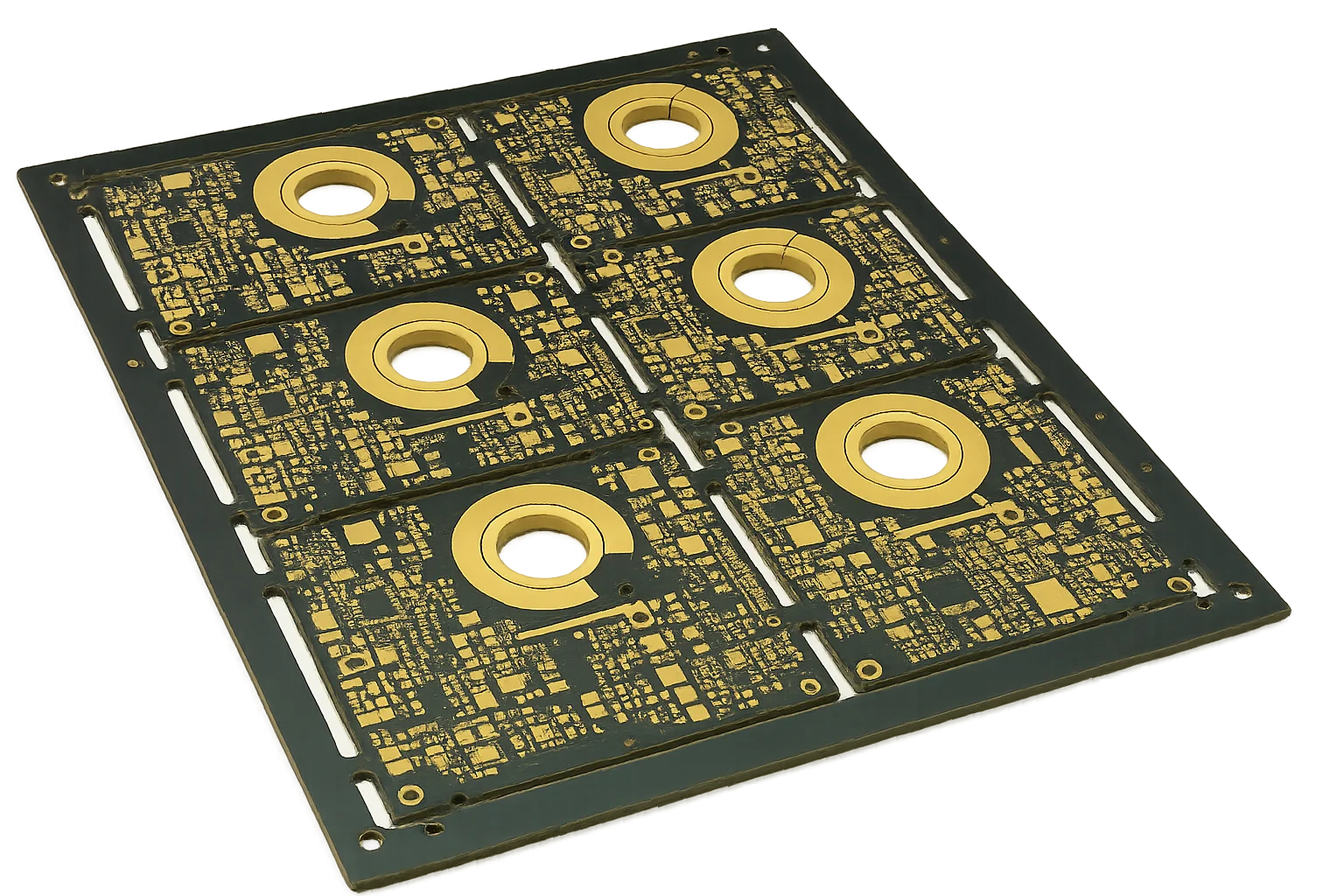
Dark circuit-board panel with large plated circular features
Power-board example: review mounting geometry and current-carrying paths.
Manufacturing considerations
  • Battery Management Systems: BMS PCBs for Li-ion/LiFePO4 packs, providing cell monitoring, balancing and protection functions.
  • DC/DC & Power Distribution: Robot power PCBs converting and distributing voltage rails to controllers, drives, sensors, HMIs and communication modules.
  • Charging & Docking Stations: PCBAs for plug-in and automated docking chargers used in AGV/AMR fleets and service robots.
  • Protection & Safety: Over-current, over/under-voltage, short-circuit and thermal protections integrated into power and battery boards.

Scroll the table to review all columns.

Key Robot PCB Application Areas

  • Robot Controllers & Main Boards: Central control PCBs, CPU/SoC boards, motion controllers and I/O controllers.
  • Servo Drive & Motor Control: Servo amplifier PCBs, BLDC driver boards, stepper drivers, joint motor control PCBAs.
  • Sensors & Perception Modules: IMU/odometry boards, encoder/feedback PCBs, LiDAR/radar interface boards, 3D camera and vision system PCBAs.
  • Communication & Networking: Fieldbus/Ethernet PCBs, wireless communication modules, robot gateway and cloud-connect PCBs.
  • HMI, Teach Pendant & Operator Panels: Handheld teach pendant PCBAs, robot panel PCBs, indicator/display boards.
  • Safety & IO Expansion: Safety IO module PCBs, emergency-stop and safety relay PCBAs, general IO and expansion cards.
  • Power, Battery & Charging Systems: Battery management PCBs, DC/DC converter boards, robot power distribution PCBs, dock/charger PCBAs.

04 / Human & machine interfaces

Review safety IO and the teach pendant as separate assemblies.

Safety, IO & Expansion Module PCBs for Robots

Safety and IO expandability are crucial in robotics. Safety PCBAs and IO module PCBs connect robots to safety devices, sensors and external equipment.
APTPCB manufactures safety IO modules, emergency stop and safety relay PCBAs, standard IO modules, expansion cards and tool/end-effector interface PCBAs.
Through reliable safety and IO PCBAs, APTPCB helps your robots integrate safely with surrounding equipment, comply with system-level safety concepts and adapt to changing applications with modular IO.
Manufacturing considerations
  • Emergency Stop & Safety Circuits: PCBs for E-stop circuits, safety relays and safety interlocks designed according to your functional safety architecture.
  • Standard IO Modules: Digital and analog IO modules for interfacing with external sensors, actuators, fixtures and tooling around the robot.
  • Tool & End-Effector Interface Boards: Robot PCBs mounted on end-effectors, supporting grippers, welding guns, screwdrivers, suction tools and other tooling.
  • Isolation, Protection & Diagnostics: Optocouplers, surge protection, status LEDs and diagnostic circuits to simplify fault-finding and improve robustness.

Scroll the table to review all columns.

HMI, Teach Pendant & Robot Panel PCBs

Human-Machine Interfaces are key to commissioning, teaching and maintaining robots. HMI PCBs, teach pendant PCBAs and panel boards must be ergonomic, durable and easy to use.
APTPCB manufactures teach pendant PCBs, handheld HMI boards, robot panel PCBAs, keypad/display boards and indicator PCB assemblies for industrial and service robots.
  • Display & Input Integration: PCBs for LCD/TFT displays, touchscreens, keypads, joysticks, emergency stop buttons and function keys.
  • Industrial-Grade Construction: Robot PCBAs designed for frequent handling, shock, vibration and exposure to oils or dust in industrial environments.
  • Communication & Power Interfaces: Boards connecting teach pendants to robot controllers via cables or wireless links, including power and safety circuits.
  • User Feedback & Indicators: Integration of LEDs, buzzers and haptic feedback where required for intuitive operation.
With durable HMI and teach pendant PCBAs, APTPCB supports better operator experience during robot setup, programming and maintenance, helping reduce errors and downtime.

05 / Commissioning evidence

Test the interfaces that the robot will commission.

Testing & Quality Control for Robot PCBAs

Robots often operate in continuous duty cycles and mission-critical environments. For Robot PCB assembly and Robotics PCBA production, quality and consistency are essential.
APTPCB integrates multiple inspection and test stages into the PCBA process for robot projects.
This layered PCBA quality and testing approach supports consistent hardware behavior from prototypes to mass production. For robot manufacturers, it translates into fewer hardware-related failures, smoother field commissioning and more reliable fleets over time.
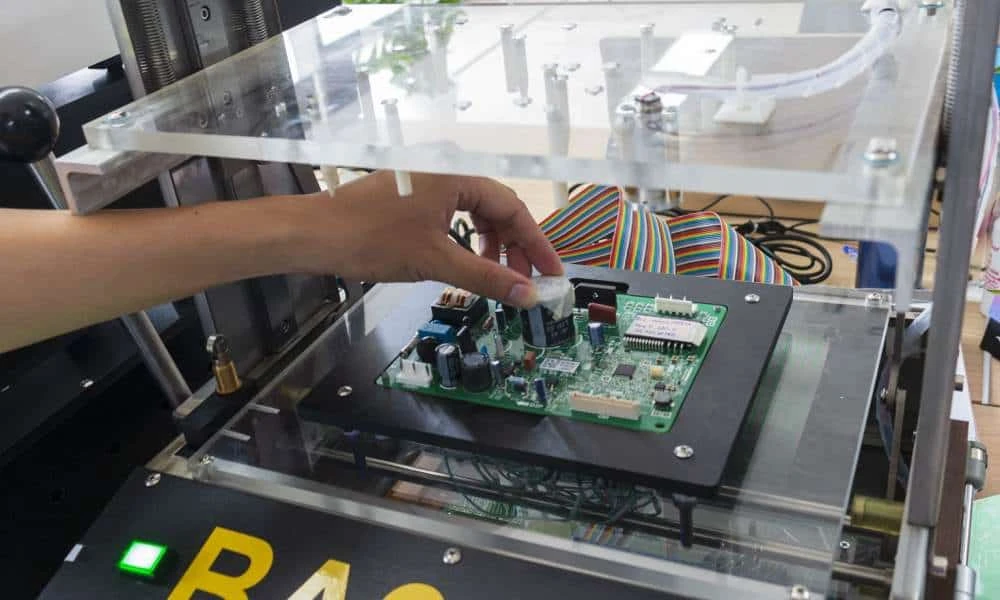
Operator placing an assembled board in a test fixture
Commissioning preparation / supply firmware, stimuli and acceptance limits
Manufacturing considerations
  • SPI (Solder Paste Inspection): Ensures correct solder paste volume and alignment, reducing soldering defects on fine-pitch MCUs, FPGAs and connectors.
  • AOI (Automated Optical Inspection): Checks component presence, type, polarity, placement and visible solder joints after reflow.
  • X-Ray Inspection (As Needed): Evaluates hidden solder joints under BGA, LGA, QFN and power packages commonly used on robot controllers and drive boards.
  • In-Circuit Test (ICT) / Flying Probe (When Designed In): Verifies electrical connectivity and component values where test points and fixtures are available.
  • Functional Test (FCT): Runs power-up and robot-specific tests, such as communication checks, sensor readouts, motor drive tests or IO scans, according to your test specifications.
  • Final Quality Inspection & Traceability: Confirms labeling, revision, cosmetic quality and packing, with lot-level or board-level traceability to support field maintenance and fleet-level quality tracking.

Scroll the table to review all columns.

ENGINEERING REFERENCE

Additional prototype-to-fleet supplier context

From Prototype to Fleet Deployment: Partnering with APTPCB for Robot PCB Projects
Robotics projects often move quickly from proofs-of-concept to pilot systems and fleet deployments. You need a PCB and PCBA partner who can support your Robot PCBs and Robot PCBAs through each phase.
APTPCB offers a complete pathway for robot controller PCBs, servo drive and motor control PCBs, sensor and perception PCBAs, communication/network PCBs, HMI and teach pendant boards, safety/IO modules and robot power/battery PCBAs, from early samples to stable mass production.
  • One-Stop PCB + PCBA: PCB fabrication and assembly in one factory reduces handoff issues, accelerates design iterations and simplifies your supply chain.
  • Flexible Volumes: Support for prototypes, pilot runs and full production as your robot platform scales from demo to series product and fleets.
  • Engineering Collaboration: Direct communication on stackup, materials, DFM, DFT and test strategy tailored to robotics and automation needs.
  • Stable, Repeatable Quality: Process control, testing and documentation designed to deliver repeatable builds, critical for robots deployed across many sites or customers.
Whether you are developing an industrial robot, cobot, AGV/AMR, warehouse robot, inspection robot, medical robot or service robot, APTPCB can help turn your designs into reliable, production-ready Robot PCBAs. By choosing a manufacturer focused on PCB manufacturing and PCB assembly for Robot PCB and robotics applications, you gain a partner committed to helping your hardware operate more reliably, scale more smoothly and support your long-term robotics roadmap.

PRACTICAL QUESTIONS

Frequently asked questions

Which robot applications do you cover?
Industrial robots, cobots, SCARA, welding/painting robots, AGVs/AMRs, warehouse robots, service robots, medical and inspection robots, plus controllers, chargers and base stations.
What PCB/PCBA types do you build for robotics?
Robot controllers and main boards, servo drive and motor control PCBAs, sensor/perception boards, communication/network modules, HMI/teach pendant panels, safety/IO modules, and power/battery/charging PCBAs.
How do you ensure reliability in robotic environments?
Robust stackups and copper weights, creepage/clearance, EMI/EMC-aware layouts, vibration-tolerant assembly, and layered inspection (SPI, AOI, X-ray, ICT/FCT) with traceability.
Can you support industrial communication and wireless?
Yes - EtherCAT, PROFINET, CAN/CANopen, Modbus, Ethernet/IP, plus Wi-Fi/Bluetooth/cellular RF modules and gateway PCBAs with isolation and protection.
Do you handle quick ramps from prototype to fleets?
Yes - one-stop PCB + PCBA with flexible volumes, fast DFM, and synchronized builds to support prototypes, pilots and fleet deployments.
What capabilities are required for industrial robotic PCB assembly and robot control PCB manufacturing?
High-reliability industrial robotic PCB assembly and robot control PCB manufacturing demand tight mechanical tolerances, robust vibration resistance, and rigorous thermal management. We deliver turnkey robotic controller PCB assembly and factory robotic PCB solutions supporting high-power MOSFET driver stages, heavy copper layers (up to 4–6 oz) for servo motor switching, and IPC-A-610 Class 3 soldering. Automated high-precision SMT lines (employing dual-gantry PCB assembly robot pick-and-place systems) ensure reliable placement of fine-pitch 0201 passives and 0.4 mm pitch BGAs alongside conformal coating to withstand factory shock and dust.
How do you handle custom robot PCB assembly and sensitive robot sensor PCB assembly?
Our dedicated robot PCB assembly service handles both high-density custom robot PCB assembly and precision robot sensor PCB assembly for LiDAR, IMU, ultrasonic, and machine-vision payloads. We implement controlled impedance (±5% to ±7% on differential RF and high-speed SERDES interfaces), ENIG/hard gold surface finishes for reliable contacts, low-stress underfill for shock-prone BGA sensors, and 100% 3D AOI plus X-ray inspection. This end-to-end robotic PCB assembly workflow guarantees seamless signal integrity and zero intermittent field failures in dynamic automation robotics.
What should a robotics PCB design account for?
A robotics controller or motor-driver PCB connects sensing, control and power functions. Current paths, vibration, thermal conditions and connector retention should be reviewed against the intended duty cycle.

ENGINEERING & PRODUCTION REVIEW

Review the electronics for your robot

Share the current revision and application requirements so the manufacturing and test scope can be reviewed.

  • Robot platform and board functions
  • Motor, power and feedback requirements
  • Mechanical, connector and cable constraints
  • Build files, firmware and commissioning tests