
01
Material identity and revision
Record the exact Arlon designation, laminate or prepreg form, supplier datasheet revision, slash sheet, thickness, copper and resin style. A generic “Arlon equivalent” remains a release hold.
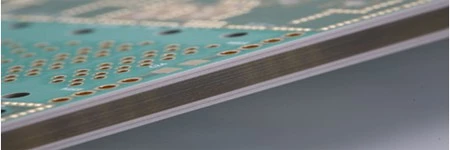
Polyimide, low-flow and aramid systems
An Arlon PCB uses a current Arlon EMD polyimide, multifunctional epoxy, low-flow prepreg or aramid-reinforced material selected for thermal stability, controlled resin flow or low in-plane expansion. This page separates the current Arlon EMD portfolio from legacy microwave names and shows the evidence needed to release an RFQ, stackup and production build.
Scope and material identity
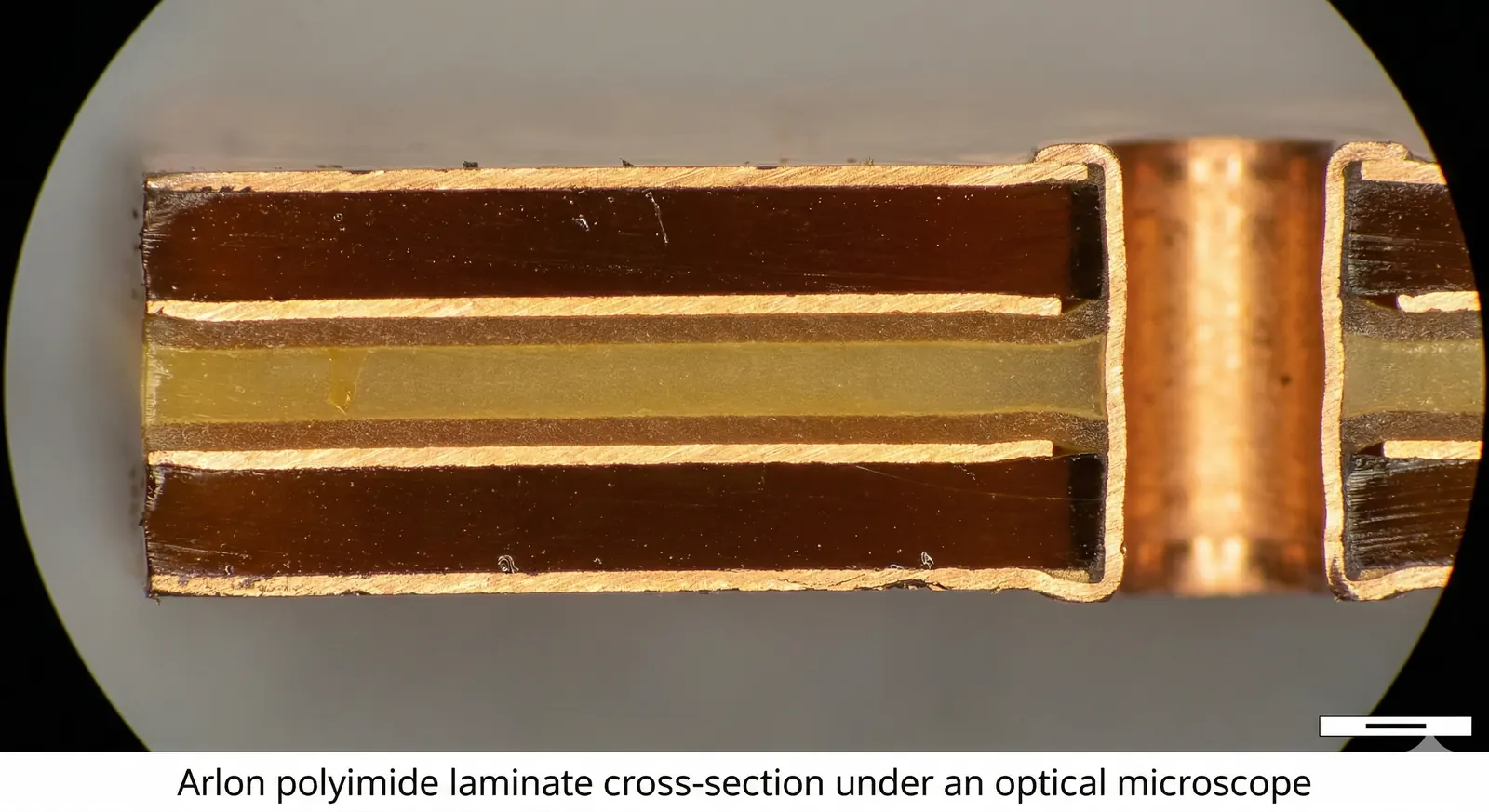
Arlon PCB manufacturing begins with the exact resin and reinforcement system, not the brand name alone. The current Arlon EMD catalog covers high-temperature polyimides, multifunctional epoxy, low-flow prepregs and nonwoven-aramid materials for multilayer, rigid-flex bonding, heat-sink attachment and controlled-expansion designs.
Legacy Arlon microwave names such as CLTE, TC and AD now appear in the Rogers advanced-electronics portfolio. Those RF materials belong on the Rogers laminate route; current alternatives can also be compared on the Taconic PCB and PTFE PCB pages. Keeping the portfolios separate prevents obsolete callouts, incorrect processing assumptions and duplicate content across material pages.
Before quotation, identify the product designation, supplier datasheet revision, laminate or prepreg form, copper, thickness, PCB stackup and acceptance evidence. A family name such as “Arlon polyimide” is not enough to release material procurement or lamination.
Material decision matrix
Use this table to choose the family to investigate. Compare the epoxy route with the design limits described for high-Tg PCB; final release still requires the exact supplier datasheet and construction.
| Material family | Supplier positioning | Typical design trigger | RFQ evidence |
|---|---|---|---|
| 33N | 250°C Tg flame-retardant polyimide; Arlon publishes 390°C decomposition temperature | High-temperature multilayer where flame rating and thermal stability are explicit inputs | Datasheet revision, slash sheet, construction, assembly profile and finished-board acceptance |
| 35N | 250°C Tg flame-retardant polyimide with low Z-axis expansion and reduced cure time | Harsh-environment multilayer where PTH stress and manufacturing cycle both matter | Layer count, thickness, hole aspect, thermal requirement and lamination route |
| 85N | 250°C Tg pure polyimide for high-layer-count and long-life high-temperature electronics | Aerospace, space, military or industrial designs that explicitly require pure polyimide | Program specification, stackup, copper, via structure, thermal profile and evidence plan |
| 45N | 175°C Tg multifunctional epoxy for higher-layer-count multilayers | Higher-temperature epoxy construction without a polyimide requirement | Stackup, lead-free profile, CAF or reliability requirements and material availability |
| 37N / 38N | 200°C Tg polyimide low-flow prepregs | Rigid-flex bonding, heat-sink attachment or another joint needing controlled resin flow | Flow target, copper relief, cavity geometry, bond area, pressure and cure requirements |
| 47N / 49N | Epoxy low-flow prepregs; 49N has a published 170°C Tg | Epoxy rigid-flex or heat-sink bonding where resin squeeze-out must be limited | Base laminate compatibility, flow window, bondline, temperature limits and test coupon |
| 55NT | Multifunctional epoxy with nonwoven aramid reinforcement and 6-9 ppm/°C in-plane CTE | Low expansion, dimensional stability or reduced board weight around ceramic packages | Package CTE, board outline, layer registration, assembly profile and mechanical validation |
| 85NT | 250°C Tg pure polyimide with nonwoven aramid reinforcement and 6-9 ppm/°C in-plane CTE | High-temperature design needing both polyimide behavior and low in-plane expansion | Thermal requirement, package interface, construction, drilling plan and qualification evidence |
Availability, thicknesses, copper options and prepreg styles are confirmed per RFQ; this page does not claim standing inventory.
Supplier-published reference
These values come from current Arlon EMD product pages. They identify material families; they do not replace a controlled datasheet or finished-board qualification.
| Product | Published fact | IPC-4101 reference | Buyer interpretation |
|---|---|---|---|
| 33N | Tg 250°C; Td 390°C; flame-retardant polyimide | /40 and /41 | Confirm exact construction and required UL listing |
| 35N | Tg 250°C; low Z-axis expansion; shorter cure cycle | /40 and /41 | Confirm PTH geometry and lamination cycle |
| 85N | Tg 250°C; pure polyimide | /40 and /41 | Confirm whether pure polyimide is a program requirement |
| 45N | Tg 175°C by DSC; conventional FR-4 lamination conditions | /26 | Do not treat it as interchangeable with polyimide |
| 37N | Tg 200°C polyimide low-flow prepreg | /42 | Release flow and bondline requirements |
| 38N | Tg 200°C polyimide low-flow prepreg | /42 | Confirm current cure and flow data from the selected revision |
| 47N | Epoxy low-flow prepreg; supplier cites 300°F lamination | /21 | Check temperature limits of adjacent materials and parts |
| 49N | Tg 170°C epoxy low-flow prepreg | /26 | Confirm flow window for the actual geometry |
| 55NT / 85NT | 6-9 ppm/°C X-Y CTE; typically about 25% lighter than glass-reinforced laminates | /55 and /53 | Validate package, assembly and mechanical behavior at system level |
Reference standards: IPC-4101 slash sheets listed above. Finished PCB acceptance, such as IPC-6012 class, must be stated separately by the customer.
Selection tradeoff
The correct material is the least complex system that closes the documented thermal, dimensional and processing risks.
| Decision | 33N / 35N / 85N | 45N | 55NT / 85NT | Release question |
|---|---|---|---|---|
| Primary value | High-temperature polyimide behavior | Higher-Tg multifunctional epoxy | Low in-plane expansion and lower weight | Which failure mechanism drives the material choice? |
| Published Tg | 250°C | 175°C by DSC | 55NT epoxy; 85NT polyimide at 250°C | Is Tg actually the controlling requirement? |
| Reinforcement | Glass-reinforced polyimide | Glass-reinforced epoxy | Nonwoven aramid | Does package CTE or dimensional stability control? |
| Processing focus | Cure, moisture handling and hole-wall preparation | FR-4-like lamination route with product-specific controls | Registration, drilling and package interaction | Has the supplier processing guide been translated into the traveler? |
| Best-fit evidence | Thermal requirement, microsection and PTH acceptance | Stackup, reflow and finished-board acceptance | Dimensional, registration and assembly evidence | What record will close the risk on pilot units? |
| Common mistake | Selecting polyimide from temperature reputation alone | Treating 45N as a drop-in FR-4 or polyimide substitute | Assuming low CTE alone guarantees solder-joint life | Which assumptions remain unverified? |
| Commercial release | Confirm exact product, form and availability | Confirm construction and availability | Confirm aramid construction and supply route | No material is released from a family name alone |
Final material selection belongs to the customer design authority; manufacturing review confirms the proposed construction and evidence plan.
Manufacturing release flow
The release starts by locking the exact product and datasheet revision, then mapping laminate, prepreg, copper, thickness and slash-sheet requirements into the stackup and fabrication drawing for the multilayer PCB. Any proposed substitution stays open until the customer approves it in writing.
DFM then checks resin-flow demand, copper distribution, cavities or heat-sink bond areas, hole geometry, registration, finished thickness and the assembly thermal profile. Rigid-flex PCB bonding with low-flow materials needs special attention because insufficient flow can trap air while excessive pressure or relief can move resin outside the intended bond area.
The pilot plan assigns evidence to each risk: incoming material identity, lamination records, coupon or microsection requirements, dimensional checks, electrical test and any customer-defined thermal or assembly validation. Only accepted evidence and frozen revisions release the production route.
Construction archetypes
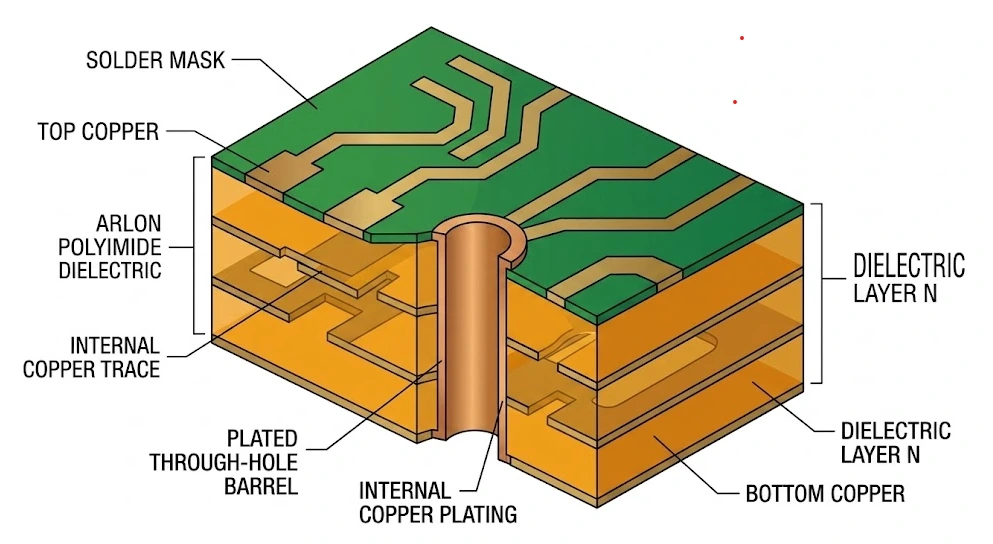
These are decision patterns, not production-ready stackups. Layer count, thickness, resin content and copper are confirmed from the actual design.
| Route | Material system | Typical use | Dominant risk | Required input |
|---|---|---|---|---|
| All-polyimide multilayer | 33N, 35N or 85N laminate and compatible prepreg | High-temperature multilayer | Cure, moisture, Z-axis stress and PTH geometry | Thermal requirement, stackup, hole data and acceptance plan |
| 45N epoxy multilayer | 45N laminate and prepreg | Higher-layer-count epoxy board | Incorrect substitution or reflow assumption | Assembly profile, stackup and reliability criteria |
| Polyimide rigid-flex bond | 37N or 38N low-flow prepreg | Rigid-flex bonding | Voids, squeeze-out and insufficient encapsulation | Flex construction, coverlay relief, bond area and flow target |
| Epoxy rigid-flex bond | 47N or 49N low-flow prepreg | Epoxy rigid-flex construction | Flow window and adjacent-material temperature limit | Base laminate, flex package, cavity geometry and cure limit |
| Heat-sink attachment | Selected low-flow prepreg | Bonded heat spreader or heat sink | Bondline voids, resin starvation and planarity | Metal type, surface condition, bond area, flatness and thermal requirement |
| Low-CTE epoxy aramid | 55NT | Dimension-sensitive board or ceramic-package interface | Registration and assembly mismatch | Package CTE, outline tolerance, assembly profile and support conditions |
| Low-CTE polyimide aramid | 85NT | High-temperature, dimension-sensitive board | Combined thermal, drilling and registration risk | Temperature profile, package interface, construction and evidence plan |
| Legacy material callout | CLTE, TC, AD or another historical designation | Existing drawing or controlled legacy program | Wrong supplier route or obsolete revision | Exact product, original datasheet, approved equivalent rules and current availability |
Release controls
Each control closes a specific procurement or fabrication risk before production release.
Record the exact Arlon designation, laminate or prepreg form, supplier datasheet revision, slash sheet, thickness, copper and resin style. A generic “Arlon equivalent” remains a release hold.
Translate supplier storage, conditioning and bake guidance into the material traveler and assembly handoff. The required treatment depends on the selected resin system and elapsed exposure, not a universal bake claim.
For 37N, 38N, 47N or 49N, review copper relief, cavity edges, bond area, resin containment and void escape. Flow approval must use the actual artwork and construction.
Define temperature, pressure, vacuum, dwell, cool-down and book construction from the supplier guide and internal process review. Record approved deviations before the pilot build.
Match drilling, desmear or etchback and plating preparation to the resin and reinforcement. Hole geometry, smear risk and positive-etchback requirements determine the route.
Assign material identity, lamination records, microsection, dimensional, electrical and customer-specific evidence to the relevant risk. Freeze material and document revisions after pilot acceptance.
Buyer evidence
Arlon's IPC-4101 slash-sheet statements describe the laminate or prepreg system. They do not automatically define the finished-board acceptance class, test coverage or program compliance. The RFQ and PCB quality plan must separately state the applicable drawing, IPC-6012 class or customer specification and any flow-down requirements.
A practical evidence plan can request material identity or certificate records, lamination traveler data, finished thickness, electrical test, impedance coupon results when controlled impedance is specified, and microsections or dimensional records for the risks identified in DFM. Availability of each deliverable is confirmed during quotation.
Environmental, assembly, package-reliability and end-equipment compliance remain customer qualification activities unless a specific test scope, fixture, method and acceptance limit are contracted. APTPCB manufacturing evidence supports that qualification but does not replace it.
Application-driven selection
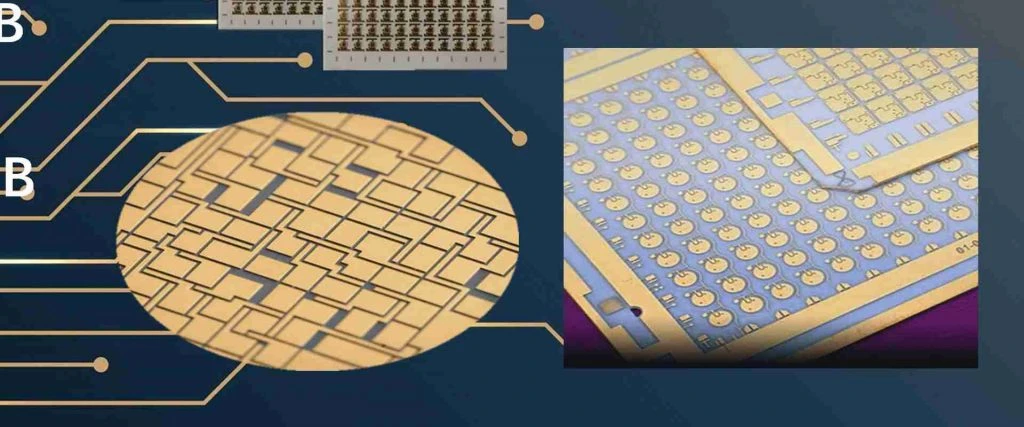
The application identifies the dominant risk; it does not select the material by itself.
33N, 35N or 85N may be evaluated where thermal stability and PTH reliability are explicit program inputs. Final selection follows the controlled specification and qualification plan.
Polyimide systems may suit electronics exposed to elevated temperature, vibration and long service requirements when the actual mission profile and acceptance tests are defined.
High-temperature polyimide can be considered for repeated thermal exposure, but connector wear, planarity, copper, assembly and fixture conditions remain separate design inputs.
45N offers a 175°C Tg multifunctional epoxy option when an epoxy process is appropriate and pure polyimide is not a design requirement.
37N, 38N, 47N or 49N can address rigid-flex bonding or heat-sink attachment when the resin-flow window and bond geometry are released together.
55NT or 85NT may reduce in-plane expansion and board weight, while solder-joint life and package interaction still require assembly-level validation.
Selection and RFQ guide
Start with the failure mode, then release material and manufacturing evidence together.
Use the program temperature profile, PTH geometry, flame requirement, layer count and supplier product positioning to compare the three 250°C Tg systems. Do not select one from Tg alone.
Consider 45N when a 175°C Tg multifunctional epoxy and conventional FR-4 lamination route match the design. Compare its role with current Isola material options, then confirm assembly profile and finished-board acceptance before treating it as the lower-complexity choice.
Use these for polyimide rigid-flex bonding or heat-sink attachment when minimal, uniform resin flow is required. Release flow target, vacuum, bond area and cavity geometry with the stackup.
Use the required lamination temperature, Tg, base-laminate compatibility and flow window to choose between the epoxy systems. The finished joint, not the prepreg name, is the acceptance object.
Choose the epoxy or polyimide aramid system from the thermal requirement, then validate registration, package CTE, assembly profile, support and mechanical constraints at board and system level.
Send ODB++ or Gerber data, drill files, fabrication drawing, exact material and datasheet revision, stackup, copper and thickness, impedance table, low-flow geometry where used, assembly profile, quantities, revision status and required material, coupon, microsection or dimensional evidence.
FAQ
Material selector
Use supplier-published facts to shortlist a family, then confirm the exact datasheet and construction in the RFQ.
RFQ coordination
For international sourcing, keep the product designation, datasheet revision, drawing, evidence and change-control language identical across design, procurement and manufacturing.
Defines the approved product, thermal or dimensional requirement, allowed substitutions and system-level qualification.
Confirms the current product form, availability, approved source, lot documentation and commercial assumptions before release.
Maps the selected material into stackup, resin-flow, lamination, drilling, inspection and finished-board acceptance inputs.
Owns assembly profile, package interaction, environmental validation and end-equipment compliance using the agreed board evidence.
Send the exact Arlon product and datasheet revision, stackup, drill data, low-flow geometry where applicable, assembly profile and required evidence. Capability, availability and quote are confirmed after technical review.