

Manufacturing defects in printed circuit boards can paralyze a production line, but the true differentiator between a reliable partner and a risky vendor is how they handle those failures. 8d problem solving pcb methodologies provide a structured, discipline-based framework to identify root causes, implement containment, and prevent recurrence. For procurement leads and engineers, demanding an 8D report is not just about paperwork; it is the primary mechanism for ensuring long-term reliability and process maturity. At APTPCB (APTPCB PCB Factory), we utilize these disciplines to transform isolated quality events into permanent process improvements, ensuring your supply chain remains robust.
When 8d problem solving pcb is the right approach (and when it isn’t)
Understanding the scope of a quality issue is the first step in applying the correct resolution strategy.
While 8d problem solving pcb is a powerful tool, it is resource-intensive and should be deployed strategically rather than universally. If a single board arrives with a cosmetic scratch due to mishandling during shipping, a simple RMA (Return Merchandise Authorization) and replacement is sufficient. However, if you detect a 5% yield drop at the In-Circuit Test (ICT) stage due to open vias, or if a field failure occurs involving delamination under thermal stress, the 8D process is mandatory.
Use 8D when:
- Systemic Failures: The defect rate exceeds the agreed Acceptable Quality Limit (AQL).
- Safety Criticality: The PCB is used in automotive, medical, or aerospace applications where failure implies liability.
- Unknown Root Cause: The defect cannot be immediately explained by a simple operator error.
- Recurring Issues: A problem previously thought "fixed" has reappeared in a new batch.
Do not use 8D when:
- One-off Logistics Issues: Damage clearly caused by the carrier.
- Design Errors: If the failure is due to a layout error (e.g., missing net connection in Gerber), this requires a design revision, not a manufacturing root cause analysis.
- Minor Cosmetic Deviations: Issues that do not affect form, fit, or function and are within IPC Class 2 allowables.
Specs & requirements (before quoting)
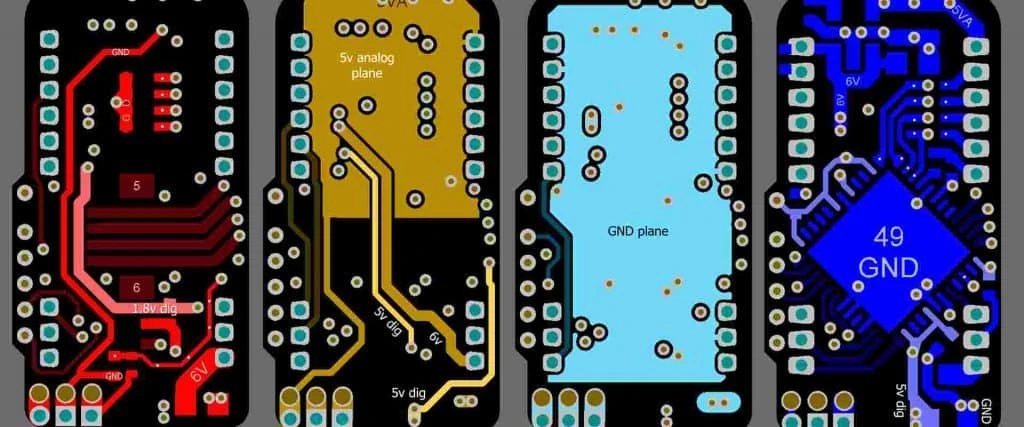
To enable effective 8d problem solving pcb later in the lifecycle, you must establish clear baselines during the initial quoting phase. Without precise specifications, a supplier cannot determine if a deviation has actually occurred.
- IPC Classification: Clearly state IPC-A-600 Class 2 or Class 3. This defines the "pass/fail" criteria for defects like voiding or plating thickness.
- Base Material Data: Specify the exact laminate (e.g., FR4 Tg170, Rogers 4350B). Generic requests like "Standard FR4" make root cause analysis difficult because resin properties vary.
- Traceability Level: Require lot codes or QR codes on the PCB. You cannot solve a problem if you cannot identify which production batch the bad board came from.
- Solderability Standards: Define the preservation time and method (e.g., HASL, ENIG) and the required shelf life (6 vs. 12 months).
- Bow and Twist Tolerances: Set a percentage (usually <0.75% for SMT). Warpage issues are common 8D triggers during assembly.
- Impedance Control: If applicable, provide the target impedance (e.g., 50Ω ±10%) and the specific layer stackup.
- Via Plugging/Tenting: Explicitly state if vias must be fully plugged (IPC-4761 Type VII) or just tented. Chemical entrapment in open vias is a frequent root cause of corrosion.
- Cleanliness Requirements: Specify ionic contamination limits (e.g., <1.56 µg/cm² NaCl equivalent) to prevent electrochemical migration.
- Cross-Sectioning: Require microsection coupons for every production lot to verify plating integrity.
- Electrical Testing: Mandate 100% Netlist testing (Flying Probe or Bed of Nails) to rule out shorts/opens before shipping.
- Visual Inspection: Define magnification levels for final inspection (usually 10x or 40x).
- Documentation Retention: The supplier must keep production records (travelers) for at least 2-5 years to facilitate retrospective analysis.
Hidden risks (root causes & prevention)
Even with perfect specifications, the absence of a robust 8d problem solving pcb culture introduces hidden risks that only manifest during volume production.
The "Band-Aid" Fix Risk:
- Why it happens: Suppliers may rework a bad batch (e.g., manual touch-up of solder mask) without fixing the upstream process.
- Detection: The defect disappears for one batch but returns in the next.
- Prevention: Demand the "D7" (Prevent Recurrence) section of the 8D report to show process parameter changes, not just rework instructions.
Traceability Gaps:
- Why it happens: Lack of a digital Manufacturing Execution System (MES).
- Detection: The supplier cannot tell you if other batches used the same bad roll of copper foil.
- Prevention: Review their mes traceability tutorial or documentation to ensure they can link raw materials to finished serial numbers.
Measurement System Variation:
- Why it happens: The supplier’s test equipment is not calibrated or correlates poorly with your equipment.
- Detection: You fail boards that they passed.
- Prevention: Require a Gage R&R (Repeatability and Reproducibility) study as part of the 8D investigation.
Chemical Entrapment in Microvias:
- Why it happens: Aggressive plating chemistry gets trapped in small holes, causing "black pad" or open circuits later.
- Detection: Intermittent failures after thermal cycling.
- Prevention: Validate their rinsing and baking processes via microsection analysis.
Laminate Substitution:
- Why it happens: Supplier swaps to a cheaper "equivalent" material without notice.
- Detection: Changes in dielectric constant or thermal reliability (delamination).
- Prevention: Require a Certificate of Conformance (CoC) listing the specific material batch number for every shipment.
Incomplete Curing:
- Why it happens: Rushing the lamination press cycle to increase throughput.
- Detection: Board is soft or exhibits excessive Z-axis expansion.
- Prevention: Request Tg (Glass Transition Temperature) verification data in the 8D report.
Solder Mask Undercut:
- Why it happens: Over-developing the mask leads to slivers that flake off and cause shorts.
- Detection: Visual inspection reveals peeling mask edges.
- Prevention: Audit their exposure and developing parameters.
Drill Smear:
- Why it happens: Drill bits are used beyond their life cycle, generating heat that melts resin over the inner copper layers.
- Detection: Open circuits at inner layer interconnects.
- Prevention: Check their tool life management policy.
Validation plan (what to test, when, and what “pass” means)
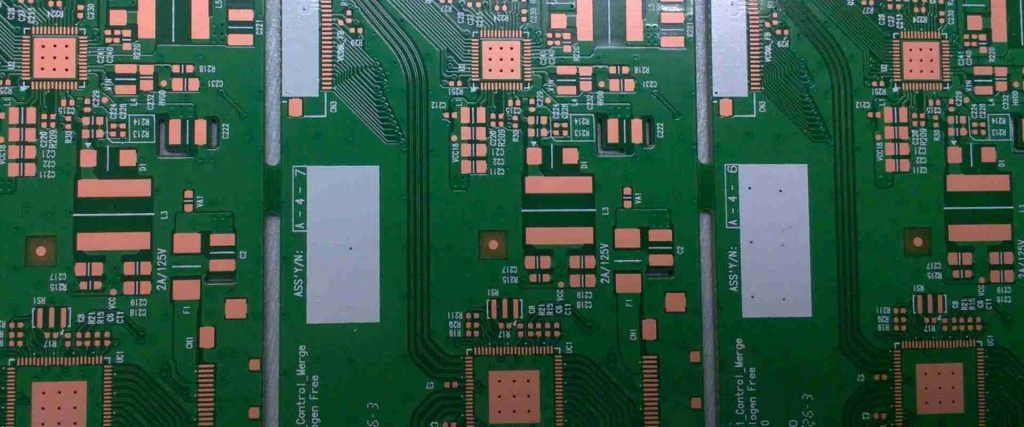
To verify that the 8d problem solving pcb actions were effective, you must execute a validation plan that goes beyond standard inspection.
Microsection Analysis (Post-Fix):
- Objective: Verify internal structural integrity after process changes.
- Method: Slice the PCB vertically, polish, and inspect under microscope.
- Acceptance: No plating cracks, no resin recession, copper thickness meets spec.
Thermal Stress Test (Solder Float):
- Objective: Simulate assembly reflow to check for delamination.
- Method: Float sample on molten solder (288°C) for 10 seconds (IPC-TM-650).
- Acceptance: No blistering, measles, or lifting of pads.
Interconnect Stress Test (IST):
- Objective: Accelerated life testing for vias.
- Method: Cycle temperature rapidly to fatigue the copper barrels.
- Acceptance: Resistance change <10% over 500 cycles.
Ionic Contamination Testing:
- Objective: Ensure cleaning processes removed reactive residues.
- Method: ROSE test or Ion Chromatography.
- Acceptance: <1.56 µg/cm² NaCl equivalent (or specific industry standard).
Solderability Test:
- Objective: Verify surface finish quality.
- Method: Dip and look / Wetting balance test.
- Acceptance: >95% coverage of the pad with fresh solder.
Impedance Verification (TDR):
- Objective: Confirm stackup and etching accuracy.
- Method: Time Domain Reflectometry on test coupons.
- Acceptance: Within ±10% of design value.
Peel Strength Test:
- Objective: Check adhesion of copper to laminate.
- Method: Pull copper strip at 90 degrees.
- Acceptance: Meets IPC-4101 spec for the chosen material (e.g., >0.8 N/mm).
X-Ray Inspection:
- Objective: Non-destructive view of layer registration.
- Method: X-ray drill alignment targets.
- Acceptance: Misregistration < tolerance (e.g., 3 mils).
Tape Test:
- Objective: Check solder mask adhesion.
- Method: Apply pressure-sensitive tape and rip off.
- Acceptance: No mask removal.
First Article Inspection (FAI):
- Objective: Full dimensional verification of the first batch post-8D.
- Method: Measure every dimension on the drawing.
- Acceptance: 100% compliance with tolerances.
Supplier checklist (RFQ + audit questions)
Use this checklist to vet APTPCB or any other vendor to ensure they are capable of genuine 8d problem solving pcb.
RFQ Inputs (What you send)
- Complete Gerber files (RS-274X or ODB++).
- Fabrication drawing with clear notes on Class 2/3.
- Stackup diagram with material definitions.
- Netlist file (IPC-356).
- Panelization requirements (if you need arrays).
- Impedance requirements list.
- Surface finish preference (ENIG, OSP, Immersion Silver).
- Color of Solder Mask and Silkscreen.
- Special requirements (Castellated holes, Edge plating).
- Volume and delivery schedule (EAU).
Capability Proof (What they provide)
- ISO 9001 / IATF 16949 certificates.
- UL file number (for flammability safety).
- Sample 8D report (redacted) to show depth of analysis.
- Equipment list (specifically testing labs).
- Material datasheets for proposed laminates.
- DFM (Design for Manufacturing) report identifying layout risks.
Quality System & Traceability
- Do they use an MES system for lot tracking?
- Can they trace a specific board to the operator who plated it?
- Do they have an internal lab for microsectioning?
- Is there a quality dashboard design or system to track real-time yields?
- How long are production travelers archived?
- What is their standard procedure for non-conforming material (MRB)?
Change Control & Delivery
- Do they have a formal PCN (Process Change Notification) policy?
- Will they notify you before changing raw material brands?
- What is the escalation path if an 8D is rejected?
- Do they offer buffer stock programs for verified builds?
- Is packaging defined (vacuum sealed, desiccant, HIC)?
- Do they perform outgoing quality audits (OQA)?
Decision guidance (trade-offs you can actually choose)
Implementing rigorous 8d problem solving pcb protocols involves trade-offs. You cannot maximize every variable simultaneously.
Speed vs. Root Cause Depth:
- If you prioritize Speed: Accept a "Containment" (D3) fix like 100% manual screening to keep the line moving.
- If you prioritize Reliability: Wait for the "Root Cause" (D4) and "Corrective Action" (D5) which might delay the next shipment by 3-5 days but ensures the issue is gone forever.
Cost vs. Testing Scope:
- If you prioritize Cost: Rely on standard E-test (Open/Short).
- If you prioritize Quality: Pay extra for Netlist testing and IPC Class 3 microsections, which catches latent defects standard tests miss.
Flexibility vs. Process Control:
- If you prioritize Flexibility: Allow the supplier to substitute "equivalent" materials to meet lead times.
- If you prioritize Consistency: Lock down the BOM (Bill of Materials), accepting that lead times may extend if that specific laminate is out of stock.
Sample Size vs. Confidence:
- If you prioritize Low NRE: Test coupons only at the corners of the panel.
- If you prioritize High Confidence: Add test coupons inside the array (sacrificing board real estate) to catch localized plating issues.
Standard vs. Custom Reporting:
- If you prioritize Efficiency: Accept the supplier's standard 8D format.
- If you prioritize Integration: Demand they use your specific portal or template, which may slow down their response time due to administrative overhead.
FAQ
What is the difference between an RMA and an 8D? An RMA is a logistical process to return bad goods and get credit or replacements. An 8D is an engineering process to investigate why the goods were bad and change the manufacturing process to prevent it from happening again.
How long should an 8D report take? Initial containment (D3) should be communicated within 24-48 hours to secure your production line. Full root cause analysis and permanent corrective action (D4-D7) typically takes 5-10 working days depending on the lab testing required.
Does every PCB failure require an 8D? No. Isolated, non-critical defects often just need a credit note. 8D is reserved for systemic issues, recurring trends, or failures that impact safety and reliability.
What if the supplier claims "Operator Error" as the root cause? Reject the 8D. "Operator Error" is a symptom, not a root cause. The true root cause is likely inadequate training, poor documentation, or a process design that allows errors to happen easily.
Can APTPCB handle complex 8D investigations? Yes. We maintain full in-house laboratory capabilities to perform cross-sectioning, thermal stress testing, and chemical analysis to support deep-dive investigations.
Why is traceability important for 8D? Without traceability, you cannot quarantine the specific "bad" batch. You might be forced to recall all inventory, which is expensive. Traceability allows for surgical containment of only the affected date codes.
What is the "D0" step in 8D? D0 is "Preparation and Plan." It involves recognizing that a problem exists, assessing the risk, and deciding if an 8D is actually necessary before assembling the team.
How does DFM prevent the need for 8D? Good DFM (Design for Manufacturing) catches layout issues that make defects likely (e.g., acid traps). Fixing these before production reduces the chance of manufacturing failures later.
Related pages & tools
- PCB Quality Control System
- Why this helps: Understand the baseline quality standards and certifications (ISO, UL) that support the 8D framework.
- Incoming Quality Control (IQC)
- Why this helps: Learn how raw materials are vetted before they ever reach the production line, preventing "garbage in, garbage out."
- Final Quality Inspection (FQA)
- Why this helps: See the final gatekeeping steps that should catch defects before they ship to your dock.
- PCB Fabrication Process
- Why this helps: A deep understanding of the manufacturing steps helps you critique the supplier's root cause analysis effectively.
- PCB Stencil Technologies
- Why this helps: Many assembly defects blamed on the PCB are actually stencil-related; knowing the difference is key to a valid 8D.
Conclusion
Effective 8d problem solving pcb is not about assigning blame; it is about engineering a more resilient supply chain. By defining clear requirements, understanding the hidden risks of manufacturing, and validating corrective actions with data, you transform quality failures into opportunities for process hardening.
At APTPCB, we view the 8D process as a collaborative tool for continuous improvement. To start a project with a partner who prioritizes transparency and root-cause resolution, prepare your Gerber files, fabrication drawings, and testing requirements. Send them for a DFM review today to ensure your next scale-up is built on a foundation of verified quality.