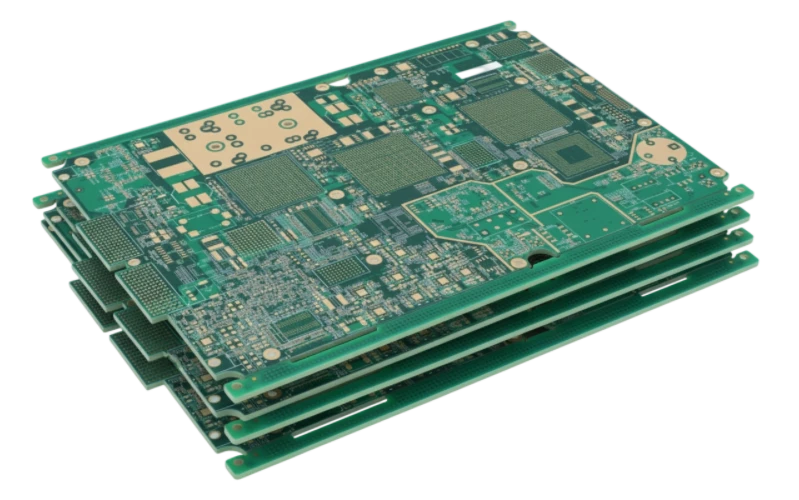
Adhesive Creep and Delamination

adhesive creep and delamination: what this playbook covers (and who it’s for)

This playbook is designed for senior hardware engineers, PCB procurement leads, and quality managers who are tasked with scaling Flexible or Rigid-Flex PCB designs where reliability is non-negotiable. Specifically, it addresses the twin failure modes of adhesive creep and delamination—issues that often pass initial prototyping but cause catastrophic field failures after thermal cycling or dynamic use.

You will get a structured decision-making framework to prevent material movement (creep) and layer separation (delamination). We move beyond basic IPC standards to define the specific material properties, stackup geometries, and process controls required to lock down your design. This guide translates complex material science into actionable procurement specifications.

At APTPCB (APTPCB PCB Factory), we see these issues frequently in designs transitioning from prototype to mass production. The goal of this guide is to help you define a "safe zone" for your product, ensuring that the adhesive systems used in your PCB stackup can withstand the mechanical and thermal stresses of your specific application environment.

When prioritizing adhesive creep and delamination is the right approach (and when it isn’t)

Focusing heavily on preventing adhesive creep and delamination is the correct strategy when your product faces harsh thermal or mechanical environments. If your device operates in a static, temperature-controlled environment (like consumer office electronics), standard FR4 rigid boards rarely suffer from these issues. However, for dynamic flex applications, the stakes change immediately.

This approach is critical when:

  • Dynamic Flexing is Required: Applications like robotics, hinges, or print heads where the flex circuit bends thousands or millions of times. Adhesive creep here leads to conductor misalignment and eventual fatigue failure.
  • High-Temperature Environments: Automotive under-hood or aerospace avionics where temperatures exceed 125°C. Acrylic adhesives soften significantly at these temperatures, leading to Z-axis expansion and delamination.
  • Complex Rigid-Flex Stackups: Designs with high layer counts in the rigid section. The mismatch in Coefficient of Thermal Expansion (CTE) between the adhesive (often high CTE) and the copper via barrel can rip the via apart (delamination) or cause the pads to "swim" (creep) during lamination.
  • High-Frequency Signals: When signal integrity is paramount, the moisture absorption of certain adhesives can change the dielectric constant, leading to impedance mismatches. Delamination creates air gaps that ruin signal performance.

It might be over-engineering when:

  • Purely Rigid Boards: Standard FR4 rigid boards use prepreg which cures hard; creep is rarely an issue unless the resin system is defective.
  • Static "Flex-to-Install": If the flex layer is bent once during assembly and never moves again, and the thermal environment is mild, standard low-cost adhesive systems are usually sufficient.
  • Short Lifecycle Products: Disposable consumer goods may not require the high-reliability adhesiveless materials often used to mitigate these risks.

Specs & requirements (before quoting)

Specs & requirements (before quoting)

To prevent adhesive creep and delamination, you must move from generic requests to specific material and process requirements. Define these 10 parameters clearly in your fabrication drawing or RFQ to ensure the manufacturer understands the reliability tier you require.

  • Adhesive System Type: Specify explicitly between Acrylic (standard, flexible, but high Z-axis expansion) and Epoxy (harder, less flexible, better thermal stability). For high-reliability rigid-flex, consider "Adhesiveless" copper clad laminates to eliminate the creep interface entirely.
  • Glass Transition Temperature (Tg): Define a minimum Tg for the adhesive system, not just the core material. If the adhesive Tg is too low (e.g., <50°C for some acrylics), it will soften and creep during standard operating temperatures.
  • Z-Axis CTE (Coefficient of Thermal Expansion): Set a maximum limit for Z-axis expansion (e.g., <200 ppm/°C above Tg). Excessive expansion is the primary cause of delamination in plated through-holes (PTH).
  • Peel Strength: Require a minimum peel strength (e.g., >1.0 N/mm or >8.0 lb/in) both "as received" and "after thermal stress." This validates the bond integrity against delamination.
  • Moisture Absorption Rate: Specify a maximum moisture absorption (e.g., <1.0% or <0.5% for high-speed). Moisture turns to steam during reflow, causing "popcorn" delamination.
  • Coverlay/Solder Mask Overlap: Define the minimum overlap of the coverlay onto the rigid section (for rigid-flex) or the pad interface. Insufficient overlap allows edge delamination; too much can cause stress risers.
  • Bending Radius Ratio: Specify the minimum bend radius relative to the thickness (e.g., 10:1 for static, 20:1+ for dynamic). Tighter bends force the adhesive to shear, promoting creep.
  • Plasma Cleaning Cycles: Mandate plasma cleaning (desmear) parameters in the process notes. This chemical/physical etching of the hole wall is critical for adhesive removal and preventing interconnect delamination.
  • Bake-Out Procedure: Require a pre-lamination and pre-reflow bake-out cycle (e.g., 120°C for 2-4 hours) to remove trapped moisture. This is the #1 defense against blistering and delamination.
  • Time to Delamination (T260/T288): For high-performance boards, request T260 or T288 data, which measures how long the material survives at 260°C or 288°C before separating.

Hidden risks (root causes & prevention)

Even with good specs, process variations can introduce adhesive creep and delamination risks during mass production. These "hidden" risks often don't show up in a sample of 5 prototypes but will plague a batch of 5,000.

  • Risk: Pad "Swimming" (Creep during Lamination)

    • Why it happens: Acrylic adhesives flow significantly under the high pressure and temperature of the lamination press. If the adhesive flow is uncontrolled, surface pads can physically shift (swim) relative to the drilled holes.
    • Detection: Misalignment of the annular ring in microsections; breakout of the hole on the pad.
    • Prevention: Use "No-Flow" or "Low-Flow" prepregs/adhesives for rigid-flex interfaces; optimize lamination press rise rates.
  • Risk: Via Barrel Cracks (Z-Axis Expansion)

    • Why it happens: Adhesives typically have a much higher CTE (100-400 ppm) than copper (17 ppm). When the board heats up, the adhesive expands rapidly, pulling the copper barrel apart.
    • Detection: Intermittent open circuits at high temperatures; cracks visible in cross-sectioning.
    • Prevention: Minimize adhesive thickness in the stackup; use adhesiveless base materials; restrict the use of coverlay in PTH areas.
  • Risk: Popcorn Effect (Moisture Induced Delamination)

    • Why it happens: Polyimide and acrylic adhesives are hygroscopic (absorb water). If not baked, the water turns to steam at 260°C (reflow), generating massive internal pressure that separates layers.
    • Detection: Visible blisters on the board surface after assembly; electrical shorts due to layer shifting.
    • Prevention: Strict moisture management controls (MSL packaging); mandatory pre-assembly baking.
  • Risk: Shielding Film Separation

    • Why it happens: In designs utilizing flex EMI shielding and grounding, the conductive adhesive on the shielding film may not bond well to certain coverlay types or surface finishes, especially under dynamic bending.
    • Detection: Peeling edges of the black shielding film; increase in EMI emissions.
    • Prevention: Verify compatibility between the shielding film adhesive and the underlying coverlay; ensure proper heat/pressure during film application.
  • Risk: Strain Hardening and Cracking

    • Why it happens: In folded rigid-flex strain mitigation designs, if the adhesive is too brittle (like some epoxies) or the bend is too tight, the adhesive can crack. Once the adhesive cracks, it creates a propagation path for the copper to crack.
    • Detection: Micro-cracks in the adhesive layer at the bend radius; eventual open circuits.
    • Prevention: Use flexible acrylics for dynamic bend areas (if thermal allows); ensure the neutral bend axis is centered on the copper.
  • Risk: Incomplete Curing (Soft Adhesive)

    • Why it happens: If the lamination cycle is too short or cool, the adhesive doesn't fully cross-link. It remains soft and gummy.
    • Detection: Extreme creep during soldering; smear during drilling that is impossible to clean.
    • Prevention: Differential Scanning Calorimetry (DSC) testing to verify degree of cure.
  • Risk: Capillary Action in Coverlay Openings

    • Why it happens: Adhesive can squeeze out (bleed) onto pads during lamination, acting as an insulator and preventing soldering.
    • Detection: "Black pad" appearance or non-wetting during SMT.
    • Prevention: Adjust coverlay drill/rout sizes to account for adhesive squeeze-out (typically 3-5 mils).
  • Risk: CTE Mismatch in Hybrid Stackups

    • Why it happens: Mixing FR4 rigid materials with Polyimide flex materials creates a warpage risk. The adhesive interface takes the brunt of this shear stress, leading to delamination.
    • Detection: Bow and twist of the PCB; separation at the rigid-flex interface.
    • Prevention: Use "Low-Flow" prepreg at the interface; balance the copper distribution to minimize warpage.

Validation plan (what to test, when, and what “pass” means)

Validation plan (what to test, when, and what “pass” means)

You cannot rely on visual inspection alone. To validate that your design is immune to adhesive creep and delamination, implement this testing plan during the NPI (New Product Introduction) phase.

  1. Thermal Shock Testing (The Stress Test)

    • Objective: Simulate rapid temperature changes to trigger CTE mismatch failures.
    • Method: Cycle boards between -40°C and +125°C (or higher) for 100-500 cycles (IPC-TM-650 2.6.7).
    • Acceptance: Change in resistance <10%; no visible delamination or blistering.
  2. Interconnect Stress Test (IST)

    • Objective: Specifically target via reliability and adhesive Z-axis expansion.
    • Method: Rapidly heat the internal coupons electrically to 150°C+ and cool down.
    • Acceptance: Survive 500+ cycles without barrel fatigue or separation.
  3. Solder Float Test (The "Popcorn" Check)

    • Objective: Verify moisture resistance and bond strength at reflow temps.
    • Method: Float sample on molten solder (260°C or 288°C) for 10 seconds (IPC-TM-650 2.4.13).
    • Acceptance: No blistering, measles, or delamination visible under 10x magnification.
  4. Peel Strength Verification

    • Objective: Confirm the adhesive bond quality of the raw material and the laminated stack.
    • Method: Perform a 90-degree peel test on test coupons (IPC-TM-650 2.4.8).
    • Acceptance: Meets spec (e.g., >1.0 N/mm); failure mode should be cohesive (material break) not adhesive (clean separation).
  5. Cross-Section Analysis (Microsectioning)

    • Objective: Inspect internal alignment and interface integrity.
    • Method: Slice the PCB vertically through vias and flex-rigid interfaces. Polish and inspect.
    • Acceptance: No adhesive smear on internal copper layers; no "nail-heading" of internal layers; no micro-voids in the laminate.
  6. Flexural Endurance (Dynamic Bend Test)

    • Objective: Validate the adhesive's ability to hold layers together under movement.
    • Method: Flex the circuit around a mandrel of specified radius for X cycles.
    • Acceptance: No increase in resistance; no delamination of the coverlay or shielding film.
  7. Glass Transition (Tg) Verification

    • Objective: Ensure the supplier used the correct adhesive/material.
    • Method: DSC (Differential Scanning Calorimetry) or TMA (Thermomechanical Analysis).
    • Acceptance: Tg value matches the datasheet of the specified material.
  8. Ionic Contamination Test

    • Objective: Ensure no chemical residues are trapped under the adhesive/coverlay.
    • Method: ROSE test or Ion Chromatography.
    • Acceptance: <1.56 µg/cm² NaCl equivalent (standard) or lower for high-reliability.

Supplier checklist (RFQ + audit questions)

Use this checklist to vet APTPCB or any other manufacturing partner. These questions reveal if they have the process control to manage adhesive creep and delamination.

RFQ Inputs (What you send)

  • Stackup Drawing: Clearly showing adhesive layers, thicknesses, and types (Acrylic vs. Epoxy vs. Prepreg).
  • Material Spec: "Adhesiveless Polyimide" vs. "Adhesive-based" explicitly stated.
  • Bend Radius: Defined for dynamic areas to allow DFM checks on adhesive stress.
  • Impedance Requirements: If controlled impedance is needed, adhesive thickness tolerance becomes critical.
  • Operating Temp: Max continuous operating temperature defined.
  • IPC Class: Class 2 (Standard) or Class 3 (High Reliability/Aerospace).
  • Desmear Requirement: Explicit note for plasma etch/desmear.
  • Bake Requirements: Pre-assembly bake time and temp specified.

Capability Proof (What they must show)

  • Lamination Press Control: Can they provide press cycle data (temp/pressure/vacuum profiles) for your specific build?
  • Plasma Etch Capability: Do they have in-house plasma cleaning equipment for desmearing acrylic adhesives?
  • Laser Drilling: Do they use UV/CO2 lasers capable of clean cutting without charring adhesives?
  • Registration Accuracy: What is their layer-to-layer registration tolerance (critical for preventing pad swimming issues)?
  • Material Stock: Do they stock high-reliability materials (e.g., DuPont Pyralux, Panasonic Felios) or generic alternatives?
  • Flex-Rigid Experience: Can they show examples of similar layer-count rigid-flex boards?

Quality System & Traceability

  • Cross-Section Reports: Will they provide microsection photos of every production batch?
  • TDR Reports: If impedance is controlled, do they test coupons on every panel?
  • Material Certs (CoC): Will they provide Certificates of Conformance for the laminate and adhesive films?
  • Moisture Control: Do they have a documented MSD (Moisture Sensitive Device) handling procedure?
  • X-Ray Inspection: Do they use X-Ray to check registration before drilling?
  • Flying Probe: Is 100% net list testing performed?

Change Control & Delivery

  • PCN Policy: Do they agree to issue a Process Change Notification (PCN) before changing adhesive brands?
  • Sub-tier Management: Do they control where their raw materials come from?
  • Packaging: Do they ship in vacuum-sealed moisture barrier bags with desiccant and HIC (Humidity Indicator Cards)?
  • Yield Data: Are they willing to share yield data related to delamination fallout?

Decision guidance (trade-offs you can actually choose)

Engineering is about trade-offs. You cannot have maximum flexibility, maximum thermal resistance, and minimum cost simultaneously. Here is how to navigate the decisions around adhesive creep and delamination.

  • Adhesiveless vs. Adhesive-Based Laminates:

    • If you prioritize reliability and thinness: Choose Adhesiveless. It eliminates the adhesive interface entirely, removing the weakest link for creep and Z-axis expansion. It is thinner and better for high-frequency signals.
    • If you prioritize cost: Choose Adhesive-Based. It is the industry standard for legacy designs and simple flex. Just be aware of the thermal limits.
  • Acrylic vs. Epoxy Adhesives:

    • If you prioritize dynamic flexibility: Choose Acrylic. It is more flexible and withstands bending better. However, it has a high Z-axis CTE and is prone to smear.
    • If you prioritize thermal stability and bond strength: Choose Epoxy. It is harder, drills cleaner, and holds up better in high-temp assembly, but it is more brittle for dynamic flexing.
  • Low-Flow vs. Standard Prepreg (for Rigid-Flex):

    • If you prioritize preventing "swim" and squeeze-out: Choose Low-Flow Prepreg. It stays put during lamination, keeping the rigid-flex interface clean.
    • If you prioritize gap filling: Choose Standard/High-Flow. If you have heavy copper layers (2oz+), you need flow to fill the gaps, or you risk voids (which lead to delamination).
  • Thick vs. Thin Coverlay Adhesive:

    • If you prioritize encapsulation: Choose Thicker Adhesive (e.g., 50um). It ensures copper traces are fully encapsulated without air gaps.
    • If you prioritize flexibility: Choose Thinner Adhesive (e.g., 15-25um). It reduces the overall stiffness of the flex section.
  • Shielding Film vs. Copper Layers:

    • If you prioritize flexibility and thinness: Choose Shielding Film. It is lightweight and flexible. Watch out for grounding resistance and film delamination.
    • If you prioritize shielding effectiveness: Choose Solid Copper Layers. It is robust and won't delaminate easily, but it makes the flex stiff and prone to cracking.

FAQ

Q: Can I fix delamination after it happens? A: No. Once layers separate, the electrical and mechanical integrity is compromised. You cannot "re-laminate" a finished board. The only solution is prevention.

Q: Why does my flex PCB pass electrical test but fail in the field? A: Electrical tests (Flying Probe) are static. They don't stress the adhesive. Field failures are often due to "creep" (slow movement over time) or fatigue from dynamic bending, which standard E-tests don't catch.

Q: Is adhesive creep only a problem for Flex PCBs? A: It is most common in Flex and Rigid-Flex due to the materials used (Acrylic/Polyimide). However, poorly cured FR4 or incorrect prepreg selection in Rigid boards can also exhibit creep-like symptoms under high stress.

Q: How does moisture affect adhesive creep? A: Moisture acts as a plasticizer, softening the adhesive and lowering its Tg. This makes the adhesive more prone to moving (creeping) under stress and drastically increases the risk of delamination during reflow.

Q: What is the best way to prevent barrel cracks in Rigid-Flex? A: Use adhesiveless materials for the flex cores and minimize the use of adhesive-based coverlays inside the plated through-holes. Restrict coverlay to the flex areas only (bikini cut).

Q: Does gold plating (ENIG) cause delamination? A: Not directly, but the chemical process (Nickel/Gold) is aggressive. If the adhesive bond is weak or the lamination had voids, the plating chemicals can seep in and force the layers apart (chemical attack).

Q: How do I specify "No Adhesive" in the hole wall? A: Use a "Bikini Cut" or "Window" coverlay design. The coverlay stops short of the rigid section, so the plated holes in the rigid section only go through FR4 and copper, not the soft acrylic adhesive.

Q: What is the typical shelf life of a Flex PCB regarding delamination risk? A: If sealed properly, 1-2 years. However, once opened, they absorb moisture within hours. Always bake flex boards if they have been exposed to air for more than an hour before reflow.

  • Rigid-Flex PCB Capabilities: Deep dive into the stackup geometries that minimize stress and prevent interface separation.
  • Flex PCB Materials: Understand the difference between adhesive-based and adhesiveless laminates for your application.
  • PCB Quality Control: See how we use microsectioning and thermal stress tests to validate bond integrity.
  • DFM Guidelines: Design rules to ensure your coverlay and stiffener designs don't create stress points that lead to peeling.
  • PCB Material Selection: Explore high-Tg and low-CTE material options from Isola, Rogers, and DuPont.

Request a quote

Ready to validate your design against adhesive creep and delamination risks? Request a Quote from APTPCB today. Our engineering team performs a comprehensive DFM review on every file to identify potential stackup risks, material incompatibilities, and lamination concerns before we cut a single sheet of copper.

For the most accurate DFM and pricing, please provide:

  • Gerber Files (RS-274X)
  • Stackup Drawing (Specify adhesive types and thicknesses)
  • Fabrication Notes (Include Tg, Peel Strength, and IPC Class requirements)
  • Volume & Lead Time (Prototyping vs. Mass Production)

Conclusion

Managing adhesive creep and delamination is the difference between a reliable product and a costly recall. By selecting the right material systems (like adhesiveless polyimide), defining strict process controls (plasma, bake-out), and validating with thermal shock and peel tests, you can eliminate these failure modes. Use the checklist and specs in this guide to hold your supplier accountable, ensuring your Flex and Rigid-Flex designs perform flawlessly in the real world.