
Modern electronics demand thinner profiles, higher signal speeds, and greater thermal endurance, driving the industry toward adhesiveless copper FPC technology. Unlike traditional flexible laminates that use an acrylic or epoxy adhesive to bond copper to polyimide, adhesiveless materials bond the metal directly to the base film. This structural difference unlocks capabilities essential for HDI (High Density Interconnect), high-frequency applications, and rigid-flex constructions. This guide serves as a comprehensive resource for engineers and procurement teams navigating the complexities of adhesiveless flexible printed circuits.
Key Takeaways
- Thinner Profile: Eliminating the adhesive layer reduces total thickness, allowing for tighter bend radii and smaller device form factors.
- Superior Thermal Performance: Without the thermal barrier of acrylic adhesive, heat dissipates more efficiently, and the material can withstand higher operating temperatures.
- Improved Signal Integrity: Adhesiveless laminates offer lower Dielectric Constant (Dk) and Dissipation Factor (Df), making them ideal for high-speed data transmission.
- Better Dimensional Stability: The absence of a "floating" adhesive layer reduces material movement during processing, which is critical for fine-pitch etching.
- Via Reliability: Laser drilling is cleaner and plating adhesion is stronger (Z-axis expansion is lower) compared to adhesive-based stacks.
- Cost Consideration: While raw material costs are higher than adhesive-based options, the yield improvements in HDI designs often offset the initial expense.
- Validation is Key: Standard peel tests differ for adhesiveless materials; understanding IPC-TM-650 test methods is mandatory for quality assurance.
What adhesiveless copper FPC really means (scope & boundaries)
To fully appreciate the benefits listed above, we must first define the physical construction and manufacturing boundaries of this material class.
Adhesiveless copper FPC refers to a flexible copper clad laminate (FCCL) where the conductive copper layer is attached to the dielectric polyimide (PI) core without an intervening adhesive layer. In traditional "3-layer" flex materials, an acrylic or epoxy adhesive (typically 12–25 microns thick) bonds the copper. In "2-layer" adhesiveless materials, the copper is either cast onto the polyimide, or the polyimide is cast onto the copper, or the copper is sputtered and plated onto the film.
This distinction is not merely semantic; it fundamentally changes the mechanical and electrical behavior of the circuit. APTPCB (APTPCB PCB Factory) utilizes adhesiveless materials primarily for designs requiring high-reliability vias and fine-line circuitry. The absence of adhesive eliminates the "smear" often caused by drilling through acrylics, which can insulate inner layers and cause open circuits. Furthermore, acrylic adhesives have a low Glass Transition Temperature (Tg), often softening around 40°C–60°C, whereas adhesiveless polyimide maintains structural integrity well above 200°C.
Scope-wise, this technology is the standard for:
- Rigid-Flex PCBs: Where Z-axis expansion must be minimized to prevent plated through-hole (PTH) failure.
- Chip-on-Flex (COF): Where wire bonding requires a rigid, non-compressible surface that adhesives cannot provide.
- High-Frequency Circuits: Where the electrical properties of adhesives would degrade signal quality.
adhesiveless copper FPC metrics that matter (how to evaluate quality)
Once you understand the structure, you need to measure its performance against specific engineering requirements using quantifiable metrics.
Evaluating adhesiveless copper FPC requires looking beyond standard FR4 parameters. The interaction between the copper and the polyimide is direct, meaning the properties of the polyimide film itself dominate the performance.
| Metric | Why it matters | Typical Range / Factors | How to Measure |
|---|---|---|---|
| Peel Strength | Determines how well the copper sticks to the polyimide. Critical for reliability during thermal shock. | > 0.8 N/mm (Standard) > 1.0 N/mm (High Performance) |
IPC-TM-650 2.4.9 (90° Peel Test) |
| Dimensional Stability | Measures material shrinkage or expansion after etching and heating. Vital for multilayer registration. | < 0.05% (Method B) Adhesiveless is significantly more stable than adhesive types. |
IPC-TM-650 2.2.4 |
| Dielectric Constant (Dk) | Affects impedance control. Lower Dk allows for thinner dielectrics for the same trace width. | 3.2 – 3.4 (at 1 MHz to 10 GHz) | IPC-TM-650 2.5.5.3 |
| Dissipation Factor (Df) | Signal loss. Critical for RF and high-speed digital signals. | 0.002 – 0.004 | IPC-TM-650 2.5.5.3 |
| Glass Transition (Tg) | The temperature where the material turns from rigid to soft. Adhesiveless relies on PI Tg. | > 220°C (Polyimide base) Adhesive types are limited by adhesive Tg (~50°C). |
DSC (Differential Scanning Calorimetry) |
| Moisture Absorption | Polyimide absorbs water, which can cause delamination during reflow (popcorning). | 0.8% – 2.0% (depending on PI thickness) | IPC-TM-650 2.6.2.1 |
| Tensile Modulus | Stiffness of the material. Important for dynamic flexing applications. | 3 – 6 GPa | ASTM D882 |
How to choose adhesiveless copper FPC: selection guidance by scenario (trade-offs)
Knowing the metrics helps, but real-world application dictates the choice between different manufacturing methods (Casting vs. Sputtering) and copper types.
When selecting materials for adhesiveless copper FPC, engineers must balance flexibility, current carrying capacity, and signal integrity. The two primary methods of creating adhesiveless laminates are Cast-on-Copper (liquid PI applied to copper foil) and Sputtering/Plating (copper seeded onto PI film).
Scenario 1: Dynamic Flexing (The Hinge Application)
- Requirement: The FPC must bend millions of times without cracking.
- Recommendation: Use Rolled Annealed (RA) Copper with a Cast-on-Copper adhesiveless laminate.
- Trade-off: RA copper has lower tensile strength than Electro-Deposited (ED) copper but superior ductility.
- Why: The grain structure of RA copper is horizontal, allowing it to stretch. Adhesiveless construction prevents the "buckling" that occurs when soft adhesives shift under stress.
Scenario 2: High-Density Interconnect (HDI) / Fine Pitch
- Requirement: Trace widths below 50µm (2 mil) and microvias.
- Recommendation: Use Sputtering/Plating based adhesiveless materials.
- Trade-off: Higher material cost and thinner copper limits current capacity.
- Why: Sputtered copper layers can be extremely thin (e.g., 2µm–9µm), allowing for precise etching of very fine lines with minimal undercut.
Scenario 3: High-Speed / RF Communication
- Requirement: Low signal loss at 5GHz+.
- Recommendation: Low-Dk/Low-Df Polyimide (LCP or Modified PI) adhesiveless laminate.
- Trade-off: Significantly higher cost and more difficult processing parameters (lamination temp).
- Why: Adhesives act as a capacitor, degrading signals. Removing them is mandatory for strict impedance control.
Scenario 4: High-Temperature Sensors (Automotive/Aerospace)
- Requirement: Operating environment > 150°C.
- Recommendation: Standard adhesiveless PI with heavy copper.
- Trade-off: Stiffness increases; not suitable for dynamic flexing.
- Why: Acrylic adhesives fail/melt at these temperatures. Adhesiveless PI is stable up to 260°C for short durations.
Scenario 5: Rigid-Flex Construction
- Requirement: Reliability of plated through-holes (PTH) connecting rigid and flex layers.
- Recommendation: Adhesiveless is mandatory.
- Trade-off: None (Adhesive-based is generally prohibited for high-layer rigid-flex).
- Why: The high Z-axis expansion of acrylic adhesive breaks copper barrels in vias during reflow soldering.
Scenario 6: Static Install (Bend-to-Install)
- Requirement: Low cost, bent once during assembly.
- Recommendation: Electro-Deposited (ED) Copper on adhesiveless (or consider adhesive-based if specs allow).
- Trade-off: ED copper is brittle and will crack if bent repeatedly.
- Why: If the performance benefits of adhesiveless (thermal/thinness) are needed but dynamic flexing is not, ED copper is a cost-effective option.
Adhesive vs Adhesiveless: How to choose
If your design requires UL ratings for high temperature, impedance control, or has more than 4 layers, choose adhesiveless. If you are building a simple single-sided LED strip or a connector cable that operates at room temperature with loose tolerances, adhesive-based laminates may save 20-30% on material costs.
adhesiveless copper FPC implementation checkpoints (design to manufacturing)
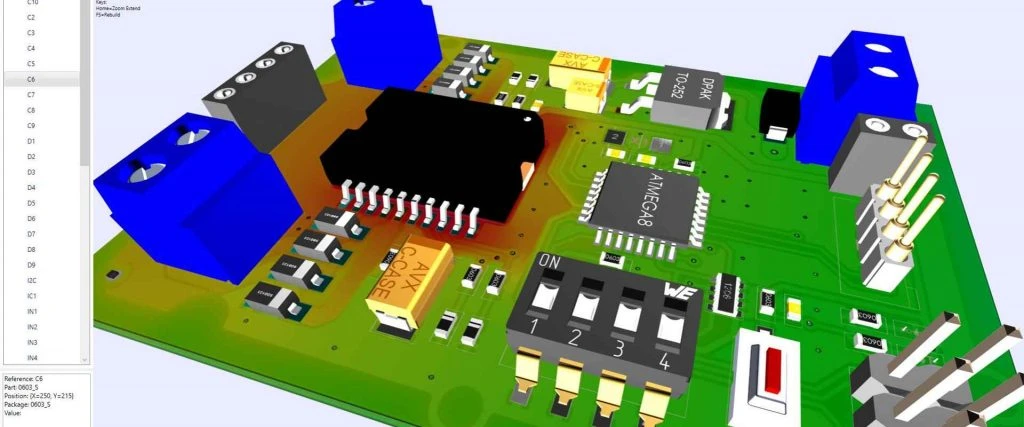
After selecting the material, the focus shifts to the manufacturing floor where specific process controls ensure the theoretical benefits are realized.
Implementing adhesiveless copper FPC requires a modified fabrication process compared to standard rigid PCBs or adhesive-based flex. APTPCB follows strict protocols to manage the dimensional instability inherent in thin materials.
Material Pre-Baking:
- Action: Bake polyimide materials for 2-4 hours at 120°C-150°C before processing.
- Risk: Moisture trapped in the PI will cause delamination (blistering) during high-temp lamination or soldering.
- Acceptance: Moisture content < 0.2%.
Drilling (Laser vs. Mechanical):
- Action: Use UV laser for vias < 150µm.
- Risk: Adhesiveless materials are tougher; mechanical drills wear out faster, causing burrs.
- Acceptance: Clean hole walls with no fibers protruding.
Desmear / Plasma Treatment:
- Action: Plasma cleaning is critical for adhesiveless PI to roughen the surface for plating.
- Risk: Without adhesive, the copper plating relies entirely on mechanical interlocking with the PI. Poor plasma treatment = poor peel strength.
- Acceptance: Pass standard tape test after plating.
Copper Plating:
- Action: Use ductile copper plating baths.
- Risk: Brittle plating will crack during the flexing of the finished product.
- Acceptance: Elongation > 15% for the plated copper.
Photoresist & Etching:
- Action: Utilize tension-controlled transport systems.
- Risk: Thin adhesiveless films (e.g., 12.5µm PI) wrinkle easily, leading to etching defects.
- Acceptance: Line width tolerance ±10% or better.
Coverlay Alignment:
- Action: Account for material shrinkage (scaling factors) in the design data.
- Risk: Adhesiveless materials shrink after etching. If the coverlay is cut to 1:1 Gerber data, pads will be covered.
- Acceptance: Registration accuracy within ±50µm.
Surface Finish:
- Action: ENIG (Electroless Nickel Immersion Gold) is preferred.
- Risk: HASL (Hot Air Solder Leveling) involves thermal shock and mechanical stress that can warp thin flex circuits.
- Acceptance: Flat pads with uniform gold thickness.
Stiffener Application:
- Action: Use thermosetting adhesive for stiffeners, not pressure-sensitive adhesive (PSA) if reflow is required.
- Risk: Stiffener detachment during assembly.
- Acceptance: No voids or bubbles under the stiffener.
For more on how these steps integrate into complex builds, review our capabilities in Rigid-Flex PCB manufacturing.
adhesiveless copper FPC common mistakes (and the correct approach)
Even with a solid plan, specific pitfalls can derail production if the unique properties of adhesiveless laminates are ignored.
Mistake 1: Ignoring Grain Direction
- Error: Placing the circuit on the panel without regarding the copper grain direction (Machine Direction vs. Transverse Direction).
- Consequence: Cracks form immediately upon bending.
- Correction: For dynamic flex, conductors must run parallel to the grain direction (Machine Direction) of the RA copper.
Mistake 2: Assuming "Adhesiveless" Means "Zero Adhesive Anywhere"
- Error: Designers assume the coverlay (insulation layer) is also adhesiveless.
- Consequence: Unexpected Z-axis expansion or adhesive squeeze-out on pads.
- Correction: While the base laminate is adhesiveless, standard coverlays do use adhesive. For pure adhesiveless stacks, "bondply" or photosensitive covercoats must be used.
Mistake 3: Over-Etching Fine Lines
- Error: Using standard rigid PCB etch compensation factors.
- Consequence: Traces become too thin or lift off the polyimide because the bond is purely mechanical/chemical, not adhesive-based.
- Correction: Use precise compensation factors tailored for thin copper (e.g., 12µm or 18µm) on PI.
Mistake 4: Neglecting Tear Stops
- Error: Designing sharp internal corners or slits without reinforcement.
- Consequence: The polyimide tears easily once a rift starts.
- Correction: Add copper tear stops or drilled holes at the end of slits to distribute stress.
Mistake 5: Incorrect Impedance Calculations
- Error: Using the Dk of "Flex" (often averaged at 3.8-4.0) instead of the specific Dk of the adhesiveless PI (3.2-3.4).
- Consequence: Impedance mismatch, signal reflection.
- Correction: Use the specific datasheet values for the adhesiveless core.
Mistake 6: Inadequate Baking Before Assembly
- Error: Skipping the bake cycle before soldering components.
- Consequence: "Popcorning" or delamination.
- Correction: Mandatory bake at 120°C for 2-4 hours immediately before assembly.
For further reading on avoiding design errors, consult our DFM Guidelines.
adhesiveless copper FPC FAQ (cost, lead time, materials, testing, acceptance criteria)
Below are answers to specific questions arising from these common mistakes and procurement challenges.
Q: What is the cost difference between adhesive and adhesiveless copper FPC? A: Adhesiveless laminates typically cost 30% to 50% more than adhesive-based laminates per square meter. However, for HDI or rigid-flex designs, the improved manufacturing yield often makes the total unit cost comparable or even lower due to fewer scrapped parts.
Q: How does lead time compare for adhesiveless FPC production? A: Lead times are generally similar (standard 5-10 days for prototypes). However, if specialized adhesiveless materials (like thick copper >2oz or ultra-thin 5µm copper) are required, material procurement can add 1-2 weeks.
Q: Can I use adhesiveless FPC for high-frequency (5G) applications? A: Yes, it is the preferred choice. You should specify "Low-Dk Adhesiveless Polyimide" or Liquid Crystal Polymer (LCP) variants to minimize signal loss. Standard adhesive flex is unsuitable for frequencies above 1-2 GHz.
Q: What are the acceptance criteria for visual inspection of adhesiveless FPC? A: We follow IPC-6013 Class 2 or Class 3. Key criteria include: no blistering between copper and PI, no exposed copper where coverlay should be, and hole breakout must not exceed 90° (Class 2) or be present at all (Class 3).
Q: Is RA (Rolled Annealed) copper always better than ED (Electro-Deposited) for adhesiveless flex? A: Not always. RA is better for dynamic flexing (bending movement). ED copper is often superior for fine-line etching and static applications because it has a finer grain structure that etches more cleanly.
Q: How do I specify adhesiveless material in my fabrication notes? A: Explicitly state: "Material: Adhesiveless Copper Clad Laminate (2-layer FCCL)." Specify the copper thickness (e.g., 18µm) and Polyimide thickness (e.g., 25µm). Do not just say "Polyimide Flex."
Q: Does adhesiveless FPC require special surface finishes? A: No, it supports all standard finishes (ENIG, ENEPIG, Immersion Silver, OSP). However, ENIG is highly recommended to maintain planarity on the thin, flexible surface.
Q: What is the minimum bend radius for adhesiveless copper FPC? A: It depends on the total thickness. A general rule is 6x to 10x the total thickness for static bends, and 20x to 40x for dynamic bends. Adhesiveless types allow for tighter bends than adhesive types due to reduced overall thickness.
For specific material data, you can explore our Flex PCB capabilities page.
adhesiveless copper FPC glossary (key terms)
To navigate these answers effectively, a clear understanding of the specialized terminology is required.
| Term | Definition |
|---|---|
| FCCL | Flexible Copper Clad Laminate. The base material for FPC. |
| 2-Layer FCCL | Industry term for adhesiveless laminate (Copper + Polyimide). |
| 3-Layer FCCL | Industry term for adhesive-based laminate (Copper + Adhesive + Polyimide). |
| Polyimide (PI) | A high-temperature engineering polymer used as the dielectric base. |
| Coverlay | The insulating top layer (usually PI + Adhesive) laminated over etched circuits. |
| Bondply | An adhesive layer used to bond multiple flex layers together in a multilayer stack. |
| Sputtering | A vacuum deposition method to apply a thin seed layer of copper onto polyimide. |
| Casting | A manufacturing method where liquid polyimide is cured directly onto copper foil. |
| RA Copper | Rolled Annealed Copper. Treated to align grains horizontally for flexibility. |
| ED Copper | Electro-Deposited Copper. Formed by electrolysis; vertical grain structure. |
| Z-Axis Expansion | Thermal expansion in the thickness direction. High expansion causes via failure. |
| I-Beam Effect | A design error where traces on top and bottom layers overlap exactly, increasing stiffness and risk of cracking. |
| Bikini Cut | A coverlay design where the coverlay only covers the flexible section, leaving rigid sections exposed (in rigid-flex). |
| Springback | The tendency of a flexible circuit to return to its flat state after bending. |
Conclusion (next steps)
Adhesiveless copper FPC is no longer a niche material reserved for aerospace; it is the backbone of modern, compact, and high-performance electronics. By eliminating the adhesive layer, designers gain thermal reliability, signal integrity, and the ability to miniaturize beyond the limits of traditional laminates. However, success requires respecting the material's unique processing needs—from grain direction to plasma treatment.
When you are ready to move from concept to production, APTPCB is equipped to handle the intricacies of adhesiveless fabrication.
To get an accurate DFM review and quote, please provide:
- Gerber Files: RS-274X format preferred.
- Stackup Diagram: Clearly label "Adhesiveless" core and copper weights.
- Drill Chart: Distinguish between laser microvias and mechanical through-holes.
- Application Type: Static vs. Dynamic (helps us validate copper selection).
- Surface Finish: ENIG is recommended.
Contact our engineering team today to validate your design or upload your files for a Quick Turn PCB Quote.