
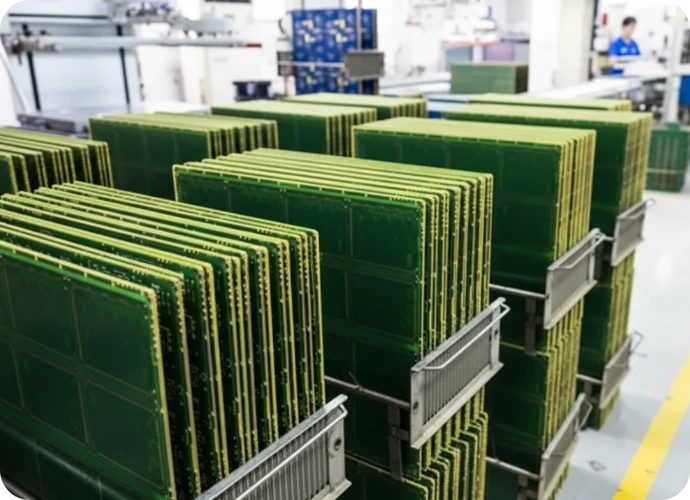
Agricultural weather electronics operate in one of the most demanding IoT environments. Weather stations, soil monitoring nodes, irrigation controllers, and remote agricultural gateways must collect accurate data while exposed to humidity, condensation, temperature cycling, fertilizer residue, UV radiation, dust, and limited maintenance access.
An agricultural weather PCB is therefore not defined only by its circuit function. Reliability depends on the complete engineering decision chain:
- Environmental conditions during the product lifetime
- PCB material and stackup selection
- Moisture and corrosion protection strategy
- Wireless performance requirements
- Manufacturing process control
- Validation evidence before field deployment
The most reliable projects answer three questions before production:
- What environmental stresses will the PCB experience?
- Which manufacturing controls reduce the highest failure risks?
- What supplier evidence proves production readiness?
This guide provides engineers, product managers, and procurement teams with a practical framework for designing and sourcing agricultural weather PCB assemblies.
When does an agricultural weather PCB require ruggedized manufacturing?
Agricultural electronics vary significantly in exposure level and replacement cost. A seasonal prototype and a five-year autonomous sensor network should not receive the same PCB specification.
| Application condition | Recommended approach | Main reason |
|---|---|---|
| Multi-year autonomous weather stations | High-reliability PCB materials, protective coating, environmental validation | Field repair is difficult and lost data has operational impact |
| Solar-powered agricultural IoT PCB nodes | Low-leakage design, moisture-resistant materials, efficient power architecture | Battery life depends on stable electrical performance |
| Chemical exposure from fertilizers or pesticides | Chemical-resistant coating and contamination controls | Agricultural chemicals accelerate corrosion mechanisms |
| Short-term seasonal prototypes | Standard industrial PCB approach with future ruggedization planning | Lower replacement cost allows simpler validation |
| Sealed enclosure with controlled environment | Standard PCB specifications may be sufficient | Environmental stress is reduced by system design |
A rugged agricultural weather PCB is typically justified when a failure requires expensive field visits, disrupts crop monitoring, or causes data loss across many deployed nodes.
What PCB materials should be selected for outdoor agricultural environments?
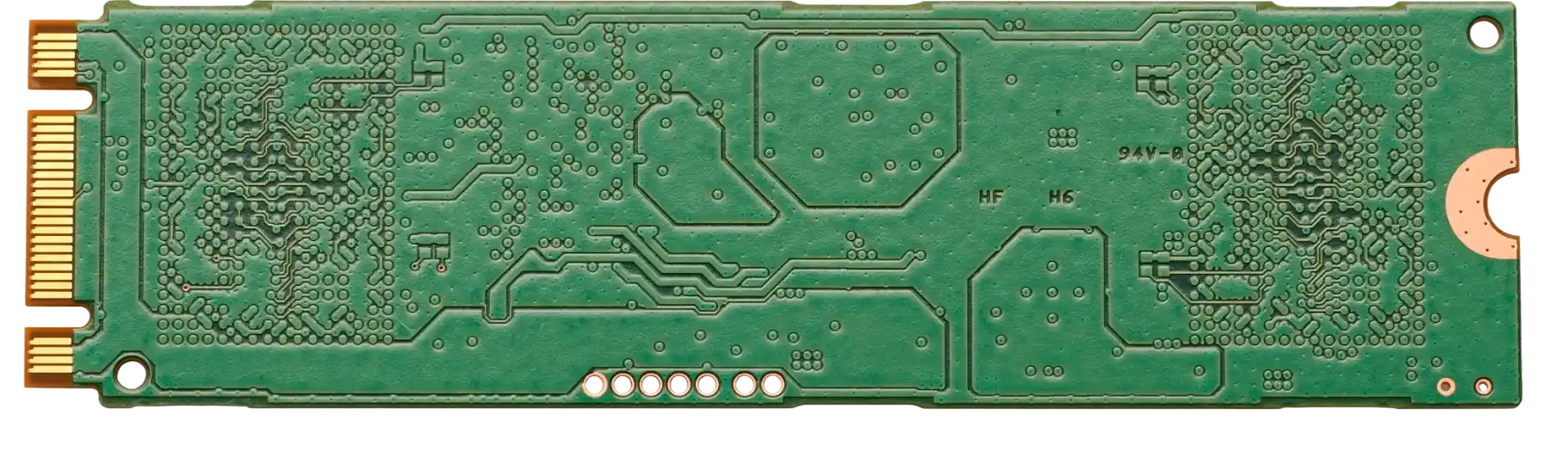
Material selection should match the actual environmental and electrical requirements.
| Design decision | Common selection | Why it matters |
|---|---|---|
| Base laminate | High-Tg FR-4 or specialized RF materials | Improves dimensional stability during temperature cycling |
| Surface finish | ENIG for many long-life outdoor applications | Provides a flat, corrosion-resistant assembly surface |
| Conformal coating | Acrylic or silicone depending on exposure conditions | Protects circuits from moisture and contamination |
| Copper weight | 1 oz standard; higher copper when current capacity requires it | Supports power delivery and thermal performance |
| Via protection | Tented, filled, or plugged vias | Reduces moisture collection paths |
| RF sections | Controlled impedance stackup | Maintains communication performance for wireless nodes |
For agricultural IoT systems using LoRa, NB-IoT, or LTE-M, PCB materials influence antenna behavior because dielectric properties can change with moisture absorption.
Wireless sections should define:
- Controlled impedance requirements
- Antenna keep-out regions
- RF connector specifications
- Stackup dielectric information
- Production impedance verification
For compact agricultural devices requiring reduced wiring complexity, designers can also evaluate Rigid-Flex PCB Capabilities.
What are the main agricultural weather PCB failure modes?
Outdoor agricultural electronics usually fail through combined environmental stresses rather than a single defect.
| Failure mode | Root cause | Prevention and verification |
|---|---|---|
| Electrochemical migration | Moisture and ionic contamination create conductive paths | Cleanliness control, coating validation, contamination testing |
| Solder joint fatigue | Thermal expansion differences during day/night cycles | Thermal cycling and assembly reliability testing |
| UV degradation | Sun exposure damages polymers and markings | UV-resistant materials and enclosure protection |
| Chemical corrosion | Fertilizer and pesticide residue attack exposed surfaces | Chemical compatibility testing |
| Delamination | Moisture absorption combined with heating | Suitable laminate selection and moisture handling |
| Connector oxidation | Outdoor exposure damages contact surfaces | Protected connectors and suitable plating |
| RF performance drift | Moisture changes dielectric properties around antennas | Environmental RF validation |
| Potting-related stress | Material shrinkage transfers mechanical force | Potting compatibility testing |
A coating alone does not create outdoor reliability. Successful agricultural PCB designs combine:
- Controlled manufacturing cleanliness
- Appropriate materials
- Correct enclosure strategy
- Protected interfaces
- Environmental validation
How should agricultural weather PCBs be validated before production?
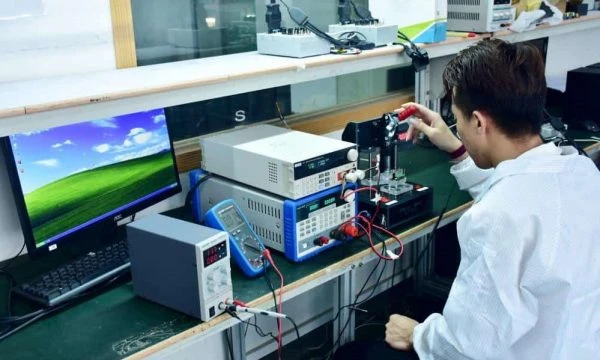
Validation should reproduce the stresses expected during field operation.
| Reliability objective | Example validation method | Acceptance focus |
|---|---|---|
| Moisture resistance | Temperature humidity testing such as THB | Stable insulation performance and no corrosion |
| Thermal durability | Thermal cycling across operating temperature range | No cracks, delamination, or connection failures |
| Corrosion resistance | Salt mist or chemical exposure testing where applicable | Protection of exposed conductive surfaces |
| Coating performance | Adhesion and coverage inspection | Uniform coating without defects |
| Mechanical reliability | Vibration testing for machinery and outdoor mounting | No intermittent electrical failures |
| UV exposure resistance | Accelerated UV aging | Material integrity and marking durability |
| Functional reliability | Environmental functional testing | Stable sensor and communication operation |
For remote agricultural sensor networks, validation should consider the complete deployment system:
- PCB assembly
- Enclosure
- Cable interfaces
- Antenna placement
- Power system
- Firmware behavior
The PCB manufacturer validates fabrication and assembly quality according to agreed specifications. Product designers remain responsible for system-level environmental qualification.
What should buyers include in an agricultural weather PCB RFQ?
A complete RFQ reduces quotation delays and prevents reliability requirements from being interpreted differently by suppliers.
Required technical inputs
- Gerber files
- PCB stackup drawing
- Laminate requirements
- Copper thickness requirements
- Surface finish specification
- Coating type and keep-out areas
- Operating temperature range
- Wireless communication requirements
- Production volume
- Expected service lifetime
- Environmental exposure conditions
Agricultural weather PCB supplier checklist
| Supplier evaluation area | Evidence to request |
|---|---|
| Outdoor PCB experience | Examples of comparable industrial or IoT applications |
| Coating process | Material type, application method, inspection process |
| Manufacturing control | AOI, X-ray capability, process monitoring |
| Material traceability | Laminate and component batch records |
| Quality system | Calibration records, non-conformance process |
| Change management | Advance notification process for material changes |
| Testing capability | Environmental and functional test support |
Supplier selection should evaluate lifetime reliability rather than only initial PCB price.
For broader industrial reliability requirements, review Industrial Control PCB Manufacturing. For coating-specific considerations, see PCB Conformal Coating Services.
How do agricultural weather PCB design choices affect cost and reliability?
| Priority | Design direction | Trade-off |
|---|---|---|
| Lowest cost | Standard FR-4 with strong enclosure protection | Lower PCB cost but greater dependence on enclosure performance |
| Long outdoor life | Higher-performance laminates and stronger protection methods | Higher material and validation cost |
| Wireless performance | RF materials or hybrid stackup | Improved signal stability with increased complexity |
| Chemical resistance | Silicone or specialized coatings | Better protection but more difficult repair |
| Fast prototyping | Standardized design with future ruggedization options | Lower initial cost but additional future qualification work |
The most expensive material is not automatically the most reliable solution. Reliability comes from matching materials, assembly processes, protection methods, and validation requirements.
Additional material options can be reviewed through Isola PCB Materials.
How should files be prepared for agricultural weather PCB production?
Before manufacturing review, provide complete documentation:
- Gerber files in RS-274X format
- Bill of materials with manufacturer part numbers
- Fabrication drawing
- Assembly drawings
- Stackup definition
- Coating requirements
- Testing requirements
- Acceptance criteria
A detailed DFM review helps identify:
- Moisture traps
- Coating conflicts
- Thermal stress locations
- RF layout issues
- Manufacturing limitations
Agricultural weather PCB FAQ
Can standard FR-4 be used for agricultural weather applications?
Yes, when the enclosure provides sufficient environmental protection and the operating conditions are controlled. Direct outdoor exposure and long service life usually require additional protection planning.
Is ENIG always required for agricultural electronics?
Not always. Surface finish selection depends on contact requirements, environmental exposure, component technology, and lifetime expectations.
What information reduces supplier quotation delays?
The most useful inputs are PCB files, stackup requirements, coating requirements, environmental conditions, testing expectations, and production volume.
Should drone-mounted agricultural sensors use the same PCB requirements?
No. Drone applications introduce vibration, weight, and mechanical constraints that require different validation priorities.
What is the biggest agricultural weather PCB design mistake?
Treating weather protection as only a coating decision. Reliable outdoor electronics require coordinated decisions across materials, layout, assembly cleanliness, enclosure design, and testing.
Request an agricultural weather PCB DFM review and quote
To evaluate manufacturing feasibility, provide:
- Gerber fabrication files
- BOM with manufacturer part numbers
- Fabrication drawing
- Stackup requirements
- Coating requirements and keep-out areas
- Expected production volume
- Reliability testing requirements
APTPCB can review manufacturing risks before production, including material selection, environmental protection requirements, and DFM considerations.
Request a Quote and DFM Review
Conclusion: designing agricultural weather electronics for reliable field deployment
Agricultural weather PCB reliability is created before production begins. The strongest designs identify environmental stresses early, select materials based on actual operating conditions, validate critical failure modes, and require suppliers to provide measurable manufacturing evidence.
For agricultural IoT networks, weather stations, and environmental monitoring systems, a decision-focused PCB specification reduces field failures, improves data availability, and supports reliable long-term deployment.
For additional validation guidance, explore Testing and Quality Assurance when defining inspection and reliability requirements.