
Definition, scope, and who this guide is for
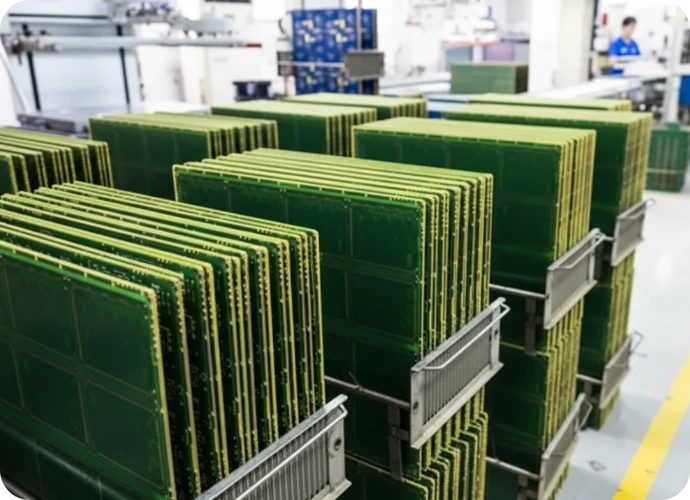
An AI Development PCB is not merely a standard circuit board with a different name; it is the physical foundation for high-performance computing architectures used in machine learning training and inference. These boards are characterized by extreme density, high-speed signal integrity requirements (often exceeding 112Gbps PAM4), and significant thermal management challenges due to power-hungry GPUs, TPUs, or NPUs. Unlike consumer electronics, an AI Development PCB must support massive data throughput while maintaining near-zero latency and high reliability under continuous load.
This guide covers the procurement and engineering requirements for these specialized boards. The scope includes server-grade accelerator cards, edge AI processing units, and the complex backplanes required for 1.6T Ethernet PCB switches that interconnect AI clusters. We focus on the transition from prototype to pilot production, where specification errors can lead to costly re-spins or signal integrity failures.
This playbook is written for hardware engineers, PCB designers, and technical procurement leads who need to validate suppliers and specifications before committing capital. Whether you are sourcing for a data center application or an Automotive AI PCB for autonomous driving, the decision framework remains similar: define rigorous specs, identify manufacturing risks early, and validate the supplier’s capability to execute.
APTPCB (APTPCB PCB Factory) has observed that many project delays stem not from silicon issues, but from PCB fabrication defects that could have been prevented with a clearer upfront agreement on acceptance criteria. This guide aims to bridge that gap, providing a structured approach to sourcing high-complexity AI hardware.
When to use AI Development PCB (and when a standard approach is better)
Understanding the definition of these high-performance boards leads directly to the question of necessity: does your project actually require the cost and complexity of an AI-grade fabrication process?
You should utilize an AI Development PCB process when your design parameters exceed standard IPC Class 2 capabilities. If your board utilizes BGA components with a pitch tighter than 0.4mm, requires blind and buried vias (HDI) to route thousands of nets, or demands controlled impedance on 16+ layers, standard manufacturing will result in low yield. Furthermore, if your signal speeds approach 56Gbps or 112Gbps per lane, the surface roughness of standard copper foil becomes a signal integrity killer. In these scenarios, the specialized materials and registration accuracy of an AI-focused process are mandatory.
Conversely, a standard PCB approach is better for auxiliary boards or lower-speed control units within the AI system. If the board functions primarily for power distribution (without high-speed switching), fan control, or legacy interface management, paying for ultra-low-loss materials and HDI processes is unnecessary. Standard FR4 materials and through-hole technology are sufficient for these subsystems, allowing you to allocate budget where it matters most—the main compute engine.
AI Development PCB specifications (materials, stackup, tolerances)
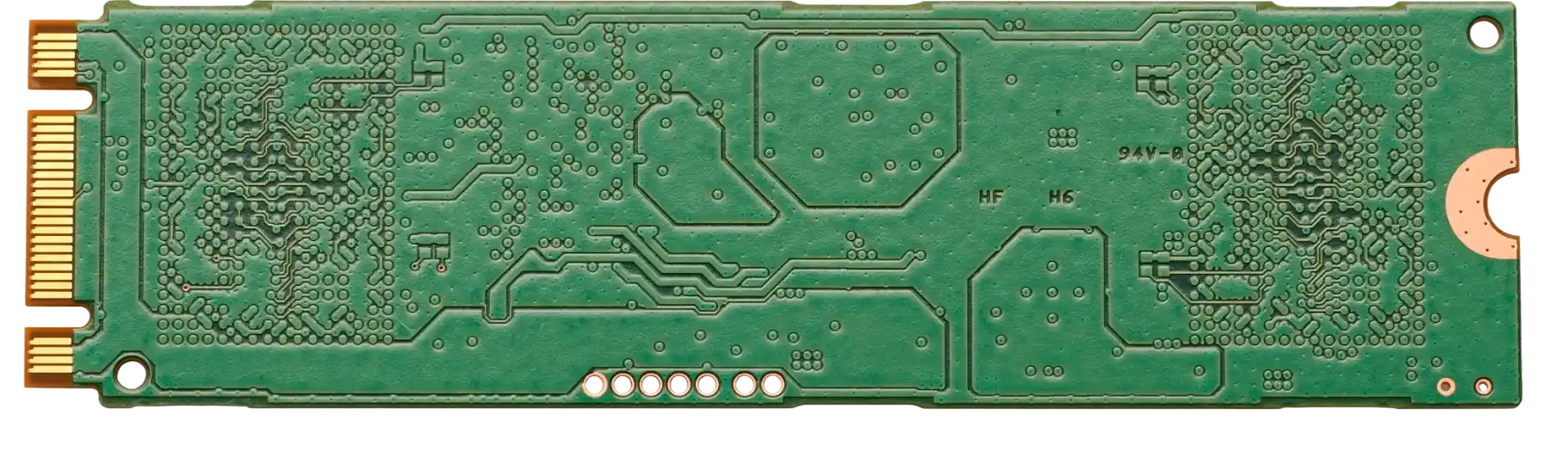
Once you have determined that your project requires an AI Development PCB, the next step is to freeze the specifications that will drive the manufacturing quote and engineering review.
- Base Material Selection:
- Requirement: Ultra-low loss laminates are non-negotiable for high-speed AI signals.
- Target: Panasonic Megtron 7 (M7) or Megtron 8 (M8), Isola Tachyon 100G, or Rogers RO3003 for RF sections.
- Df value: Dissipation factor must be < 0.002 @ 10GHz.
- Layer Count and Stackup:
- Requirement: High layer counts to accommodate power planes and signal isolation.
- Target: 18 to 32 layers is common for AI accelerators.
- Structure: Symmetrical stackup to prevent warpage; often requires hybrid stackups (mixing low-loss material with standard FR4 for cost balance if validated).
- HDI Technology:
- Requirement: High Density Interconnects to route out of fine-pitch BGAs.
- Target: 3+N+3, 4+N+4, or Any-Layer ELIC (Every Layer Interconnect).
- Microvia Aspect Ratio: 0.8:1 to 1:1 for reliability.
- Impedance Control:
- Requirement: Strict matching to prevent signal reflection.
- Target: ±5% tolerance for single-ended (50Ω) and differential pairs (85Ω or 100Ω).
- Verification: 100% TDR (Time Domain Reflectometry) testing on coupons and in-board traces.
- Copper Weight and Plating:
- Requirement: High current handling for AI processors (often >500A total).
- Target: 2oz or 3oz inner layers for power; Heavy Copper options may be needed.
- Surface Finish: ENIG (Electroless Nickel Immersion Gold) or ENEPIG for wire bonding; OSP is risky for multiple reflow cycles on large boards.
- Backdrilling:
- Requirement: Removal of via stubs to reduce signal reflection at high frequencies.
- Target: Stub length < 6-8 mils (0.15mm - 0.2mm).
- Designator: Must be clearly marked in Gerber files.
- Warpage Control:
- Requirement: Large AI chips require perfectly flat surfaces for soldering.
- Target: < 0.5% or < 0.4% diagonal (stricter than IPC standard of 0.75%).
- Method: Low-CTE core materials and balanced copper distribution.
- Registration Accuracy:
- Requirement: Alignment between layers is critical for signal integrity.
- Target: Layer-to-layer registration < 3 mils (75µm).
- Drill-to-Copper: Minimum 4-5 mils to prevent breakout.
- Thermal Reliability:
- Requirement: Survival through multiple high-temp reflow cycles.
- Target: Tg (Glass Transition Temp) > 180°C; Td (Decomposition Temp) > 340°C.
- Test: 6x solder float test at 288°C without delamination.
- Documentation Standards:
- Requirement: Clear communication of intent.
- Target: IPC-6012 Class 3 (for high reliability) or Class 2 (for standard server).
- Files: ODB++ preferred over Gerber RS-274X for intelligent data transfer.
AI Development PCB manufacturing risks (root causes and prevention)
Defining specifications is only the first step; understanding where the manufacturing process typically fails for an AI Development PCB allows you to implement preemptive controls.
- Risk: Conductive Anodic Filament (CAF) Growth
- Why it happens: High voltage gradients between closely spaced vias combined with moisture absorption in the laminate glass weave.
- Detection: High-voltage insulation resistance testing (SIR).
- Prevention: Use "Anti-CAF" or "CAF-resistant" materials (spread glass weave); ensure drill wall quality is smooth to prevent wicking.
- Risk: Impedance Mismatch
- Why it happens: Variations in dielectric thickness (prepreg pressing) or trace width etching (over/under-etching).
- Detection: TDR testing fails to meet the ±5% window.
- Prevention: Perform stackup simulation with the fabricator before layout freeze; use laser direct imaging (LDI) for precise trace definition.
- Risk: Via-in-Pad Plating Voids
- Why it happens: Trapped air or chemicals during the plating or resin plugging process in HDI microvias.
- Detection: X-ray inspection and cross-section analysis.
- Prevention: Use vacuum plugging technology; specify minimum copper wrap plating thickness (IPC Class 3 requirements).
- Risk: Excessive Board Warpage
- Why it happens: Asymmetric copper distribution or mixing materials with drastically different CTE (Coefficient of Thermal Expansion).
- Detection: 3D moiré interferometry or simple shadow gauge measurement.
- Prevention: Balance copper coverage on all layers; use dummy copper thieving; select high-Tg materials.
- Risk: Signal Loss (Insertion Loss)
- Why it happens: Copper surface roughness is too high (skin effect) or solder mask affects the signal.
- Detection: VNA (Vector Network Analyzer) testing on test coupons.
- Prevention: Specify VLP (Very Low Profile) or HVLP (Hyper Very Low Profile) copper foil; remove solder mask from high-speed traces.
- Risk: Backdrill Depth Errors
- Why it happens: Mechanical depth control tolerance issues (drill machine variance).
- Detection: X-ray or cross-section; TDR showing reflection stubs.
- Prevention: Design with a safety margin (don't drill too close to the target layer); use electrical depth control drilling machines.
- Risk: Layer Misregistration
- Why it happens: Material scaling (shrinking/expanding) during lamination cycles.
- Detection: X-ray drill verification; breakout analysis.
- Prevention: Use X-ray scaling compensation systems; limit panel size if registration is extremely tight.
- Risk: Resin Starvation
- Why it happens: Heavy copper layers require more resin to fill the gaps; standard prepreg flows aren't enough.
- Detection: Visual inspection (white spots); delamination under stress.
- Prevention: Use high-resin content prepregs; optimize lamination pressure profiles.
AI Development PCB validation and acceptance (tests and pass criteria)
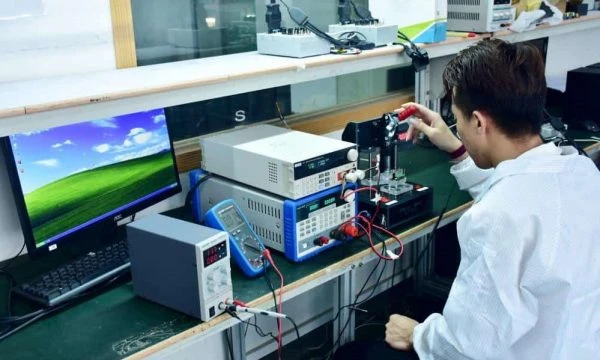
To ensure the risks identified above have been mitigated, a robust validation plan must be executed before accepting the AI Development PCB lot.
- Interconnect Stress Test (IST)
- Objective: Verify the reliability of vias and microvias under thermal stress.
- Method: Cycle coupons between ambient and 150°C+ repeatedly.
- Acceptance Criteria: Resistance change < 10% after 500 cycles.
- Signal Integrity (S-Parameter) Verification
- Objective: Confirm the board meets loss budgets for high-speed links (e.g., 112G SerDes).
- Method: VNA measurement of insertion loss and return loss on impedance coupons.
- Acceptance Criteria: Matches simulation model within 1-2 dB tolerance.
- Ionic Contamination Test
- Objective: Ensure board cleanliness to prevent corrosion and leakage.
- Method: Solvent extract conductivity (ROSE test).
- Acceptance Criteria: < 1.56 µg/cm² NaCl equivalent (or stricter OEM limit).
- Solderability Test
- Objective: Ensure pads will accept solder during assembly.
- Method: Dip and look / Wetting balance test.
- Acceptance Criteria: > 95% coverage; continuous coating; no dewetting.
- Thermal Shock Testing
- Objective: Simulate extreme environment changes (relevant for Automotive AI PCB).
- Method: -40°C to +125°C rapid transition.
- Acceptance Criteria: No cracking, delamination, or electrical open circuits.
- Microsection Analysis (Cross-Section)
- Objective: Verify internal build quality.
- Method: Destructive cutting and polishing of a sample board/coupon.
- Acceptance Criteria: Verify plating thickness (e.g., >25µm in hole), dielectric thickness, and layer alignment.
- Peel Strength Test
- Objective: Ensure copper traces do not lift off the laminate.
- Method: Mechanical pull test.
- Acceptance Criteria: > 0.8 N/mm (or per material datasheet spec).
- Hi-Pot (High Potential) Test
- Objective: Check for isolation between power planes.
- Method: Apply high voltage (e.g., 1000VDC) between isolated nets.
- Acceptance Criteria: Leakage current < specified limit; no breakdown.
AI Development PCB supplier qualification checklist (RFQ, audit, traceability)
When selecting a partner like APTPCB, use this checklist to ensure the manufacturer is capable of handling the complexity of an AI Development PCB.
Group 1: RFQ Inputs (What you must provide)
- Complete Gerber RS-274X or ODB++ files.
- Fabrication drawing with clear notes on IPC Class (2 or 3).
- Stackup definition including specific material names (e.g., "Megtron 7", not just "Low Loss").
- Impedance table referencing specific layers and trace widths.
- Drill chart separating plated, non-plated, and backdrilled holes.
- Panelization requirements (if specific array needed for assembly).
- Netlist (IPC-356) for electrical test verification.
- Special requirements: gold finger thickness, edge plating, filled vias.
Group 2: Capability Proof (What supplier must demonstrate)
- Proven track record with HDI (3+N+3 or higher).
- Experience processing high-speed materials (Megtron/Rogers) without delamination.
- Equipment list: LDI (Laser Direct Imaging) for fine lines (<3 mil).
- Equipment list: Vacuum lamination presses for high layer counts.
- Equipment list: Laser drills capable of accurate depth control for microvias.
- In-house VNA testing capability for signal integrity.
Group 3: Quality System & Traceability
- ISO 9001 and UL certification (mandatory).
- IATF 16949 certification (mandatory for Automotive AI PCB).
- Material traceability: Can they trace a specific board back to the laminate batch?
- Automated Optical Inspection (AOI) used on all inner layers.
- X-ray inspection availability for registration and BGA pads.
- Calibration records for impedance testing equipment.
Group 4: Change Control & Delivery
- PCN (Process Change Notification) policy: Do they notify before changing materials?
- EQ (Engineering Question) workflow: How do they handle data discrepancies?
- Packaging: Vacuum sealed with desiccant and humidity indicator card (HIC).
- First Article Inspection (FAI) report format.
- Capacity planning: Can they scale from prototype to volume without re-qualifying a new line?
How to choose AI Development PCB (trade-offs and decision rules)
Making the final decision on an AI Development PCB often involves balancing competing constraints. Here are the common trade-offs and how to navigate them.
- Material Cost vs. Signal Integrity:
- Rule: If your signal frequency is > 25GHz, choose Megtron 7 or Tachyon despite the cost. If < 10GHz, Megtron 6 or mid-loss FR4 may suffice. Do not compromise on material for 112G links.
- Layer Count vs. Board Size:
- Rule: If the device form factor is strictly limited (e.g., edge AI module), increase layer count and use HDI. If space allows (e.g., server rack), reduce layer count and spread components to lower thermal density and cost.
- Through-Hole vs. HDI:
- Rule: If using BGAs with < 0.8mm pitch, HDI is mandatory. If components are larger, standard through-hole is cheaper and more robust.
- Surface Finish (ENIG vs. OSP):
- Rule: If the board requires high reliability and shelf life, choose ENIG. If cost is the absolute driver and assembly happens immediately, OSP is an option, but risky for complex AI boards with multiple reflows.
- Automotive vs. Commercial Grade:
- Rule: If the application is an Automotive AI PCB, prioritize reliability (thermal shock, CAF resistance) over density. Use larger vias and wider traces where possible.
- Backdrilling vs. Blind Vias:
- Rule: If you need to remove stubs on thick backplanes, backdrilling is cost-effective. For thinner boards, blind vias offer better signal performance but higher fabrication cost.
AI Development PCB FAQ (cost, lead time, Design for Manufacturability (DFM) files, materials, testing)
Q: What are the primary cost drivers for an AI Development PCB?
- Answer: The biggest drivers are the laminate material (low-loss materials are 3-5x cost of FR4) and the HDI process steps (laser drilling and sequential lamination cycles).
- Key factors: Layer count, number of lamination cycles, gold thickness, and impedance testing requirements.
Q: What is the typical lead time for AI Development PCB manufacturing?
- Answer: Standard lead time is 15-20 working days due to complex lamination cycles.
- Expedite: Quick-turn options (7-10 days) are possible but depend on material availability in stock.
Q: Which DFM files for AI Development PCB are most critical to prevent delays?
- Answer: The drill file (identifying backdrills) and the IPC-356 netlist are critical.
- Common issue: Missing definition of which vias are filled/capped vs. open causes engineering holds.
Q: Can I use standard FR4 for an Automotive AI PCB?
- Answer: Generally, no. Automotive AI requires high Tg (>170°C) and CAF-resistant materials to survive harsh thermal cycling and humidity.
- Risk: Standard FR4 will delaminate or fail electrically under automotive stress conditions.
Q: How does testing for AI Development PCB differ from standard boards?
- Answer: Standard boards get basic E-test (open/short). AI boards require TDR (impedance), VNA (signal loss), and often IST (reliability) testing.
- Impact: Expect higher NRE (Non-Recurring Engineering) charges for these advanced test fixtures.
Q: What are the acceptance criteria for AI Development PCB warpage?
- Answer: For boards with large BGA sockets, warpage must often be < 0.5%.
- Mitigation: Suppliers may use pallets during reflow or adjust the copper balance during CAM engineering.
Q: Do I need specific materials for 1.6T Ethernet PCB designs?
- Answer: Yes, 1.6T Ethernet requires ultra-low loss materials like Megtron 8 or equivalent to handle 224Gbps PAM4 signals.
- Constraint: These materials have long lead times; order them early.
Q: How do I validate the stackup for an AI Development PCB before ordering?
- Answer: Request a stackup simulation from the fabricator.
- Process: Provide your target impedance; the fabricator will adjust dielectric thickness and trace width based on their press capabilities.
Resources for AI Development PCB (related pages and tools)
To further assist in your design and procurement process, utilize these specific resources:
- HDI PCB Capabilities – Understand the microvia structures and limitations essential for routing fine-pitch AI chips.
- High Speed PCB Manufacturing – Deep dive into the fabrication techniques required for signal integrity in 112G/224G systems.
- Megtron PCB Materials – Detailed specs on the Panasonic laminates that are the industry standard for AI hardware.
- Automotive Electronics PCB – Specific requirements for reliability and certification in autonomous driving hardware.
- PCB Stackup Design – How to structure your layers to balance signal integrity, power delivery, and manufacturability.
- DFM Guidelines – Practical design rules to ensure your AI board can actually be built with high yield.
Request a quote for AI Development PCB (Design for Manufacturability (DFM) review + pricing)
Ready to move from design to fabrication? Submit your data for a comprehensive DFM review and accurate pricing.
Request a Quote for AI Development PCB – Our engineering team will review your stackup and files to identify potential risks before production begins.
Please include the following for an accurate assessment:
- Gerber or ODB++ files.
- Fabrication drawing with material and impedance specs.
- Layer stackup preference.
- Estimated volume (prototype vs. production).
- Any special testing requirements (IST, VNA, etc.).
Conclusion (next steps)
Successfully deploying an AI Development PCB requires more than just a good circuit design; it demands a manufacturing strategy that accounts for material physics, process tolerances, and rigorous validation. By defining clear specifications for materials and stackups, understanding the root causes of manufacturing risks, and utilizing a strict supplier qualification checklist, you can secure the foundation of your AI hardware. Whether you are building for the data center or the road, the quality of the bare board dictates the reliability of the entire system.