
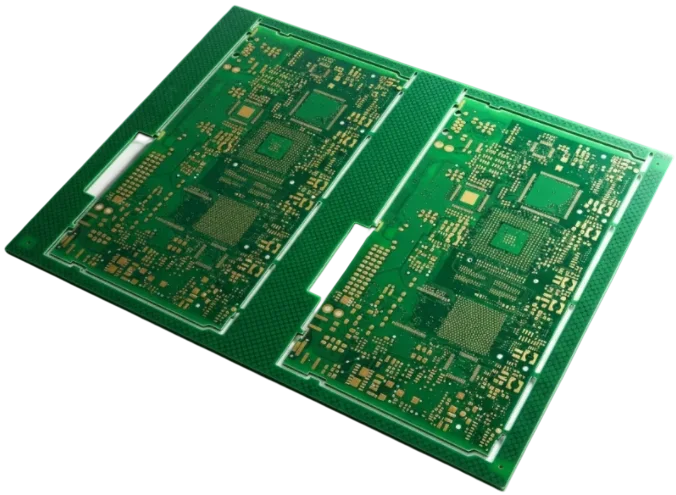
An in-flight entertainment PCB is a printed circuit board used in aircraft passenger-information, media, connectivity, control, or seat-power equipment. Its requirements come from the equipment function, installation location, aircraft program, environmental qualification categories, interfaces, and approved verification plan—not from the word “entertainment” alone.
This guide helps IFE equipment engineers, integrators, quality teams, and buyers convert system requirements into buildable PCB/PCBA specifications and release evidence without treating a bare board as certified aircraft equipment.
Key takeaways
- Separate the head-end server, seat display, seat electronic box, wireless access point, passenger control, and power hardware. Their PCB risks and test evidence are different.
- RTCA/DO-160 defines environmental conditions and test procedures for airborne equipment. The applicable sections and categories must be assigned for the equipment and installation; a bare PCB does not receive universal “DO-160 certification.”
- DO-254 applicability and design-assurance level are program decisions based on the airborne hardware function and certification basis. IFE does not automatically mean one fixed assurance level.
- Do not specify high-Tg FR-4, HDI, rigid-flex, low-loss laminate, conformal coating, ENIG, IPC Class 3, or a fixed impedance tolerance by habit. Select them from electrical, mechanical, environmental, reliability, and qualification needs.
- Freeze the interface, loss, power, thermal, mechanical, environmental, acceptance, test, traceability, and change-control requirements before the production stack-up and assembly process are released.
- Qualification evidence belongs to a controlled equipment configuration. Production must preserve the tested design, materials, processes, firmware, test method, and approved deviations.
IFE equipment-to-PCB release matrix
An aircraft entertainment system is a network of different electronic units. Treating every board as the same “aerospace PCB” hides the requirements that drive layout, construction, assembly, and test.
| IFE equipment | Main PCB risks | Buyer inputs to freeze | Useful release evidence |
|---|---|---|---|
| Head-end server or content loader | High-speed memory and data links, dense BGA escape, storage integrity, power sequencing, heat | Interface standards, channel/loss budget, storage architecture, airflow or conduction path, firmware and test limits | Stack-up approval, impedance/TDR data when specified, X-ray coverage, programming log, functional interface test |
| Seat display unit | Thin enclosure, display/touch noise, flex or cable fatigue, localized heat, connector retention | Display and touch interfaces, mechanical envelope, flex motion, mounting points, thermal path, human-interface test | First-article dimensional report, AOI/X-ray as required, display/touch functional test, flex and connector inspection |
| Seat electronic box | Aircraft power input, transient protection, conversion heat, multiple connectors, under-seat environment | Input and load profile, protection architecture, harness interfaces, mounting, environmental categories, load test | Power-up and load test, thermal evidence, connector inspection, serialized configuration record |
| Wireless access point | RF feed and antenna interaction, power noise, coexistence, enclosure detuning, thermal density | Bands, antenna and cable data, link budget, radio layout constraints, enclosure model, coexistence plan | RF coupon or line verification when specified, programming record, conducted/radiated functional test at equipment level |
| Passenger control unit | Wear, cleaning fluids or spills, keypad/touch interface, cable or flex fatigue | Mechanical life, ingress boundary, cleaning agents, connector/flex definition, input acceptance test | First-article inspection, continuity and functional test, customer-defined mechanical/environmental evidence |
| Seat power or distribution board | Current density, connector heating, protection coordination, conducted noise, fault containment | Input source, output/load profile, derating rules, fault cases, creepage/clearance, harness and thermal limits | Copper and stack-up verification, electrical safety checks, load/thermal test, protection and fault-response test |
This matrix is the central purchasing rule: quote and release each board against its own function and evidence package. A display processor board and a seat-power converter should not share generic acceptance criteria merely because they are installed in the same cabin.
Requirements to freeze before PCB layout
The PCB manufacturer cannot infer the aircraft installation or certification basis from a product name. Before layout release, create a requirements matrix that maps every critical equipment requirement to a PCB consequence and an acceptance method.
| Requirement input | PCB/PCBA consequence | What the supplier needs |
|---|---|---|
| Equipment function and failure effects | Reliability priorities, monitoring, redundancy, test access | Critical-function list and allocated hardware requirements |
| Installation location and environmental qualification | Material, component, coating, connector, support and test choices | Applicable DO-160 sections/categories or approved environmental specification |
| Digital and video interfaces | Stack-up, reference planes, impedance, insertion loss, via transitions, connector launch | Interface versions, data rates, topology, channel/loss budget and receiver limits |
| RF and antenna architecture | Laminate need, feed geometry, shielding boundary, grounding, enclosure interaction | Frequency bands, impedance, loss and phase limits, antenna/cable/enclosure data |
| Aircraft input power and seat loads | Protection, filtering, copper geometry, clearance, thermal and fault response | Normal/abnormal input, transient profile, load steps, current, fault and hold-up requirements |
| Mechanical and thermal envelope | Thickness, outline, support, component height, flex zones and heat path | Controlled mechanics, mounting, shock/vibration, dissipation, airflow/conduction and temperature limits |
| Acceptance and reliability class | Fabrication and assembly criteria, inspection and sampling | Applicable IPC documents, class, amendments and customer-specific requirements |
| Qualification and production test | Coupons, test points, fixtures, software, serialization and records | Test specification, limits, coverage, equipment, calibration and report format |
| Configuration and lifecycle control | Approved materials/components, substitutions, tooling, revisions and notification | AVL, change-notification rules, retention, obsolescence and deviation process |
Avoid ambiguous requirements such as “aerospace grade,” “DO-160 PCB,” “4K capable,” “zero-defect,” or “100% tested.” Each phrase needs a measurable construction, condition, method, limit, and record.
What DO-160, DO-254, and flammability requirements mean for the PCB
RTCA/DO-160 provides environmental conditions and test procedures for airborne equipment. Temperature/altitude, vibration, humidity, power input, RF susceptibility/emissions, electrostatic discharge, and other sections may affect an IFE unit, but the categories depend on the installation and program. Obtain the approved environmental requirements before freezing the board and enclosure. The PCB supplier can preserve specified materials and geometry and provide build evidence; the applicant or integrator owns the qualification plan, representative test article, laboratory results, and certification data.
RTCA/DO-254 addresses design assurance for airborne electronic hardware. Its applicability, hardware classification, and assurance level are not assigned by calling a product “entertainment.” They are determined from the implemented function, system safety assessment, architecture, certification basis, and authority or applicant agreements. PCB fabrication records can support configuration control, but they do not replace the hardware design-assurance lifecycle.
Aircraft cabin flammability rules, including applicable provisions associated with 14 CFR Part 25.853, concern materials, components, and installations within the certification basis. A laminate's UL flammability recognition is not, by itself, proof that a finished IFE unit or installation meets aircraft flammability requirements. The equipment team should identify the applicable materials, test method, specimen/configuration, and required evidence.
How to design high-speed, video, and RF paths
IFE data paths may include Ethernet, USB, display links, memory buses, PCIe-class links, LVDS or other proprietary interfaces. The correct impedance and tolerance come from the interface and channel budget. Do not apply one universal 90 Ω, 100 Ω, or ±10% rule to every differential pair.
Model the complete channel: package breakout, PCB traces, vias, connectors, cable or flex, and receiver. Set the stack-up with actual laminate data, finished copper, plating, trace geometry, glass style, and manufacturable tolerances. Keep continuous return paths, add return transitions near layer changes, and review connector launches. The high-speed PCB manufacturing page can frame the stack-up discussion, but the project channel budget controls.
HDI is justified when BGA escape density, board area, layer transitions, or via-stub limits require microvias. It is not mandatory merely because a display carries high-resolution video. If HDI is needed, define the build-up, microvia structure, capture pads, reliability qualification, inspection, and approved material set with the HDI PCB team.
For wireless access points, review the antenna, cable, connector, enclosure, mounting metal, ground clearances, and power noise together. Use low-loss or hybrid material only when the loss/phase budget requires it; exotic laminate cannot fix an antenna or enclosure error.
Power, thermal, and mechanical design
IFE hardware puts processors, displays, radios, storage, and passenger power in constrained mechanics. Define aircraft input/transients, load steps, sequencing, protection, filtering, and fault cases. Keep switching loops compact, control returns, separate noisy power from radios and touch/display circuits, and add diagnostic test points. Select copper from current, voltage drop, temperature rise, terminals, board thickness, and fabrication limits.
Model dissipation, duty cycle, ambient/pressure, airflow or enclosure conduction, contact resistance, and temperature limits. High-Tg material does not replace a heat path. Size thermal vias, planes, spreaders, chassis contacts, and component placement from the model, then verify representative equipment.
Review board modes, mounting spans, heavy components, BGA/ceramic strain, connector loads, cable restraint, and handling. Bonding, underfill, staking, coating, and stiffeners are project choices. A rigid-flex PCB can remove weak interconnects when packaging or movement justifies it, but its bend zones and transitions still need qualification.
Select materials and construction from the requirement
The most reliable board is not automatically the board with the most expensive laminate or finish. Use the simplest qualified construction that satisfies the released requirements and remains available for the program lifecycle.
| Design need | Possible construction response | Evidence or decision needed |
|---|---|---|
| Standard digital control and moderate-speed interfaces | Characterized FR-4 family, controlled stack-up | Approved material family, thermal and electrical limits |
| Dense processor, FPGA, or memory escape | Multilayer HDI where routing analysis requires it | Build-up, microvia type, reliability and inspection plan |
| Long or demanding RF/high-speed channel | Low-loss or hybrid material when the loss budget requires it | Frequency-dependent Dk/Df data, modeled channel and stack-up |
| Moving display arm or folded interconnect | Flex or rigid-flex | Bend definition, stiffeners, copper orientation, coverlay and mechanical test |
| High-current seat power | Heavier copper, local bus structure or separate power board | Current/temperature-rise analysis, clearance and terminal design |
| Moisture, spill or cleaning exposure | Enclosure, cleaning, coating or encapsulation as allocated | Exposure profile, material, masking, cure, inspection and rework rules |
Surface finish, solder mask color, via aspect ratio, component height, ionic cleanliness, and controlled-impedance tolerance must be stated in the drawing or purchase specification when they matter. A generic aerospace label does not establish these values.
Manufacturing, traceability, and change control
Qualification has value only when production matches the qualified configuration. The manufacturing package should control design data, materials, components, processes, programming, inspection, test, labeling, and deviations as one baseline.
Before qualification, release fabrication data, stack-up/material/finish, BOM/AVL, assembly drawings, firmware, special processes, inspection and test limits as one revision. Define lot or serial traceability and the shipment dossier. Also state which changes—material, component, supplier, site, process, tooling, firmware, fixture, software, or limit—require customer approval, notification, or requalification.
APTPCB's published aerospace scope includes stack-up and controlled-impedance support, high-Tg materials when specified, optional conformal coating, SPI, AOI, X-ray, ICT/flying probe when designed in, customer-defined functional test, and lot- or board-level traceability. Confirm the exact capability, certificate scope, test coverage, records, and retention in the quotation rather than relying on a generic capability statement. The PCB quality page can help frame the required evidence.
Qualification-to-production evidence matrix
The best release package connects each risk to an objective record. More documents are not automatically better; each record should prove a defined requirement or preserve the tested configuration.
| Gate | Primary question | Typical PCB/PCBA evidence | Equipment/program evidence |
|---|---|---|---|
| First article | Does the built hardware match the released data? | Dimensional report, material record, microsection or impedance report when specified, AOI/X-ray results | Equipment configuration record and integration inspection |
| Pre-compliance | Are likely environmental and EMC failures visible before formal test? | Controlled prototype build and board-level diagnostic data | EMI scan, thermal, power, vibration or functional engineering tests |
| Formal qualification | Does the representative equipment meet the approved plan? | Test-article traceability, CoC and agreed manufacturing dossier | Approved lab plan/report, test setup, pass/fail data and failure disposition |
| Production release | Can the qualified configuration be repeated? | Control plan, approved suppliers/materials, fixtures/software, serialized test record | Production acceptance test and configuration audit |
| Change review | Could the change affect compliance or reliability? | Supplier change notice, deviation, comparative build/test data | Impact assessment and requalification decision |
Common IFE PCB failure modes
Troubleshooting should follow the complete equipment path. A video dropout may come from a PCB discontinuity, connector, cable, power transient, firmware reset, thermal limit, or network issue.
| Symptom | Likely board-level contributors | Diagnostic evidence | Preventive control |
|---|---|---|---|
| Intermittent video or data errors | Discontinuous return path, lossy transition, connector launch, cracked joint, supply disturbance | TDR/VNA or interface diagnostics, X-ray, power capture, thermal correlation | End-to-end channel budget, transition review, connector and assembly qualification |
| Touch or display instability | Display-power noise, sensor coupling, flex damage, grounding or enclosure interaction | Noise measurement, flex/connector inspection, functional test across operating modes | Return-path control, interface separation, mechanical strain control |
| Radio range or coexistence failure | Antenna detuning, RF-feed loss, enclosure change, digital/power noise | Conducted RF test, near-field scan, antenna measurement in final mechanics | Freeze antenna/enclosure boundary and validate representative equipment |
| Seat box overtemperature or reset | Inadequate heat path, regulator loss, load transient, component derating, blocked airflow | Temperature map, load-step capture, event/reset log | Coupled power/thermal analysis and worst-case load test |
| Conducted or radiated emissions failure | Switching loop, cable common-mode current, reference discontinuity, enclosure seam | Current-probe/near-field scan, spectrum and cable correlation | Early EMI architecture and pre-compliance test |
| Vibration-related intermittency | Board resonance, connector fretting, heavy-component strain, solder-joint fatigue | Event monitoring during mechanical test, microscopy/X-ray, modal correlation | Mounting and strain analysis, appropriate support and connector selection |
| Corrosion or leakage | Residue, moisture path, spill/cleaner exposure, coating defect | Visual/cleanliness test and leakage measurement | Validated cleaning, handling, enclosure and coating process |
| Batch regression | Unapproved material, component, process, firmware or fixture change | Configuration and lot-history comparison | Traceable baseline and formal change control |
What to include in an IFE PCB RFQ
A complete RFQ lets the supplier price the real construction, testing, documentation, and configuration-control workload before tooling or component commitments.
Fabrication and mechanics
- Gerber/ODB++/IPC-2581, drill/net data, outline, controlled drawings, stack-up, materials, copper, finish, impedance, IPC class, coupons, and special acceptance
- Enclosure model, mounting, component-height and connector limits, flex/bend definition, stiffeners, and controlled dimensions
Assembly and software
- BOM/AVL, alternates, DNP and lifecycle status, placement and assembly data, special hardware/processes, cleaning/coating, and packaging requirements
- Firmware/programming files, version/checksum method, security handling, and required programming record
Electrical, test, and program controls
- Interface/data-rate/channel limits; aircraft input, transients, loads, sequencing, faults, protection, and thermal limits
- Test points, fixtures, stimuli, modes, pass/fail limits, software revision, coverage, and required inspection/test evidence
- Environmental categories, responsibility matrix, quantities, traceability, shipment records, retention, deviations, changes, obsolescence, and requalification rules
Run a DFM review before stack-up and component commitments. Missing test access, acceptance limits, or change rules are cheaper to correct before the qualification article is built.
Why involve APTPCB before the qualification build?
APTPCB can review the PCB/PCBA package, flag missing manufacturing or test inputs, align the stack-up and materials with available processes, and confirm included records. Project-dependent support includes multilayer, HDI, flex and rigid-flex construction; controlled impedance; SPI, AOI and X-ray; flying probe/ICT where access exists; customer-defined functional test; coating on request; and traceable prototype-to-production builds.
APTPCB does not replace the equipment applicant, certification authority, airframer, integrator, qualification laboratory, or system safety process. The useful supplier deliverable is a repeatable hardware baseline with objective evidence and controlled changes. See the aerospace and defense PCB manufacturing scope, then confirm current certificates and their scope during supplier qualification.
Relevant standards and references may include:
- RTCA/DO-160G — environmental conditions and test procedures for airborne equipment
- RTCA/DO-357 — user-guide supplement to RTCA/DO-160G
- RTCA/DO-254 — design assurance guidance for airborne electronic hardware
- 14 CFR Part 25.853 — compartment-interior flammability provisions, as applicable to the certification basis
- IPC-6012 and IPC-A-600 — rigid printed-board qualification/performance and acceptance
- IPC-6013 — flexible and rigid-flex printed-board qualification/performance
- J-STD-001 and IPC-A-610 — soldered assembly requirements and acceptance
Confirm the applicable revisions, categories, classes, supplements, customer clauses, and certification basis with the responsible program teams.
Frequently asked questions
What is an in-flight entertainment PCB?
It is a PCB used in aircraft passenger media, information, connectivity, control, display, or seat-power equipment. The actual requirements depend on the unit's function, interfaces, installation, environmental categories, reliability allocation, and approved verification plan.
Does an IFE PCB need DO-160 certification?
DO-160 testing is performed on a defined airborne-equipment configuration against assigned sections and categories. A PCB supplier can provide controlled hardware and manufacturing evidence, but a bare PCB does not receive one universal DO-160 certification.
Does every IFE board require IPC Class 3?
No. The equipment manufacturer should select the applicable fabrication and assembly acceptance class from function, failure consequences, reliability needs, and program requirements. State the IPC documents, class, revisions, and customer-specific criteria in the purchase specification.
Is high-Tg FR-4 mandatory for aircraft entertainment electronics?
No universal Tg applies to every IFE board. Select the laminate from assembly temperature, operating environment, z-axis expansion, reliability, electrical loss, mechanical needs, availability, and qualification requirements. High-Tg material does not replace thermal design.
Do 4K displays always require an HDI PCB?
No. Resolution alone does not determine the PCB construction. HDI is useful when BGA escape, routing density, board area, via transitions, or signal-integrity limits require it. A manufacturable through-hole multilayer stack-up may be sufficient for another design.
When should an IFE design use rigid-flex?
Use rigid-flex when it provides a verified packaging, weight, movement, or connector-reduction benefit. Define bend zones, flex materials, copper orientation, stiffeners, connector loads, assembly process, and mechanical qualification rather than assuming rigid-flex is inherently more reliable.
Is conformal coating required on every IFE PCBA?
No. Coating should follow the allocated moisture, condensation, spill, contamination, cleaning, and service requirements. If specified, control material compatibility, masking, thickness or coverage, cure, inspection, rework, and its effect on connectors and test points.
How should controlled impedance be specified for an IFE PCB?
Specify each interface, target impedance, tolerance, reference structure, layer, geometry constraints, coupon/report need, and the end-to-end channel budget. The interface and loss model—not a generic aerospace rule—determine the values.
What test evidence should accompany an IFE PCBA?
Evidence should match the risk and purchase specification. It may include material and stack-up records, electrical test, impedance data when specified, AOI/X-ray, programming logs, ICT/flying-probe, functional test, first-article dimensions, traceability, and approved deviations.
What files are needed for an IFE PCB quote?
Send fabrication data, controlled drawings, stack-up/material requirements, BOM/AVL, placement and assembly data, firmware/programming inputs, mechanical constraints, interface and power requirements, test specifications, environmental categories, quantities, traceability, and release-document requirements through the PCB quote form.
Build the qualification baseline before the test article
An IFE PCB program succeeds when the equipment requirement, board design, manufacturing process, test method, and production configuration remain connected. Freeze the environmental and interface inputs, build against one controlled baseline, collect only evidence tied to acceptance criteria, and assess every later change against the qualified equipment.
Send APTPCB the current PCB/PCBA package, equipment type, applicable environmental requirements, test scope, and documentation matrix. The engineering review can then focus on the gaps most likely to cause a board respin, qualification delay, or production mismatch.