
Key Takeaways
Before diving into the technical specifications of industrial control boards, here are the critical points you need to know about Anaerobic Digestion PCB manufacturing.
- Definition: These are specialized industrial control boards designed to operate within biogas plants and waste treatment facilities, managing sensors, pumps, and thermal regulation.
- Environment is King: Unlike standard consumer electronics, an Anaerobic Digestion PCB must withstand high humidity, variable temperatures, and corrosive gases like Hydrogen Sulfide (H2S).
- Material Selection: High-Tg FR4 and specific surface finishes like ENIG are preferred over standard HASL to prevent premature oxidation.
- Protection: Conformal coating or potting is not optional; it is a requirement to ensure longevity in biogas environments.
- Validation: Testing must go beyond electrical connectivity to include environmental stress screening (ESS) and salt/mist simulation.
- Comparison: While similar to an Activated Sludge PCB, the anaerobic variant faces higher concentrations of corrosive biogas byproducts.
What Anaerobic Digestion PCB really means (scope & boundaries)
To understand how to specify these boards, we must first define the operational scope of an Anaerobic Digestion PCB.
Anaerobic digestion is a biological process where microorganisms break down biodegradable material in the absence of oxygen. The "PCB" in this context refers to the electronic backbone—the Printed Circuit Boards—that control the reactors, monitor pH levels, regulate temperature, and manage gas flow.
APTPCB (APTPCB PCB Factory) defines these boards not by their circuit topology alone, but by their environmental resilience. These boards are the brain of the Programmable Logic Controllers (PLCs) and sensor nodes located inside or near the digester tanks.
The scope includes:
- Sensor Interfaces: Boards that process signals from pH, temperature, and gas flow sensors.
- Actuator Control: Power electronics driving pumps, mixers, and valves.
- Communication Modules: PCBs handling SCADA or IoT data transmission to central control rooms.
If your project involves general agricultural electronics, you might also encounter terms like Aeroponic Control PCB. However, the chemical exposure in anaerobic digestion is significantly more aggressive, requiring stricter design rules.
Anaerobic Digestion PCB metrics that matter (how to evaluate quality)
Building on the definition of environmental resilience, we must quantify quality using specific metrics relevant to Anaerobic Digestion PCB performance.
Standard electrical tests are insufficient for boards exposed to biogas environments. You must evaluate the physical and chemical resistance properties of the PCB.
| Metric | Why it matters | Typical range or influencing factors | How to measure |
|---|---|---|---|
| CTI (Comparative Tracking Index) | Measures resistance to electrical breakdown (tracking) on the surface, crucial in humid/polluted environments. | PLC Grade: ≥ 600V (Group I) or ≥ 400V (Group II). | IEC 60112 standard testing. |
| Surface Insulation Resistance (SIR) | Ensures no leakage current develops between traces due to moisture or ionic contamination. | > 10^8 Ohms after humidity exposure. | IPC-TM-650 2.6.3.3 test method. |
| Tg (Glass Transition Temperature) | Determines the temperature at which the PCB substrate becomes mechanically unstable. | High Tg (>170°C) is recommended for industrial pumps/motors. | TMA (Thermomechanical Analysis). |
| Copper Thickness | Critical for power boards driving heavy sludge pumps or mixers. | 2 oz to 4 oz (Heavy Copper) is common. | Microsection analysis. |
| Solder Mask Hardness | The first line of defense against physical scratches and chemical ingress. | Pencil Hardness > 6H. | IPC-SM-840 qualification. |
How to choose Anaerobic Digestion PCB: selection guidance by scenario (trade-offs)
Once you understand the metrics, the next step is selecting the right board configuration for your specific Anaerobic Digestion PCB application.
Different zones within a biogas facility require different PCB attributes. Below are common scenarios and the recommended trade-offs.
1. The "Inside the Tank" Sensor Node
- Scenario: A PCB mounted inside a sensor housing exposed to biogas vapors.
- Recommendation: Use Ceramic or High-Tg FR4 with potting.
- Trade-off: Higher cost and unrepairable (due to potting) vs. maximum corrosion resistance.
2. The Main Control Panel (PLC)
- Scenario: Located in a control room, but subject to ambient industrial fumes.
- Recommendation: Industrial Control PCB standards. Multilayer FR4 with ENIG finish.
- Trade-off: Moderate cost vs. high reliability for complex logic.
3. Heavy Duty Pump Drivers
- Scenario: Controlling the motors that stir the biomass. High current requirements.
- Recommendation: Heavy Copper PCB (3oz+).
- Trade-off: Higher fabrication lead time vs. superior thermal management and current capacity.
4. Wireless Monitoring Gateway
- Scenario: Transmitting data from the digester to the cloud.
- Recommendation: RF-optimized materials (controlled impedance) with standard protection.
- Trade-off: Signal integrity focus vs. mechanical robustness.
5. Outdoor Feeder Systems
- Scenario: Electronics controlling the input of raw waste, exposed to rain and temperature swings.
- Recommendation: Rigid-Flex PCB to reduce connector failures in vibrating machinery.
- Trade-off: Higher design complexity vs. improved mechanical reliability.
6. Laboratory Pilot Units
- Scenario: Small-scale testing of digestion efficiency.
- Recommendation: Standard FR4 with OSP or HASL (if environment is controlled).
- Trade-off: Low cost and fast turn vs. limited lifespan in real-world conditions.
Anaerobic Digestion PCB implementation checkpoints (design to manufacturing)
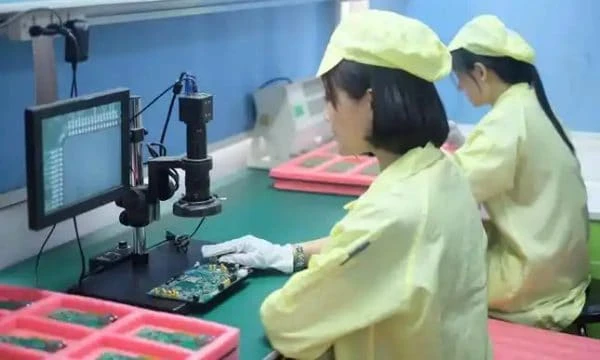
After selecting the right scenario, you must follow a strict implementation roadmap to ensure your Anaerobic Digestion PCB survives the manufacturing process.
APTPCB recommends the following checkpoints to bridge the gap between design files and the final product.
Design Phase
- Trace Width/Spacing: Increase clearance beyond IPC minimums to prevent arcing in humid conditions. Risk: Short circuits. Acceptance: DRC (Design Rule Check) pass at >6 mil spacing.
- Component Layout: Group sensitive analog sensors away from high-power motor drivers. Risk: Signal noise. Acceptance: Signal integrity simulation.
- Thermal Relief: Ensure thermal pads are sufficient for components inside sealed enclosures. Risk: Overheating. Acceptance: Thermal simulation.
Fabrication Phase 4. Material Verification: Confirm the laminate meets the specified CTI and Tg ratings. Risk: Dielectric breakdown. Acceptance: Material datasheet review. 5. Surface Finish Application: Ensure ENIG or Immersion Tin thickness is within spec. Risk: Black pad or oxidation. Acceptance: X-Ray Fluorescence (XRF) measurement. 6. Solder Mask Coverage: Verify no "solder mask dams" are too thin, which could peel off. Risk: Exposed copper corrosion. Acceptance: Visual inspection.
Assembly Phase 7. Flux Residue Cleaning: Aggressive cleaning is vital; ionic residues attract moisture. Risk: Dendrite growth. Acceptance: ROSE testing (Resistivity of Solvent Extract). 8. Conformal Coating: Apply Silicone or Acrylic coating. Risk: H2S corrosion. Acceptance: UV light inspection for coverage. * See more on protection: PCB Conformal Coating. 9. Connector Sealing: Ensure connectors are rated for IP67 if exposed. Risk: Water ingress. Acceptance: IP rating certification.
Anaerobic Digestion PCB common mistakes (and the correct approach)
Even with a solid plan, engineers often make specific errors when designing an Anaerobic Digestion PCB.
Avoiding these pitfalls saves time and prevents catastrophic field failures in biogas plants.
Mistake: Using OSP or HASL Surface Finishes.
- Why it fails: Organic Solderability Preservative (OSP) degrades quickly in humidity. HASL is uneven and can trap contaminants.
- Correct Approach: Use PCB Surface Finishes like ENIG (Electroless Nickel Immersion Gold) which offers a flat surface and excellent corrosion resistance.
Mistake: Ignoring Sulfur Corrosion (Creep Corrosion).
- Why it fails: Biogas contains Hydrogen Sulfide. This attacks exposed silver and copper, creating conductive whiskers that short the board.
- Correct Approach: Use sulfur-resistant resistors and ensure complete conformal coating coverage.
Mistake: Underestimating Thermal Management in Sealed Boxes.
- Why it fails: To keep gas out, enclosures are sealed. This traps heat from the PCB.
- Correct Approach: Use Metal Core PCBs (MCPCB) or conduct heat to the enclosure walls via thermal interface materials.
Mistake: Treating it like an Activated Sludge PCB.
- Why it fails: Activated sludge processes are aerobic (with air) and generally less corrosive than the anaerobic (no air, high sulfur) process.
- Correct Approach: Apply stricter anti-corrosion standards for anaerobic applications.
Mistake: Insufficient Test Points.
- Why it fails: Once coated or potted, the board is hard to probe for debugging.
- Correct Approach: Design edge connectors specifically for diagnostics that can be sealed later.
Mistake: Neglecting Galvanic Isolation.
- Why it fails: Ground loops between the digester tank sensors and the main PLC can destroy the PCB.
- Correct Approach: Use optocouplers or isolated power supplies for all field I/O.
Anaerobic Digestion PCB FAQ (cost, lead time, materials, testing, acceptance criteria)
To wrap up the technical details, here are answers to the most frequent questions regarding Anaerobic Digestion PCB procurement.
Q: What is the primary cost driver for an Anaerobic Digestion PCB? A: The primary drivers are the specialized materials (High Tg FR4), the surface finish (ENIG is more expensive than HASL), and the post-assembly protection (conformal coating or potting labor).
Q: How does the lead time compare to standard PCBs? A: Fabrication lead time is similar (standard 5-10 days). However, allow an extra 2-3 days for proper curing of conformal coatings or potting compounds during the assembly phase.
Q: Which materials are best for Anaerobic Digestion PCB fabrication? A: We recommend FR4 with a High Tg (170°C+) and a high CTI (Comparative Tracking Index) rating. For high-power pump controllers, heavy copper (3oz+) is advised.
Q: What specific testing is required for these boards? A: Beyond standard E-Test and AOI, we recommend Ionic Contamination Testing (to ensure cleanliness before coating) and potentially a Salt Spray Test for validation samples.
Q: What are the acceptance criteria for Anaerobic Digestion PCB assembly? A: The board must meet IPC-A-610 Class 2 or Class 3 standards. Crucially, the conformal coating must show no voids, bubbles, or de-wetting under UV inspection.
Q: How does Anaerobic Digestion PCB differ from Aeroponic Control PCB? A: An Aeroponic Control PCB manages water and nutrients in a relatively clean, oxygen-rich environment. An Anaerobic board must survive in a chemically aggressive, oxygen-deprived environment rich in methane and sulfur.
Q: Can APTPCB handle the sourcing of sulfur-resistant components? A: Yes, our turnkey services include sourcing resistors and capacitors specifically rated "anti-sulfur" to prevent corrosion failures.
Q: Is X-Ray inspection necessary? A: If your board uses BGA components (common in advanced controllers), X-Ray inspection is mandatory to ensure solder joint quality, as visual inspection is impossible.
Resources for Anaerobic Digestion PCB (related pages and tools)
- Material Data: Isola PCB Materials (High performance laminates).
- Design Rules: DFM Guidelines (Essential for manufacturability).
- Protection: PCB Conformal Coating (Process details).
- Industry Context: Industrial Control PCB (Broader applications).
Anaerobic Digestion PCB glossary (key terms)
| Term | Definition |
|---|---|
| Anaerobic Digestion | A process where bacteria break down organic matter without oxygen, producing biogas. |
| Biogas | A mixture of gases (mostly methane and CO2) produced by anaerobic digestion; often corrosive. |
| H2S (Hydrogen Sulfide) | A corrosive gas found in biogas that attacks copper and silver on PCBs. |
| Conformal Coating | A protective chemical film applied to the PCB to resist moisture and corrosion. |
| Potting | Encapsulating the entire PCB in a resin block for maximum environmental protection. |
| PLC (Programmable Logic Controller) | An industrial computer used for automation; the PCB is the core of this device. |
| SCADA | Supervisory Control and Data Acquisition; systems that monitor the digestion process remotely. |
| ENIG | Electroless Nickel Immersion Gold; a surface finish highly resistant to oxidation. |
| Creep Corrosion | The migration of corrosion products (like copper sulfide) across the PCB surface, causing shorts. |
| CTI | Comparative Tracking Index; measures the electrical breakdown properties of the insulating material. |
| IP Rating (Ingress Protection) | A standard (e.g., IP67) defining how well an enclosure seals against dust and water. |
| Galvanic Isolation | Separating electrical circuits to prevent ground loops and noise interference. |
Conclusion (next steps)
Successfully deploying an Anaerobic Digestion PCB requires more than just a schematic; it demands a holistic approach to environmental hardening. From selecting high-CTI laminates to applying rigorous conformal coatings, every step is a defense against the harsh reality of biogas facilities.
Whether you are upgrading an existing wastewater plant or designing a new agricultural digester, APTPCB is ready to assist.
Ready to manufacture? When submitting your data for a quote or DFM review, please provide:
- Gerber Files: RS-274X format.
- Stack-up: Specify copper weight and dielectric thickness.
- Fabrication Drawing: Clearly mark "Anti-Sulfur Components" or "Conformal Coating Required."
- Environment Profile: Mention if the board will be inside the tank or in a remote panel.
Contact us today to ensure your control systems are as resilient as the infrastructure they manage.