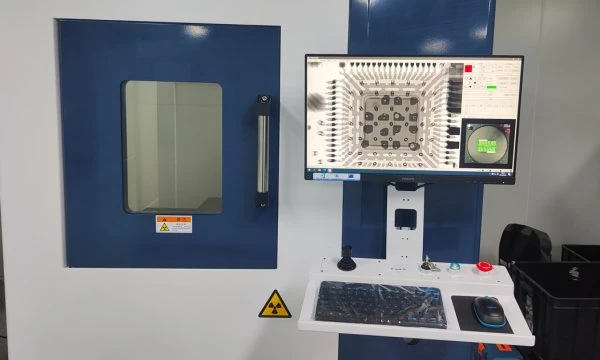
AOI Inspection

Automated Optical Inspection (AOI) has shifted from a luxury to a necessity in modern electronics manufacturing. As components shrink to 0201 or 01005 metric sizes and density increases, human visual inspection becomes unreliable and slow. AOI inspection uses high-resolution cameras and advanced lighting algorithms to scan printed circuit boards for catastrophic failures and quality defects.

At APTPCB (APTPCB PCB Factory), we integrate AOI as a standard gatekeeper in the Surface Mount Technology (SMT) line. This guide details how to implement, measure, and validate AOI processes to ensure high-yield production.

Key Takeaways

  • Definition: AOI is a non-contact testing method that uses optics to capture images of a PCB and compares them against a database or "Golden Board" to detect faults.
  • Primary Function: It detects visible surface defects such as missing components, polarity errors, skew, and solder bridge shorts.
  • Limitation: AOI cannot see hidden solder joints (like those under BGA or LGA packages); this requires X-Ray inspection.
  • Placement: It can be placed after solder paste printing, pre-reflow, or post-reflow, though post-reflow is the most common configuration for final quality assurance.
  • Metrics: The balance between "False Calls" (flagging good boards as bad) and "Escapes" (letting bad boards pass) is the critical measure of AOI efficiency.
  • Validation: Regular calibration using known defect samples is required to prevent algorithm drift.
  • Trend: The industry is moving from 2D inspection (top-down) to 3D inspection (volumetric measurement) to better detect lifted leads and coplanarity issues.

What aoi inspection really means (scope & boundaries)

Now that we have established the high-level takeaways, we must define the specific mechanical and software mechanisms that drive this technology. AOI inspection is not a single tool but a system comprising optics, lighting, and image processing software.

The Core Mechanism

The system captures images of the PCB assembly using a high-definition camera. It utilizes various light sources (LEDs in different colors and angles) to highlight specific features. For example, red light might illuminate the component body, while blue light reflects off the solder fillet. The software then analyzes these images using one of two primary methods:

  1. Image Matching: Compares the captured image to a stored image of a perfect "Golden Board."
  2. Algorithm-Based: Uses rules to calculate parameters (e.g., if the solder fillet pixel count is below X, it is a dry joint).

Scope of Detection

AOI is effective for visible features. It excels at identifying:

  • Component Defects: Missing parts, wrong values (if marked), wrong polarity, skewed placement, or tombstoning.
  • Solder Defects: Insufficient solder, excess solder, solder bridges (shorts), and solder balls.
  • Board Defects: Scratches or contamination on the PCB surface.

The 2D vs. 3D Evolution

Traditional 2D AOI looks at the board from a top-down perspective. It is fast and cost-effective but struggles with height-based defects like lifted leads. 3D AOI uses phase-shift profilometry or laser triangulation to measure the height of every pixel. This allows the system to calculate the volume of the solder fillet and the coplanarity of the component, significantly reducing false calls caused by shadows or board warpage.

aoi inspection metrics that matter (how to evaluate quality)

Understanding the definition is the first step; measuring the effectiveness of the machine in a live production environment is the next. An aoi inspection machine that flags every board is useless, as is one that passes every board. You must track specific metrics to tune the process.

Metric Why it matters Typical Range / Factors How to Measure
False Call Rate (FCR) High FCR slows down the line as operators must manually verify good boards. It causes "operator fatigue," leading them to approve actual defects. Target: < 500 PPM (Parts Per Million). Influenced by lighting stability and threshold settings. (Number of Good Boards Flagged / Total Components Inspected) × 1,000,000.
Escape Rate The most critical metric. An escape is a defect that the AOI missed and was sent to the customer. Target: 0. Influenced by camera resolution and algorithm coverage. (Defects Found Later in Test or Field / Total Defects) × 100%.
First Pass Yield (FPY) Indicates the health of the SMT process upstream. AOI is the measuring stick for the printer and pick-and-place machine. Target: > 98% for mature products. (Boards Passing AOI on First Run / Total Boards Input) × 100%.
Inspection Speed Determines if the AOI becomes the bottleneck of the SMT line. Range: 30–60 cm²/sec. Depends on resolution (microns per pixel). Total area of PCB / Cycle time per board.
Call Overkill Similar to False Call, but specifically refers to algorithms being too sensitive (e.g., flagging a valid solder joint as "insufficient" because it is slightly dull). Target: Low. Ratio of software flags to verified human confirmations.
Program Stability Measures if the AOI results are consistent across different batches or different machines. High stability required. Run the same "Golden Board" 50 times; results should be identical.

How to choose aoi inspection: selection guidance by scenario (trade-offs)

Once you know the metrics, you must apply them to specific manufacturing scenarios to decide the right inspection strategy. Not every board requires 3D inspection, and not every defect can be caught post-reflow.

Scenario 1: High-Volume Consumer Electronics

  • Challenge: Speed is the priority. The line beat rate is very fast.
  • Recommendation: High-speed 2D AOI or 3D AOI with reduced resolution.
  • Trade-off: You may accept a slightly higher false call rate to keep the line moving, relying on a dedicated rework station to filter them.

Scenario 2: Automotive or Aerospace (High Reliability)

  • Challenge: Zero escapes are permitted. Vibration resistance is critical.
  • Recommendation: Full 3D AOI post-reflow combined with SPI inspection (Solder Paste Inspection) pre-reflow.
  • Trade-off: Cycle time increases, and programming takes longer to fine-tune thresholds.

Scenario 3: 0201 or 01005 Micro-Components

  • Challenge: Components are too small for standard cameras; shadows from taller neighbors block the view.
  • Recommendation: High-resolution 3D AOI (10-12 micron resolution) with telecentric lenses.
  • Trade-off: The field of view (FOV) shrinks, meaning the camera must take more snapshots, significantly slowing down the inspection time.

Scenario 4: Tall Components and Connectors

  • Challenge: Tall parts cast shadows on smaller surrounding parts, causing false "missing component" calls.
  • Recommendation: Multi-angle lighting systems or side-view cameras.
  • Trade-off: Equipment cost is higher.

Scenario 5: Pre-Reflow vs. Post-Reflow

  • Pre-Reflow: Inspects placement accuracy and paste presence before soldering.
    • Pros: Defects can be fixed easily without a soldering iron.
    • Cons: Does not detect soldering defects like cold joints or tombstones that happen during reflow.
  • Post-Reflow: Inspects the final joint quality.
    • Pros: Catches the most critical electrical and mechanical failures.
    • Cons: Rework requires desoldering, which stresses the PCB.
  • Selection: Post-reflow is mandatory. Pre-reflow is optional but recommended for expensive high-density boards.

Scenario 6: SPI vs AOI: when to run each in pcba

  • SPI (Solder Paste Inspection): Focuses purely on the volume, height, and area of the solder paste deposit before component placement. It prevents defects at the source (printing process).
  • AOI: Focuses on component placement and finished solder joints.
  • How to choose: It is not an "either/or" choice for high-quality production. SPI prevents defects; AOI detects defects. If budget is limited, Post-Reflow AOI is the minimum requirement. For complex boards, running both is the industry standard to close the feedback loop.

aoi inspection implementation checkpoints (design to manufacturing)

aoi inspection implementation checkpoints (design to manufacturing)

Selecting the right strategy is crucial, but execution requires a strict checklist from design to assembly. Successful aoi inspection starts at the PCB layout stage.

Design for Manufacturing (DFM) Phase

  1. Component Clearance: Ensure enough space between components so the AOI camera can see the solder fillets at a 45-degree angle.
  2. Pad Design: Pads should be long enough to allow a visible solder meniscus (toe fillet) to form. If the component covers the entire pad, AOI cannot verify the joint.
  3. Fiducials: Include at least two (preferably three) global fiducial markers on the PCB panel rails and local fiducials for fine-pitch QFPs. This allows the AOI to align the coordinate system.
  4. Silkscreen Clarity: Avoid placing silkscreen ink over pads or too close to solder joints, as the high contrast can confuse the image processing algorithms.

Setup and Programming Phase

  1. CAD Data Import: Import XY coordinate data (Pick and Place file) directly into the AOI machine rather than teaching it manually. This reduces programming errors.
  2. Library Management: Maintain a central library of package definitions (e.g., an 0603 resistor package). Do not create a new definition for every new board; link to the central library to ensure consistency.
  3. Lighting Calibration: Calibrate the light intensity daily. LED degradation over time can change how a solder joint looks to the camera.
  4. Golden Board Creation: Scan a known "good board" to establish the baseline, but immediately follow up by scanning a "defect board" to verify detection capabilities.

Production Phase

  1. First Article Inspection: The first board of a run must pass AOI and be visually verified by a senior technician to ensure the program isn't generating false calls.
  2. False Call Tuning: During the first 50 boards, adjust the thresholds. If the machine flags a good joint, widen the acceptance criteria slightly—but never so much that it allows an escape.
  3. Data Feedback: Link the AOI data to the SMT line. If the AOI detects a trend of "skewed placement" on U12, alert the pick-and-place operator immediately.
  4. Maintenance: Clean the camera lenses and lighting modules weekly. Flux fumes can create a film on the optics, blurring the image.

aoi inspection common mistakes (and the correct approach)

Even with a solid implementation plan, specific operational errors can compromise results. Here are the most frequent pitfalls we see in the industry.

1. Relying on AOI for BGA Inspection

Mistake: Assuming AOI checks all components equally. Reality: AOI is line-of-sight. It cannot see the solder balls under a Ball Grid Array (BGA). Correction: You must use X-Ray Inspection for BGAs, LGAs, and QFNs with large thermal pads.

2. Ignoring the "Shadow Effect"

Mistake: Placing a small resistor right next to a tall electrolytic capacitor. Reality: The tall component blocks the light or the camera angle, creating a dark spot that the AOI interprets as a missing part. Correction: Adjust the layout during DFM or use a 3D AOI system with multi-directional projection lighting.

3. Over-Optimizing for Zero False Calls

Mistake: Loosening the parameters until the machine stops beeping. Reality: This almost guarantees that actual defects (Escapes) will pass through. Correction: Accept a small, manageable rate of false calls (e.g., 1-2 per panel) as the cost of security.

4. Neglecting PCB Color Variations

Mistake: Using the same program for a green PCB and a white PCB. Reality: The reflectivity of the solder mask changes the contrast. White PCBs reflect much more light, blinding the sensor. Correction: Create separate lighting profiles for different solder mask colors.

5. Forgetting Component Height Variations

Mistake: Programming a 3D AOI with a fixed height for a capacitor that has multiple suppliers. Reality: Supplier A's capacitor might be 1.0mm tall, while Supplier B's is 1.1mm. The AOI will flag Supplier B as "wrong part." Correction: Set height acceptance tolerances based on the datasheets of all approved vendors in the BOM.

6. Skipping Polarity Checks on Symmetrical Parts

Mistake: Not defining the polarity mark for LEDs or diodes that look symmetrical. Reality: The part is placed 180 degrees wrong, but the AOI passes it because the body shape matches. Correction: specifically program the algorithm to look for the cathode mark, notch, or chamfer.

aoi inspection FAQ (cost, lead time, materials, testing, acceptance criteria)

Avoiding mistakes ensures stability, but specific logistical questions often remain for buyers and engineers.

How does aoi inspection impact the cost of PCBA?

AOI is typically included in the standard assembly price for mass production at APTPCB. For very small prototype runs, there might be a small setup fee for programming. However, the cost of not using AOI (field failures) is exponentially higher.

Does AOI increase production lead time?

In a balanced line, AOI runs at the same speed as the pick-and-place machines, so it adds zero net time to the throughput. Programming takes 1-3 hours depending on complexity, which is absorbed during the SMT setup phase.

Can AOI detect wrong component values?

Only if the value is printed on the component body (e.g., "103" on a resistor). It cannot electrically measure the value. Multilayer ceramic capacitors (MLCCs) usually have no markings; if a reel is loaded incorrectly, AOI cannot detect that a 100nF cap was placed instead of 10nF. This requires electrical testing (ICT).

How does PCB surface finish affect AOI?

HASL (Hot Air Solder Leveling) is uneven and shiny, which can cause variable reflections that confuse 2D AOI. ENIG (Electroless Nickel Immersion Gold) is flatter and more consistent, making it easier for AOI to inspect.

What acceptance criteria does AOI use?

AOI is programmed based on industry standards, typically IPC-A-610 Class 2 (Standard) or Class 3 (High Reliability). You must specify the class in your RFQ so the threshold for solder fillet volume is set correctly.

Does AOI replace Functional Circuit Testing (FCT)?

No. AOI checks for structural integrity (is the part there? is it soldered?). FCT checks for functional performance (does it turn on? is the voltage correct?). They are complementary.

What is the difference between Offline and Inline AOI?

  • Inline: The machine is integrated into the conveyor system. Boards flow automatically. Best for mass production.
  • Offline: An operator manually loads and unloads boards. Best for batch production or NPI (New Product Introduction).

Can AOI inspect flexible PCBs?

Yes, but Flex PCBs require a vacuum fixture or a magnetic carrier to keep them perfectly flat. If the flex board lifts, the focus depth changes, causing false calls.

To deepen your understanding of where AOI fits into the broader manufacturing ecosystem, explore these related capabilities at APTPCB:

  • SPI Inspection: Learn about the pre-reflow defense line that works in tandem with AOI.
  • X-Ray Inspection: The necessary solution for inspecting BGA and QFN components that AOI cannot see.
  • Quality System: An overview of how we integrate various testing methods (AOI, ICT, FCT) into a total quality management framework.
  • SMT & THT Assembly: The core assembly process where AOI is physically located.

aoi inspection glossary (key terms)

To ensure clear communication across all resources and with your manufacturing partner, here are the standard definitions used in AOI.

Term Definition
Algorithm The set of mathematical rules the software uses to analyze the image (e.g., edge detection, pattern matching).
CAD Data The XY coordinate and rotation data generated from the PCB design software, used to program the AOI.
Escape A defect that the AOI machine failed to detect and passed as "Good."
False Call A good component or joint that the AOI machine incorrectly flagged as "Defective."
Fiducial A copper marker on the PCB used by the camera to align the board's position and correct for skew.
FOV (Field of View) The area of the board that the camera can see in a single snapshot.
Golden Board A known good board used to teach the AOI system what a perfect assembly looks like.
OCR (Optical Character Recognition) Software feature that reads the text on component bodies to verify part numbers.
Parallax The apparent displacement of an object when viewed from different lines of sight; a challenge for 3D inspection.
Reflow The process of melting solder paste to attach components; AOI usually occurs immediately after this.
Shadowing When a tall component blocks the light source from reaching a shorter adjacent component.
Threshold The numerical limit set in the software (e.g., brightness, contrast, height) that determines pass/fail.
Tombstoning A defect where a component stands up on one end due to uneven wetting forces during reflow.
Warp The bending of the PCB; AOI systems must map the board surface to compensate for this Z-axis variation.

Conclusion (next steps)

AOI inspection is the backbone of quality control in modern electronics manufacturing. It provides the speed and consistency that human operators cannot match, ensuring that issues like tombstoning, shorts, and missing parts are caught before the product leaves the factory. However, it is not a "set and forget" tool; it requires careful selection between 2D and 3D technologies, rigorous programming based on IPC standards, and constant validation.

At APTPCB, we configure our AOI lines to match the complexity of your specific design, ensuring high yield and reliability.

Ready to move to production? When submitting your data for a quote or DFM review, please provide:

  1. Gerber Files (including paste and silk layers).
  2. Centroid/Pick-and-Place File (XY coordinates).
  3. BOM (Bill of Materials) with approved manufacturer parts.
  4. Inspection Class (IPC Class 2 or 3).
  5. Specific Requirements (e.g., "Inspect for label text accuracy").

This data allows us to build a robust inspection program that minimizes false calls and eliminates escapes.