
Definition, scope, and who this guide is for
Designing and procuring printed circuit boards for high-performance audio creates a unique intersection of challenges: you need the pristine signal integrity of an RF board combined with the rigorous safety standards of a power supply. This playbook is written for hardware engineers, procurement leads, and product managers who are responsible for bringing audio devices to market. It specifically addresses the audio equipment safety compliance pcb, a critical component where regulatory failure can mean product recalls, and signal failure means poor market reception.
In this guide, we move beyond basic fabrication notes. We focus on the specific engineering decisions that ensure your PCB meets safety standards like IEC 62368-1 and UL 60065 while maintaining the low noise floor required for high-fidelity output. You will find actionable specifications for materials, a breakdown of hidden manufacturing risks that introduce noise or safety hazards, and a validation plan to prove your design works before mass production.
Finally, we provide a buyer-ready checklist. This tool helps you audit potential suppliers, ensuring they have the process controls necessary to handle complex stackups and strict tolerance requirements. Whether you are building a wifi 7 home audio pcb or a high-voltage tube amplifier, this guide helps you navigate the trade-offs between cost, safety, and sonic performance.
When to use audio equipment safety compliance pcb (and when a standard approach is better)
Understanding the scope of this playbook requires identifying when standard PCB manufacturing is insufficient and when a specialized safety compliance approach is mandatory.
This approach is critical when:
- High Voltage is Present: If your device includes internal power supplies, tube amplification, or Class-D output stages exceeding safety extra-low voltage (SELV) limits, you must prioritize creepage, clearance, and dielectric strength.
- Certification is Required: For products targeting global markets requiring CE, UL, or FCC certification, the PCB itself is a safety-critical component. The material's flammability rating (UL94 V-0) and Comparative Tracking Index (CTI) become non-negotiable.
- Noise Sensitivity is Extreme: In
hires audio certification pcbdesigns, the noise floor must be virtually non-existent. Standard FR4 might be too lossy, or standard etching tolerances might create impedance mismatches that degrade signal quality. - Thermal Loads are High: High-power amplifiers generate significant heat. A
metal backed audio pcbor heavy copper design is often necessary to dissipate heat without active cooling fans that introduce acoustic noise. - Wireless Integration: Modern
multiroom audio hub pcbdesigns integrate complex RF signals (Bluetooth, Wi-Fi). These require strict isolation from the analog audio path to prevent digital noise injection.
This approach may be overkill when:
- Battery-Powered, Low-Voltage Gadgets: Simple Bluetooth trackers or low-power toys often do not reach the voltage thresholds that trigger complex safety compliance audits.
- Prototyping for Function Only: If you are merely testing a circuit topology on a bench and not preparing for certification or mass production, strict compliance documentation can be deferred.
audio equipment safety compliance pcb specifications (materials, stackup, tolerances)
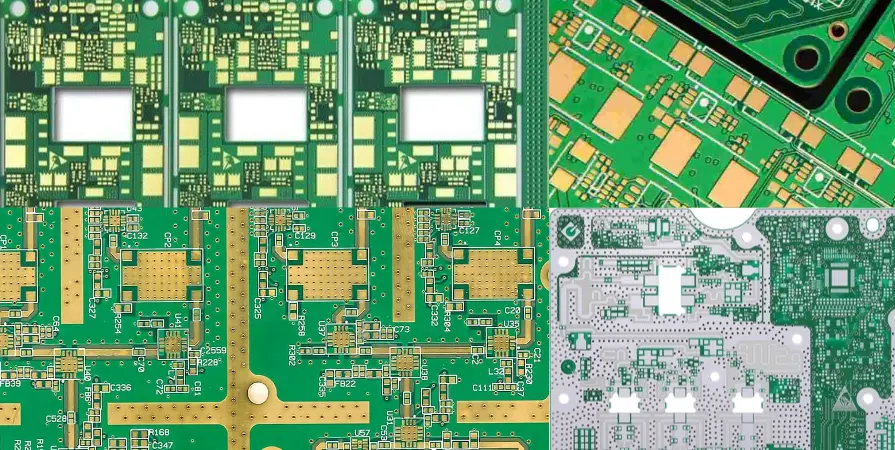
Once you determine that a safety-compliant audio PCB is necessary, you must translate performance goals into manufacturing specifications. Ambiguity here leads to compliance failures later.
- Base Material (Laminate) & CTI: Specify the Comparative Tracking Index (CTI). For high-voltage audio, request PLC 0 or PLC 1 materials (CTI > 400V or 600V). This prevents electrical breakdown across the surface under humid conditions. Standard FR4 is often PLC 3; ensure your supplier stocks high-CTI laminates.
- Flammability Rating: Explicitly require UL94 V-0 certification. The supplier must provide their UL file number for the specific laminate and solder mask combination used. This is the first thing safety auditors check.
- Copper Weight and Tolerance: For power rails in amplifiers, specify heavy copper (2oz, 3oz, or more). Crucially, define the finished copper thickness, not just the starting foil weight. Define etching tolerances (e.g., ±10%) to ensure current-carrying capacity is not compromised by over-etching.
- Solder Mask Dielectric Strength: The solder mask is an insulation layer. Specify a mask with high dielectric strength and ensure it is fully cured. Inconsistent curing can lead to breakdown under high voltage.
- Impedance Control for Digital Audio:
For
wifi 7 home audio pcbor HDMI/USB inputs, define impedance targets (e.g., 90Ω differential, 50Ω single-ended) with a tolerance of ±5% or ±10%. This ensures digital data integrity before conversion to analog. - Surface Finish: Select Electroless Nickel Immersion Gold (ENIG) or Immersion Silver. These provide flat surfaces for fine-pitch components and, unlike HASL, do not introduce thickness variations that can affect high-frequency impedance.
- Via Plugging and Tenting: For safety isolation, vias in high-voltage areas should be fully plugged and capped (IPC-4761 Type VII) to prevent arcing or solder wicking that could bridge isolation gaps.
- Cleanliness (Ionic Contamination): Specify a maximum ionic contamination level (e.g., < 1.56 µg/cm² NaCl equivalent). Residues can cause dendritic growth (electrochemical migration) over time, leading to shorts and safety failures.
- Bow and Twist: Audio equipment often uses large chassis. Specify a strict bow and twist tolerance (e.g., < 0.75% or 0.5%) to ensure the PCB fits into the enclosure without stress, which can crack ceramic capacitors (a fire risk).
- Layer Stackup for EMI:
Define a stackup that prioritizes ground planes. An
audio emi shielded pcboften requires internal ground layers to shield sensitive analog traces from noisy power or digital layers. - Silkscreen Markings: Mandate that all safety-critical components (fuses, transformers) have clear, legible markings on the silkscreen as per compliance standards.
- Thermal Conductivity:
If using a
metal backed audio pcb(IMS), specify the dielectric thermal conductivity (e.g., 2W/mK or 3W/mK) and the breakdown voltage of the dielectric layer (e.g., > 3kV).
audio equipment safety compliance pcb manufacturing risks (root causes and prevention)
Defining specs is step one; understanding where the process breaks down is step two. These risks often appear only during mass production or compliance testing.
- Creepage Distance Reduction via Etching:
- Risk: The PCB designer sets a 3mm gap for safety. The manufacturer under-etches, leaving the copper slightly wider, reducing the gap to 2.8mm.
- Detection: Automated Optical Inspection (AOI) calibrated to measure spacing, not just connectivity.
- Prevention: Set "minimum spacing" design rules larger than the regulatory minimum to account for manufacturing tolerances.
- Solder Mask Voids in High-Voltage Areas:
- Risk: Tiny bubbles or skips in the solder mask expose copper. Over time, dust and humidity create a conductive path, leading to arcing.
- Detection: 100% Visual Inspection or specialized electrical testing.
- Prevention: Require double-coating of solder mask in high-voltage zones.
- CAF (Conductive Anodic Filament) Growth:
- Risk: In high-voltage, high-humidity environments, copper filaments grow along the glass fibers inside the PCB, causing internal shorts.
- Detection: Highly accelerated stress testing (HAST) on coupons.
- Prevention: Specify "CAF-resistant" materials (tight glass weave, specialized resin).
- Inconsistent Dielectric Constant (Dk):
- Risk: Variations in the FR4 resin content change the capacitance of traces. In
hires audio certification pcbdesigns, this alters filter cutoff frequencies and phase response. - Detection: Impedance testing on every batch.
- Prevention: Specify specific laminate brands or series (e.g., Isola, Panasonic) rather than generic "FR4".
- Risk: Variations in the FR4 resin content change the capacitance of traces. In
- Ground Loops via Poor Panelization:
- Risk: How the PCB is connected to the panel frame (break-away tabs) can leave copper burrs or expose ground planes, creating unintended chassis contact points.
- Detection: Physical inspection of depaneled boards.
- Prevention: Define "mouse bite" locations away from sensitive ground areas and specify edge sanding/milling.
- Thermal Stress Cracking:
- Risk: Large audio capacitors and transformers act as heat sinks. During wave soldering, the thermal shock can crack plated through-holes (PTH).
- Detection: Cross-section analysis after thermal cycling.
- Prevention: Use high-Tg (Glass Transition Temperature) materials and optimize thermal relief pad designs.
- Counterfeit Materials:
- Risk: A supplier swaps a specified high-CTI laminate for a standard one to save cost. The board looks identical but fails safety testing.
- Detection: Periodic material analysis (FTIR/TGA) or requesting Certificate of Conformance (CoC) from the laminate manufacturer.
- Prevention: Audit the supplier’s incoming material inspection process.
- Residue-Induced Noise:
- Risk: No-clean flux residues are usually safe, but in high-impedance audio circuits, they can be slightly conductive, raising the noise floor.
- Detection: Surface Insulation Resistance (SIR) testing.
- Prevention: Require a wash process even for no-clean fluxes if the circuit is highly sensitive.
audio equipment safety compliance pcb validation and acceptance (tests and pass criteria)

To ensure your audio equipment safety compliance pcb is truly safe and performant, you must validate the manufacturing output rigorously.
- Electrical Safety (Hi-Pot) Test:
- Objective: Verify isolation between primary (mains) and secondary (audio) circuits.
- Method: Apply high voltage (e.g., 1500V AC or 2121V DC) across isolation barriers.
- Acceptance: Leakage current < 1mA (or as per standard), no breakdown.
- Impedance Verification:
- Objective: Confirm digital audio and RF traces meet design specs.
- Method: TDR (Time Domain Reflectometry) on test coupons included in the panel.
- Acceptance: Measured impedance within ±10% of target.
- Microsection (Cross-Section) Analysis:
- Objective: Verify plating thickness, layer registration, and hole wall quality.
- Method: Slice a sample PCB, polish, and view under a microscope.
- Acceptance: Copper thickness meets spec (e.g., >25µm in holes), no cracks, good resin fill.
- Solderability Test:
- Objective: Ensure pads will solder correctly during assembly.
- Method: Dip and look / Wetting balance test.
- Acceptance: >95% coverage, smooth coating.
- Thermal Stress Test:
- Objective: Simulate soldering and operating heat.
- Method: Float in solder at 288°C for 10 seconds (multiple cycles).
- Acceptance: No delamination, no blistering, no lifted pads.
- Ionic Contamination Test:
- Objective: Ensure board cleanliness to prevent corrosion/leakage.
- Method: ROSE test (Resistivity of Solvent Extract).
- Acceptance: < 1.56 µg/cm² NaCl equivalent.
- Dimensional Measurement:
- Objective: Verify physical fit and creepage distances.
- Method: CMM (Coordinate Measuring Machine) or calibrated optical measurement.
- Acceptance: All dimensions within tolerance; critical safety spacings must not be under minimum.
- Peel Strength Test:
- Objective: Ensure copper traces won't lift, especially for heavy components.
- Method: Pull test on copper strips.
- Acceptance: > 1.1 N/mm (or per IPC standard).
- Solder Mask Adhesion:
- Objective: Ensure mask won't flake off and expose copper.
- Method: Tape test (IPC-TM-650).
- Acceptance: No mask removal.
- Warp and Twist Measurement:
- Objective: Ensure flatness for assembly.
- Method: Place on surface plate, measure maximum lift.
- Acceptance: < 0.75% diagonal dimension.
audio equipment safety compliance pcb supplier qualification checklist (RFQ, audit, traceability)
Use this checklist when engaging with a manufacturer like APTPCB (APTPCB PCB Factory) or evaluating new vendors. It separates capable partners from risky ones.
Group 1: RFQ Inputs (What you ask for)
- Are UL file numbers for the specific laminate/mask combination provided in the quote?
- Is the CTI value of the laminate explicitly stated?
- Is the finished copper weight defined (after plating)?
- Are impedance control requirements clearly listed with specific layers?
- Is the surface finish thickness specified (e.g., ENIG gold thickness)?
- Are tolerance requirements for outline and drilling explicitly stated?
- Is the requirement for CAF-resistant material noted?
- Are there specific instructions for via plugging/tenting in high-voltage areas?
Group 2: Capability Proof (What they must demonstrate)
- Can they provide a valid UL certificate (ZPMV2) for the requested stackup?
- Do they have experience with
metal backed audio pcbor heavy copper (>3oz)? - Can they achieve the required minimum trace/space for your high-density areas?
- Do they have in-house TDR equipment for impedance testing?
- Can they handle the specific material brands (Rogers, Isola, Panasonic) you need?
- Do they have experience with
multiroom audio hub pcbdesigns involving RF?
Group 3: Quality System & Traceability
- Is the facility ISO 9001 and ISO 14001 certified?
- Do they perform 100% Electrical Testing (Open/Short) on all boards?
- Is AOI (Automated Optical Inspection) used on inner layers before lamination?
- Can they provide microsection reports for every production batch?
- Do they have a system to trace raw materials back to the supplier batch?
- Is there a defined procedure for handling non-conforming products?
Group 4: Change Control & Delivery
- Do they have a formal PCN (Product Change Notification) process? (Crucial: they cannot change materials without asking).
- What is the standard lead time for NPI vs. Mass Production?
- Do they offer DFM (Design for Manufacturing) review prior to production?
- How are PCBs packaged to prevent moisture absorption (vacuum sealed + desiccant)?
- Can they provide a Certificate of Compliance (CoC) with every shipment?
- Do they have a disaster recovery plan for supply chain disruptions?
How to choose audio equipment safety compliance pcb (trade-offs and decision rules)
Engineering is the art of compromise. Here is how to navigate the common trade-offs in audio equipment safety compliance pcb design.
- Material: FR4 vs. Specialized Audio Laminates
- Trade-off: Standard FR4 is cheap but has higher dielectric absorption (smearing transients). Specialized laminates (like Rogers) sound better but cost 3-5x more.
- Guidance: Use high-grade FR4 for power supplies and digital logic. Use specialized laminates only for the analog signal path or RF sections.
- Copper Thickness: 1oz vs. 2oz+
- Trade-off: Thicker copper lowers resistance (good for power) but limits fine-line etching (bad for high-density digital).
- Guidance: If you need both, consider a hybrid stackup or bus bars. For pure amplifiers, prioritize copper weight. For
wifi 7 home audio pcb, prioritize fine-line capability (1oz or 0.5oz).
- Surface Finish: HASL vs. ENIG
- Trade-off: HASL is durable and cheap but uneven. ENIG is flat and conductive but more expensive.
- Guidance: Always choose ENIG for audio. The flat surface ensures better contact for components, and the gold/nickel interface is stable. HASL unevenness can cause issues with fine-pitch ICs used in modern DACs.
- Solder Mask: Green vs. Black/White
- Trade-off: Green is standard and allows easy visual inspection of traces. Black/White looks "premium" but makes visual inspection and troubleshooting difficult.
- Guidance: Stick to Green or Blue for prototypes and initial runs. Switch to Matte Black only after the design is fully validated and yield is high.
- Layer Count: 2-Layer vs. 4-Layer+
- Trade-off: 2-layer is cheaper. 4-layer allows dedicated ground/power planes.
- Guidance: For any
hires audio certification pcb, 4 layers are the minimum entry point. The improvement in noise immunity from a solid ground plane far outweighs the cost difference.
audio equipment safety compliance pcb FAQ (cost, lead time, Design for Manufacturability (DFM) files, stackup, impedance, Inconsistent Dielectric Constant (DK)/Df)
Q: Does the color of the PCB affect audio quality?
- Technically, some black solder masks have slightly different carbon content which could theoretically affect impedance, but in 99% of cases, it is negligible. The bigger issue is that black mask makes it hard to see traces for debugging.
Q: What is the difference between UL94 V-0 and 94HB?
- V-0 self-extinguishes within 10 seconds on a vertical specimen; it is mandatory for most consumer electronics. 94HB is a horizontal burn test and is generally not acceptable for mains-powered audio equipment.
Q: Why is CTI important for audio amps?
- High-power amps have high internal voltages. A low CTI means the PCB material can carbonize and become conductive if it gets dirty or moist, leading to catastrophic failure. High CTI prevents this tracking.
Q: Can I use a metal-core PCB for a Class A amplifier?
- Yes, and it is recommended. Class A amps are inefficient and hot. A
metal backed audio pcbacts as part of the thermal management system, transferring heat from transistors to the chassis.
Q: How do I reduce EMI in a mixed-signal audio board?
- Separate analog and digital grounds, join them at a single point (star ground), and use internal layers for shielding. Ensure return paths do not cross split planes.
Q: What is the best way to specify "cleanliness" to a supplier?
- Reference IPC-5704 or specify a maximum equivalent sodium chloride level (e.g., 1.56 µg/cm²). Ask for ionic contamination testing reports.
Q: Do I need to test impedance on an analog audio board?
- For pure analog, usually no. However, if you have digital audio interfaces (I2S, USB, HDMI), impedance control is critical to prevent jitter and data errors.
Q: What files does APTPCB need to quote accurately?
- Gerber files (RS-274X), Drill files, Stackup diagram, and a ReadMe file containing material specs, color, finish, and special requirements (like CTI or impedance).
Resources for audio equipment safety compliance pcb (related pages and tools)
- High Frequency PCB Manufacturing – Why specialized materials matter for maintaining signal integrity in high-resolution audio chains.
- Metal Core PCB Capabilities – Essential reading for designers managing heat in Class A or high-power Class D amplifiers.
- PCB Quality Control System – Understand the specific certifications and inspection steps that ensure safety compliance.
- Impedance Calculator – A tool to help you define trace widths for digital audio interfaces like USB and HDMI.
- PCBA Testing & Quality – Learn how assembly-level testing (ICT, FCT) complements PCB-level safety checks.
- Heavy Copper PCB – Details on handling high current loads for power supply sections in audio equipment.
Request a quote for audio equipment safety compliance pcb (Design for Manufacturability (DFM) review + pricing)
Ready to move from design to production? Request a quote from APTPCB today to get a comprehensive DFM review alongside your pricing.
To get the most accurate safety-compliant quote, please include:
- Gerber Files: Including all copper, mask, and drill layers.
- Fabrication Drawing: Clearly stating CTI requirements, UL markings, and finished copper weight.
- Stackup Details: Desired layer order and dielectric thicknesses.
- Volume: Prototype quantity vs. expected mass production volume.
- Testing Requirements: Specify if you need Hi-Pot or Impedance reports included.
Conclusion (next steps)
Sourcing an audio equipment safety compliance pcb is about more than just finding a vendor who can etch copper. It requires a partner who understands the gravity of high-voltage safety, the nuance of low-noise signal paths, and the strict documentation required for global certification. By defining your requirements clearly, validating the risks early, and auditing your supplier against a strict checklist, you ensure that your audio product sounds incredible and operates safely in any environment.