
Key Takeaways
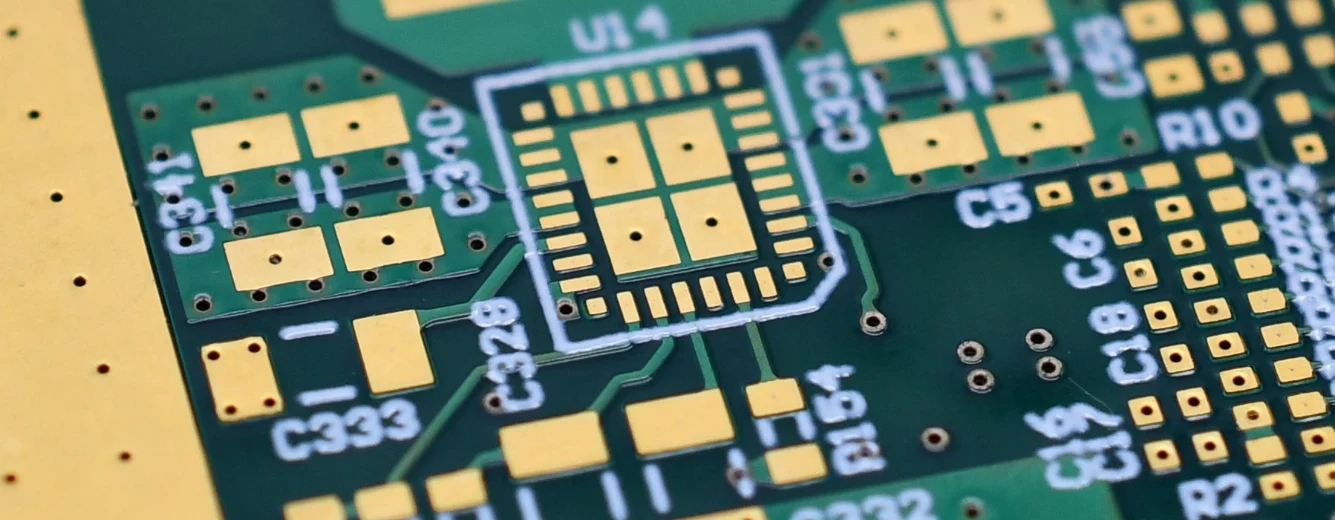
- Definition: An 800G OSFP transceiver PCB (often just called an OSFP board) is the high-speed printed circuit board that carries an Octal Small Form-factor Pluggable module running at 800 Gbps: the cage footprint, the DSP or retimer routing, and the module power delivery. An automotive-grade version adds the vibration, temperature, and humidity requirements of a vehicle.
- Critical Metric: Signal Integrity (SI) is the primary driver; insertion loss must be minimized to support 112G PAM4 signaling per lane.
- Material Necessity: Standard FR4 is insufficient; ultra-low loss materials (like Megtron 7 or Tachyon 100G) are mandatory to prevent signal attenuation.
- Thermal Challenge: OSFP modules generate significant heat; the PCB design must integrate advanced thermal management strategies unlike standard logic boards.
- Validation: Testing goes beyond standard electrical checks to include vibration, thermal shock, and humidity cycling compliant with automotive standards.
- Misconception: High speed does not equal fragility; these boards must be as robust as an
automotive-grade BMS balancing boarddespite their delicate signal traces. - APTPCB Role: APTPCB (APTPCB PCB Factory) specializes in bridging the gap between data-center speeds and automotive reliability standards.
What “OSFP 800G transceiver board” means (scope & boundaries)
An OSFP board has the same job everywhere: move eight lanes of 112 Gbps PAM4 between the module and the host ASIC or DSP without losing the eye. Most 800G OSFP boards go into switches and servers; the optical module PCB guide covers the module side, and server PCB builds cover the host side. This article focuses on the board-level checklist and on what changes when the same link has to survive a vehicle.
As autonomous driving levels advance (L4/L5), vehicles are becoming "data centers on wheels." The OSFP (Octal Small Form-factor Pluggable) standard, originally built for climate-controlled server rooms, is now being adapted for the automotive sector to handle massive sensor data throughput. An automotive-grade OSFP 800G transceiver board acts as the physical interface between the optical or copper network and the vehicle's central compute unit.
Unlike a standard server board, this PCB must survive the "automotive grade" gauntlet. It faces temperature extremes (-40°C to +105°C or higher), constant vibration, and potential chemical exposure. While an automotive-grade On-board charger PCB focuses on high voltage and current, the OSFP board focuses on preserving the integrity of extremely fast, low-voltage signals (112 Gbps PAM4 per lane). The scope of this board includes the cage connector footprint, the re-timer or DSP routing, and the power delivery network required to energize the transceiver.
Metrics that matter (how to evaluate quality)
Once the scope is defined, engineers must quantify performance using specific metrics to ensure the automotive-grade OSFP 800G transceiver board functions correctly.
The margin for error at 800G is microscopic. A deviation in impedance that would be acceptable on an automotive-grade ECG acquisition board could cause total link failure in an 800G system.
| Metric | Why it matters | Typical range or influencing factors | How to measure |
|---|---|---|---|
| Insertion Loss (IL) | Determines how much signal strength is lost over distance. High loss kills 800G links. | < 1.0 dB/inch @ 28 GHz (Nyquist). Dependent on material Df and copper roughness. | VNA (Vector Network Analyzer) S-parameters (S21). |
| Return Loss (RL) | Measures signal reflection caused by impedance mismatches. Reflections corrupt data. | < -10 dB up to 40 GHz. Influenced by via stubs and connector transitions. | VNA S-parameters (S11). |
| Differential Impedance | Matches the transceiver and cable to prevent reflections. | 85Ω or 100Ω ±5% (tighter than the standard ±10%). | TDR (Time Domain Reflectometry). |
| Glass Transition (Tg) | Ensures the board survives automotive thermal cycling without delamination. | High Tg (> 170°C) is mandatory for automotive reliability. | TMA (Thermomechanical Analysis). |
| Skew (Intra-pair) | Time delay difference between P and N lines. Destroys the "eye" of the signal. | < 5 ps/inch. Controlled by fiber weave selection (spread glass). | TDR or VNA. |
| CAF Resistance | Prevents electrochemical migration in humid automotive environments. | Must pass 1000h @ 85°C/85% RH. | High Voltage Bias Testing. |
How are 800G transceivers thermally tested?
OSFP modules dissipate a lot of power in a small cage, so thermal testing of 800G transceivers happens at two levels, and the PCB affects both.
| Test | What it checks | Where the PCB matters |
|---|---|---|
| Temperature testing (operating range) | The link holds BER and the module stays below its case-temperature limit at the hot and cold ends of the specified range | Thermal vias under the cage and power ICs, copper spreading, airflow path past the cage |
| Thermal cycling | Repeated hot-cold swings do not crack vias, pads, or press-fit joints | Low Z-axis CTE laminate, via aspect ratio, plating quality, press-fit hole tolerance |
| Thermal shock (automotive and rugged builds) | Fast transitions do not cause delamination or barrel cracks | Laminate Tg and decomposition margin, resin-glass bond, lamination control |
| Humidity bias / CAF | Fine-pitch vias do not grow conductive filaments under moisture and voltage | Resin system, glass style, hole-to-hole spacing |
Test limits, cycle counts, and dwell times come from the module specification, the system owner, and any automotive qualification plan. The bare-board side of the job is to supply laminate data, coupons, and cross-section evidence that match the qualification route. Ask for those deliverables in the RFQ instead of assuming they come by default.
How to choose (trade-offs by scenario)
With the metrics established, the next step is selecting the right design approach and materials based on the specific deployment scenario of the automotive-grade OSFP 800G transceiver board.
There is no "one size fits all" in automotive electronics. A board located in a climate-controlled cabin has different requirements than one near the powertrain.
Scenario 1: The Central Compute Unit (Cabin)
- Priority: Maximum Signal Integrity.
- Trade-off: Higher cost for ultra-low loss materials (e.g., Megtron 7).
- Guidance: Use HVLP (High Very Low Profile) copper foil to minimize skin effect losses. The environment is relatively stable, so standard high-Tg resin systems work well.
Scenario 2: Sensor Fusion Hub (Near Engine/Motor)
- Priority: Thermal Stability and Vibration.
- Trade-off: Increased thickness and mechanical reinforcement.
- Guidance: Requires materials with a low Z-axis CTE (Coefficient of Thermal Expansion) to prevent via cracking during thermal shock. Similar robustness to an
automotive-grade 48V VRM boardis needed for the power sections.
Scenario 3: Long-Haul Autonomous Trucking
- Priority: Long-term Reliability (15+ year lifespan).
- Trade-off: Conservative design rules (wider lines/spaces) to reduce failure risk.
- Guidance: Avoid aggressive HDI if possible. Use spread glass weaves to prevent skew and potential CAF issues over long durations.
Scenario 4: Prototype / R&D Vehicles
- Priority: Speed of Fabrication.
- Trade-off: Lower environmental durability (acceptable for lab testing).
- Guidance: Standard high-speed materials may be substituted if automotive-grade laminates have long lead times, provided the vehicle isn't doing extreme weather testing.
Scenario 5: High-Density Zone (Space Constrained)
- Priority: Miniaturization.
- Trade-off: Higher crosstalk risk.
- Guidance: Use Any-layer HDI. This allows for tighter routing of the 800G lanes but requires rigorous simulation to ensure crosstalk doesn't degrade the Bit Error Rate (BER).
Scenario 6: Integrated Antenna/Communication Module
- Priority: RF Performance mixed with Digital.
- Trade-off: Complex hybrid stackup.
- Guidance: Similar to an
automotive-grade Beamforming module board, you may need to mix PTFE-based materials for RF sections with high-Tg FR4 for the digital logic to balance cost and performance.
In any hybrid build, only the 112G lanes need the ultra-low-loss laminate. Power, control, and low-speed layers can often use a high-Tg mid-loss system such as Isola FR408HR, provided the fabricator confirms the material combination and lamination cycle.
Implementation checkpoints (design to manufacturing)
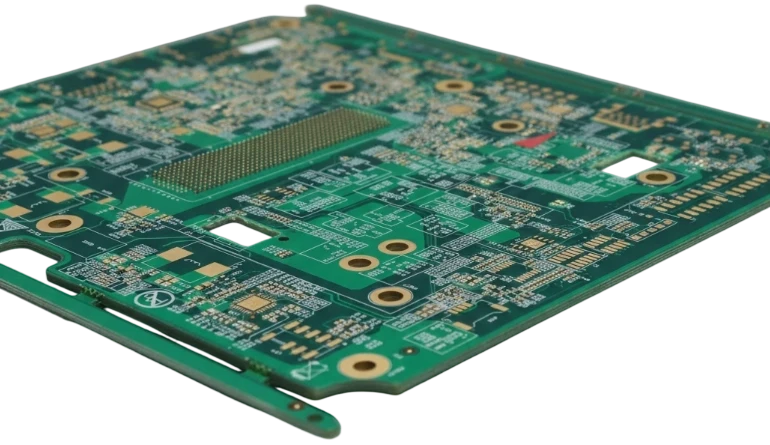
After selecting the right strategy, the focus shifts to the rigorous execution of the automotive-grade OSFP 800G transceiver board design and manufacturing process.
APTPCB recommends following these checkpoints to ensure the final product meets both AEC-Q standards and 800G performance requirements.
Stackup Validation:
- Action: Confirm material availability and impedance calculations with the fab house before routing.
- Risk: Redesigning the board because a specific prepreg thickness is out of stock.
- Acceptance: Signed stackup sheet from the CAM engineer.
Anti-Pad Optimization:
- Action: Simulate the via transitions for the OSFP connector pins. The anti-pad size heavily influences capacitance.
- Risk: High return loss at the connector interface.
- Acceptance: 3D EM Simulation report showing < -10dB RL.
Backdrilling Definition:
- Action: Identify all high-speed vias requiring backdrilling to remove stubs.
- Risk: Stubs act as antennas, causing resonance that kills 800G signals.
- Acceptance: Drill files clearly marking backdrill layers and depth.
Fiber Weave Selection:
- Action: Specify "spread glass" (e.g., 1067, 1078) or rotate the design 10 degrees.
- Risk: Fiber weave effect causing skew between differential pairs.
- Acceptance: Material datasheet confirmation in the BOM.
Surface Finish Selection:
- Action: Use Immersion Silver or ENEPIG. Avoid HASL.
- Risk: HASL is too uneven for fine-pitch OSFP components and hurts signal integrity.
- Acceptance: Finish specified in fabrication notes.
Thermal Via Placement:
- Action: Place thermal vias under the OSFP cage and power management ICs.
- Risk: Overheating causes the transceiver to throttle or fail.
- Acceptance: Thermal simulation showing junction temps stay within limits.
Cleanliness Requirements:
- Action: Specify ionic contamination limits.
- Risk: Dendritic growth (shorts) in humid automotive environments.
- Acceptance: Ionic chromatography test results < 1.56 µg/cm² NaCl equivalent.
Automotive Traceability:
- Action: Implement unique serialization (QR/Data Matrix) on every board.
- Risk: Inability to track a batch failure in the field.
- Acceptance: Laser marking verification during Final Quality Inspection.
Common mistakes (and the correct approach)
Even with a solid plan, specific pitfalls often plague the development of the automotive-grade OSFP 800G transceiver board.
Avoiding these errors saves weeks of debugging and thousands of dollars in re-spins.
- Mistake 1: Treating it like a standard server board.
- Correction: Server boards don't vibrate. You must add teardrops to all pads and use flexible solder mask to prevent cracking under automotive vibration.
- Mistake 2: Ignoring the "Reference Plane" continuity.
- Correction: At 800G, crossing a split plane is fatal. Ensure continuous ground reference for all high-speed lanes.
- Mistake 3: Neglecting the Power Delivery Network (PDN).
- Correction: 800G transceivers have large current spikes. If the PDN impedance is too high, voltage droop will cause bit errors. Use low-inductance capacitors close to the pins.
- Mistake 4: Using standard FR4 for the whole stack.
- Correction: While you can use hybrid stackups to save money, the signal layers must be low-loss material. Do not compromise here.
- Mistake 5: Overlooking connector press-fit forces.
- Correction: OSFP cages often use press-fit pins. Ensure the PCB is thick enough and rigid enough to withstand insertion force without warping.
- Mistake 6: Forgetting Conformal Coating compatibility.
- Correction: Automotive boards often need coating. Ensure the OSFP connector area is masked off properly so coating doesn't wick into the contact fingers.
FAQ (cost, lead time, materials, testing, acceptance criteria)
Addressing common questions helps clarify the logistical and technical realities of sourcing an automotive-grade OSFP 800G transceiver board.
Q: What is an OSFP board? A: An OSFP board is the host or module PCB that carries an OSFP (Octal Small Form-factor Pluggable) transceiver. For 800G it routes eight 112 Gbps PAM4 lanes, so it needs low-loss laminate, controlled impedance, backdrilled or stub-free vias, and a thermal path for the module.
Q: How does the cost of an automotive-grade OSFP 800G transceiver board compare to a standard data center board? A: The automotive version is typically 30-50% more expensive. This is due to the requirement for specialized high-Tg, low-loss materials, stricter testing and quality protocols (like IPC Class 3), and traceability requirements.
Q: What is the typical lead time for these high-performance boards? A: Lead times are generally longer, often 4-6 weeks. The specialized laminates (like Rogers or high-end Isola) may not be in standard stock and require procurement time.
Q: Which materials are best for automotive-grade OSFP 800G transceiver board fabrication? A: Materials must offer both low loss and high thermal reliability. Panasonic Megtron 7 (or 8), Isola Tachyon 100G, and Rogers RO4000 series are common choices. They maintain stable Dielectric Constant (Dk) across the wide automotive temperature range.
Q: What specific testing is required for automotive acceptance criteria? A: Beyond standard E-test, these boards often require Interconnect Stress Testing (IST) to verify via reliability, CAF testing for humidity resistance, and 100% Signal Integrity testing on coupons to verify impedance and loss.
Q: Can I use a standard OSFP connector for an automotive application? A: Generally, no. You should look for "ruggedized" or automotive-grade connectors that feature stronger latching mechanisms and thicker gold plating to resist fretting corrosion caused by vehicle vibration.
Q: How do I define acceptance criteria for signal integrity on the production line? A: You cannot test 800G traffic on every bare board. Instead, use "test coupons" designed into the panel rails. The acceptance criteria are based on TDR impedance measurements and VNA insertion loss measurements on these coupons matching the simulation models.
Q: Is backdrilling mandatory for this type of board? A: Yes. At 112 Gbps per lane (the signaling rate for 800G), any via stub longer than 10-15 mils can cause severe signal degradation. Backdrilling is essential to remove these stubs.
Q: How does this differ from an automotive-grade BMS balancing board? A: A BMS board prioritizes high voltage isolation and current handling. The OSFP board prioritizes high-frequency signal preservation. They use different materials, different copper weights, and different design rules.
Related pages & tools
To further assist in your design and procurement process, APTPCB provides several related resources.
- Material Selection: Explore our guide on Megtron PCB materials which are frequently used for 800G applications.
- Manufacturing Capabilities: Learn about our High-Speed PCB fabrication processes, including backdrilling and impedance control.
- Quality Assurance: Review our Testing and Quality standards to understand how we validate automotive reliability.
Glossary (key terms)
A clear understanding of technical terminology is essential when discussing automotive-grade OSFP 800G transceiver board specifications.
| Term | Definition |
|---|---|
| OSFP | Octal Small Form-factor Pluggable. A transceiver module form factor supporting 800G. |
| PAM4 | Pulse Amplitude Modulation 4-level. A modulation scheme used to achieve 112G per lane. |
| AEC-Q100 | Failure mechanism based stress test qualification for integrated circuits in automotive. |
| Backdrilling | The process of drilling out the unused portion of a plated through-hole (stub) to improve signal integrity. |
| Df (Dissipation Factor) | A measure of how much signal energy is absorbed by the PCB material (Loss Tangent). |
| Dk (Dielectric Constant) | A measure of the material's ability to store electrical energy; affects signal speed and impedance. |
| Skin Effect | The tendency of high-frequency current to flow only on the outer surface of the conductor. |
| HVLP Copper | High Very Low Profile copper. Extremely smooth copper foil used to reduce skin effect losses. |
| CTE | Coefficient of Thermal Expansion. How much the material expands when heated. |
| Fretting Corrosion | Corrosion caused by micromotion between contact surfaces (like connectors) due to vibration. |
| BER | Bit Error Rate. The number of bit errors per unit time. |
| Eye Diagram | A visual display of the quality of a digital signal. A "open eye" indicates good signal integrity. |
Conclusion (next steps)
The transition to autonomous driving is pushing vehicle network speeds to limits previously seen only in supercomputers. An automotive-grade 800G OSFP transceiver PCB has to combine data-center signal performance with vehicle-level durability.
Success in this domain requires more than just a good schematic; it needs materials, stackup, and manufacturing controls that are agreed before layout is frozen. Whether you are prototyping a new sensor hub or moving a central compute unit to mass production, APTPCB is ready to support your high-speed automotive needs.
Ready to move forward? When submitting your design for a DFM review or quote, please provide:
- Gerber Files: Including drill files with backdrill layers defined.
- Stackup Requirements: Specify preferred materials (e.g., Megtron 7) and impedance targets.
- Fabrication Notes: Clearly state IPC Class 3 requirements and automotive acceptance criteria.
- Test Requirements: Detail any specific frequency-domain testing needed on coupons.