
Definition, scope, and who this guide is for
This guide serves as a comprehensive bed of nails tutorial for procurement leads, quality engineers, and product managers who need to transition from low-volume prototyping to mass production. While "bed of nails" refers to the physical fixture used in In-Circuit Testing (ICT), the "tutorial" aspect for a buyer involves mastering the entire workflow: Design for Test (DFT), fixture specification, validation, and cost management. It is not about building the fixture yourself, but about knowing exactly what to ask your manufacturer to ensure zero-defect delivery.
At APTPCB (APTPCB PCB Factory), we often see projects stall because the test strategy was not defined early enough. A bed of nails fixture uses spring-loaded pogo pins to make simultaneous contact with test points on a PCB, checking for shorts, opens, and component values in seconds. This guide covers the critical specifications you must define, the risks of poor fixture design (such as board stress), and the acceptance criteria to enforce before approving a fixture for volume production.
This playbook is designed for decision-makers who need to balance the high upfront cost of tooling with the low per-unit cost of testing. If you are scaling up production and need to ensure every board is electrically verified without the bottleneck of flying probe testing, this tutorial provides the roadmap to execute that transition safely.
When to use bed of nails tutorial (and when a standard approach is better)
Understanding the correct application of this testing method is the first step in our tutorial; moving to a fixture-based solution is not always the right financial or technical decision.
Use a Bed of Nails (ICT) approach when:
- Volume exceeds 1,000 units: The speed of testing (seconds per board) amortizes the high fixture tooling cost ($1,500–$5,000+) quickly.
- Design is stable: If you anticipate layout changes, a fixed bed of nails will require expensive re-tooling or re-drilling.
- Comprehensive coverage is required: You need to verify passive component values (R, L, C), diode orientation, and IC presence, not just simple continuity.
- Power-up testing is needed: The fixture can easily integrate functional test blocks to flash firmware or check voltage rails under load.
Stick to Flying Probe or Bench Testing when:
- Prototyping (NPI): Designs are still changing; flying probe testing requires no tooling and can adapt to layout changes instantly.
- High-density, low-access boards: If you lack space for 0.8mm–1.0mm test points, a bed of nails may be physically impossible without expensive, fragile micro-probes.
- Budget constraints: If the upfront capital for a fixture is unavailable, slower testing methods with zero NRE (Non-Recurring Engineering) costs are preferable.
bed of nails tutorial specifications (materials, stackup, tolerances)
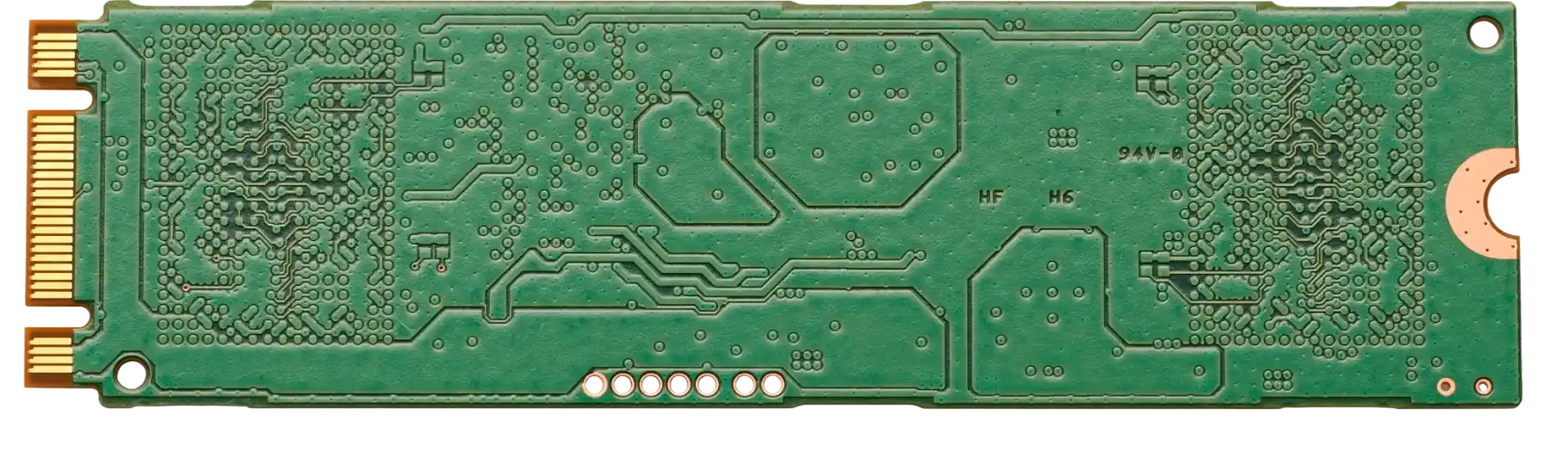
Once you decide to proceed, the next step in this bed of nails tutorial is defining the technical requirements to prevent "false failures" and board damage.
- Test Point Size: Minimum 0.8mm (32 mil) diameter preferred; 0.6mm allowed for high precision but increases fixture cost.
- Test Point Spacing: Center-to-center spacing of 1.27mm (50 mil) minimum to avoid shorting pins; 2.54mm (100 mil) is ideal for robust, low-cost fixtures.
- Test Point Coverage: Target 100% net coverage for critical power and signal lines; specify "test pads" on the bottom side to simplify fixture design (single-sided fixture).
- Pin Type Selection: Specify "crown" heads for leaded components and "spear" or "chisel" heads for flat test pads or vias.
- Fixture Material: G10/FR4 or ESD-safe composite materials to prevent static buildup during the test cycle.
- Press Mechanism: Vacuum fixture (better for high density) vs. Pneumatic/Mechanical press (lower cost, higher physical stress).
- Strain Gauge Limits: Specify maximum allowable micro-strain (typically <500 µε) to prevent cracking ceramic capacitors during the press cycle.
- Cycle Life: Require probes rated for at least 100,000 cycles; specify a maintenance schedule for pin cleaning or replacement.
- Software Output: Define the log format (e.g., serial number, pass/fail status, specific failed net ID) for traceability.
- Bypass Capability: Ensure the fixture allows bypassing specific tests (via software flags) if a component is temporarily substituted or DNI (Do Not Install).
bed of nails tutorial manufacturing risks (root causes and prevention)
A robust tutorial must address what can go wrong; improper fixture implementation is a leading cause of field failures due to latent physical damage.
Risk: Component Cracking (Stress Fractures)
- Root Cause: The fixture applies uneven pressure, bending the PCB during the test cycle.
- Detection: Strain gauge testing during fixture commissioning.
- Prevention: Support posts (push fingers) placed strategically under the board to counteract the downward force of the probes.
Risk: False Failures (Ghost Opens)
- Root Cause: Flux residue on test points or oxidized pogo pins preventing electrical contact.
- Detection: High re-test rate (Retest OK) in production logs.
- Prevention: Implement a "flux cleaning" step before testing and a "pin cleaning" schedule every 5,000 cycles.
Risk: Pad Cratering
- Root Cause: Excessive spring force on a small test pad rips the copper pad off the laminate.
- Detection: Visual inspection or destructive cross-sectioning.
- Prevention: Use lower spring-force probes (e.g., 4oz instead of 8oz) for sensitive or small pads.
Risk: Pin Shorting
- Root Cause: Probes hitting the edge of a solder mask opening or slipping off a pad onto a nearby trace.
- Detection: Intermittent shorts reported on specific nets.
- Prevention: Enforce strict DFM rules for test point clearance (mask opening > pad size + tolerance).
Risk: Static Discharge (ESD)
- Root Cause: Non-ESD fixture materials build up charge during vacuum engagement.
- Detection: Latent IC failures that appear after shipping.
- Prevention: Mandate ESD-dissipative materials for the top plate and pressure plate.
Risk: Witness Marks
- Root Cause: Sharp probe tips digging too deep into the test pad.
- Detection: Visual inspection shows deep divots.
- Prevention: Select appropriate tip styles (e.g., spherical radius) where possible and control overdrive distance.
bed of nails tutorial validation and acceptance (tests and pass criteria)
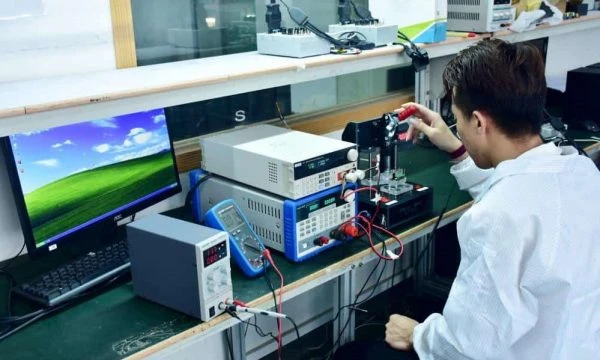
Before authorizing volume production, you must validate the fixture itself; this section of the bed of nails tutorial outlines the acceptance protocol.
Objective: Verify Electrical Repeatability
- Method: Run a "Golden Board" (known good unit) 50 times consecutively.
- Acceptance Criteria: 100% Pass rate with Cpk > 1.33 for analog measurements (resistors/voltages).
Objective: Verify False Fail Rejection
- Method: Insert a known "Bad Board" (with specific induced faults like open/short) 10 times.
- Acceptance Criteria: The fixture must detect the specific fault 100% of the time.
Objective: Mechanical Stress Analysis
- Method: Strain gauge measurement on critical components (BGA, MLCC) during the press cycle.
- Acceptance Criteria: Strain must remain below 500 micro-strain (or IPC-9704 standards).
Objective: Contact Accuracy
- Method: Apply "lipstick" or pressure-sensitive paper to probe tips and cycle the fixture.
- Acceptance Criteria: Witness marks must be centered on the test pads (within 25% of pad radius).
Objective: Cycle Time Verification
- Method: Time the full test sequence (load, lock, test, unlock, unload).
- Acceptance Criteria: Total time must meet the throughput requirement (e.g., <30 seconds per panel).
Objective: Safety Interlocks
- Method: Attempt to open the fixture or trigger sensors during operation.
- Acceptance Criteria: System must immediately halt and depressurize to prevent operator injury.
bed of nails tutorial supplier qualification checklist (RFQ, audit, traceability)
Use this checklist to vet APTPCB or any other manufacturing partner to ensure they can execute the requirements defined in this tutorial.
RFQ Inputs (What you send)
- Gerber files with a dedicated "Test Point" layer identified.
- Netlist (IPC-356 format) for electrical connectivity verification.
- Bill of Materials (BOM) indicating DNI (Do Not Install) parts.
- Schematics (searchable PDF) to aid in debugging.
- 3D CAD model (STEP) for mechanical interference checking.
- Estimated annual volume to determine fixture durability class (Standard vs. Heavy Duty).
Capability Proof (What they provide)
- Photos/examples of previous fixtures built for similar complexity.
- List of in-house ICT test capabilities (e.g., Agilent, Teradyne, or custom functional testers).
- Strain gauge testing report sample.
- Procedure for probe maintenance and lifecycle tracking.
Quality System & Traceability
- Does the test system log serial numbers to a database?
- Can they implement "stop-on-fail" logic (preventing failed boards from moving to packing)?
- Is there a procedure for "Retest OK" verification (limiting re-tries to 2 max)?
- Do they have a Golden Board management process (daily verification)?
Change Control & Delivery
- Lead time for fixture fabrication (typically 2–4 weeks).
- Cost for re-drilling or modifying the fixture if the PCB revision changes.
- Storage conditions for the fixture when not in use (humidity/dust control).
How to choose bed of nails tutorial (trade-offs and decision rules)
Navigating the trade-offs is the final strategic step in this bed of nails tutorial.
- If you prioritize Speed over Flexibility: Choose a Vacuum Bed of Nails. It is the fastest method for high volume but the hardest to modify.
- If you prioritize Low Upfront Cost over Unit Cost: Choose Flying Probe. Zero tooling cost, but higher per-unit test time cost.
- If you prioritize Mechanical Safety over Density: Choose a Pneumatic Press Fixture. It allows for robust mechanical stops to limit board flexing, though it requires more spacing than vacuum fixtures.
- If you prioritize Debugging over Pass/Fail: Choose a Functional Bed of Nails. Integrate USB/UART programmers into the fixture to get detailed logs, rather than just a simple resistance check.
- If you prioritize Dual-Sided Testing: Choose a Clamshell Fixture. It tests top and bottom simultaneously but costs 2x more and is mechanically complex. Otherwise, design all test points on the bottom side.
bed of nails tutorial FAQ (cost, lead time, Design for Manufacturability (DFM) files, materials, testing)
What is the typical cost breakdown for a bed of nails tutorial implementation? The cost includes NRE (Non-Recurring Engineering) for the fixture kit ($1,500–$5,000), programming ($500–$1,500), and the probes ($1–$3 per pin). Complex fixtures with functional blocks or dual-sided access will cost significantly more.
How does bed of nails tutorial testing affect production lead time? Once the fixture is built (2–3 weeks), it reduces production lead time significantly. Testing 1,000 boards might take 3 days on a flying probe but only 4 hours on a bed of nails.
What DFM files are required to build the fixture? You must provide Gerber files (specifically copper, mask, and drill layers), an IPC-356 netlist, and an XY centroid file. A searchable schematic is crucial for the test engineer to define guard points for accurate measurements.
Can a bed of nails tutorial approach test for solder voids? No. A bed of nails tests for electrical continuity and component values. To detect solder voids (especially under BGAs), you need X-Ray inspection or testing quality standards that include SPI/AOI.
What are the acceptance criteria for bed of nails tutorial fixture maintenance? Acceptance criteria for maintenance include replacing probes every 100,000 cycles (or when resistance > 50mΩ) and cleaning the fixture plate with ESD-safe solvents weekly to remove flux residue.
How do I handle design changes after the fixture is built? If a component moves, the corresponding probe hole must be re-drilled or plugged. If the move is minor (<1mm), it might be adjustable; otherwise, a new top plate or full fixture rebuild is required.
Is bed of nails tutorial testing destructive? It is non-destructive if designed correctly. However, it leaves small "witness marks" (dimples) on the test pads. These are acceptable provided they do not expose the underlying copper to corrosion or compromise solderability.
Does this tutorial apply to flexible PCBs? Yes, but flexible PCBs require a specialized "hold-down" gate or vacuum plate to keep the flex flat against the probes. The risk of damaging a flex circuit is higher, so strain validation is even more critical.
Resources for bed of nails tutorial (related pages and tools)
- DFM guidelines: Essential design rules to ensure your PCB layout accommodates test points and fixture requirements.
- Flying probe testing: Understand the alternative to bed of nails for low-volume or prototype runs.
- ICT test capabilities: Detailed overview of In-Circuit Test parameters, coverage, and equipment.
- Testing quality standards: Learn how ICT fits into the broader quality control ecosystem including AOI and X-Ray.
Request a quote for bed of nails tutorial (Design for Manufacturability (DFM) review + pricing)
Ready to implement the strategies from this bed of nails tutorial? Get a quote from APTPCB today. Our engineering team will review your Gerbers for testability (DFT) and provide a comprehensive quote that includes fixture fabrication, programming, and unit testing costs.
Please include the following for an accurate assessment:
- Gerber files & BOM.
- IPC-356 Netlist.
- Estimated annual volume (to recommend the right fixture class).
- Specific test requirements (e.g., firmware flashing, functional checks).
Conclusion (next steps)
Successfully executing a bed of nails tutorial strategy transforms your production line from a bottleneck into a high-speed, reliable output engine. By defining clear specifications for test point density and fixture materials, validating the setup with strain gauges and golden boards, and maintaining a rigorous supplier checklist, you mitigate the risks of board damage and false failures. This guide provides the framework; the next step is to engage with a manufacturing partner who treats test engineering as a priority, not an afterthought.