
Definition, scope, and who this guide is for
Identifying the best pcb manufacturers is not simply about finding the largest factory or the lowest price per square inch. For engineering leads and procurement managers, the "best" manufacturer is defined by the alignment between technical capability, quality management systems (QMS), and supply chain resilience. In the context of high-reliability electronics, a top-tier manufacturer acts as an extension of your design team, catching errors before fabrication begins and ensuring consistent performance across batches.
This guide is designed for professionals responsible for sourcing printed circuit boards for critical applications—ranging from automotive control units to industrial IoT devices. It moves beyond basic marketing claims to focus on the engineering specifications, risk mitigation strategies, and validation protocols that distinguish a capable partner from a liability. Whether you are navigating how to choose a pcb manufacturer for npi (New Product Introduction) or scaling to mass production, the criteria for selection remain rooted in data and process control.
We will explore the specific technical parameters that define high-quality fabrication, the hidden risks in the manufacturing process, and a comprehensive checklist for auditing potential suppliers. APTPCB (APTPCB PCB Factory) often advises clients that the cost of a PCB is not just the purchase price, but the total cost of quality, including potential rework and field failures. This playbook aims to minimize those downstream costs by front-loading the selection process with rigorous criteria.
When to use best pcb manufacturers (and when a standard approach is better)
Understanding the definition of a top-tier supplier leads directly to knowing when their advanced capabilities are strictly necessary versus when a standard commodity shop suffices.
Engaging the best pcb manufacturers is critical when your project involves tight tolerances, advanced materials, or harsh operating environments. If a board failure results in significant liability, safety risks, or expensive recalls, the premium for a high-quality manufacturer is an insurance policy. This includes designs utilizing High Density Interconnect (HDI) technology, rigid-flex structures, or high-frequency RF materials where impedance control is paramount. In these scenarios, the manufacturer’s ability to control etching processes and layer registration directly impacts signal integrity.
Conversely, for simple consumer electronics, toys, or non-critical LED lighting arrays where cost is the primary driver and failure rates of 1-2% are acceptable, a standard manufacturer may be the better strategic choice. These "standard" shops optimize for speed and low cost on 2-4 layer FR4 boards with loose tolerances. However, for complex NPI phases where design feedback is crucial, even simple boards benefit from a manufacturer who provides detailed Design for Manufacturing (DFM) analysis. The decision ultimately rests on the cost of failure: if a field failure costs more than the board savings, stick to the best manufacturers.
best pcb manufacturers specifications (materials, stackup, tolerances)
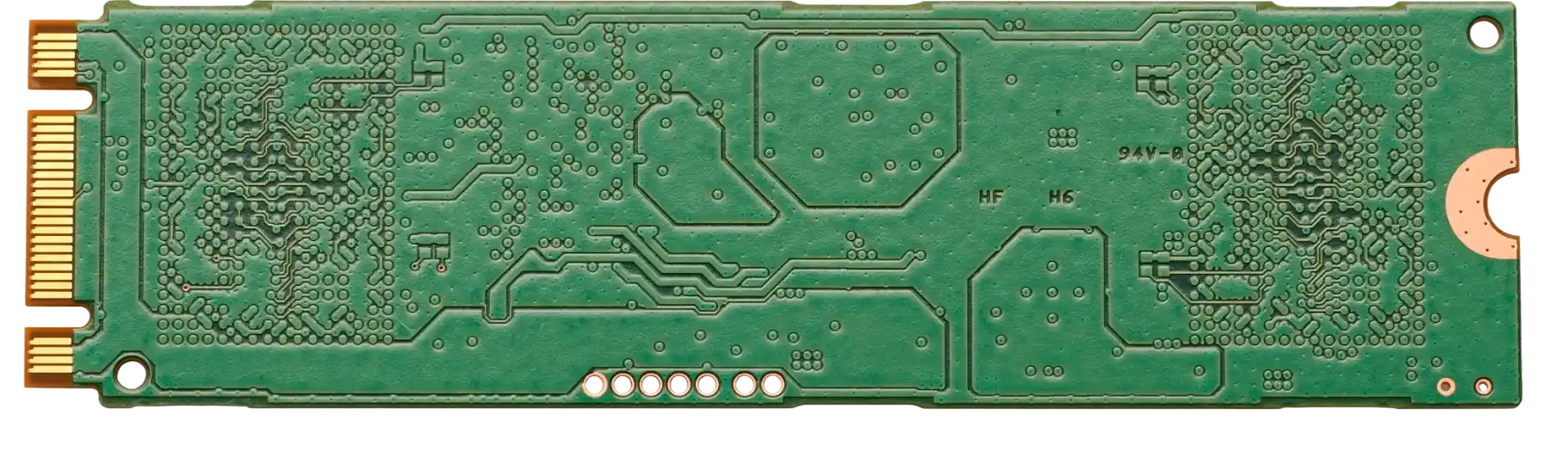
Once you determine that a high-performance manufacturer is required, you must define the specifications that they will be measured against. The best pcb manufacturers distinguish themselves by their ability to consistently meet the following rigorous parameters:
- High-Tg Material Consistency: Top manufacturers guarantee the use of specific laminates (e.g., Isola 370HR, Panasonic Megtron 6) rather than generic "FR4" substitutes. They ensure the Glass Transition Temperature (Tg) is consistently >170°C for lead-free assembly reliability.
- Controlled Impedance Tolerance: They achieve impedance tolerances of ±5% or better (standard is ±10%) through precise dielectric thickness control and etching compensation.
- Layer-to-Layer Registration: For multilayer boards (10+ layers), the best factories maintain registration tolerances within ±3 mils (75µm) to prevent breakout on internal vias.
- Plated Through Hole (PTH) Copper Wall Thickness: They adhere strictly to IPC Class 3 requirements, providing an average of 25µm (1 mil) copper in hole walls to withstand thermal cycling without barrel cracking.
- Soldermask Dam Width: Capable of maintaining soldermask dams as small as 3-4 mils between pads to prevent solder bridging on fine-pitch components like QFNs and BGAs.
- Surface Finish Uniformity: Whether ENIG, ENEPIG, or Immersion Silver, the thickness and uniformity are controlled to prevent "black pad" issues and ensure flat surfaces for BGA placement.
- Via Plugging and Capping: Full capabilities for VIPPO (Via-in-Pad Plated Over), ensuring vias are 100% filled with epoxy and plated flat to prevent solder theft during assembly.
- Cleanliness and Ionic Contamination: Strict adherence to cleanliness standards (e.g., <1.56 µg/cm² of NaCl equivalent) to prevent electrochemical migration and dendritic growth in humid environments.
- Bow and Twist Control: Maintaining flatness better than 0.5% (standard is 0.75%) to ensure successful mounting of large BGA packages and prevent stress on solder joints.
- Etch Factor Control: Advanced compensation for trapezoidal etching profiles, ensuring the top width of the trace matches the design intent for accurate impedance.
- Drill Position Accuracy: True position tolerance of drilled holes within ±3 mils relative to the master pattern, critical for high-density connector footprints.
- Trace Width/Spacing Minimums: Reliable production of 3 mil / 3 mil trace and space for HDI applications, verified by Automated Optical Inspection (AOI).
best pcb manufacturers manufacturing risks (root causes and prevention)
Even with perfect specifications, the manufacturing process contains inherent risks; the best pcb manufacturers are defined by how they mitigate these specific failure modes.
- Delamination during Reflow:
- Root Cause: Moisture trapped in the PCB material due to improper storage or baking before shipping.
- Detection: Blistering visible after thermal stress tests.
- Prevention: Manufacturer must enforce strict moisture sensitivity controls and vacuum packaging with desiccant.
- Intermittent Open Circuits (Micro-vias):
- Root Cause: Weak interface between the target pad and the electroless copper plating (separation).
- Detection: Thermal cycling tests followed by resistance measurement.
- Prevention: rigorous desmear processes and 2-step plating cycles used by top-tier vendors.
- Solderability Issues (Black Pad):
- Root Cause: Hyper-corrosion of the nickel layer during the immersion gold process (ENIG).
- Detection: Brittle solder joints that fail under minor mechanical stress.
- Prevention: Strict control of the gold bath pH and nickel phosphorus content.
- Impedance Mismatch:
- Root Cause: Variation in prepreg thickness after lamination or over-etching of copper traces.
- Detection: TDR (Time Domain Reflectometry) testing on coupons.
- Prevention: Use of automated optical shaping and real-time press cycle monitoring.
- Barrel Cracks in Plated Through Holes:
- Root Cause: Insufficient copper plating ductility or thickness combined with high thermal expansion (Z-axis).
- Detection: Cross-section analysis after thermal shock.
- Prevention: Periodic chemical analysis of plating baths to ensure ductility agents are balanced.
- Foreign Object Debris (FOD) under Soldermask:
- Root Cause: Contamination in the cleanroom environment before mask application.
- Detection: Visual inspection or AOI.
- Prevention: Class 10,000 or better cleanrooms and automated handling.
- Misregistration of Internal Layers:
- Root Cause: Material scaling (shrinkage/expansion) during lamination not compensated for in CAM.
- Detection: X-ray inspection of drill alignment.
- Prevention: Using historical scaling factors for specific material types and X-ray drilling optimization.
- Wicking of Chemistry along Glass Fibers:
- Root Cause: Poor drilling quality causing micro-fractures in the glass weave (CAF risk).
- Detection: Hi-Pot testing and CAF testing.
- Prevention: Optimized drill speeds, feeds, and bit life management.
- Incomplete Etching (Shorts):
- Root Cause: Photoresist adhesion failure or exhausted etchant chemistry.
- Detection: 100% AOI (Automated Optical Inspection) on inner layers.
- Prevention: Automatic replenishment systems for etchant and strict photoresist lamination parameters.
- Outgassing during Wave Soldering:
- Root Cause: Incomplete curing of the soldermask or moisture in the laminate.
- Detection: Blowholes in solder joints.
- Prevention: Proper UV bumping and thermal curing cycles.
best pcb manufacturers validation and acceptance (tests and pass criteria)

To ensure your partner truly ranks among the best pcb manufacturers, you must implement a validation plan that goes beyond a simple visual check.
- Microsection Analysis (Cross-Sectioning):
- Objective: Verify internal stackup, plating thickness, and registration.
- Method: Cut, pot, and polish a sample coupon or board edge.
- Acceptance Criteria: Copper thickness ≥ IPC Class 2/3 requirements; no separation between layers; registration within tolerance.
- Solderability Testing:
- Objective: Ensure pads will accept solder during assembly.
- Method: Dip and look test (IPC-J-STD-003) or wetting balance test.
- Acceptance Criteria: >95% coverage of the surface with a continuous solder coating; no de-wetting.
- Electrical Continuity and Isolation (E-Test):
- Objective: Detect opens and shorts.
- Method: Flying probe (for prototypes) or Bed of Nails (for mass production).
- Acceptance Criteria: 100% pass against the IPC-D-356 netlist extracted from Gerber data.
- Ionic Contamination Testing (ROSE Test):
- Objective: Verify board cleanliness to prevent corrosion.
- Method: Resistivity of Solvent Extract (ROSE) testing.
- Acceptance Criteria: Contamination levels <1.56 µg/cm² NaCl equivalent (or stricter per specific industry standards).
- Impedance Verification (TDR):
- Objective: Confirm signal integrity specs.
- Method: Time Domain Reflectometry on test coupons.
- Acceptance Criteria: Measured impedance within ±10% (or ±5% if specified) of the design target.
- Thermal Stress Test (Solder Float):
- Objective: Simulate assembly conditions to check for delamination.
- Method: Float sample in molten solder (288°C) for 10 seconds (repeated cycles).
- Acceptance Criteria: No blistering, delamination, or measling visible; no lifted pads.
- Peel Strength Test:
- Objective: Verify adhesion of copper foil to the laminate.
- Method: Mechanical peel test per IPC-TM-650.
- Acceptance Criteria: Peel strength > 1.05 N/mm (or per material datasheet spec).
- Dimensional Verification:
- Objective: Ensure mechanical fit.
- Method: CMM (Coordinate Measuring Machine) or calipers.
- Acceptance Criteria: Outline dimensions, hole sizes, and slot widths within drawing tolerances (typically ±0.1mm).
- Soldermask Adhesion Test:
- Objective: Ensure mask does not flake off.
- Method: Tape test (IPC-TM-650 2.4.28.1).
- Acceptance Criteria: No soldermask removal on the tape after rapid detachment.
- Plating Adhesion Test:
- Objective: Verify bond between electroless and electrolytic copper.
- Method: Tape test on cross-hatch pattern or stress test.
- Acceptance Criteria: No separation of plating layers.
best pcb manufacturers supplier qualification checklist (RFQ, audit, traceability)
When evaluating potential partners, use this checklist to structure your how to request a pcb quote (rfq checklist) and supplier audit. This separates the best pcb manufacturers from the rest.
RFQ Inputs (What you must provide)
- Gerber Files (RS-274X): Complete set including all copper layers, soldermask, silkscreen, and drill files.
- Fabrication Drawing: PDF specifying dimensions, tolerances, and special notes.
- Stackup Definition: Explicit layer order, dielectric materials, and copper weights.
- Material Specifications: Specific IPC-4101 slash sheet numbers (e.g., /126 for high Tg) or brand names.
- Impedance Requirements: List of nets/layers and target impedance with tolerance.
- Surface Finish: Specific type (ENIG, HASL, OSP) and thickness requirements.
- IPC Class: Class 2 (Standard) or Class 3 (High Reliability).
- Panelization: Single board or array delivery preference (with rails/fiducials).
- Volume & Lead Time: Prototype quantity vs. EAU (Estimated Annual Usage) and target delivery dates.
- Testing Requirements: Specific callouts for TDR, ionic cleanliness, or cross-section reports.
Capability Proof (What they must demonstrate)
- Minimum Trace/Space: Proven capability for your finest pitch (e.g., 3/3 mil).
- Aspect Ratio: Ability to plate high aspect ratio holes (e.g., 10:1 or higher).
- Layer Count: Experience with layer counts exceeding your current project needs.
- Special Technologies: Proven track record with HDI, Rigid-Flex, or Metal Core if needed.
- Material Stock: On-hand inventory of your required laminates to avoid lead time delays.
- Certifications: ISO 9001 (General), IATF 16949 (Automotive), ISO 13485 (Medical), UL Listing.
- Equipment List: Modern direct imaging (LDI) and automated optical inspection (AOI) machines.
- Capacity: Sufficient spare capacity to handle your production spikes.
Quality System & Traceability
- Incoming Material Inspection (IQC): Process for verifying laminate and chemistry quality.
- In-Process Controls (IPQC): Real-time monitoring of etching, plating, and lamination.
- Non-Conforming Material Process: Clear procedure for quarantining and scrapping bad boards.
- Traceability: Ability to trace a specific board back to the raw material lot and production date.
- Calibration: Regular calibration schedule for all measurement and test equipment.
- Corrective Action (CAPA): Robust process for 8D reports and root cause analysis.
- Operator Training: documented training records for critical process steps.
- Data Security: Protocols for protecting your IP and design files.
Change Control & Delivery
- PCN (Product Change Notification): Policy to notify you before changing materials or processes.
- Sub-tier Management: Control over their own suppliers (e.g., laminate manufacturers).
- Packaging: ESD-safe, vacuum-sealed packaging with humidity indicators.
- Logistics: Reliable shipping partners and DDP/DAP incoterm capabilities.
- Disaster Recovery: Plan for business continuity in case of factory disruption.
- Communication: Dedicated account manager and engineering support window.
How to choose best pcb manufacturers (trade-offs and decision rules)
Selecting the best pcb manufacturers often involves balancing competing priorities. Use these decision rules to navigate common trade-offs.
- Speed vs. Cost: If you prioritize Speed (24-48 hour turn), choose a manufacturer with a dedicated "Quick Turn" line and digital quoting. You will pay a premium (30-50% more). If you prioritize Cost, choose a manufacturer with a "Standard Production" queue that aggregates orders, accepting a 10-15 day lead time.
- NPI Support vs. Mass Production Efficiency: If you are in NPI (New Product Introduction), choose a partner who offers deep DFM reviews and engineering consulting, even if their unit price is higher. If you are in Mass Production, choose a partner with high automation and purchasing power for raw materials to drive down unit costs.
- Local vs. Offshore:
If you prioritize IP Protection and Communication, choose a domestic or local manufacturer for the prototype phase. If you prioritize Scale and Unit Economics, choose an offshore partner (like
APTPCB) that has established quality bridges and logistics for volume production. - Specialized vs. Generalist: If you need RF/Microwave boards, choose a manufacturer specializing in Rogers/Teflon processing. A generalist FR4 shop will struggle with the etching tolerances required for RF. If you need standard FR4, a generalist shop will offer better pricing and availability.
- Flexibility vs. Process Control: If you need Flexibility (changing designs mid-stream), smaller boutique shops are often more accommodating. If you need Strict Process Control (automotive/medical), larger certified factories are better, though they are less agile regarding changes once production starts.
- Consignment vs. Turnkey: If you want Simplicity, choose a manufacturer offering Turnkey PCB Assembly (PCBA). If you want Control over Components, buy the bare boards and manage the assembly separately, though this increases logistics complexity.
best pcb manufacturers FAQ (cost, lead time, boards benefit from a manufacturer who provides detailed Design for Manufacturing (DFM) files, materials, testing)
Q: How do the best pcb manufacturers calculate cost for high-layer count boards? Cost is driven primarily by the size of the board, the number of layers (material usage), and the complexity of the build (blind/buried vias). Top manufacturers also factor in the "yield loss" risk; tighter tolerances increase the price because the manufacturer anticipates scrapping a percentage of the batch to ensure you only receive perfect boards.
Q: What is the standard lead time for a best-in-class manufacturer for NPI? For standard technology (up to 6 layers), the best manufacturers can offer 24 to 48-hour turns for prototypes. For complex HDI or rigid-flex NPI, expect 5 to 8 working days. Mass production lead times typically range from 2 to 4 weeks depending on material availability and shipping method.
Q: What files are absolutely required for a DFM review? To get a valid DFM report, you must provide Gerber files (RS-274X or X2) or ODB++ data, along with an NC Drill file and a clear stackup diagram. The best pcb manufacturers will also request a netlist (IPC-D-356) to verify that the Gerbers match your schematic intent before they start CAM engineering.
Q: How do I choose the right material for high-frequency applications? Do not just specify "Rogers." You must specify the exact series (e.g., Rogers 4350B or 3003) and the dielectric thickness. The best manufacturers will stock common high-frequency laminates but may require lead time for niche materials. Consult their engineering team early to select a material that is both performant and stock-available.
Q: What is the difference between IPC Class 2 and Class 3 testing? IPC Class 2 is the standard for most electronics, allowing for some cosmetic imperfections and minor voiding that doesn't affect function. IPC Class 3 is for high-reliability products (aerospace, medical) and requires stricter plating thickness (average 25µm in holes), no breakouts, and more rigorous acceptance criteria. The best manufacturers can switch between these classes based on your PO.
Q: Can the manufacturer handle controlled impedance if I don't specify the stackup? Yes, a capable manufacturer can propose a stackup for you. You provide the target impedance (e.g., 50Ω single-ended, 100Ω differential) and the trace widths you want to use. Their CAM engineers will calculate the necessary dielectric thickness and adjust trace widths slightly to hit the target within tolerance.
Q: What are the acceptance criteria for X-out boards in a panel? In mass production, it is standard to allow a certain percentage of "X-outs" (bad boards marked with an X) in a delivery panel to keep costs down. However, for automated assembly lines, you may require "100% good panels." The best manufacturers will allow you to specify "No X-outs," though this will increase the cost per panel.
Q: How do top manufacturers ensure data security for sensitive designs? Leading manufacturers use secure FTP servers for file transfer, restrict data access to essential engineering personnel, and sign NDAs (Non-Disclosure Agreements). They also have IT policies in place to prevent unauthorized copying or external transmission of design files.
Resources for best pcb manufacturers (related pages and tools)
- NPI & Small Batch Manufacturing: Learn how to transition from prototype to pilot run without losing design intent.
- PCB Quality Control Systems: A deep dive into the specific certifications and inspection equipment used to validate board reliability.
- HDI PCB Capabilities: Explore the technical specs for High Density Interconnect boards, including micro-vias and fine pitch requirements.
- DFM Guidelines: Essential design rules to follow to ensure your board can be manufactured efficiently and cost-effectively.
- Rigid-Flex PCB Technology: Understand the unique material and stackup challenges when combining rigid and flexible substrates.
- PCB Surface Finishes: Compare ENIG, OSP, and Immersion Silver to choose the right finish for your assembly process.
Request a quote for best pcb manufacturers (boards benefit from a manufacturer who provides detailed Design for Manufacturing (DFM) review + pricing)
Ready to validate your design with a partner that understands high-reliability requirements? Request a Quote from APTPCB to receive a comprehensive DFM review alongside your pricing and lead time options.
To ensure the fastest and most accurate quote, please include:
- Gerber Files: RS-274X or ODB++ format.
- Fabrication Drawing: PDF with dimensions and special notes.
- Stackup Details: Layer count, copper weight, and material preference.
- Quantities: Prototype count and estimated production volume.
- Testing Specs: Any specific requirements for impedance or IPC Class.
Conclusion (next steps)
Selecting the best pcb manufacturers is a strategic decision that impacts your product's reliability, time-to-market, and total lifecycle cost. By defining clear specifications, understanding the manufacturing risks, and utilizing a robust validation checklist, you move from a transactional purchase to a partnership. Whether you are in the early stages of NPI or scaling up production, prioritizing process control and engineering support over the lowest initial bid ensures that your hardware performs exactly as designed in the real world.