
devices rely heavily on stable connectivity, Bluetooth Low Energy (BLE) medical gateway PCB compliance: what this playbook covers (and who it’s for)
Medical IoT (IoMT) devices rely heavily on stable connectivity, and the Bluetooth Low Energy (BLE) gateway is the critical bridge between patient sensors and the cloud. This playbook is designed for hardware engineers, product managers, and procurement leads who need to navigate the complexities of BLE medical gateway PCB compliance without getting lost in theoretical jargon. We focus on the manufacturing and procurement side of compliance—ensuring your design specifications translate into a physical board that meets regulatory standards like IEC 60601 and ISO 13485.
You will get a structured approach to defining specifications that reduce RF interference, a risk assessment guide to identify failure points before mass production, and a validation plan to enforce quality. Unlike generic PCB guides, this document specifically addresses the unique intersection of RF performance and medical reliability. We strip away the marketing fluff to provide actionable checklists you can use immediately in your Request for Quote (RFQ) packages.
At APTPCB (APTPCB PCB Factory), we understand that a medical gateway failure is not just a technical glitch; it is a potential risk to patient data continuity. This guide helps you select the right materials, define the correct stackup, and audit your supply chain to ensure every board performs identically to your golden sample.
When devices rely heavily on stable connectivity, Bluetooth Low Energy (BLE) medical gateway PCB compliance is the right approach (and when it isn’t)
Understanding the scope of your project is the first step in applying the rigorous standards detailed in this guide.
This approach is critical when:
- Patient Data Integrity is Paramount: Your gateway aggregates data from continuous glucose monitors, pacemakers, or hospital ward vitals where data loss is unacceptable.
- Regulatory Approval is Required: The device must pass FDA, CE (MDR), or FCC certifications where PCB-level EMI/EMC performance is a deciding factor.
- Environment is Uncontrolled: The gateway will be deployed in home health settings or crowded hospital wards with high RF noise floors.
- Long Lifecycle: The product is expected to remain in the field for 5–10 years without hardware revision.
This approach may be overkill when:
- Consumer Wellness Tracking: The device is a simple fitness tracker hub where occasional data drops are annoying but not critical.
- Prototyping/Proof of Concept: You are in the early breadboard phase testing basic BLE connectivity logic, not hardware reliability.
- Non-Medical Industrial Gateways: While rugged, these do not require the specific bio-compatibility or stringent ISO 13485 traceability of medical devices.
Specs & requirements (before quoting)
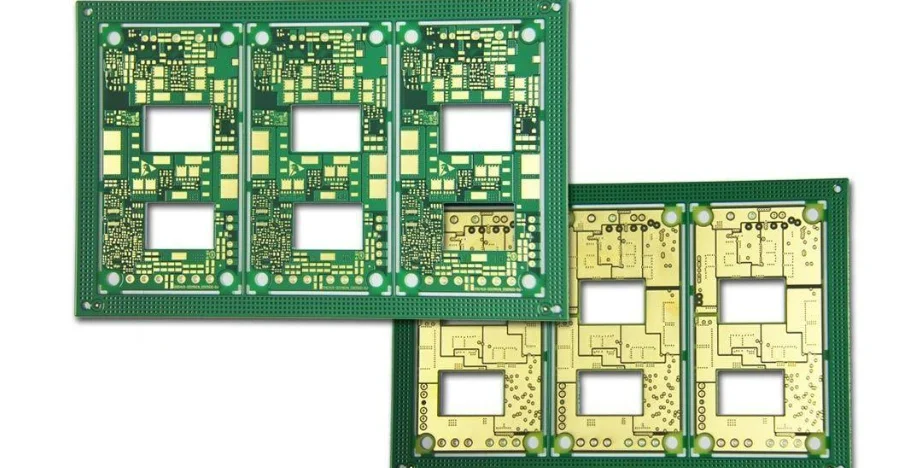
Once you have determined that strict compliance is necessary, you must translate "high quality" into specific, measurable parameters for your manufacturer. Vague requests lead to variation; specific numbers lead to compliance.
- Base Material (Laminate): Specify High-Tg FR4 (Tg ≥ 170°C) to withstand multiple reflow cycles and potential potting processes. For the RF section, consider low-loss materials if the trace length is significant, though standard FR4 is often sufficient for short BLE runs if controlled well.
- Dielectric Constant (Dk) Tolerance: Define the Dk value (e.g., 4.2 ±0.1 @ 1GHz) explicitly. Variations in Dk will shift the impedance of your BLE antenna matching network, reducing range.
- Stackup Configuration: Define a balanced stackup (usually 4 or 6 layers) with a solid ground plane immediately adjacent to the BLE signal layer to minimize EMI.
- Impedance Control: Specify 50Ω single-ended impedance for the antenna trace with a tolerance of ±5% (standard is ±10%, but medical RF demands tighter control).
- Surface Finish: Mandate ENIG (Electroless Nickel Immersion Gold) or ENEPIG. These flat surfaces are essential for the fine-pitch components often used in BLE modules and ensure reliable solder joints without the oxidation risks of OSP.
- Copper Weight: Standard 1oz (35µm) is typically sufficient, but verify current requirements if the gateway includes power-over-ethernet (PoE) features.
- Solder Mask Color: Use Matte Green or Matte Black. Matte finishes reduce glare during automated optical inspection (AOI), improving defect detection rates.
- Cleanliness Standards: Specify IPC-6012 Class 2 as a minimum, with Class 3 preferred for critical care gateways. Explicitly require ionic contamination testing (ROSE test) to prevent dendritic growth.
- Via Tenting/Plugging: Require vias under the BLE module or BGA components to be plugged and capped (VIPPO) to prevent solder wicking, which causes weak joints.
- Marking and Traceability: Require date codes, UL markings, and serial numbers to be etched in copper or permanent silkscreen for full lot traceability.
- Dimensional Tolerances: Set outline tolerances to ±0.10mm to ensure the PCB fits perfectly into compact medical enclosures without stress.
- Flammability Rating: UL 94V-0 is non-negotiable for medical environments.
Hidden risks (root causes & prevention)
Defining requirements is only half the battle; you must also anticipate where the manufacturing process typically drifts, causing BLE medical gateway PCB compliance failures during volume production.
- Risk: Impedance Drift due to Prepreg Variation.
- Why: Suppliers might swap prepreg brands to save cost, changing the dielectric thickness.
- Detection: TDR (Time Domain Reflectometry) coupons fail, or antenna range drops in the field.
- Prevention: Lock the stackup and material brand (e.g., "Isola 370HR or equivalent approved in writing").
- Risk: Black Pad Syndrome (ENIG).
- Why: Poor control of the phosphorus content in the nickel bath leads to brittle joints.
- Detection: Solder joints fracture under minor mechanical stress (drop test).
- Prevention: Audit the supplier’s chemical analysis logs and require IPC-4552 compliance.
- Risk: Ionic Contamination (Dendrites).
- Why: Flux residues from HASL or aggressive etching are not fully washed off.
- Detection: Board shorts out after months in humid environments (hospital rooms).
- Prevention: Mandate ionic cleanliness testing (< 1.56µg/cm² NaCl equivalent).
- Risk: RF Shielding Can Shorting.
- Why: Solder mask openings for the RF shield are too large or misaligned.
- Detection: The metal shield shorts traces on the surface layer.
- Prevention: Design solder mask dams and define strict registration tolerances.
- Risk: Component Skew on Miniaturized Passives.
- Why: 0201 or 01005 components used in the RF matching network tombstone during reflow.
- Detection: AOI inspection or functional RF failure.
- Prevention: Optimize footprint design for the specific manufacturer’s process capabilities.
- Risk: X-Ray Escapes on QFN/BGA.
- Why: BLE SoCs are often QFNs with large ground pads; insufficient void checking leads to overheating.
- Detection: Device resets randomly due to thermal shutdown.
- Prevention: Mandate 100% X-Ray inspection for QFN/BGA with <25% voiding criteria.
- Risk: Counterfeit Components.
- Why: Shortages lead procurement to gray markets.
- Detection: High failure rates or slightly different marking fonts.
- Prevention: Buy only from authorized distributors and require Certificate of Conformance (CoC).
- Risk: Warp and Twist.
- Why: Unbalanced copper distribution causes the board to bow during reflow.
- Detection: The board does not sit flat in the enclosure or stresses solder joints.
- Prevention: Copper thieving (balancing) on outer layers during CAM engineering.
Validation plan (what to test, when, and what “pass” means)
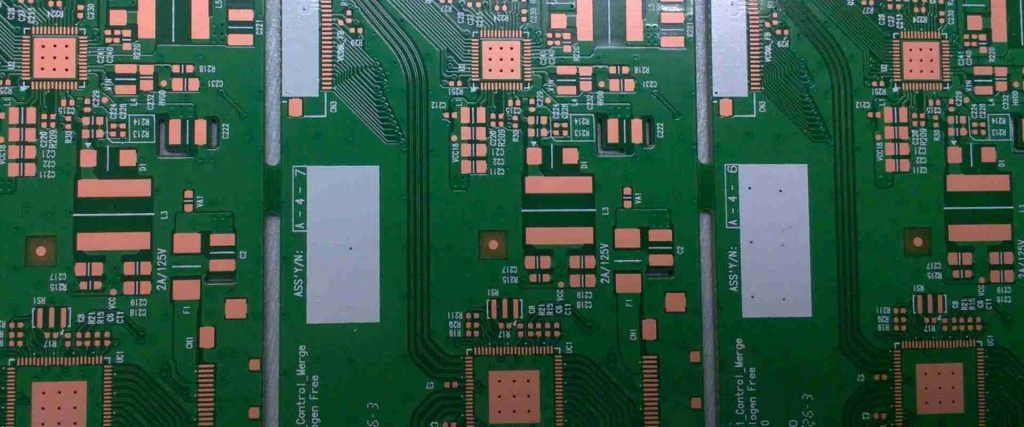
To ensure your BLE medical gateway PCB is truly compliant, you cannot rely on the supplier's word alone; you need a structured validation protocol that gates the release of the product.
- Objective: Verify Signal Integrity (Impedance).
- Method: TDR testing on test coupons included on the production panel.
- Criteria: Measured impedance must be within ±5% (or ±10% if specified) of the target 50Ω.
- Objective: Verify Material Safety (Flammability).
- Method: Review UL file number and conduct a flame test on a sample if changing suppliers.
- Criteria: Material must self-extinguish within 10 seconds (V-0).
- Objective: Verify Solderability.
- Method: Solder float test or wetting balance test per IPC-J-STD-003.
- Criteria: >95% coverage of the surface with a smooth, continuous solder coating.
- Objective: Verify Cleanliness.
- Method: Ion chromatography or ROSE testing.
- Criteria: Contamination levels below 1.56 µg/cm² NaCl equivalent.
- Objective: Verify RF Performance.
- Method: Conducted power measurement and sensitivity test in an anechoic chamber or shield box.
- Criteria: TX power and RX sensitivity must match the datasheet/simulation within ±1.5dB.
- Objective: Verify Thermal Stress.
- Method: Thermal cycling (-40°C to +85°C) for 100+ cycles.
- Criteria: No cracks in vias, no delamination, and functional test passes after cycling.
- Objective: Verify Mechanical Robustness.
- Method: Drop test of the assembled unit from 1 meter.
- Criteria: No BGA/QFN fracturing and the device remains functional.
- Objective: Verify Layer Alignment.
- Method: Microsection (cross-section) analysis.
- Criteria: Internal layer registration within specified tolerance; no breakout of vias.
- Objective: Verify Surface Finish Thickness.
- Method: X-Ray Fluorescence (XRF).
- Criteria: Gold thickness 2-5µin; Nickel thickness 120-240µin (for ENIG).
- Objective: Verify Software/Hardware Handshake.
- Method: Functional test (FCT) loading firmware and running a diagnostic loop.
- Criteria: 100% pass on all I/O and BLE advertising packets.
Supplier checklist (to provide actionable checklists you can use immediately in your Request for Quote (RFQ) + audit questions)
Use this checklist to vet potential partners like APTPCB or to audit your current supply chain for BLE medical gateway PCB compliance.
Group 1: RFQ Inputs (What you send)
- Gerber files (RS-274X or X2) with clear board outline.
- Drill file with defined plated vs. non-plated holes.
- IPC Netlist for electrical test verification.
- Stackup drawing specifying material type (e.g., "Isola 370HR") and layer order.
- Impedance requirements table (Layer, Trace Width, Target Impedance).
- Assembly drawing showing component polarity and special mounting instructions.
- Bill of Materials (BOM) with approved manufacturer lists (AML).
- Pick and Place (XY) centroid file.
- Test specification document (ICT/FCT requirements).
- Packaging requirements (ESD bags, humidity indicator cards).
Group 2: Capability Proof (What they must show)
- ISO 13485 certification (Medical Devices Quality Management).
- UL certification for the specific laminate and stackup proposed.
- In-house impedance control capabilities (TDR equipment).
- Experience with mixed-signal (RF + Digital) boards.
- Automated Optical Inspection (AOI) capability for inner and outer layers.
- X-Ray inspection capability for BGA/QFN/LGA components.
- Cleanliness testing capability (ROSE/Ion Chromatography).
- Solder paste inspection (SPI) equipment availability.
Group 3: Quality System & Traceability
- Do they have a system to track raw material lots to finished PCB lots?
- Can they provide a First Article Inspection (FAI) report per AS9102 or equivalent?
- Is there a defined procedure for handling non-conforming material (MRB)?
- Do they perform 100% electrical testing (Flying Probe or Bed of Nails)?
- Are their operators trained to IPC-A-600/610 Class 2 or 3?
- Do they have ESD control measures (flooring, wrist straps, grounding) in place?
Group 4: Change Control & Delivery
- Do they have a formal Process Change Notification (PCN) system?
- Will they notify you before changing material suppliers or manufacturing locations?
- Can they support "locked" processes where no changes are allowed without approval?
- What is their standard lead time for NPI vs. Mass Production?
- Do they offer buffer stock programs for critical components?
- Is there a disaster recovery plan for the manufacturing site?
Decision guidance (trade-offs you can actually choose)
Every engineering decision involves a compromise. Here is how to navigate the trade-offs specifically for BLE medical gateway PCB projects.
- Class 2 vs. Class 3: If you prioritize cost and the device is not life-sustaining, choose IPC Class 2. If you prioritize absolute reliability and liability protection, choose IPC Class 3 (expect 15-20% higher cost).
- ENIG vs. OSP: If you prioritize shelf life and BGA flatness, choose ENIG. If you prioritize lowest cost and have a short supply chain loop, choose OSP (but beware of RF pad oxidation).
- HDI vs. Through-Hole: If you prioritize miniaturization and signal integrity, choose HDI (High Density Interconnect). If you prioritize lower manufacturing cost and simpler debugging, choose Standard Through-Hole technology.
- Hard Gold vs. ENIG: If you prioritize wear resistance for edge connectors (e.g., module insertion), choose Hard Gold. For general soldering, stick to ENIG.
- Testing Depth: If you prioritize speed to market, choose Flying Probe testing. If you prioritize volume throughput and coverage, invest in a Bed of Nails (ICT) fixture.
- Material Selection: If you prioritize RF performance over long distances, choose Rogers/Teflon hybrids. If you prioritize cost and standard BLE range (10-30m), choose High-Tg FR4.
- Sourcing: If you prioritize supply security, choose Turnkey Assembly where the PCB vendor sources parts. If you prioritize strict BOM control, source critical ICs yourself and consign them (Consignment).
FAQ
Q: Does a BLE gateway PCB require UL certification? A: Yes. The bare PCB must have a UL 94V-0 flammability rating, and the final assembly often requires UL safety certification for the medical environment.
Q: Can I use standard FR4 for Bluetooth Low Energy? A: Yes, standard FR4 is acceptable for 2.4GHz BLE if the trace lengths are short and impedance is controlled. For longer traces, lossy FR4 may attenuate the signal.
Q: What is the most common failure in medical gateway PCBs? A: Solder joint fractures on BGA/QFN components due to drop shock or thermal cycling, followed by ionic contamination causing shorts.
Q: How do I ensure my PCB meets FCC/CE RF requirements? A: Follow the reference design of the BLE chip manufacturer exactly, use a solid ground plane, stitch ground vias along board edges, and verify impedance.
Q: Why is ENIG preferred over HASL for medical boards? A: HASL surfaces are uneven, making it difficult to place fine-pitch components accurately. ENIG is perfectly flat and lead-free, meeting RoHS and assembly requirements.
Q: What is the difference between IPC Class 2 and Class 3 for gateways? A: Class 3 requires tighter annular rings, more plating thickness in vias, and stricter visual criteria, resulting in higher reliability but higher cost.
Q: Should I panelize the boards myself or let the factory do it? A: Let the factory do it. They know their machine limits and material utilization rates best, which saves you money and prevents V-score errors.
Q: How often should I audit my PCB supplier? A: For medical devices, an annual on-site or detailed desktop audit is standard practice to ensure quality systems remain compliant.
Related pages & tools
- Medical PCB Manufacturing – Deep dive into the specific ISO standards and reliability tests required for medical-grade electronics.
- Impedance Calculator – Use this tool to estimate trace widths for your 50Ω BLE antenna lines before finalizing your stackup.
- HDI PCB Capabilities – Learn how High Density Interconnect technology can help miniaturize your gateway without sacrificing signal integrity.
- PCB Quality System – Understand the rigorous inspection processes (AOI, X-Ray, E-Test) that prevent defects from leaving the factory.
- Turnkey Assembly Services – Explore how combining PCB fabrication and assembly simplifies the supply chain for complex medical devices.
Request a quote
Ready to move your design from concept to compliant production? At APTPCB, we provide a comprehensive DFM review to catch compliance risks before you pay a cent.
For the most accurate quote and DFM, please provide:
- Gerber Files: RS-274X format preferred.
- BOM: Excel format with manufacturer part numbers.
- Quantities: Prototype (e.g., 5-10) and Production (e.g., 1k, 5k) targets.
- Special Requirements: Impedance specs, Class 2/3, or specific material requests.
Click here to upload your files and get a quote
Conclusion
Achieving BLE medical gateway PCB compliance is not about checking a box; it is about building a foundation of reliability that protects both your patients and your brand reputation. By defining clear specifications for materials and impedance, anticipating manufacturing risks like contamination and component skew, and enforcing a strict validation plan, you eliminate the variables that lead to field failures. Use the checklist provided to hold your suppliers accountable, and prioritize transparency over rock-bottom pricing. When you control the inputs and audit the process, you ensure that your medical gateway performs flawlessly in the critical environments where it matters most.