
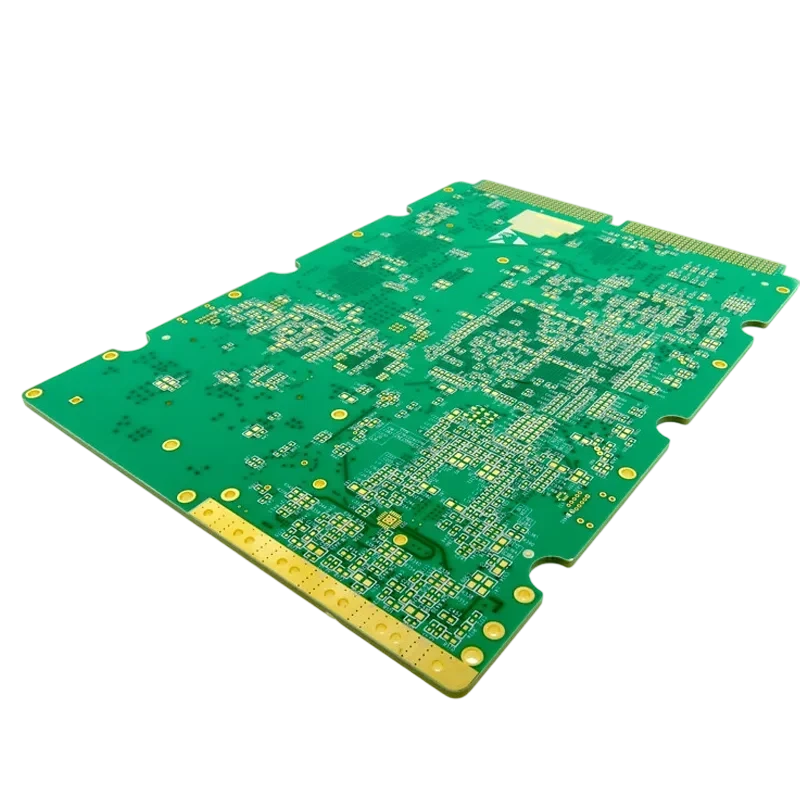
A BLE skincare coaching PCB is the electronics platform behind connected beauty devices that guide users through skincare routines using Bluetooth Low Energy, sensors, motors, LEDs, and companion mobile applications.
Unlike a traditional beauty-device control board, a BLE skincare coaching PCB must combine several engineering disciplines:
- Low-power wireless communication
- Sensor accuracy for skin-contact measurements
- Battery charging and protection
- Compact mechanical integration
- Moisture and cosmetic-chemical resistance
- Production-level testing and traceability
The PCB is not only a carrier for components. It directly affects Bluetooth stability, user feedback accuracy, battery life, and long-term product reliability.
This guide helps product teams define requirements before PCB quotation, select manufacturing capabilities, and validate the design before scaling production.
When should you choose a BLE skincare coaching PCB?
A connected skincare product usually requires a BLE PCB when the user experience depends on intelligent feedback rather than simple operation.
Typical applications include:
- Smart facial cleansing devices measuring pressure and movement speed
- Skin hydration monitoring tools
- LED beauty devices controlled through smartphone applications
- Massage devices with personalized treatment programs
- Connected aroma and wellness devices with usage tracking
A BLE architecture is suitable when the product needs:
| Product requirement | PCB capability required |
|---|---|
| Mobile app connection | BLE module, antenna design, RF impedance control |
| Personalized skincare guidance | Sensor interface, MCU processing, firmware support |
| Usage history tracking | Low-power memory and wireless communication |
| Rechargeable operation | Battery management circuit and charging protection |
| Compact handheld design | Miniaturized PCB, HDI, rigid-flex options |
A non-connected PCB may still be appropriate for simple products where app interaction, data collection, and firmware updates do not provide meaningful customer value.
What PCB specifications should be defined before requesting a quote?
A BLE skincare coaching PCB requires more detailed specifications than a standard consumer electronics board.
PCB material and layer structure
Specify the laminate grade, thickness, and stackup before manufacturing.
Common choices include:
- FR-4 high Tg materials for thermal stability
- 4-layer PCB structures for RF return paths and power separation
- 0.8mm to 1.2mm thickness for compact handheld products
- Rigid-flex PCB when the enclosure requires curved placement
A controlled stackup improves antenna performance and reduces unexpected RF variation between production batches.
BLE antenna and impedance requirements
BLE operates in the 2.4GHz frequency band, where PCB geometry strongly affects performance.
The RF section should define:
- 50Ω controlled impedance traces
- Antenna keep-out area
- Ground clearance requirements
- Matching network placement
- Final enclosure antenna tuning
A prototype that works on a laboratory bench may lose range after the battery, housing, and user's hand affect antenna characteristics.
BLE skincare coaching PCB parameter selection matrix
| Design factor | Option | Best fit | Main trade-off |
|---|---|---|---|
| Antenna | PCB trace antenna | Cost-sensitive products | Requires layout space and tuning |
| Antenna | Ceramic chip antenna | Small premium devices | Higher component cost |
| PCB structure | 2-layer PCB | Simple controllers | Limited RF and power separation |
| PCB structure | 4-layer PCB | Connected devices | Higher PCB cost |
| Connection method | BLE module | Faster certification | Larger BOM cost |
| Connection method | Chip-down BLE SoC | High-volume products | Higher engineering effort |
| Protection | Conformal coating | Most beauty devices | Requires coating process control |
| Protection | Potting | Maximum moisture protection | Reduced repairability |
How do you protect a skincare PCB from humidity and cosmetic products?
Beauty devices commonly operate near:
- Water vapor
- Skin oils
- Creams and lotions
- Cleaning chemicals
- Temperature changes
PCB reliability depends on environmental protection.
Recommended manufacturing controls include:
Conformal coating
Specify coating requirements in the assembly documentation.
Important details include:
- Coating type: acrylic, silicone, or equivalent
- Masking requirements for connectors and sensors
- Coating thickness control
- Inspection method
Coating prevents moisture-related leakage currents and corrosion while maintaining repair capability.
PCB cleanliness
Humidity combined with ionic contamination can create conductive paths between traces.
Production requirements should include:
- Controlled cleaning process
- Ionic contamination monitoring
- Surface insulation resistance testing when required
Charging contact protection
External charging contacts are exposed reliability points.
Design considerations include:
- Gold-plated contact surfaces
- Proper sealing around openings
- Corrosion testing during validation
What are the major BLE skincare PCB failure modes?
| Failure mode | Root cause | Prevention method |
|---|---|---|
| Poor Bluetooth range | Antenna detuning after enclosure assembly | Tune antenna with final housing installed |
| Sensor inaccurate readings | Environmental drift or parasitic capacitance | Define sensor keep-out areas and calibration methods |
| Battery drain | Leakage caused by contamination | Improve cleaning and coating process |
| Motor interference | Noise coupling into RF or sensor circuits | Separate power paths and improve grounding |
| Charging failures | Poor battery protection design | Validate charging and protection circuits |
| Corrosion | Moisture exposure and incompatible materials | Use protective finishes and environmental testing |
| Production failures | Incorrect firmware or missing test access | Add programming points and functional tests |
How should a BLE skincare PCB validation plan be structured?
Electrical testing alone is insufficient. Smart beauty products require system-level validation.
RF performance testing
Verify:
- Bluetooth connection stability
- Antenna performance inside the enclosure
- Signal strength during normal user handling
Power consumption testing
Measure current during:
- Sleep mode
- BLE advertising
- Active treatment mode
- Charging operation
Battery-life calculations should match real operating conditions.
Environmental testing
Recommended tests include:
| Test | Purpose |
|---|---|
| Humidity soak | Verify moisture resistance |
| Thermal cycling | Check solder joint reliability |
| Drop testing | Validate mechanical robustness |
| Chemical exposure | Confirm coating compatibility |
| ESD testing | Verify user-contact protection |
Sensor validation
For coaching functions, sensor accuracy directly affects customer experience.
Validate:
- Sensor repeatability
- Calibration stability
- Temperature influence
- Humidity influence
What should be included in a BLE skincare PCB supplier RFQ?
A complete RFQ package should include:
Design files
- Gerber files
- PCB stackup
- Drill files
- BOM
- Pick-and-place data
- Assembly drawing
- Test requirements
Manufacturing requirements
Confirm supplier capability for:
- 50Ω impedance control
- Fine-pitch BLE packages
- HDI manufacturing if required
- Conformal coating
- AOI and SPI inspection
- Functional testing
Supplier qualification checklist
| Evaluation item | Supplier evidence |
|---|---|
| RF capability | Impedance report and antenna experience |
| Assembly quality | SPI/AOI inspection records |
| Component sourcing | Authorized distributor traceability |
| Testing | ICT/FCT capability |
| Environmental protection | Coating process documentation |
| Change control | ECN management process |
Which PCB architecture is best for a smart beauty device?
The correct architecture depends on product priorities.
BLE module vs custom BLE design
A pre-certified BLE module reduces development time and certification risk.
A custom BLE SoC design reduces unit cost at high volume but requires stronger RF engineering capability.
Rigid-flex vs cable-connected boards
Rigid-flex can improve reliability by reducing connectors and improving mechanical integration.
Cable assemblies may reduce initial cost for larger products.
Standard PCB vs HDI
HDI helps fit electronics into:
- Slim handles
- Small sensor heads
- Compact wearable designs
Standard PCB structures remain suitable when enclosure space allows.
FAQ
Does a BLE skincare PCB require FCC or CE certification?
The final wireless product normally requires regional regulatory compliance. Using a pre-certified BLE module can simplify the certification process, while custom RF designs require more validation.
What frequency does a BLE skincare PCB use?
BLE operates in the 2.4GHz ISM band. PCB antenna layout and impedance control are critical because small physical changes can affect RF performance.
Can standard FR-4 be used?
Yes. High-Tg FR-4 is commonly used when improved thermal reliability is required.
Why does Bluetooth work during prototype testing but fail after assembly?
The enclosure, battery, user's hand position, and nearby components can detune the antenna. Final antenna tuning should be performed with the complete product assembly.
Is conformal coating necessary?
For many skincare devices exposed to humidity and cosmetic products, conformal coating significantly improves long-term reliability.
Related pages & tools
- Medical PCB Manufacturing – Understand the quality standards (ISO 13485) relevant to high-end skincare and wellness devices.
- HDI PCB Capabilities – Essential for miniaturizing smart beauty devices to fit ergonomic, handheld designs.
- Rigid-Flex PCB Technology – The best solution for fitting electronics into curved or bending device heads without fragile cables.
- PCB Conformal Coating Services – Critical for protecting your electronics from steam, moisture, and cosmetic lotions.
- Turnkey PCB Assembly – Simplify your supply chain by having APTPCB handle component sourcing, fabrication, and assembly.
- DFM Guidelines – Download our design rules to ensure your BLE board is manufacturable at scale.
Request a quote
Provide:
- Gerber files
- BOM and approved components
- PCB stackup requirements
- BLE antenna requirements
- Testing requirements
- Production volume estimate
Conclusion
A BLE skincare coaching PCB turns a traditional beauty device into an intelligent connected product. Successful manufacturing depends on controlling RF performance, protecting electronics from moisture, validating sensor accuracy, and selecting a supplier with both PCB and PCBA capability.
A production-ready design is created before manufacturing begins: with clear specifications, measurable validation criteria, and a supplier process capable of supporting long-term reliability.