
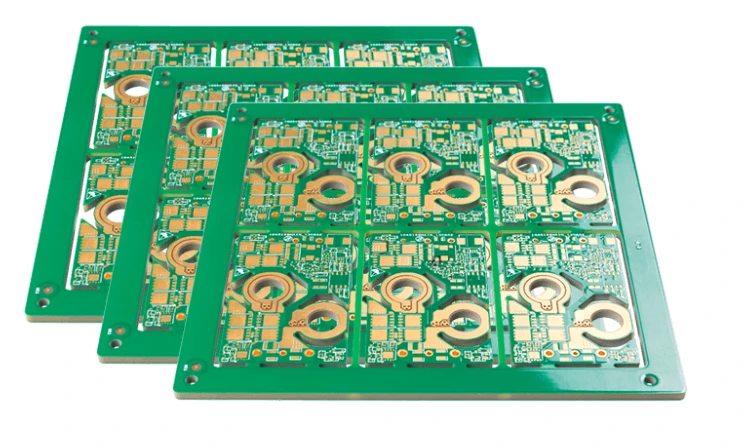
Effective BMS balancing board design is the critical factor determining the longevity and safety of multi-cell battery packs. Without precise cell equalization, series-connected lithium-ion or LiFePO4 packs suffer from capacity mismatch, leading to premature failure or thermal runaway. Engineers must navigate complex trade-offs between passive bleeding and active energy transfer while managing significant heat dissipation on the PCB.
At APTPCB (APTPCB PCB Factory), we see hundreds of battery management system designs annually. We often correct layout errors related to voltage sensing accuracy and thermal management before mass production. This guide provides the specific rules, checklists, and troubleshooting frameworks needed to execute a robust BMS balancing board design that meets industrial and automotive standards.
Battery Management System (BMS) balancing board design quick answer (30 seconds)
For a functional and safe balancing circuit, adhere to these core principles immediately:
- Match Balancing Current to Capacity: Design the balancing current to be at least 1% of the cell capacity (C-rating) for passive systems to effectively correct drift over time (e.g., 50mA–100mA for small packs, 1A+ for large storage).
- Prioritize Thermal Dissipation: Passive balancing converts excess energy into heat. Ensure your PCB layout uses wide copper pours, thermal vias, and potentially heavy copper PCB technology to dissipate heat away from sensitive battery cells.
- Kelvin Connections for Sensing: Always route voltage sense lines separately from high-current power paths to prevent voltage drop (IR drop) from corrupting the measurement accuracy.
- Voltage Reference Precision: Use voltage references and ADCs with better than 0.1% accuracy; a 10mV measurement error can reduce usable pack capacity by over 5%.
- Fail-Safe Protection: Include redundant over-voltage and over-temperature protection mechanisms that operate independently of the main microcontroller firmware.
When Battery Management System (BMS) balancing board design applies (and when it doesn’t)
Understanding when to implement a dedicated balancing circuit versus relying on simple protection modules is vital for cost and performance.
When to apply rigorous BMS balancing board design:
- Series-Connected Packs: Any application using 2S (two cells in series) or higher configurations where cell voltage drift is inevitable.
- High-Cycle Life Requirements: Electric vehicles (EVs), energy storage systems (ESS), and industrial robotics where packs must last 1000+ cycles.
- Mixed Cell Batches: When supply chain constraints force the use of cells from different production lots (though this should be minimized), active balancing is crucial.
- Fast Charging Applications: High C-rate charging exacerbates impedance mismatches, requiring robust balancing to prevent individual cells from hitting over-voltage cutoffs prematurely.
When it may not be necessary (or limited scope):
- Single Cell Applications: 1S configurations (e.g., most smartphones) do not require inter-cell balancing, only protection.
- Ultra-Low Cost Toys: Short-lifespan products often skip balancing to save cost, accepting that the pack will die once the first cell drifts too far.
- Lead-Acid Systems (Sometimes): While lead-acid batteries can self-balance to a degree via gassing during overcharge, precision electronics are still preferred for large banks.
- Primary (Non-Rechargeable) Batteries: Balancing is irrelevant for non-rechargeable chemistries.
Battery Management System (BMS) balancing board design rules and specifications (key parameters and limits)
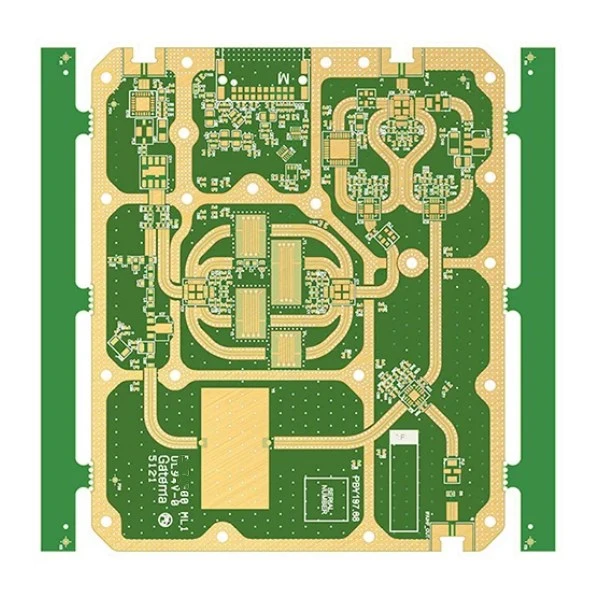
The following table outlines the critical engineering rules for BMS balancing board design. Adhering to these values ensures the board functions correctly under load and temperature stress.
| Rule / Parameter | Recommended Value / Range | Why it matters | How to verify | If ignored |
|---|---|---|---|---|
| Balancing Current | 0.5% to 2% of Cell Capacity (Ah) | Ensures the BMS can correct drift faster than it occurs. | Calculate bleed resistor current at max cell voltage. | Pack remains unbalanced; capacity reduces over time. |
| Sense Line Width | 6–10 mil (0.15–0.25mm) | Low current carries only signal; minimizes capacitance. | PCB layout review (Gerber viewer). | Noise coupling; inaccurate voltage readings. |
| Power Trace Width | Calculated for Δ T < 10° C | Prevents trace overheating during balancing or discharge. | IPC-2152 calculator based on current. | Traces fuse open or delaminate; fire risk. |
| Bleed Resistor Power | Rated Power > 2x Actual Dissipation | Resistors get hot; derating ensures longevity. | Check component datasheet vs. V2/R. | Resistor failure; loss of balancing function. |
| MOSFET Rds(on) | < 10 mΩ (for high current) | Minimizes heat generation in the switching element. | Datasheet review; thermal simulation. | MOSFET overheats and fails short or open. |
| Voltage Accuracy | ±2mV to ±5mV | Determines when balancing starts/stops. | Calibrated multimeter comparison. | Cells overcharged or balancing never triggers. |
| Thermal Clearance | > 5mm from Cells | Heat from balancing resistors damages battery chemistry. | 3D mechanical review; thermal camera. | Accelerated cell degradation; safety hazard. |
| Isolation Distance | > 0.5mm per 100V | Prevents arcing in high-voltage stacks (>60V). | Creepage/Clearance analysis in CAD. | Short circuits; catastrophic board failure. |
| Filter Capacitors | 100nF - 1µF on sense lines | Filters high-frequency noise from motor/inverter. | Oscilloscope check on sense lines. | Erratic voltage readings; false triggering. |
| PCB Tg (Glass Transition) | High Tg (>170°C) | Resists thermal stress during passive balancing. | Material datasheet selection. | PCB warping; via fracture under heat. |
| Conformal Coating | Acrylic or Silicone | Protects against condensation and electrolyte leaks. | Visual inspection under UV light. | Corrosion; short circuits in humid environments. |
Battery Management System (BMS) balancing board design implementation steps (process checkpoints)

Follow this step-by-step process to move from concept to a manufacturable BMS balancing board design.
Define Cell Chemistry and Series Count:
- Identify if the pack is Li-ion (3.6V/4.2V), LiFePO4 (3.2V/3.65V), or LTO. This dictates the voltage thresholds for the balancing logic.
- Check: Confirm the maximum stack voltage does not exceed component breakdown voltages.
Select Balancing Topology:
- Decide between Passive (resistor bleeding) or Active (capacitive/inductive transfer). Passive is standard for <100W applications; Active is for high-capacity storage.
- Check: Verify the cost budget allows for the chosen topology.
Calculate Balancing Current Requirements:
- Estimate the expected self-discharge mismatch (typically 2-3% per month). Calculate the resistor value: R = Vcell / Ibalance.
- Check: Ensure the chosen current can balance the pack within the expected charging window.
Component Selection and Derating:
- Select bleed resistors with high pulse capability. Choose MOSFETs with logic-level gates if driving directly from ICs.
- Check: Verify all components are rated for automotive temperature ranges (-40°C to +105°C) if required.
Schematic Capture and Simulation:
- Design the circuit including RC filters on voltage sense lines. Simulate the switching behavior to ensure no voltage spikes damage the controller.
- Check: Verify the "turn-on" voltage of the balancing circuit matches the target cell voltage.
PCB Layout (Thermal Focus):
- Place bleed resistors away from the microcontroller and battery temperature sensors. Use large copper planes on top and bottom layers connected by thermal vias to act as heatsinks.
- Check: Review high thermal PCB guidelines to maximize heat transfer.
Routing Sense Lines (Kelvin Connection):
- Route sense lines as differential pairs where possible. Connect them directly to the battery terminal pads, not to the high-current path.
- Check: Ensure no high-current switching loops run parallel to sense lines.
Prototype Manufacturing:
- Order a small batch for validation. Ensure the PCB fab uses the correct copper weight (e.g., 2oz or 3oz) specified in the design.
- Check: Perform First Article Inspection (FAI) on component placement.
Functional Testing:
- Test balancing activation at the precise voltage threshold. Use a thermal camera to verify hotspot temperatures stay below 60°C-80°C.
- Check: Validate that balancing stops when the cell voltage drops below the hysteresis limit.
Battery Management System (BMS) balancing board design troubleshooting (failure modes and fixes)
Even with robust design, issues occur. Use this table to diagnose common BMS balancing board design failures.
Symptom: Cells remain unbalanced after full charge
- Causes: Balancing current is too low; Charge cycle terminates too early; Measurement error.
- Checks: Measure actual current through bleed resistors. Check if the charger cutoff voltage is lower than the balancing start voltage.
- Fix: Decrease bleed resistor value (increase current); Adjust charger voltage; Recalibrate BMS.
- Prevention: Calculate required balancing current based on worst-case cell mismatch.
Symptom: PCB discoloration or burning smell
- Causes: Overheating bleed resistors; Undersized traces; Lack of thermal relief.
- Checks: Thermal imaging during balancing. Verify resistor power rating vs. actual dissipation (P=V2/R).
- Fix: Use higher wattage resistors; Increase copper area; Add airflow.
- Prevention: Derate power components by 50%. Use metal core PCB for extreme heat loads.
Symptom: Erratic voltage readings (jumping values)
- Causes: Noise on sense lines; Poor grounding; Aliasing frequencies.
- Checks: Oscilloscope on ADC inputs. Check for ground loops.
- Fix: Add or increase RC filter values (e.g., 1kΩ + 100nF). Move sense lines away from power switching.
- Prevention: Use differential sensing and proper ground plane separation.
Symptom: Balancing MOSFET fails short (permanently on)
- Causes: ESD damage; Over-voltage spike; Overheating.
- Checks: Test MOSFET resistance (Gate-Source, Drain-Source). Check for flyback diodes (if inductive load).
- Fix: Replace MOSFET; Add TVS diodes for protection.
- Prevention: Ensure Vds rating is 1.5x max cell voltage. Add gate resistors to slow switching speed.
Symptom: BMS cuts off power prematurely
- Causes: High IR drop in sense lines; False over-voltage trigger.
- Checks: Measure voltage at cell terminals vs. BMS reading under load.
- Fix: Improve Kelvin connections; Thicken sense traces.
- Prevention: Account for connector resistance in design.
Symptom: Battery drains while in storage
- Causes: High quiescent current in BMS; Leaky balancing MOSFETs.
- Checks: Measure standby current. Check for partial shorts on the PCB.
- Fix: Select ultra-low power ICs; Clean flux residues (dendritic growth).
- Prevention: Implement "sleep mode" in BMS logic; Use strict PCB cleaning processes.
How to choose Battery Management System (BMS) balancing board design (Passive vs Active)
The most fundamental decision in BMS balancing board design is choosing between passive and active topologies. This choice impacts cost, size, and efficiency.
1. Passive Balancing (Resistive Bleeding)
- Mechanism: Resistors burn off excess energy from the highest voltage cells until they match the lower cells.
- Pros: Low cost, simple circuit, small footprint, high reliability due to fewer components.
- Cons: Wastes energy as heat; limited balancing current (usually <200mA); struggles with large capacity banks.
- Best For: E-bikes, power tools, laptops, low-cost consumer electronics.
- Design Focus: Thermal management is the #1 priority. You are intentionally designing a heater on your PCB.
2. Active Balancing (Energy Transfer)
- Mechanism: Capacitors or inductors transfer energy from high-voltage cells to low-voltage cells (or back to the pack).
- Pros: High efficiency (>90%); minimal heat generation; supports high balancing currents (1A–10A); extends pack range.
- Cons: Expensive; complex control logic; larger PCB footprint; higher EMI noise potential.
- Best For: Electric vehicles, large energy storage walls, high-value battery packs where efficiency is paramount.
- Design Focus: Switching frequency optimization and EMI shielding are critical.
Decision Matrix: If your pack capacity is < 20Ah and cost is sensitive, choose Passive. If your pack capacity is > 50Ah or energy efficiency is critical, choose Active. For the middle ground (20Ah–50Ah), the choice depends on the thermal constraints of the enclosure.
Battery Management System (BMS) balancing board design FAQ (cost, lead time, Design for Manufacturability (DFM))
Q: What is the typical cost impact of adding balancing to a BMS PCB? A: For passive balancing, the cost increase is minimal, primarily driven by the resistors and MOSFETs (approx. $0.50 - $2.00 per series string depending on volume). Active balancing significantly increases cost due to transformers, inductors, and complex controller ICs, often adding $10 - $30+ per board.
Q: How does BMS balancing board design affect PCB lead time? A: Standard passive designs use common components and do not delay lead time (standard 5-10 days). However, designs requiring heavy copper (3oz+) for heat dissipation or specific high-Tg materials may extend lead time by 3-5 days. APTPCB offers expedited services for these complex stack-ups.
Q: What are the acceptance criteria for BMS balancing board assembly? A: Acceptance requires passing Automated Optical Inspection (AOI) for solder joints, In-Circuit Testing (ICT) for component values, and a functional test where voltage is applied to simulate cell inputs. The balancing current must fall within ±10% of the design target, and leakage current must be below the specified threshold (usually <10µA).
Q: How do I prepare DFM files for a BMS balancing board? A: Submit Gerber files (RS-274X), a Centroid file for pick-and-place, and a detailed BOM. Crucially, include a "Read Me" note specifying the breakdown voltage requirements and any specific conformal coating areas to avoid coating the connector contacts or test points.
Q: Can I use standard FR4 for BMS balancing boards? A: Yes, standard FR4 is suitable for most low-current passive balancing. However, for currents >500mA or tightly packed designs, High-Tg FR4 (Tg 170) is recommended to prevent delamination during thermal cycling. For extreme heat, consider aluminum or metal core PCBs.
Q: How do I test the balancing function without real batteries? A: Use a battery cell simulator or a series of precision power supplies. You can also use a resistor ladder with a power supply to simulate a balanced stack, then adjust one resistor to simulate an imbalance and trigger the BMS logic.
Q: What is the best surface finish for BMS PCBs? A: ENIG (Electroless Nickel Immersion Gold) is preferred for BMS boards. It offers a flat surface for fine-pitch components (like BMS ICs) and excellent corrosion resistance, which is vital for battery packs often exposed to harsh environments.
Q: How do I handle high-current paths in the layout? A: Use polygon pours rather than thin traces. If the board carries the full pack discharge current (not just balancing current), calculate the width required for the amperage. You may need to solder busbars or use heavy copper layers to handle 50A+ loads.
Q: Why is my BMS balancing board making a buzzing noise? A: This is likely "coil whine" or capacitor singing if you are using active balancing with inductors/MLCCs. It can also occur in passive systems if the PWM frequency for balancing falls within the audible range (20Hz–20kHz). Increasing the switching frequency usually resolves this.
Q: Does APTPCB perform functional testing on BMS boards? A: Yes. We can perform custom FCT (Functional Circuit Testing) based on your test procedure. You provide the test fixture design or requirements, and we verify that every board balances correctly before shipment.
Resources for Battery Management System (BMS) balancing board design (related pages and tools)
- Power & Energy PCB Solutions: Explore our capabilities for battery and renewable energy electronics.
- DFM Guidelines: Download our checklist to ensure your BMS layout is ready for mass production.
- SMT Assembly Services: Learn how we handle fine-pitch BMS ICs and power components.
Battery Management System (BMS) balancing board design glossary (key terms)
| Term | Definition |
|---|---|
| Cell Balancing | The process of equalizing the voltage and state of charge (SOC) of individual cells in a series pack. |
| Passive Balancing | A method that dissipates energy from the highest voltage cell as heat through a bleed resistor. |
| Active Balancing | A method that redistributes energy from high-voltage cells to low-voltage cells using capacitors or inductors. |
| BMS (Battery Management System) | An electronic system that manages a rechargeable battery (cell or pack), protecting it from operating outside its safe operating area. |
| SOC (State of Charge) | The level of charge of an electric battery relative to its capacity, usually expressed as a percentage. |
| SOH (State of Health) | A figure of merit of the condition of a battery (or a cell, or a battery pack), compared to its ideal conditions. |
| Bleed Resistor | A power resistor used in passive balancing to drain excess charge from a cell. |
| Kelvin Connection | A four-wire connection method used to measure voltage accurately by eliminating the effect of lead resistance. |
| OCV (Open Circuit Voltage) | The difference of electrical potential between two terminals of a device when disconnected from any circuit. |
| C-Rate | A measure of the rate at which a battery is discharged relative to its maximum capacity. |
| Thermal Runaway | A situation where an increase in temperature changes the conditions in a way that causes a further increase in temperature, often leading to destruction. |
| Hysteresis | The difference between the voltage at which balancing starts and the voltage at which it stops, preventing rapid oscillation. |
Request a quote for Battery Management System (BMS) balancing board design
Ready to move your BMS balancing board design from prototype to production? APTPCB provides comprehensive DFM reviews to catch thermal and layout issues before you pay for tooling. Send us your Gerber files, BOM, and testing requirements for a precise quote within 24 hours.
Conclusion (next steps)
Successful BMS balancing board design requires a rigorous approach to thermal management, voltage sensing precision, and component selection. Whether you opt for a cost-effective passive bleeder system or a high-efficiency active topology, the integrity of your PCB layout dictates the safety and lifespan of the battery pack. By following the specifications and troubleshooting steps outlined above, you can ensure your BMS delivers reliable performance in the field.