
Key Takeaways
- Cable Car PCBs require reliability-first design: Mechanical stress, condensation, temperature cycling, and electrical noise are usually more important than maximum component density.
- Material selection affects lifetime: High-Tg FR4 or specialized laminates may be required when boards experience wide temperature changes and long service periods.
- Subsystem requirements differ: A brake monitoring PCB, communication PCB, and power management PCB should not use identical design priorities.
- Manufacturing evidence matters: For safety-related transportation electronics, suppliers should provide inspection records, electrical test results, and process documentation.
- RFQ success depends on input quality: Complete Gerber files, BOM, stackup requirements, testing expectations, and coating requirements reduce production risk.
What is a Cable Car PCB and why does reliability come first?
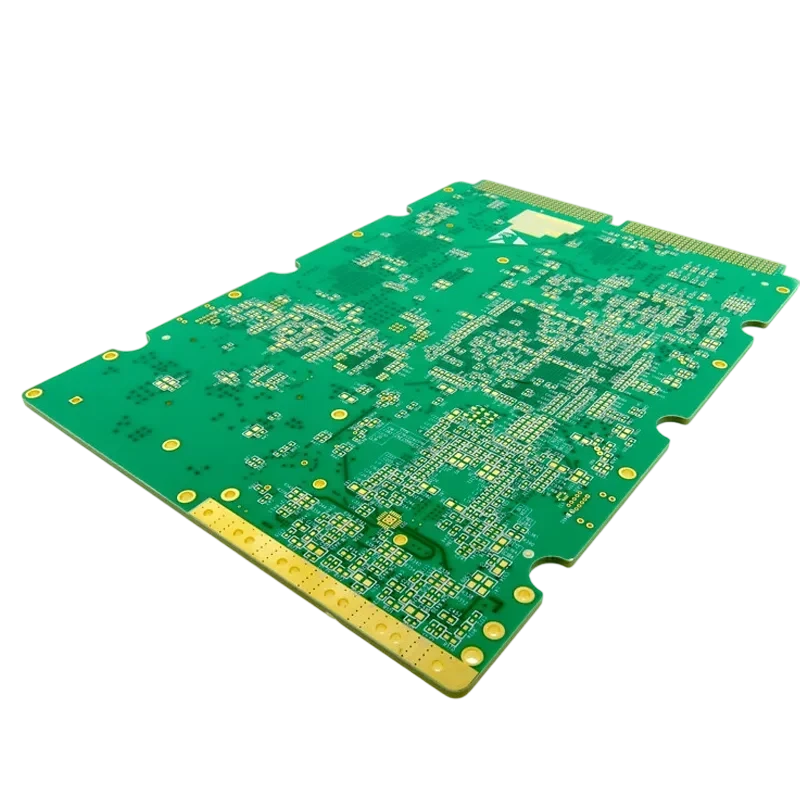
A Cable Car PCB is a printed circuit board designed for electronic systems used in aerial transportation equipment such as gondolas, cable lifts, chairlifts, and related passenger transport systems.
Unlike a standard industrial PCB installed inside a protected cabinet, a cable car PCB may operate in moving equipment exposed to vibration, humidity, temperature changes, electromagnetic interference, and mechanical shock. Typical applications include:
- Cabin control systems
- Door controllers
- Emergency communication interfaces
- Battery and power management
- Sensor monitoring systems
- Safety interlock circuits
The primary design objective is not maximum miniaturization. It is predictable operation throughout a long service life.
A useful comparison is an AGV Control PCB used for automated transportation systems. Both require robust control logic and reliable communication. However, cable cars introduce additional challenges because the electronics move vertically through changing weather conditions and may be part of a passenger safety system.
A successful design must separate three different questions:
- Can the PCB manufacturer build the board consistently?
- Can the PCB survive the expected operating environment?
- Can the complete transportation system meet its required safety qualification?
A PCB manufacturer can verify fabrication quality and provide manufacturing evidence, but final system qualification remains the responsibility of the equipment designer and system integrator.
Which PCB parameters matter most for cable car applications?
Engineers evaluating a cable car PCB should prioritize environmental and reliability parameters rather than only layer count or component density.
| Design factor | Why it matters | Design consideration | Verification method |
|---|---|---|---|
| Thermal expansion | Temperature changes can stress vias and solder joints | Select materials with suitable Tg and CTE characteristics | Material datasheet review and thermal testing |
| Vibration resistance | Continuous movement can cause mechanical fatigue | Reinforce component mounting and avoid unnecessary stress points | Mechanical analysis and vibration testing |
| Moisture resistance | Condensation can reduce insulation performance | Consider conformal coating and suitable materials | Coating inspection and environmental testing |
| Signal integrity | Communication systems must operate reliably near motors and switching electronics | Use controlled impedance and appropriate stackup design | Simulation and TDR verification |
| Current handling | Motors and power systems generate heat | Use appropriate copper weight and thermal design | Electrical calculations and thermal evaluation |
| Electrical insulation | Safety circuits require stable insulation performance | Consider spacing, materials, and contamination environment | Design review and electrical testing |
Material selection: when should engineers move beyond standard FR4?
Standard FR4 can be suitable for some non-critical cabin electronics, but safety-related or outdoor applications often require higher reliability materials.
Common considerations include:
- High-Tg FR4: Provides improved resistance to thermal stress compared with general-purpose laminates.
- Polyimide materials: Used when flexibility, temperature resistance, or harsh environmental performance is required.
- Heavy copper constructions: Useful for power distribution and high-current circuits.
- Metal-core solutions: May be considered where thermal management is a dominant concern.
The correct material depends on the actual operating environment, stackup design, component selection, and qualification requirements. Material choice should be verified using manufacturer datasheets rather than selected only by material category.
Cable Car PCB selection guide by subsystem
Different cable car electronics have different failure risks. A single PCB design philosophy should not be applied to every subsystem.
| Subsystem | Main design priority | Recommended approach | Main risk |
|---|---|---|---|
| Cabin control unit | Reliability and redundancy | Robust multilayer stackup, dedicated power and ground planes, controlled interfaces | System interruption |
| Door controller | Mechanical durability | Strong component attachment, vibration-aware placement, appropriate copper weight | Solder joint fatigue |
| Communication interface | Signal integrity | Controlled impedance routing and noise management | Communication failure |
| Battery and power management | Thermal performance | Optimize copper thickness, thermal paths, and current capacity | Excessive heat |
| External sensor modules | Environmental protection | Sealing strategy, coating, and connector reliability | Moisture damage |
| Emergency monitoring | Functional safety | Simple, predictable circuits with clear validation requirements | Incorrect safety response |
For safety-related circuits, engineers should avoid adding complexity without a clear reliability benefit. A simpler architecture with easier verification may provide better long-term performance.
Manufacturing checklist: what should be verified before production?
A reliable cable car PCB depends on communication between the design team and the manufacturer before fabrication begins.
Use the following release checklist to reduce manufacturing risk.
| Checkpoint | What to confirm | Evidence to request |
|---|---|---|
| Material specification | Laminate type, Tg, CTE, and environmental requirements | Material approval record |
| Stackup definition | Layer arrangement and impedance requirements | Approved stackup document |
| Mechanical design | Component placement and mounting considerations | DFM review feedback |
| Copper design | Power requirements and thermal limits | Current capacity review |
| Via reliability | Drill, plating, and aspect ratio suitability | Fabrication review |
| Surface finish | Finish selection matches storage and assembly needs | Process specification |
| Protection strategy | Coating areas and masking requirements | Coating drawing |
| Electrical testing | Test coverage matches reliability needs | Electrical test report |
| Optical inspection | Defect detection before shipment | AOI records |
Design teams should complete a formal DFM review before releasing production files. Manufacturing partners providing PCB manufacturing services can help identify fabrication risks related to spacing, drilling, stackup, and production constraints.
Common cable car PCB design mistakes
Designing only for normal operating temperature
A system may operate within its expected temperature range but still fail after repeated cold starts, thermal cycling, or storage conditions.
Better approach: Define both operating and non-operating environmental conditions during design review.
Treating moisture protection as an afterthought
High-altitude installations may experience condensation even when electronics are enclosed.
Better approach: Include environmental protection planning early, including coating coverage, connector selection, and enclosure considerations.
Using consumer-grade connectors in vibrating environments
Mechanical movement can create intermittent connections over time.
Better approach: Select connectors and mounting methods appropriate for vibration exposure.
Skipping manufacturing review
A design that works electrically may still create unnecessary production risk.
Better approach: Perform DFM analysis before manufacturing release. Use established DFM guidelines to review fabrication requirements.
How should engineers prepare a Cable Car PCB RFQ?
A complete manufacturing request allows suppliers to evaluate feasibility accurately.
Include:
- Gerber fabrication files
- Drill files
- Bill of Materials (BOM)
- Layer stackup requirements
- Material requirements
- Copper weight requirements
- Surface finish requirements
- Testing requirements
- Coating specifications
- Assembly drawings if applicable
For high-reliability applications, also request manufacturing evidence such as:
- Electrical test results
- Inspection records
- Material traceability information
- Process documentation applicable to the project
Engineers can use an Impedance Calculator during design preparation to verify signal requirements before submitting fabrication data.
FAQ: Cable Car PCB procurement and design questions
Can a cable car PCB use standard FR4?
It depends on the subsystem and environmental requirements. Standard FR4 may be acceptable for lower-risk electronics, while control and safety-related circuits may require higher-performance materials.
Does conformal coating replace proper PCB design?
No. Coating protects against environmental exposure but cannot correct poor layout, unsuitable materials, or inadequate mechanical design.
Are IPC Class 3 requirements always mandatory?
The required manufacturing class depends on the application, customer requirements, and system qualification process. Safety-critical electronics often require higher reliability standards than general electronics.
Can existing cable car systems be upgraded with new PCBs?
Yes, but replacement boards must be evaluated for electrical interfaces, mechanical fit, connector compatibility, and system-level validation.
What information helps a manufacturer provide an accurate quotation?
The most useful inputs are complete fabrication data, BOM information, stackup requirements, testing expectations, and environmental requirements.
Conclusion
Designing a Cable Car PCB requires balancing electrical performance, environmental durability, manufacturability, and system reliability.
The strongest designs begin with a clear understanding of operating conditions, subsystem requirements, and supplier evidence expectations. Material selection, vibration protection, thermal management, and manufacturing validation should be considered together rather than as separate steps.
When preparing a new cable car PCB project, provide complete technical requirements and define the evidence needed for acceptance. This approach helps manufacturers produce boards that support reliable operation in demanding transportation environments.