
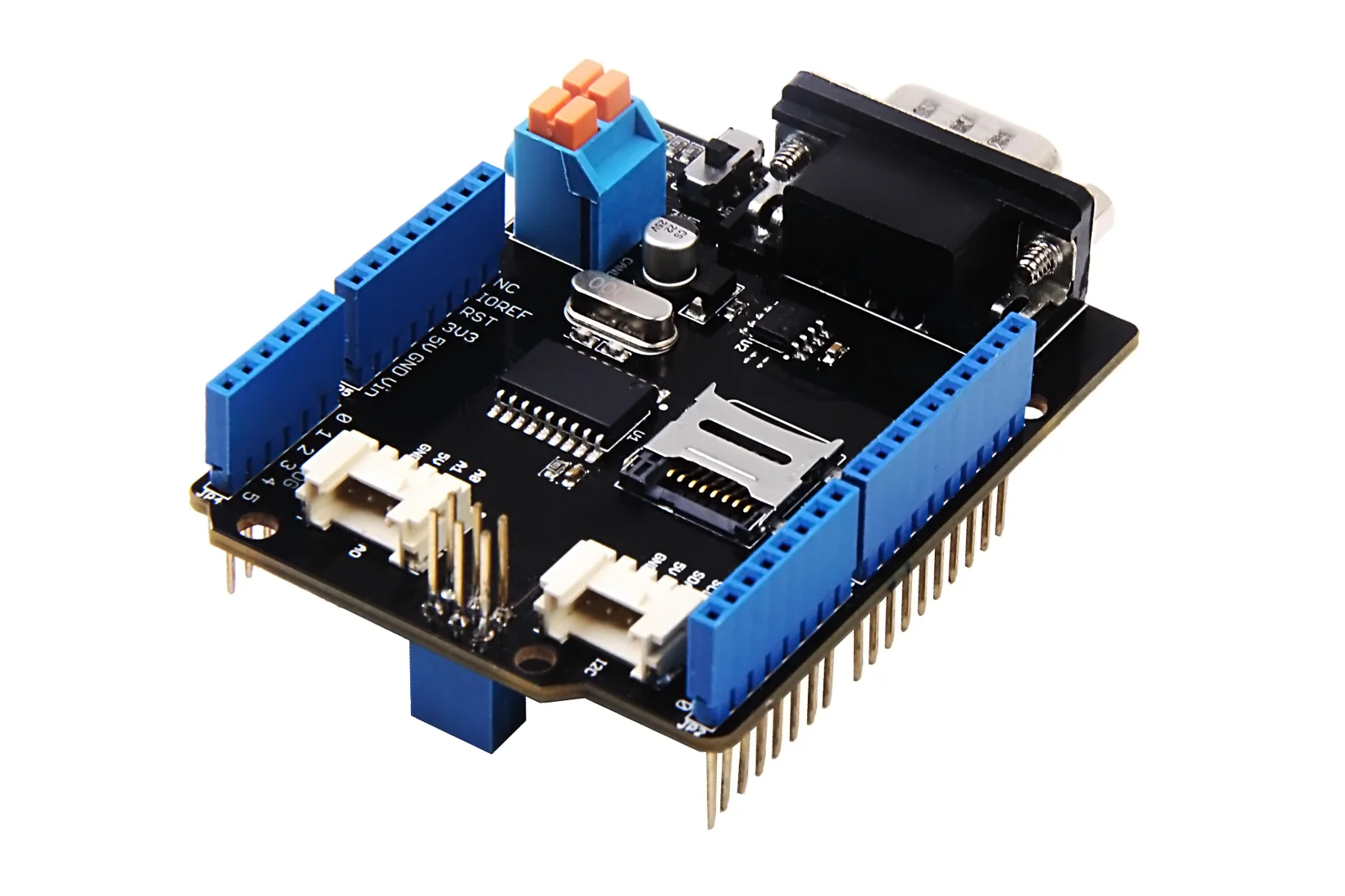
- A CAN transceiver PCB is the physical layer that turns logic-level TX/RX into a robust two-wire differential signal, so it should be reviewed as a signal-integrity problem, not just a footprint.
- The differential pair between transceiver and connector is where most real failures begin: asymmetry, impedance discontinuities, and broken return paths show up here first.
- Protection parts (TVS, common-mode choke) must sit in the signal path without breaking pair geometry, which is a layout constraint as much as a BOM choice.
- CAN FD raises the data-rate ceiling, so margins that classical CAN tolerated become real defects on the same board.
- Keep the review at the board boundary: it does not prove bus compliance, guaranteed EMC results, or fixed performance numbers.
Quick Answer A
CAN transceiver PCBis best reviewed as a board that has to keep a clean, symmetric differential pair from the transceiver to the connector while protection and grounding stay intact. The practical question is notDoes the schematic match the datasheet?It isDoes the differential pair hold the impedance the bus standard specifies, with a continuous return path, after TVS, choke, vias, and connector are all placed?
Table of Contents
- What a CAN transceiver PCB is — and where the physical layer boundary sits
- The differential pair is the whole game
- Protection without breaking the pair
- Material and CAN FD considerations
- What to verify before the build
- FAQ
- Public references
- Author and review information
What a CAN transceiver PCB is — and where the physical layer boundary sits
CAN is a communication protocol; the PCB is the physical medium that has to make that protocol survive electrical stress. A CAN transceiver PCB hosts the physical-layer interface between the controller and the two-wire bus (CAN_H and CAN_L), and it sits on the analog side of the link. That boundary is the useful way to scope the board.
On one side is digital logic: the transceiver receives TX from the controller and returns RX. On the other side is a differential bus that may run through harsh cabling, connectors, and a noisy mechanical environment. The board's job is to carry that differential signal cleanly, reject common-mode noise, and avoid radiating energy of its own. It is an active element in the signal chain, not just a carrier for the transceiver chip.
Naming the boundary keeps the review honest. The board can be designed and checked for differential integrity, return path, and protection placement. It cannot, on its own, prove full bus compliance or system-level EMC behavior, which depend on cabling, termination across the whole network, and the connected nodes. For broader high-speed construction context, the closest support page is High-Speed PCB, and for application framing, Automotive Electronics PCB and Industrial Control PCB.
The differential pair is the whole game
Everything that makes a CAN transceiver PCB reliable comes back to one structure: the CAN_H / CAN_L differential pair. Route the two conductors as a tightly coupled, symmetric pair with constant spacing, hold the differential impedance the bus standard specifies, and keep a solid reference plane directly beneath them so the return current has a continuous path. When those three conditions hold, the board behaves; when any one breaks, the trouble is rarely obvious at first.
A side note on the dominant risk is worth keeping in view during layout. Differential-pair asymmetry, an impedance discontinuity where the trace meets a TVS, choke, via, or connector, or a broken return path over a split plane all do the same thing electrically: they create reflections and convert part of the differential signal into common-mode energy on the bus. That produces marginal signal integrity, the kind classical CAN at lower rates often tolerates but CAN FD does not. The result is intermittent bus errors that surface only at the higher data rate, or only over temperature, after the board already passed bench checks at room temperature and slower speeds. This is why early electrical tests for opens and shorts can look fine while the real condition is already unstable.
Two layout habits do most of the work. First, length-match CAN_H and CAN_L so they stay in phase; skew between the two lines is one of the cleanest ways to manufacture common-mode noise. Second, never route the pair across a gap in the reference plane. A split between analog and digital ground under the pair destroys the impedance and forms a slot antenna. Where impedance targets and stackup interact, PCB Impedance Control and PCB Stack-Up are the relevant references, because the impedance the standard specifies is only achievable on a stackup that supports it.
Vias are a quieter discontinuity. Each one adds inductance and a small impedance step, so keep the pair on a single layer from transceiver to connector when you can, and treat any unavoidable via transition as a matched pair rather than two independent jumps.
Protection without breaking the pair
A CAN node lives on exposed cabling, so transient protection is not optional. The two common parts are TVS devices for ESD and surge events, and a common-mode choke (CMC) to suppress common-mode noise. The layout challenge is that both sit directly in the differential path, and a careless placement turns a protection part into the impedance discontinuity described above.
A few placement principles keep protection from working against the pair:
- Place TVS and the common-mode choke close to the connector, in the direct signal path, so there are no stubs branching off to the protection devices. Stubs to protection parts create reflections of their own.
- Keep the pair symmetric through the protection components. The choke and TVS should preserve equal trace lengths and spacing for CAN_H and CAN_L so the pair stays balanced.
- Mind the order from the connector inward; the protection sequence should let transient energy meet the suppression devices before it reaches the transceiver pins.
- Treat termination as part of the same region. On an end node the pair needs termination at the connector end; a split-termination arrangement (two resistors with a capacitor to ground at the midpoint) is a common way to add common-mode filtering, but the symmetry of that network still has to be respected.
The point is that protection, termination, and the differential pair are one coupled layout, not three separate problems solved in isolation.
Material and CAN FD considerations
CAN FD raises the data-rate ceiling defined by the CAN FD specification, which is the practical reason signal integrity gets stricter. The same physical pair that was forgiving at classical CAN rates has less margin at the higher FD data phase, so discontinuities that were invisible before can become real bus errors. Treat an FD-capable board closer to a High-Speed PCB: minimize stubs, control vias on the pair, and verify impedance against the stackup rather than assuming it.
Material is the second axis. Standard FR4 is widely used for CAN and is often workable for CAN FD when the layout is tight, but the operating environment can push the choice. Automotive powertrain and underhood zones see thermal cycling that stresses laminates, and a higher glass-transition material can reduce the risk of delamination in those conditions. That is a reliability argument, not a universal rule, and the right call depends on the thermal profile and stackup; see High-Tg PCB for where higher-Tg laminates fit. Avoid framing any single laminate as the "best material"; the useful statement is that material should match the thermal and loss conditions the board will actually see, confirmed per stackup.
What to verify before the build
A staged review at the board boundary catches the failures that bench checks miss. Use the table below as a release checklist rather than asking the board to prove network performance.
| Review question | What to confirm | Why it is a release issue |
|---|---|---|
| Does the stackup support the target impedance? | The chosen layer stack yields the differential impedance the bus standard specifies for the routed pair | Trace width and dielectric height set impedance; an unverified stackup forces a late redesign |
| Is the pair symmetric and length-matched? | CAN_H and CAN_L are tightly coupled, equal length, with constant spacing end to end | Asymmetry and skew convert differential signal into common-mode noise |
| Is the return path continuous? | A solid reference plane runs unbroken beneath the pair, with no split-plane crossing | A broken return path creates reflections and radiated emissions |
| Are protection and termination in the path, stub-free? | TVS, common-mode choke, and termination sit near the connector with no branch stubs | Stubs to protection parts add discontinuities that degrade the bus |
| Is the transceiver close to the connector? | The pair from transceiver to connector is kept short and on a single layer where possible | Long pair runs and extra vias act as antennas and add impedance steps |
| Is the validation language at board level? | Review stays on DFM, impedance intent, layout, and test planning, not network compliance | A board release should not be misread as bus certification |
For pre-release manufacturing intake, the companion resource is DFM Guidelines. For assembled-board validation, Testing & Quality covers inspection and impedance reporting, and FCT Test covers functional checks that confirm the transceiver actually communicates after assembly. When the package is ready, you can start a review through the CAN transceiver PCB review request.
FAQ
Does a CAN transceiver PCB article prove bus compliance?
No. A board-level guide explains how to review differential integrity, protection, and layout, but it does not prove CAN bus compliance, EMC acceptance, or network qualification, which depend on cabling, termination, and the connected nodes.
Why does the differential pair matter more than the rest of the layout?
Because CAN is a differential bus. Asymmetry, an impedance discontinuity, or a broken return path on the CAN_H / CAN_L pair creates reflections and common-mode conversion, which is the main mechanism behind intermittent bus errors.
Can a board pass early electrical tests and still be marginal?
Yes. Opens-and-shorts checks at room temperature and lower rates can pass while the pair already carries reflections or asymmetry that only fail at the higher CAN FD data rate or over temperature.
Can I use standard FR4 for a CAN FD PCB?
Often yes, when the layout is tight and impedance is verified against the stackup. Harsh thermal environments may justify a higher-Tg laminate, but that is a reliability decision tied to the operating profile, not a universal requirement.
Where should TVS and the common-mode choke go?
Close to the connector, in the direct signal path, without stubs branching to them, and arranged so the pair stays symmetric through the protection network.
What should the manufacturing package include for a useful review?
Fabrication data with stackup intent, placement that makes the differential pair and connector zone readable, BOM context for the transceiver and protection parts, and any board-level test expectations that influence layout.
Public references
High-Speed PCB Support-page context for high-speed construction and signal-integrity planning.
PCB Impedance Control Support-page context for differential impedance targets and control.
PCB Stack-Up Support-page context for stackup definition and controlled construction.
DFM Guidelines Support-page context for manufacturing review intake and pre-release clarification.
Testing & Quality Support-page context for inspection, impedance reporting, and validation language at board level.
Author and review information
- Author: APTPCB editorial team
- Technical review: High-speed / signal-integrity PCB engineering review team
- Review scope: Board-level differential-pair integrity, protection placement, material fit, manufacturability, and release-boundary consistency