
Key Takeaways
- A Central Station PCB is the hardware foundation behind centralized patient monitoring and industrial control hubs, combining networking, processing, display, and reliability functions.
- Medical applications require PCB decisions aligned with IEC 60601-1, including isolation strategy, creepage, clearance, dielectric strength, and leakage current control.
- 2 MOPP PCB designs prioritize patient protection, while 2 MOOP PCB designs address operator protection requirements.
- High-speed interfaces such as Ethernet, USB, LVDS, and display links require controlled impedance and stable stackup design.
- A qualified supplier should provide manufacturing evidence including electrical testing, microsection reports, material traceability, and DFM review.
What is a Central Station PCB and where is it used?
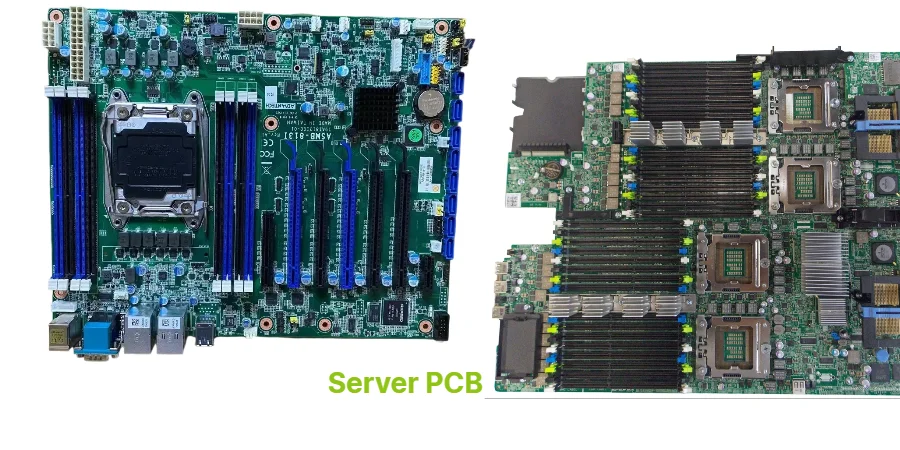
A Central Station PCB is a high-reliability circuit board used inside centralized monitoring or control systems. In hospitals, it supports central nursing stations that collect information from multiple bedside monitors, telemetry devices, and networked medical equipment.
Unlike a standard computing motherboard, a Central Station PCB must support continuous operation, reliable communication, and strict safety requirements. A failure can interrupt monitoring visibility across multiple connected devices.
Typical functions include:
- Real-time patient data aggregation.
- Alarm and event display communication.
- Network communication with bedside devices.
- Data storage and transfer.
- High-speed display processing.
- Power distribution and isolation management.
Medical central stations commonly operate as part of a larger certified system where the overall device architecture must satisfy safety requirements.
Industrial versions use a similar architecture for factory control rooms, telemetry systems, and process monitoring platforms, but the protection requirements usually focus on operator safety and electromagnetic robustness.
Which Central Station PCB specifications matter most?
PCB selection should be based on measurable engineering parameters rather than general reliability claims.
| Metric | Why it matters | Typical Range / Factor | How to Measure |
|---|---|---|---|
| Dielectric Strength | Maintains isolation between hazardous and low-voltage areas | >1.5 kV AC or higher depending on safety design | Hi-Pot Testing |
| Differential Impedance | Protects high-speed communication quality | 90Ω or 100Ω ±10% | TDR Testing |
| Tg (Glass Transition Temp) | Controls thermal expansion during operation | High Tg >170°C common for demanding systems | TMA |
| CAF Resistance | Prevents internal conductive growth failures | 500-1000 hour humidity bias testing | THB Testing |
| Copper Plating Thickness | Improves via reliability | IPC Class 3 typical target: average 25µm barrel copper | Microsection |
| CTE (z-axis) | Reduces via cracking risk | Controlled expansion through thermal cycling | TMA |
How do you choose between 2 MOPP PCB and 2 MOOP PCB?
The isolation strategy determines PCB layout, material selection, and manufacturing constraints.
| Application | Protection Goal | PCB Approach | Main Design Trade-off |
|---|---|---|---|
| ICU patient monitoring station | Patient protection | 2 MOPP PCB | Larger creepage and clearance distances reduce routing density |
| Hospital operator console | Operator protection | 2 MOOP PCB | Easier layout but still requires controlled isolation |
| Industrial control room | Equipment operator safety | 2 MOOP PCB | EMI performance becomes a major priority |
| Portable diagnostic platform | Patient-connected equipment | 2 MOPP PCB | Higher insulation requirements increase PCB complexity |
A 2 MOPP design requires careful separation between primary and secondary circuits. The PCB layout must reserve isolation barriers before routing begins.
What PCB materials are suitable for Central Station applications?
Material selection depends on processing speed, thermal load, and reliability requirements.
Common choices include:
- High-Tg FR-4 for general monitoring platforms.
- CAF-resistant laminates for long service life.
- Low-loss materials for high-speed networking and video processing.
- Hybrid stackups combining FR-4 and high-frequency materials.
For high-speed interfaces, specify controlled stackup information early. Material dielectric constant (Dk), dissipation factor (Df), copper thickness, and dielectric thickness directly affect impedance performance.
How should a Central Station PCB be designed for manufacturing?
A reliable board begins with manufacturing decisions during design review.
Isolation and schematic preparation
Define isolation boundaries clearly between:
- mains input;
- isolated power sections;
- patient-connected circuits;
- communication interfaces.
The PCB CAD environment should include spacing rules for creepage and clearance verification.
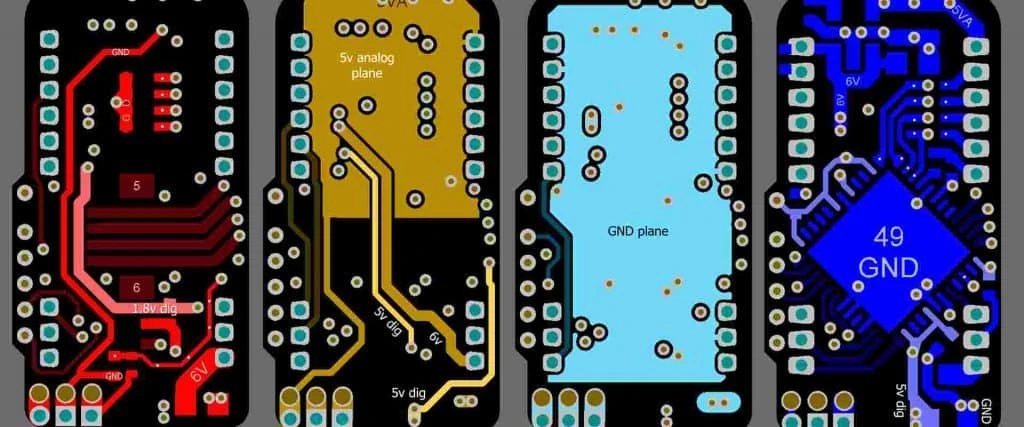
Stackup and impedance control
High-speed Central Station boards often include:
- Ethernet;
- USB;
- HDMI/display interfaces;
- LVDS links;
- processor memory buses.
Define impedance targets before routing begins.
Typical differential targets:
- 90Ω for some USB implementations.
- 100Ω for common differential communication links.
TDR testing should verify the finished PCB matches design requirements.
Thermal management
Central stations often operate continuously and may use compact enclosures.
Thermal design commonly includes:
- thermal vias beneath processors;
- copper spreading areas;
- heavy copper power layers;
- mechanical heat transfer paths.
High thermal loads from CPUs, FPGAs, or AI-processing modules may require advanced cooling strategies.
What validation should a Central Station PCB supplier provide?
A medical-grade PCB supplier should provide evidence beyond basic continuity testing.
Supplier validation package:
| Validation Item | Purpose |
|---|---|
| Electrical test report | Confirms circuit integrity |
| Hi-Pot report | Confirms insulation performance |
| Microsection analysis | Verifies copper plating and via quality |
| Material certificates | Confirms laminate traceability |
| Impedance report | Confirms high-speed performance |
| AOI/SPI records | Confirms assembly quality |
| First Article Inspection | Confirms production readiness |
Manufacturing capability should align with high-reliability requirements such as IPC Class 3 production.
What are the most common Central Station PCB failures?
| Failure Mode | Root Cause | Engineering Solution |
|---|---|---|
| Isolation breakdown | Incorrect spacing or material selection | Design IEC 60601 isolation requirements into PCB layout |
| Communication errors | Poor impedance control | Use controlled stackup and TDR verification |
| Thermal aging | Insufficient heat removal | Add thermal paths and evaluate operating temperature |
| Internal PCB shorts | CAF growth or contamination | Select suitable materials and verify process controls |
| Connector damage | Mechanical stress | Add reinforcement and appropriate mounting structures |
| Assembly defects | Insufficient inspection | Use AOI, SPI, and first article validation |
Central Station PCB implementation checklist
Before production release, confirm:
- Isolation requirements are defined according to the intended safety category.
- Stackup documentation includes material grade, thickness, and impedance targets.
- High-speed routing has verified return paths.
- Thermal areas are reviewed under actual enclosure conditions.
- Surface finish supports component pitch and lifecycle requirements.
- Manufacturing drawings define IPC requirements and inspection criteria.
Recommended surface finishes include ENIG and ENEPIG for fine-pitch assemblies requiring flat solderable surfaces.
Central Station PCB FAQ
What is the difference between 1 MOPP and 2 MOPP?
MOPP means Means of Patient Protection. One MOPP provides a single protective insulation level, while 2 MOPP provides two levels of protection and requires stricter isolation design.
Can standard FR-4 be used for a Central Station PCB?
Yes, for many applications. High-Tg FR-4 is suitable when speed and thermal requirements are moderate. Higher-performance materials may be required for advanced networking or processing systems.
How does IEC 60601 affect PCB design?
IEC 60601 influences insulation systems, creepage, clearance, leakage current, and dielectric strength requirements. These requirements must be considered during schematic and PCB layout development.
Why is impedance control important?
Central stations process large amounts of real-time information. Poor impedance control can create reflections, signal degradation, and communication instability.
What files should be provided for PCB manufacturing?
A complete manufacturing package normally includes:
- Gerber files.
- Drill files.
- Fabrication drawing.
- Stackup definition.
- Netlist.
- Assembly documentation.
- Testing requirements.
Central Station PCB glossary
| Term | Definition |
|---|---|
| MOPP | Means of Patient Protection defined within IEC 60601 concepts |
| MOOP | Means of Operator Protection |
| Creepage | Surface distance between conductive parts |
| Clearance | Air distance between conductive parts |
| CTI | Comparative Tracking Index |
| HDI | High Density Interconnect PCB technology |
| CAF | Conductive Anodic Filament |
| IPC Class 3 | High-reliability PCB manufacturing classification |
| Stackup | Layer arrangement of PCB materials and copper |
| TDR | Time Domain Reflectometry impedance measurement |
Conclusion: Selecting the right Central Station PCB manufacturing partner
A Central Station PCB must balance medical safety, signal integrity, thermal reliability, and long service life.
The correct supplier should understand both PCB fabrication and the system-level requirements behind centralized monitoring platforms. Early engineering collaboration helps define isolation strategy, materials, stackup, testing requirements, and production controls before costly redesign cycles occur.
APTPCB supports high-reliability PCB manufacturing for medical and industrial applications, including design review, fabrication validation, and production support.
For projects requiring medical-grade reliability, provide:
- PCB design files.
- Fabrication specifications.
- Material requirements.
- Safety requirements.
- Testing expectations.
A complete engineering package allows faster validation and a more predictable path from prototype to production.
For quotation and engineering review, visit the Quote page.
Additional related resources: