
Quick Answer (30 seconds)
Designing a Class D Amplifier PCB requires balancing high power efficiency with strict electromagnetic interference (EMI) control. Unlike linear amplifiers, Class D topologies switch MOSFETs fully on and off at high frequencies (often 300kHz to 2MHz), creating significant noise challenges.
- Minimize Switching Loops: The path connecting the input decoupling capacitor, high-side MOSFET, and low-side MOSFET must have the smallest possible loop area to reduce radiated EMI.
- Grounding Strategy: Use a solid ground plane (preferably on a 4-layer stackup) to shield sensitive analog signals from noisy switching currents. Star grounding is essential for 2-layer boards.
- Component Placement: Place the LC output filter (inductor and capacitor) as close to the output terminals as possible to limit noise propagation.
- Thermal Management: Although efficient (90%+), high-power Class D amps still require thermal vias and sufficient copper area (2oz or more) under power FETs.
- Gate Drive Routing: Keep gate drive traces short and wide to minimize inductance, preventing ringing and potential shoot-through failures.
- Validation: Always verify dead-time and switching node waveforms before full-power testing to prevent immediate MOSFET destruction.
When Class D Amplifier PCB applies (and when it doesn’t)
Class D technology has revolutionized audio by shrinking form factors and reducing heat, but it is not the universal solution for every audio application.
Use Class D Amplifier PCB when:
- Power Efficiency is Critical: Battery-powered devices (Bluetooth speakers, portable PAs) benefit from 90-95% efficiency, extending runtime.
- Space is Limited: The reduced need for massive heat sinks allows for compact designs in automotive audio and soundbars.
- High Power Output is Required: For subwoofers and concert audio, Class D delivers kilowatts of power without the massive weight of Class AB transformers.
- Thermal Constraints Exist: In sealed enclosures where airflow is minimal, the lower heat dissipation of Class D is mandatory.
Consider alternatives (Class A, AB, or H) when:
- Ultra-Low Noise is Priority: For high-end audiophile preamps or studio mastering equipment, a Class A Amplifier PCB or Class AB Amplifier PCB often provides superior linearity and zero switching noise.
- Design Simplicity is Needed: Low-power, low-cost analog designs may not justify the complexity of the output filter and EMI shielding required for Class D.
- RF Interference is a Dealbreaker: In highly sensitive RF environments (e.g., near AM tuners), the switching noise of Class D can be difficult to filter completely.
Rules & specifications
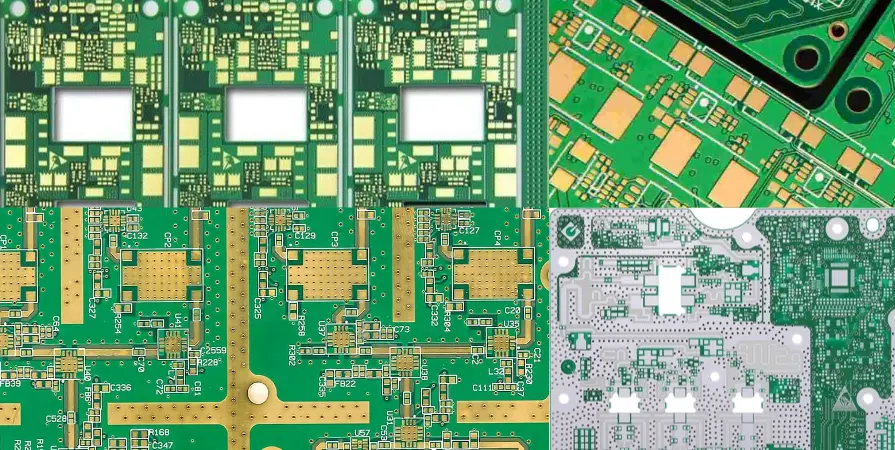
Successful Class D Amplifier PCB fabrication relies on strict adherence to layout rules and material specifications. APTPCB (APTPCB PCB Factory) recommends the following parameters to ensure performance and manufacturability.
| Rule / Parameter | Recommended Value / Range | Why it matters | How to verify | If ignored |
|---|---|---|---|---|
| Copper Weight | 2oz (70µm) or higher | Reduces resistance ($I^2R$ losses) and improves heat spreading. | Check stackup spec in Gerber viewer. | Overheating tracks; voltage drop at high power. |
| Trace Width (Power) | > 50 mil (calc. for current) | Handles high current pulses without excessive inductance or heat. | IPC-2152 Calculator. | Traces fuse open; high impedance limits peak power. |
| Layer Count | 4 Layers (Signal-GND-Power-Signal) | Provides a solid reference plane for EMI shielding and return paths. | Stackup diagram review. | High radiated EMI; ground bounce issues. |
| Switching Node Area | Minimize (< 10mm length) | This node swings full voltage at high speed; it is a major EMI antenna. | Layout visual inspection. | Failed EMC compliance; noise coupling into audio. |
| Gate Drive Trace Width | > 20 mil | Reduces inductance to ensure fast, clean MOSFET switching. | DRC (Design Rule Check). | Slow switching; increased switching losses; ringing. |
| Via Size (Thermal) | 0.3mm hole / 0.6mm pad | Optimizes solder wicking and thermal transfer to inner planes. | Drill chart verification. | MOSFETs overheat and fail thermally. |
| Clearance (High Voltage) | > 0.5mm (for >50V rails) | Prevents arcing between high-voltage rails and ground. | IPC-2221 Voltage Clearance table. | Board carbonization; short circuits. |
| Decoupling Cap Distance | < 2mm from FETs | Supplies instantaneous current; minimizes loop inductance. | 3D Viewer or placement check. | Massive voltage spikes; EMI; unstable operation. |
| Feedback Routing | Differential pair | Rejects common-mode noise picked up from the switching stage. | Check routing parallelism. | High THD+N; audible noise floor. |
| Solder Mask | LPI (Liquid Photoimageable) | Ensures reliable insulation between tight pads on driver ICs. | Visual inspection. | Solder bridges on fine-pitch driver pins. |
| Material Tg | Tg 150°C or 170°C | Prevents PCB delamination under high thermal stress. | Material datasheet (e.g., FR4 High-Tg). | Pad lifting during assembly or operation. |
| Output Filter Ground | Return to Power GND | Prevents heavy ripple current from polluting the clean analog ground. | Layout review (Ground separation). | Hum and buzz in the audio output. |
Implementation steps
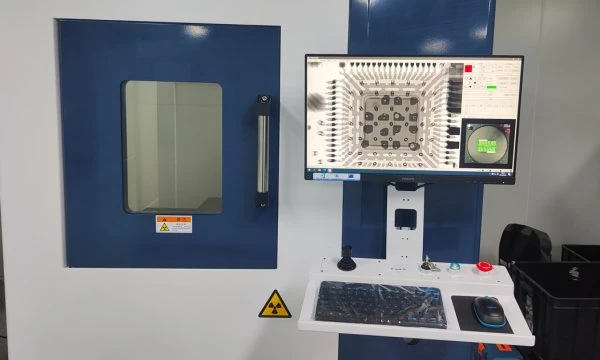
Moving from schematic to a physical Class D Amplifier PCB requires a disciplined workflow.
Component Selection & BOM Scrub:
- Select MOSFETs with low $R_{DS(on)}$ and low gate charge ($Q_g$).
- Choose inductors with a saturation current ($I_{sat}$) at least 20-30% higher than the peak output current.
- Check: Ensure capacitors are rated for the full rail voltage plus safety margin.
Stackup Definition:
- Define a 4-layer stackup if budget permits. Layer 2 should be a solid Ground plane.
- Action: Contact APTPCB for a standard impedance stackup if digital audio inputs (I2S/TDM) are used.
Floorplanning (Critical Step):
- Place the power stage first. The input capacitor, high-side FET, and low-side FET must form the tightest possible physical loop.
- Place the LC filter immediately next to the output stage.
- Check: Is the analog input section physically separated from the switching node?
Power & Ground Routing:
- Route high-current paths using wide polygons (pours) rather than thin traces.
- Use multiple vias for layer transitions to reduce inductance.
- Action: Implement a "Star Ground" or split ground plane (AGND and PGND) joined at a single point near the power supply.
Gate Drive Routing:
- Route gate drive signals as differential pairs (Gate and Source return) where possible.
- Keep these traces short to prevent parasitic oscillation.
Feedback & Analog Routing:
- Route feedback traces away from the inductor and switching node.
- Use ground pours to shield these sensitive lines.
DFM & DRC Review:
- Run a Design Rule Check for minimum clearance (especially high voltage areas).
- Check: Verify solder mask expansion around fine-pitch driver ICs to prevent bridging.
Manufacturing File Generation:
- Export Gerbers, Drill files, and Pick & Place data.
- Include a fabrication drawing specifying copper weight (e.g., "Finished Copper: 2oz").
Failure modes & troubleshooting
Even experienced designers encounter issues with Audio Amplifier PCB layouts. Here is how to diagnose common failures.
1. Excessive EMI / Radio Interference
- Symptom: The amplifier fails EMC testing or interferes with nearby radio equipment.
- Cause: Large switching loop area or poor grounding.
- Fix: Add snubber circuits (RC) across the switching node. Re-spin the board to tighten the loop between the decoupling cap and FETs.
- Prevention: Use a 4-layer board with a continuous ground plane on Layer 2.
2. MOSFET Overheating (Thermal Runaway)
- Symptom: Amp shuts down after minutes; PCB discolored under FETs.
- Cause: Insufficient copper area for heat dissipation or slow gate switching (spending too much time in the linear region).
- Fix: Check gate drive resistors (lower resistance speeds up switching). Add a heatsink or fan.
- Prevention: Use Heavy Copper PCB technology and thermal via stitching.
3. High Noise Floor (Hiss/Hum)
- Symptom: Audible hiss when no audio is playing.
- Cause: Ground loops or switching noise coupling into the analog input.
- Fix: Cut ground loops; ensure AGND and PGND connect at only one point.
- Prevention: Route analog inputs as differential pairs; keep them far from the Class D output stage.
4. Shoot-Through (MOSFET Explosion)
- Symptom: Immediate failure of MOSFETs upon power-up; short circuit.
- Cause: Both high-side and low-side FETs turning on simultaneously.
- Fix: Increase "Dead Time" in the controller settings. Check for gate ringing.
- Prevention: Minimize gate trace inductance; verify dead-time with an oscilloscope before connecting the load.
5. Output DC Offset
- Symptom: Speaker "pops" on startup; protection relay triggers.
- Cause: Mismatched input bias or leakage currents.
- Fix: Check input coupling capacitors and feedback network tolerances.
- Prevention: Use high-quality, low-tolerance resistors in the feedback path.
Design decisions
2-Layer vs. 4-Layer PCB For low-power (<50W) Class D amps, a 2-layer board is cost-effective but requires careful ground pouring. For high-power (>100W) or high-fidelity designs, a 4-layer PCB is virtually mandatory. The internal ground plane acts as a shield and drastically reduces loop inductance, which is the primary source of EMI.
Integrated vs. Discrete Output Stage
- Integrated (Chip-amp): Easier layout, built-in protection, lower power (typically <100W). Good for beginners.
- Discrete (Controller + External FETs): Unlimited power scaling, customizable performance, harder layout. Required for high-power pro audio.
Bridged (BTL) vs. Single-Ended (SE) A Bridged Amplifier PCB (Bridge-Tied Load) can deliver four times the power from the same voltage rail compared to SE. However, it requires two output filters and more complex routing.
FAQ
1. What is the most critical layer in a Class D Amplifier PCB? The Ground layer (usually Layer 2). It provides the return path for high currents and shields the signal layer from switching noise.
2. Can I use FR4 for Class D amplifiers? Yes, standard FR4 is sufficient for most audio frequencies. However, for high-power designs, High-Tg FR4 is recommended to withstand thermal stress.
3. How thick should the copper be? For amplifiers over 100W, 2oz (70µm) copper is recommended. For very high power (>500W), consider Heavy Copper PCB options like 3oz or 4oz.
4. Why do my MOSFETs fail instantly? This is often due to "shoot-through" or voltage spikes exceeding the MOSFET rating. Check your dead-time settings and ensure the layout minimizes parasitic inductance.
5. Do I need to remove copper under the inductor? Yes, removing the ground plane directly under the output inductor can prevent eddy currents and magnetic coupling, though some shielded inductors are less sensitive to this.
6. What is the difference between Class D and Class AB PCB layout? Class AB focuses on thermal mass and linear signal paths. Class D focuses on minimizing parasitic inductance and managing high-speed switching noise (EMI).
7. How do I reduce the "pop" noise at startup? Use a mute circuit that keeps the output disabled until the power rails have stabilized.
8. Is a snubber circuit necessary? In most discrete designs, yes. An RC snubber across the switching node dampens high-frequency ringing and reduces EMI.
9. Can APTPCB manufacture metal core PCBs for Class D amps? Yes, for extreme thermal requirements, a Metal Core PCB (MCPCB) can be used, but it is challenging for multi-layer designs. Usually, FR4 with thermal vias is preferred for Class D.
10. What files are needed for a quote? Gerber files (RS-274X), Drill files, BOM (if assembly is needed), and a fabrication drawing with stackup and impedance notes.
Related pages & tools
- High Frequency PCB Manufacturing: Essential for understanding materials that handle fast switching speeds.
- DFM Guidelines: Ensure your layout is manufacturable before you order.
- Turnkey PCB Assembly: Let APTPCB handle component sourcing and soldering for your amplifier boards.
Glossary (key terms)
| Term | Definition |
|---|---|
| PWM (Pulse Width Modulation) | The method used in Class D amps to encode the audio signal into a stream of pulses. |
| Dead-time | A short pause between turning off the high-side FET and turning on the low-side FET to prevent short circuits. |
| Shoot-through | A catastrophic failure where both MOSFETs conduct simultaneously, shorting the power rail to ground. |
| EMI (Electromagnetic Interference) | Radio frequency noise generated by the fast switching of the amplifier, which can disrupt other electronics. |
| LC Filter | A low-pass filter (Inductor + Capacitor) at the output that reconstructs the analog audio sine wave from the PWM pulses. |
| MOSFET | Metal-Oxide-Semiconductor Field-Effect Transistor; the switching component used in the power stage. |
| Gate Drive | The circuit responsible for turning the MOSFETs on and off rapidly and cleanly. |
| Snubber | A circuit (usually Resistor-Capacitor) used to suppress voltage spikes and ringing (transients). |
| THD+N | Total Harmonic Distortion + Noise; a measure of audio fidelity. |
| Star Ground | A grounding technique where all ground paths meet at a single physical point to prevent ground loops. |
| BTL (Bridge-Tied Load) | A configuration where the load (speaker) is connected between two amplifier outputs, doubling voltage swing. |
| Parasitic Inductance | Unwanted inductance created by PCB traces, which causes voltage spikes during fast switching. |
Request a quote
Ready to manufacture your high-performance audio designs? APTPCB provides comprehensive DFM reviews to catch layout issues before production, ensuring your Class D Amplifier PCB meets strict EMI and thermal standards.
To get an accurate quote, please prepare:
- Gerber Files: RS-274X format preferred.
- Fabrication Drawing: Specify copper weight (e.g., 2oz), surface finish (ENIG recommended), and solder mask color.
- Stackup Details: Especially if impedance control is required.
- Quantity & Lead Time: Prototype or mass production needs.
Conclusion
Designing a successful Class D Amplifier PCB is a challenge of managing high-speed energy. By minimizing switching loops, enforcing strict grounding rules, and selecting the right materials, you can achieve high efficiency without sacrificing audio quality. Whether you are building a compact portable speaker or a kilowatt-class subwoofer, following these specifications will ensure a robust and quiet product.