
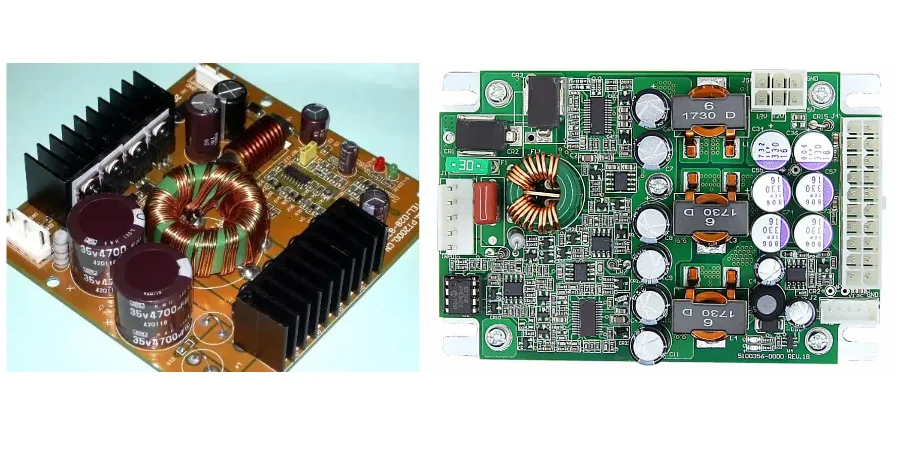
Electronic reliability often fails not because of a bad design, but because of invisible residues. Understanding cleanliness ionics basics is the first line of defense against electrochemical migration (ECM) and dendritic growth. When printed circuit boards (PCBs) retain conductive salts, acids, or flux residues, they become ticking time bombs in humid environments.
For engineers and procurement teams at APTPCB (APTPCB PCB Factory), ensuring ionic purity is not just about aesthetics; it is about guaranteeing the lifespan of the device. This guide covers the entire spectrum of ionic cleanliness, from defining the microscopic threats to implementing robust validation protocols on the factory floor.
Key Takeaways
Before diving into the technical depths, here are the critical points every engineer must understand about ionic contamination.
- Definition: Ionic cleanliness refers to the absence of conductive residues (anions and cations) that can cause short circuits when moisture is present.
- Primary Metric: The industry standard baseline is often measured in micrograms of sodium chloride equivalent per square inch (µg NaCl eq/in²).
- The "No-Clean" Myth: Using "no-clean" flux does not automatically guarantee that the board meets
cleanliness ionics basicsstandards; residues can still be reactive. - Testing Hierarchy: ROSE testing provides a general average, while Ion Chromatography (IC) identifies specific contaminants.
- Validation: Cleanliness must be validated after the final wash process and before conformal coating application.
- Environmental Context: High-voltage and high-humidity applications require significantly stricter cleanliness limits than consumer electronics.
- Process Control: The quality of the water used in the wash cycle is just as important as the solvent chemistry.
What cleanliness ionics basics really means (scope & boundaries)
Building on the key takeaways, we must first define the scope of what constitutes an "ionic" threat in PCB manufacturing.
Cleanliness ionics basics revolves around the presence of charged particles left on the board surface or trapped under components. Unlike particulate contamination (dust, fibers), ionic contamination is chemical. When these ions combine with moisture and an electrical bias (voltage), they form a conductive path. This phenomenon is known as Electrochemical Migration (ECM).
The scope of ionic cleanliness includes:
- Fabrication Residues: Etching salts, plating chemicals, and HASL flux residues left by the bare board manufacturer.
- Assembly Residues: Solder paste flux, wave soldering flux, and rework chemicals.
- Handling Residues: Salts and oils from human skin (fingerprints) or dirty gloves.
It is important to distinguish between ionic (polar) and non-ionic (non-polar) contamination. Ionic residues are conductive and dangerous in humid conditions. Non-ionic residues (like silicone oils or rosin) are generally insulating but can cause adhesion issues for conformal coatings. This guide focuses strictly on the ionic aspect, which is the primary driver of electrical leakage failures.
cleanliness ionics basics metrics that matter (how to evaluate quality)
Once the scope of contamination is understood, we must quantify it using specific industry metrics.
The following table outlines the critical metrics used to evaluate cleanliness ionics basics. Different industries accept different thresholds, but the physics of failure remains the same.
| Metric | Why it matters | Typical Range / Limit | How to measure |
|---|---|---|---|
| Resistivity of Solvent Extract (ROSE) | Measures the total conductive material on the board. It is the "gross" cleanliness check. | < 1.56 µg NaCl eq/cm² (Old Mil-Spec standard, still widely used as a baseline). | A solution washes the PCB; the change in the solution's resistivity is measured. |
| Chloride (Cl-) Content | Chlorides are aggressive ions that corrode copper and lead to rapid dendrite growth. | < 2.0 µg/in² for Class 3 high-reliability assemblies. | Ion Chromatography (IC). |
| Bromide (Br-) Content | Often comes from flame retardants in the laminate or solder mask. Excessive free bromide indicates thermal damage or poor curing. | < 5.0 µg/in². High levels may be acceptable if bound in the resin matrix. | Ion Chromatography (IC). |
| Weak Organic Acids (WOA) | Residues from "no-clean" fluxes. If active, they cause leakage currents. | < 25 µg/in² (highly dependent on specific flux chemistry). | Ion Chromatography (IC). |
| Surface Insulation Resistance (SIR) | Measures the actual electrical resistance between traces under heat and humidity. | > 100 MΩ (Megaohms) after exposure. | Comb patterns tested in a humidity chamber. |
| Sodium (Na+) & Potassium (K+) | Indicators of handling issues (salty fingerprints) or poor rinse water quality. | < 1.0 µg/in². | Ion Chromatography (IC). |
How to choose cleanliness ionics basics: selection guidance by scenario (trade-offs)
With the metrics defined, engineers must select the right cleanliness strategy based on their specific product requirements.
Not every PCB requires aerospace-grade cleaning. Over-specifying cleanliness adds unnecessary cost, while under-specifying leads to field failures. Below are common scenarios and how to navigate the trade-offs regarding cleanliness ionics basics.
Scenario 1: Consumer Electronics (Toys, Basic IoT)
- Requirement: Low cost, standard reliability.
- Strategy: Use standard "No-Clean" flux processes.
- Trade-off: You accept higher ionic residues. Visual inspection is the primary check.
- Validation: Periodic ROSE testing to ensure the process hasn't drifted significantly.
Scenario 2: Automotive Under-Hood Electronics
- Requirement: High reliability, exposure to condensation and temperature cycling.
- Strategy: Water-soluble flux followed by high-pressure deionized (DI) water wash.
- Trade-off: Higher manufacturing energy cost (washing/drying). Requires strict process control to ensure no water entrapment.
- Validation: Ion Chromatography (IC) is mandatory to detect specific corrosive ions.
Scenario 3: High-Voltage Industrial Control
- Requirement: Prevention of arcing and leakage currents across high-potential gaps.
- Strategy: Aggressive cleaning followed by Surface Insulation Resistance (SIR) validation.
- Trade-off: Design must allow for easy cleaning (no tight standoffs).
- Validation: SIR testing is more critical here than simple ionic counts because it measures functional isolation.
Scenario 4: RF and High-Frequency Boards
- Requirement: Signal integrity; residues can alter the dielectric constant.
- Strategy: Use of low-residue synthetic fluxes or thorough cleaning of Rogers/Teflon materials.
- Trade-off: Cleaning solvents must be compatible with sensitive high-frequency laminates.
- Validation: Functional RF testing combined with localized extraction testing.
Scenario 5: Medical Implantables
- Requirement: Zero tolerance for contamination; biocompatibility.
- Strategy: Multiple wash cycles (saponifier + DI water) and plasma cleaning.
- Trade-off: Extremely high cost and cycle time.
- Validation: 100% batch testing using IC and biological compatibility checks.
Scenario 6: Conformal Coated Assemblies
- Requirement: Coating adhesion and prevention of "measling" (delamination).
- Strategy: Chemical cleaning to remove flux residues that prevent adhesion.
- Trade-off: If the board isn't perfectly clean, the coating will trap ions against the surface, accelerating failure (the "greenhouse effect").
- Validation: Dyne pen testing for surface energy + Ion Chromatography.
cleanliness ionics basics implementation checkpoints (design to manufacturing)
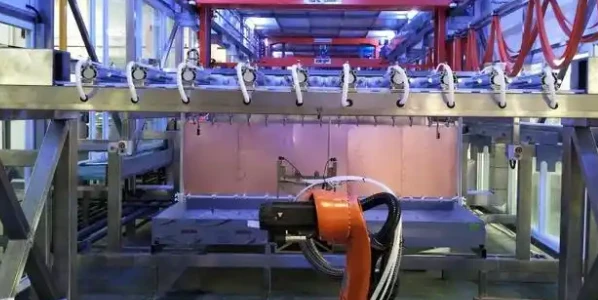
After selecting the right strategy, the focus shifts to executing it correctly throughout the production lifecycle.
Achieving acceptable cleanliness ionics basics is not just a cleaning step; it is a cumulative result of design, material selection, and handling. APTPCB recommends the following checkpoints.
Design for Cleaning (DfC):
- Recommendation: Avoid placing low-standoff components (like QFNs or LGAs) in dense clusters if you plan to wash the board.
- Risk: Wash solution gets trapped under the component and cannot dry, creating a corrosive battery cell.
- Acceptance: Verify component clearances in the DFM stage.
Laminate Selection:
- Recommendation: Choose laminates with high hydrolytic stability.
- Risk: Cheap FR4 can absorb chemicals, leaching them out later during operation.
- Acceptance: Review material datasheets for moisture absorption rates.
Solder Mask Curing:
- Recommendation: Ensure full polymerization of the solder mask.
- Risk: Under-cured mask absorbs flux residues like a sponge.
- Acceptance: Solvent rub test (IPC-TM-650 2.3.42).
Flux Compatibility:
- Recommendation: Match the flux type to the cleaning process. Never clean "no-clean" flux with water only; it turns into white, conductive sludge.
- Risk: Formation of insoluble white residues.
- Acceptance: Chemical compatibility study.
Reflow Profile:
- Recommendation: Ensure the profile is hot enough to activate and burn off the volatile carriers in the flux.
- Risk: Active flux remains on the board if the profile is too cool.
- Acceptance: PCB Profiling verification.
Wash Water Quality:
- Recommendation: Use Deionized (DI) water with resistivity > 10 MΩ-cm.
- Risk: Washing boards with tap water adds more ions (calcium, magnesium) than it removes.
- Acceptance: Inline conductivity meters on wash tanks.
Drying Process:
- Recommendation: Use air knives and baking ovens.
- Risk: Flash drying leaves "water spots" containing concentrated salts.
- Acceptance: Moisture weight test.
Handling Protocols:
- Recommendation: Gloves mandatory after the wash cycle.
- Risk: Sodium transfer from human sweat.
- Acceptance: Visual monitoring and spot checks.
Test Equipment Calibration:
- Recommendation: Calibrate ROSE and IC equipment daily/weekly.
- Risk: False pass results due to saturated test solution.
- Acceptance: Calibration logs.
Rework Management:
- Recommendation: Reworked areas must be locally cleaned.
- Risk: Flux buildup from hand soldering is often 10x higher than machine soldering.
- Acceptance: Localized swab testing.
cleanliness ionics basics common mistakes (and the correct approach)
Even with strict checkpoints, manufacturers often fall into specific traps regarding ionic cleanliness.
Here are the most frequent errors observed in the industry and how to avoid them.
- Mistake 1: Relying solely on ROSE testing for modern assemblies.
- Correction: ROSE measures bulk average cleanliness. It misses localized pockets of contamination under a BGA. Use Ion Chromatography for high-density designs.
- Mistake 2: Assuming "No-Clean" means "No Residue."
- Correction: No-clean flux leaves a resin residue. While usually safe, if the process window shifts (e.g., reflow too cool), the residue remains active and conductive.
- Mistake 3: Cleaning No-Clean flux with Isopropyl Alcohol (IPA) and a brush.
- Correction: This often just spreads the residue over a larger area rather than removing it. Use a proper saponifier and rinse method.
- Mistake 4: Ignoring the interaction between flux and solder mask.
- Correction: Some matte finish solder masks hold residues more stubbornly than gloss finishes. Verify the surface finish compatibility.
- Mistake 5: Testing cleanliness before the breakaway tabs are removed.
- Correction: The depaneling process creates dust and exposes raw fibers. Final cleanliness validation should happen after depaneling if possible, or the edges must be cleaned.
- Mistake 6: Neglecting the impact of component packaging.
- Correction: Sometimes the components themselves (from the tape and reel) arrive contaminated. Test incoming components if failures persist.
- Mistake 7: Overlooking the "Greenhouse Effect" under conformal coating.
- Correction: Coating a dirty board seals the moisture and ions in. Always validate
cleanliness ionics basicsimmediately prior to coating application.
- Correction: Coating a dirty board seals the moisture and ions in. Always validate
cleanliness ionics basics FAQ (cost, lead time, materials, testing, acceptance criteria)
To further clarify the nuances of ionic cleanliness, we address the most frequently asked questions from our clients.
Q1: How does requesting strict cleanliness ionics basics affect the cost of my PCB Assembly? Requesting standard IPC Class 2 cleanliness usually incurs no extra cost as it is part of the standard process. However, requiring Class 3 validation via Ion Chromatography (IC) or batch-level ROSE testing adds labor and lab time, potentially increasing assembly costs by 5-10%.
Q2: What is the impact on lead time for advanced cleanliness testing? Standard ROSE testing is quick (15-20 minutes). However, if you require Ion Chromatography or SIR testing, this is often a destructive or long-duration test. SIR testing, for example, can take 7 to 28 days depending on the protocol (e.g., a humidity testing intro cycle), significantly extending lead time for the qualification batch.
Q3: Which PCB materials are most susceptible to ionic retention? Porous materials or those with rough textures retain ions. Polyimide (Flex PCB) absorbs moisture and chemicals more than FR4. Additionally, matte solder masks tend to trap flux residues more than glossy masks. Check our Flex PCB capabilities for material details.
Q4: What are the acceptance criteria for cleanliness ionics basics per IPC standards? Historically, the limit was 1.56 µg NaCl eq/cm². However, IPC J-STD-001G (Amendment 1) removed this fixed number, requiring manufacturers to provide "Objective Evidence" that their specific process results in a reliable hardware set. This means the "acceptance criteria" is now process-dependent and must be validated by the user.
Q5: Can I use a drop test setup to validate cleanliness? No. A drop test setup is used for mechanical reliability (shock and vibration). While mechanical cracks in solder mask can create traps for ions, the drop test itself does not measure cleanliness. It should be part of a broader reliability qualification suite alongside SIR testing.
Q6: Why do I see white residues on my PCB after washing? White residues are usually caused by the reaction of flux with the wrong solvent, or by saponifiers that were not fully rinsed off. It can also be lead salts formed by the reaction of lead oxides with flux acids.
Q7: Is ultrasonic cleaning safe for all components?
No. While ultrasonic cleaning is excellent for cleanliness ionics basics, it can damage internal wire bonds in crystals, oscillators, and some MEMS devices. Always check component datasheets before approving ultrasonic cleaning.
Q8: How does humidity affect ionic contamination failure rates? Humidity is the catalyst. Ions need a medium to migrate. At low humidity (<30%), even dirty boards might function. At high humidity (>80%), ions dissolve and become mobile, leading to rapid dendritic growth. This is why a humidity testing intro is vital for validation.
Resources for cleanliness ionics basics (related pages and tools)
To deepen your understanding of PCB quality and manufacturing, explore these related resources from APTPCB:
- PCB Quality Control Systems: An overview of how we maintain standards across the factory.
- Automotive PCB Solutions: Industry-specific cleanliness requirements for harsh environments.
- PCBA Testing Services: Details on ICT, Flying Probe, and functional testing capabilities.
- PCB Surface Finishes: How ENIG, HASL, and OSP interact with flux and cleaning processes.
cleanliness ionics basics glossary (key terms)
The following table defines the technical terminology used when discussing ionic contamination.
| Term | Definition |
|---|---|
| Anion | A negatively charged ion (e.g., Chloride, Bromide, Sulfate). These migrate toward the anode. |
| Cation | A positively charged ion (e.g., Sodium, Potassium). These migrate toward the cathode. |
| Dendrite | A fern-like metal growth that forms between conductors due to electromigration, causing shorts. |
| ECM | Electrochemical Migration. The movement of ions under the influence of an electric field in the presence of moisture. |
| Flux | A chemical cleaning agent used before soldering to remove oxides from metal surfaces. A primary source of residues. |
| Hydrophobic | Water-repelling. Conformal coatings should be hydrophobic to prevent moisture ingress. |
| Hygroscopic | Moisture-absorbing. Flux residues are often hygroscopic, pulling water from the air to form conductive paths. |
| IC (Ion Chromatography) | A high-precision test method used to identify and quantify specific ionic species. |
| IPC-TM-650 | The manual of test methods for the PCB industry, including cleanliness testing protocols. |
| ROSE Test | Resistivity of Solvent Extract. A bulk test measuring total ionic contamination. |
| Saponifier | An alkaline chemical added to water to convert rosin/resin flux into soap, making it water-soluble. |
| SIR | Surface Insulation Resistance. A test measuring the electrical resistance of an insulating material under humidity. |
| WOA | Weak Organic Acids. Activators found in fluxes that can cause corrosion if not deactivated or removed. |
Conclusion (next steps)
Ensuring the reliability of your electronic assemblies requires a proactive approach to cleanliness ionics basics. It is not enough to simply wash the board; you must understand the interaction between your design, the flux chemistry, the soldering profile, and the final operating environment.
Whether you are building a disposable consumer gadget or a life-critical medical device, the invisible residues on your PCB determine its longevity. By selecting the right metrics (ROSE vs. IC), defining clear acceptance criteria, and validating your process with SIR testing, you can eliminate the risk of electrochemical migration.
Ready to move to production? When submitting your data to APTPCB for a DFM review or quote, please provide the following to help us manage cleanliness requirements:
- Gerber Files & Stackup: To assess density and material types.
- Assembly Drawing: Indicating any "No-Clean" or "Wash" requirements.
- Cleanliness Spec: Specify if you require IPC Class 2 or Class 3, or specific ionic limits (e.g., < 1.0 µg NaCl eq/in²).
- Testing Requirements: Indicate if you need batch-level ROSE testing or third-party Ion Chromatography validation.
Contact our engineering team today to ensure your PCBs meet the highest standards of purity and reliability.