
Definition, scope, and who this guide is for
This playbook is designed for hardware engineers, procurement leads, and product managers tasked with sourcing high-performance display modules. Specifically, it addresses the unique challenges of the COB LED Display PCB (Chip-on-Board), a technology where raw LED chips are mounted directly onto the printed circuit board rather than using packaged SMD components. This direct bonding method enables ultra-fine pixel pitches (below P1.0), superior thermal management, and robust surface durability, but it demands a significantly higher standard of PCB manufacturing precision compared to traditional displays.
Readers will find a structured decision-making framework here, moving beyond basic definitions into actionable specifications. We cover the critical material requirements needed to support wire bonding, the manufacturing risks that lead to "dead pixels" or module warping, and the specific validation tests required to accept a batch. Whether you are developing a high-resolution indoor video wall or a ruggedized control room screen, this guide provides the technical criteria to vet suppliers and enforce quality.
At APTPCB (APTPCB PCB Factory), we understand that the PCB is no longer just a carrier; in COB technology, the PCB is the packaging substrate itself. This shift transfers the burden of precision from the LED packager to the PCB fabricator. This guide aims to equip you with the checklist and knowledge to navigate that shift safely, ensuring your display products meet the rigorous demands of the modern visual market.
When to use COB LED Display PCB (and when a standard approach is better)
Understanding the manufacturing complexity described above helps determine if the performance benefits of Chip-on-Board technology justify the engineering rigor required for your specific application.
Choose COB LED Display PCB when:
- Pixel Pitch is Ultra-Fine (< P1.2): Physical limitations of SMD packaging make it difficult to achieve high density without compromising reliability. COB allows for tighter packing of LED dies.
- Durability is Critical: If the display will be touched, cleaned, or exposed to public traffic, COB offers a smooth, encapsulated surface that is dust-proof, moisture-proof, and impact-resistant (unlike fragile SMD LEDs).
- Thermal Management is a Bottleneck: Direct die attachment to the PCB allows heat to dissipate faster through the substrate, extending the lifespan of the LEDs.
- Viewing Angles Matter: The absence of encapsulation masks (cups) around individual SMDs allows for wider viewing angles (up to 170°) without color shift.
- Visual Contrast is Priority: The surface can be treated with matte black coatings to achieve extremely high contrast ratios for premium Indoor LED Display PCB applications.
Stick to Standard SMD LED Display PCB when:
- Pixel Pitch is Large (> P2.0): The cost benefit of COB diminishes at larger pitches where standard SMDs are commoditized and sufficient.
- Repairability is Essential: Replacing a single SMD LED is straightforward. Repairing a dead pixel on a COB module requires specialized equipment to remove the encapsulation and re-bond the die.
- Budget is the Primary Constraint: Standard SMD processes have a lower barrier to entry and lower initial tooling costs compared to the high-precision requirements of COB substrates.
- Color Uniformity Tolerance is Loose: While COB is excellent, binning raw dies and ensuring uniform encapsulation across batches can be more complex than buying pre-binned SMD reels.
COB LED Display PCB specifications (materials, stackup, tolerances)
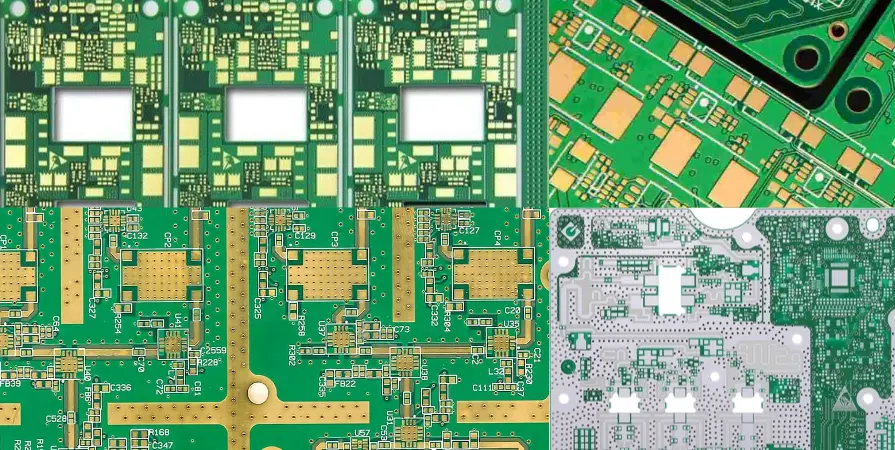
Once you have determined that COB is the correct path, the next step is defining a rigid specification sheet that leaves no room for ambiguity regarding surface flatness and bonding pad quality.
- Base Material (Core): High-Tg FR4 (Tg > 170°C) is the minimum standard to prevent pad cratering during wire bonding. For high-brightness applications, consider Metal Core PCBs (MCPCB) or Aluminum-backed substrates for superior heat dissipation.
- Surface Finish: ENEPIG (Electroless Nickel Electroless Palladium Immersion Gold) or Immersion Gold (ENIG) with a minimum gold thickness of 2-3µin. This is non-negotiable for reliable wire bonding (gold wire or copper wire). HASL is not acceptable due to unevenness.
- Board Thickness Tolerance: ±5% or better. Standard ±10% is often too loose for seamless tiling of display modules.
- Warpage / Bow & Twist: < 0.5% (diagonal). COB modules must be perfectly flat to ensure the encapsulation layer cures evenly and modules tile without visible seams.
- Copper Weight: Typically 1oz or 2oz. Higher copper weight aids in thermal spreading but requires careful etching control to maintain fine line widths for high-density interconnects.
- Solder Mask: Matte Black or specialized high-reflectivity white, depending on contrast requirements. The mask must be halogen-free and capable of withstanding encapsulation curing temperatures without discoloring.
- Pad Roughness: Ra < 0.3µm. The bonding pads must be extremely smooth to ensure the wire bond adheres correctly.
- Minimum Trace/Space: Often down to 3mil/3mil (0.075mm) for Mini-LED applications. This requires HDI (High Density Interconnect) capabilities.
- Via Structure: Plugged and capped vias (Type VII) are preferred to prevent encapsulation material from wicking into holes and creating voids.
- Dimensional Stability: The material must not shrink or expand significantly during the reflow or curing process, as this will misalign the LED dies.
- Cleanliness: Ionic contamination must be strictly controlled (< 1.0 µg/cm² NaCl equivalent) to prevent corrosion under the encapsulation layer.
- Fiducial Marks: High-contrast, exposed metal fiducials are required for the die bonder's vision system to align accurately.
COB LED Display PCB manufacturing risks (root causes and prevention)
With the specifications locked in, you must anticipate the common failure modes inherent to COB LED Display PCB production to implement effective quality control gates.
Risk: Wire Bond Lift (Open Circuit)
- Root Cause: Contaminated pad surface (oxidation, organic residue) or insufficient gold thickness.
- Detection: Pull testing during setup; electrical continuity testing post-bonding.
- Prevention: Require plasma cleaning before bonding; specify ENEPIG or thick ENIG; enforce strict storage shelf-life rules.
Risk: Module Warpage (Tiling Issues)
- Root Cause: CTE (Coefficient of Thermal Expansion) mismatch between the PCB substrate, the copper layers, and the encapsulation epoxy.
- Detection: Laser profilometry or flatness gauges on finished modules.
- Prevention: Use balanced stackups (copper balance); select encapsulation materials with CTE matched to the PCB; utilize low-stress curing profiles.
Risk: "Caterpillar" Effect or Visual Banding
- Root Cause: Inconsistent solder mask thickness or color variations between batches.
- Detection: Visual inspection under controlled lighting; colorimeter measurement.
- Prevention: Source solder mask ink from a single lot for the entire project; control ink thickness to ±5µm.
Risk: Die Drift / Misalignment
- Root Cause: PCB dimensional instability or poor fiducial recognition.
- Detection: AOI (Automated Optical Inspection) after die placement, before encapsulation.
- Prevention: Use High-Tg materials with low z-axis expansion; ensure fiducials are free of solder mask encroachment.
Risk: Encapsulation Delamination
- Root Cause: Moisture trapped in the PCB or poor adhesion between mask and epoxy.
- Detection: Thermal shock testing; acoustic microscopy (C-SAM).
- Prevention: Bake PCBs to remove moisture before bonding; ensure solder mask surface energy is compatible with the potting compound.
Risk: Electrical Shorting (Migration)
- Root Cause: Dendritic growth between fine-pitch pads due to ionic contamination and moisture.
- Detection: Temperature Humidity Bias (THB) testing.
- Prevention: Strict washing processes; ionic contamination testing (Rose test) on bare boards.
Risk: Dead Pixels after Aging
- Root Cause: Micro-cracks in traces due to flexing or thermal stress.
- Detection: Burn-in testing (72+ hours).
- Prevention: Use larger teardrops at pad junctions; avoid acute angles in routing; verify flexibility if using Flexible LED Display PCB substrates.
Risk: Poor Heat Dissipation
- Root Cause: Insufficient thermal vias or dielectric layer with poor thermal conductivity.
- Detection: Thermal imaging of the operating module.
- Prevention: Maximize thermal via count; use conductive dielectric materials; consider metal-core options.
COB LED Display PCB validation and acceptance (tests and pass criteria)
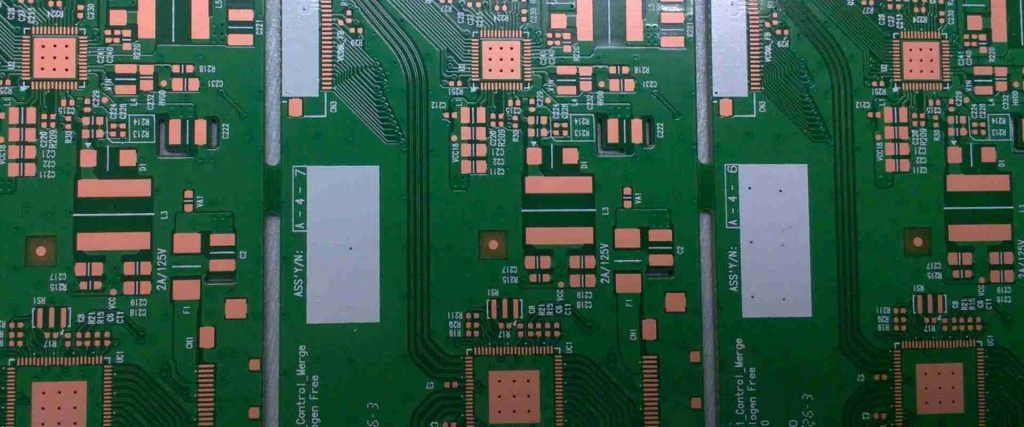
To mitigate the risks outlined above, a robust validation plan must be executed before mass production of the COB LED Display PCB begins.
Objective: Verify Bondability
- Method: Wire Pull Test and Ball Shear Test.
- Criteria: Wire pull strength > 5g (for 1mil wire); Shear strength > 30g. Failure mode must be wire break, not lift.
Objective: Verify Surface Flatness
- Method: Place PCB on a granite surface plate and measure bow/twist with feeler gauges or laser scanner.
- Criteria: Maximum bow/twist < 0.5% of diagonal dimension. For tiling, edge flatness deviation < 0.1mm.
Objective: Verify Solder Mask Adhesion
- Method: Cross-hatch tape test (ASTM D3359).
- Criteria: Classification 5B (0% removal). Critical for ensuring encapsulation does not peel off the mask.
Objective: Verify Thermal Reliability
- Method: Thermal Cycling (-40°C to +125°C, 500 cycles).
- Criteria: Change in resistance < 10%; no delamination; no cracks in solder mask or vias.
Objective: Verify Ionic Cleanliness
- Method: Ion Chromatography or ROSE test.
- Criteria: < 1.56 µg/cm² NaCl equivalent (IPC-6012 Class 3 requirement recommended for high reliability).
Objective: Verify Plating Thickness
- Method: X-Ray Fluorescence (XRF).
- Criteria: Nickel: 118-236µin; Gold: 2-5µin (for ENIG). Adherence to spec is vital for wire bonding.
Objective: Verify Dielectric Breakdown
- Method: Hi-Pot test between independent circuits and ground/substrate (for Metal Core).
- Criteria: No breakdown at 1000V DC + 2x rated voltage.
Objective: Verify Visual Consistency
- Method: Colorimeter measurement of solder mask (Lab* color space).
- Criteria: Delta E < 1.0 between boards in the same batch.
COB LED Display PCB supplier qualification checklist (RFQ, audit, traceability)
When selecting a partner like APTPCB, use this checklist to ensure the manufacturer has the specific capabilities required for COB LED Display PCB production, rather than just general PCB experience.
Group 1: RFQ Inputs (What you must provide)
- Gerber Files: RS-274X format with clear outline and fiducials.
- Fabrication Drawing: Specifying IPC Class (2 or 3), material Tg, and dimensional tolerances.
- Stackup Diagram: Defining copper weights, dielectric thickness, and impedance requirements.
- Panelization Drawing: Critical for assembly; include tooling holes and fiducials on rails.
- Surface Finish Spec: Explicitly state "Wire Bondable ENIG" or "ENEPIG".
- Solder Mask Spec: Color code, matte/gloss level, and brand preference (e.g., Taiyo).
- Acceptance Criteria: Reference the validation tests listed in the previous section.
- Volume Projections: EAU (Estimated Annual Usage) to determine tooling strategy.
Group 2: Capability Proof (What they must demonstrate)
- Minimum Line/Space: Can they reliably etch 3mil/3mil or finer?
- Surface Finish Control: Do they have in-house XRF to verify gold thickness on every batch?
- Solder Mask Precision: Can they achieve dam widths required between pads without encroachment?
- Via Plugging: Do they offer resin plugging and capping (VIPPO) for flat surfaces?
- Material Stock: Do they stock High-Tg and Metal Core materials suitable for LED applications?
- Imaging Equipment: Do they use LDI (Laser Direct Imaging) for high-precision registration?
Group 3: Quality System & Traceability
- Certifications: ISO 9001 is minimum; IATF 16949 is preferred for strict process control.
- AOI Capability: Is AOI performed on inner layers and outer layers?
- Electrical Test: Do they have flying probe or fixture testers capable of fine pitch?
- Cross-Section Analysis: Can they provide microsections to prove via quality and plating integrity?
- Traceability: Can they trace a specific board back to the material lot and plating bath data?
- Clean Room: Is the final inspection and packaging done in a controlled environment to prevent dust?
Group 4: Change Control & Delivery
- PCN Policy: Will they notify you before changing material suppliers or mask ink brands?
- Packaging: Do they use vacuum-sealed, moisture-barrier bags (MBB) with HIC (Humidity Indicator Cards)?
- Warp Protection: Do they ship with stiffeners or specialized trays to prevent warping during transit?
- Lead Time: Is the lead time consistent with the complexity (typically longer for ENEPIG/COB)?
How to choose COB LED Display PCB (trade-offs and decision rules)
Navigating the specifications often involves trade-offs. Use these decision rules to balance performance against cost and manufacturability for your COB LED Display PCB.
- If you prioritize Visual Seamlessness: Choose Rigid PCB with high-precision routing and strict flatness tolerances (<0.3%). Avoid flexible substrates unless the application demands curvature, as flex circuits are harder to tile perfectly.
- If you prioritize Brightness and Thermal Life: Choose Metal Core PCB (MCPCB) or Aluminum-backed FR4. The thermal conductivity is superior to standard FR4, allowing LEDs to run brighter and cooler.
- If you prioritize Creative Form Factors: Choose Flexible LED Display PCB or Curved LED Display PCB. Be prepared for higher costs and more complex fixturing during the bonding process to maintain planarity.
- If you prioritize Impact Resistance: Choose GOB LED Display PCB (Glue-on-Board) as a middle ground. It uses SMD LEDs but adds a protective glue layer. It is cheaper than full COB but offers similar surface protection, though with slightly lower pixel density potential.
- If you prioritize Cost at Medium Pitch (P1.5 - P2.5): Stick to standard SMD on FR4. The premium for COB substrates (ENEPIG finish, high-end mask) is not justified if the pixel density doesn't demand it.
- If you prioritize Wire Bond Reliability: Choose ENEPIG over ENIG. The palladium layer prevents "black pad" syndrome and offers a wider process window for wire bonding, reducing the risk of open circuits.
- If you prioritize Contrast: Choose Black Solder Mask with a matte finish. However, ensure the manufacturer can handle the tighter exposure tolerances required for black mask (which absorbs UV light during curing).
COB LED Display PCB FAQ (cost, lead time, Design for Manufacturability (DFM) files, materials, testing)
Q: What is the primary cost driver for COB LED Display PCB compared to standard LED boards? The surface finish and base material are the biggest drivers. COB LED Display PCB requires high-quality ENEPIG or thick ENIG for wire bonding, which is significantly more expensive than HASL. Additionally, High-Tg FR4 or Metal Core materials are needed for stability and thermals.
Q: How does the lead time for COB LED Display PCB compare to standard PCBs? Expect a lead time increase of 3-5 days over standard boards. The strict requirements for surface flatness, specialized plating (ENEPIG), and rigorous quality control (100% AOI, cross-sectioning) add time to the mass production PCB manufacturing process.
Q: What specific DFM files for COB LED Display PCB should I send for review? Beyond standard Gerbers, send a detailed panelization drawing and a "bonding map" if available. It is crucial to define the "keep-out" zones for the encapsulation dam. Our DFM guidelines can help you structure these files to avoid hold-ups.
Q: Can I use standard FR4 for COB LED Display PCB? It is risky. Standard FR4 (Tg 130-140°C) may soften too much during the wire bonding and encapsulation curing temperatures, leading to pad instability or warpage. We strongly recommend High-Tg (Tg >170°C) or Metal Core PCB materials.
Q: What are the acceptance criteria for COB LED Display PCB flatness? For high-end displays, we target a bow/twist of <0.5%. Standard IPC Class 2 allows for 0.75%, but this is often too loose for seamless tiling of COB modules. Specify the tighter tolerance in your fabrication notes.
Q: How do you test the reliability of the wire bond pads? We perform shear testing and wire pull testing on test coupons included on the production panel. This ensures the plating adhesion and hardness meet the requirements for reliable bonding without destroying production boards.
Q: Is GOB LED Display PCB the same as COB? No. GOB (Glue on Board) uses standard SMD components that are soldered and then covered with a protective glue layer. COB mounts the raw LED die directly to the PCB. COB allows for finer pitches, while GOB is a ruggedization upgrade for standard pitches.
Q: Do you support Flexible LED Display PCB manufacturing for COB? Yes, we manufacture Flex PCB substrates for COB. However, these require specialized tooling to hold the flex board perfectly flat during the die bonding and encapsulation process.
Q: What surface finish is best for COB LED Display PCB? ENEPIG is the gold standard. It offers the best solderability for components and the best bondability for gold/copper wires. Thick ENIG is a secondary option but carries a higher risk of "black pad" if not controlled tightly.
Resources for COB LED Display PCB (related pages and tools)
- Metal Core PCB: Explore aluminum and copper-based substrates essential for managing the high thermal density of COB displays.
- HDI PCB: Learn about High Density Interconnect technology, which is often required to route the fine-pitch signals in Mini-LED and Micro-LED COB boards.
- PCB Surface Finishes: Compare ENEPIG, ENIG, and other finishes to understand why specific platings are critical for wire bonding reliability.
- Flex PCB: Understand the capabilities and constraints if you are designing a flexible or curved COB display module.
- PCB Quality: Review our quality control systems, including certifications and inspection equipment, to verify we meet your validation requirements.
Request a quote for COB LED Display PCB (Design for Manufacturability (DFM) review + pricing)
Ready to move forward? Request a Quote today, and our engineering team will perform a comprehensive DFM review to identify potential bonding or flatness issues before pricing.
To get the most accurate quote and DFM feedback, please include:
- Gerber Files: RS-274X format.
- Stackup Details: Copper weight, dielectric thickness, and total thickness.
- Material Spec: Tg rating or Metal Core requirements.
- Surface Finish: Specify ENEPIG or Wire-Bondable ENIG.
- Volume: Prototype quantity vs. Mass production targets.
Conclusion (next steps)
The transition to COB LED Display PCB technology represents a significant leap in visual performance and durability, but it shifts the manufacturing complexity directly onto the PCB substrate. Success depends on rigorous material selection, precise flatness control, and a validation strategy that anticipates the unique risks of die bonding and encapsulation. By following the specifications and checklist outlined in this playbook, you can confidently qualify suppliers and execute a production run that delivers seamless, high-reliability display modules.