
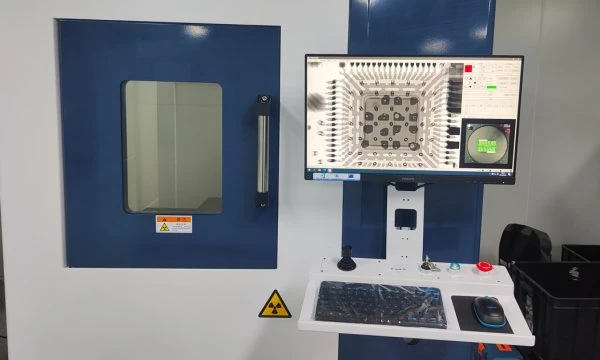
PCB defects can originate during PCB fabrication, component assembly, inspection, handling, or field operation. A reliable diagnosis requires more than identifying a visible symptom. Engineers must connect the defect appearance with the manufacturing process that created it and select inspection methods that can confirm the actual failure mechanism.
A board with an open circuit, weak via connection, solder void, or contamination issue may require completely different evidence before corrective action is approved.
Key takeaways
- Separate bare PCB defects from PCBA assembly defects before investigating root cause.
- Match inspection technology to defect location because no single method can verify every failure mode.
- Use AOI for visible features, X-ray for hidden structures, electrical testing for connectivity, and microsection analysis for internal construction evidence.
- Define acceptance criteria, IPC class, inspection coverage, and reporting requirements before production.
- Correct both the defect creation point and the inspection escape point.
What are the most common PCB defects?
PCB defects generally fall into two groups:
- Bare-board defects created during imaging, drilling, plating, lamination, routing, or surface finishing.
- Assembly defects created during solder paste printing, placement, reflow, cleaning, handling, or testing.
Bare PCB defect decision matrix
| Defect | Typical root causes | Detection method | Prevention control |
|---|---|---|---|
| Open circuit | Etching variation, broken trace, handling damage | AOI, electrical test, visual inspection | Imaging control, netlist verification |
| Short circuit | Over-etch compensation error, copper residue, contamination | AOI, electrical test | Etching control, cleanliness monitoring |
| Annular-ring breakout | Drill offset, registration error, insufficient pad size | AOI, X-ray, microsection | Registration control and drill compensation |
| Plating void or thin barrel | Poor hole preparation, chemistry imbalance, plating distribution issues | Microsection, electrical stress testing | Plating process control and coupon review |
| Delamination or blister | Moisture, contamination, lamination pressure or temperature issues | Visual inspection, C-scan, microsection | Material storage and lamination qualification |
| Solder-mask misregistration | Artwork error, mask expansion setting, process variation | AOI, visual inspection | LDI control and mask compensation |
| Bow and twist | Copper imbalance, stack-up imbalance, lamination stress | Flatness measurement | Balanced stack-up design |
| Over-etch or under-etch | Etching chemistry variation, compensation error | AOI, dimensional measurement | SPC and etch-factor control |
Which PCB assembly defects cause the most failures?
Assembly defects often appear after SMT placement and soldering. Many originate from solder paste printing, component placement accuracy, thermal profile settings, or package-specific challenges.
PCBA defect decision matrix
| Defect | Typical root causes | Detection method | Prevention control |
|---|---|---|---|
| Solder bridge | Excess paste volume, stencil aperture issue, placement shift | AOI, X-ray, electrical test | SPI monitoring, stencil optimization |
| Insufficient solder | Low paste volume, oxidation, poor wetting | AOI, X-ray, functional test | Paste storage control and reflow optimization |
| Tombstone | Unequal thermal balance, pad design issue, placement variation | AOI | Symmetrical pad design and profile control |
| BGA/QFN voiding | Paste design, thermal profile, package warpage | X-ray, microsection | Stencil design and process validation |
| Head-in-pillow | Oxidation, warpage, solder joint separation | X-ray, cross-section | Package handling and profile control |
| Wrong component or polarity | BOM error, feeder setup mistake, program mismatch | AOI, first article inspection | Manufacturing data control |
| Lifted pad or trace | Excessive rework heat or mechanical stress | Visual inspection, microsection | Rework limits and operator qualification |
| Contamination | Flux residue, ionic contamination, handling damage | Ionic analysis, chemical testing | Cleaning validation and controlled handling |
How do you select the correct PCB inspection method?
The correct inspection method depends on where the suspected defect exists.
| Inspection method | Best used for | Main limitation |
|---|---|---|
| AOI | Surface pattern defects, placement errors, visible solder issues | Cannot verify hidden joints or internal layers |
| Electrical test | Opens, shorts, continuity and isolation failures | Does not prove mechanical reliability |
| X-ray inspection | BGA, QFN, hidden solder joints, internal void analysis | Requires interpretation and does not replace functional testing |
| Microsection analysis | Plating thickness, via structure, registration, internal defects | Destructive and requires representative sampling |
| TDR/VNA | Signal-integrity discontinuities and impedance issues | Does not identify general workmanship defects |
| Ionic/chemical analysis | Residue and contamination investigation | Results depend on sampling method |
A reliable inspection plan combines methods according to product risk. A simple two-layer board may require different evidence compared with a high-density multilayer PCB containing microvias, fine-pitch packages, or high-speed interfaces.
How does PCB failure analysis identify root cause?
A successful PCB failure analysis separates three questions:
What failed? Define the electrical or physical symptom.
Where was the defect created? Identify the manufacturing step that introduced the problem.
Why did inspection fail to catch it? Determine the escape mechanism.
A practical workflow includes:
- Record board revision, serial number, lot information, and failure conditions.
- Preserve failed samples before repair or destructive testing.
- Compare failed units with known-good boards.
- Select nondestructive inspection methods first.
- Perform microsection or laboratory analysis when internal evidence is required.
- Compare findings against IPC requirements and customer specifications.
- Implement corrective actions and verify later production lots.
Corrective action should address both process capability and inspection coverage. A supplier that only removes failed boards without eliminating the source of variation has not completed root-cause analysis.
What PCB quality information should be included in an RFQ?
A supplier can only build reliable inspection coverage when the engineering package defines measurable requirements.
PCB supplier quality checklist
| Requirement area | Information to provide |
|---|---|
| PCB construction | Layer count, stack-up, material type, copper thickness, surface finish |
| Acceptance criteria | IPC class, customer specifications, critical dimensions |
| Electrical requirements | Netlist source, test voltage/current, isolation requirements |
| Inspection plan | AOI, X-ray, microsection, coupon requirements |
| Assembly requirements | BOM revision, placement data, stencil information, reflow profile expectations |
| Reliability requirements | Thermal cycling, environmental exposure, field-life expectations |
| Traceability | Lot records, material tracking, nonconformance reporting |
| Failure analysis | Sample preservation, analysis report format, corrective-action process |
Use PCB quality, AOI inspection and X-ray inspection, then submit the controlled package through the PCB quotation page.
Which PCB standards define defect acceptance?
Common standards used for PCB quality evaluation include:
- IPC-A-600 — Acceptability of printed boards
- IPC-6012 — Qualification and performance specification for rigid printed boards
- IPC-A-610 — Acceptability of electronic assemblies
- IPC J-STD-001 — Requirements for soldered electrical and electronic assemblies
- IPC-9121 — Troubleshooting for printed board fabrication processes
- IPC-9701 — Surface-mount solder attachment performance testing
The applicable revision, product class, and customer-specific requirements should be confirmed before production release.
Common PCB defects FAQ
Can AOI detect every PCB defect?
No. AOI detects visible surface conditions such as placement errors, solder-shape problems, and pattern abnormalities. Internal vias, hidden solder joints, and contamination require other inspection methods.
Does electrical testing prove PCB reliability?
No. Electrical testing verifies conditions such as continuity and isolation, but it cannot fully detect mechanical weaknesses such as poor plating, delamination, or future thermal-cycle failures.
What is the difference between defect cause and escape cause?
The defect cause explains how the failure was created. The escape cause explains why inspection or process controls allowed the failure to reach the next stage.
When is microsection analysis required?
Microsection analysis is used when engineers need direct evidence of internal structures such as plated barrels, layer registration, microvias, or material interfaces.
What information helps suppliers complete failure analysis faster?
Provide board revision, production lot, failure symptoms, test conditions, photos, inspection records, and comparison data from known-good samples.
Which follow-up format would be more useful next: **SEO optimization**, **technical expansion**, or **competitor-gap rewrite for another PCB topic**?

When a failure report goes back to the supplier, citing the [IPC-A-610 acceptance criteria](/en/blog/ipc-a-610-acceptance-criteria-overview) class fixes which inspection thresholds apply.