
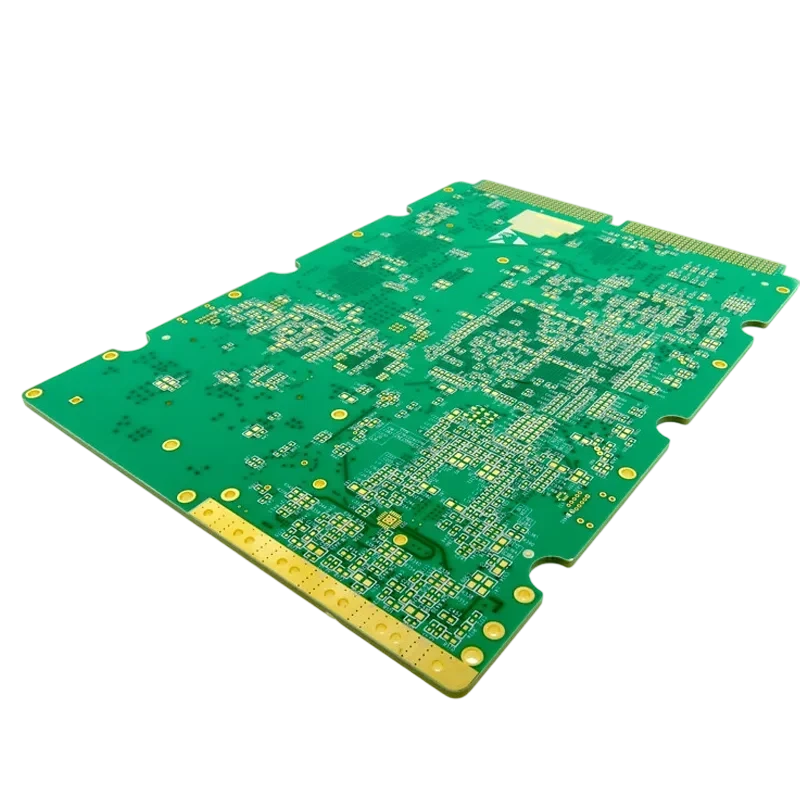
A condensation resistant PCB is designed for electronics that experience dew formation, temperature cycling, humidity changes, or liquid moisture exposure. Unlike simple humidity protection, condensation creates a direct liquid-water path across PCB surfaces, accelerating leakage current, corrosion, electrochemical migration, and insulation failure.
Outdoor controllers, agricultural monitoring systems, automotive electronics, HVAC equipment, industrial controls, and edge AI devices often fail during cold starts, overnight temperature drops, or enclosure breathing cycles. The root cause is usually not the component itself but insufficient moisture protection at the PCB design, assembly, and validation stages.
What makes a PCB condensation resistant?
A reliable condensation-resistant PCB combines five protection layers:
- Electrical spacing design to prevent water bridging between conductors.
- Clean assembly processes to remove ionic contamination.
- Material selection for moisture resistance and tracking performance.
- Conformal coating or encapsulation matched to the environment.
- Validation testing that reproduces condensation events.
A coating alone does not compensate for poor layout, contaminated surfaces, or trapped moisture beneath components.
When does a PCB need condensation protection?
Condensation-resistant strategies are typically required when electronics experience:
- Outdoor temperature cycling.
- Morning dew or irrigation exposure.
- Unheated industrial environments.
- HVAC condensation zones.
- Marine humidity and salt contamination.
- Automotive engine compartment conditions.
- Agricultural monitoring equipment.
Applications such as agritech ai edge pcb systems are especially challenging because processors generate heat during operation but may experience condensation during shutdown and cool-down periods.
Standard indoor electronics normally do not require these measures when operated in controlled environments.
Condensation resistant PCB design decision matrix
| Environment | Recommended protection | Typical application |
|---|---|---|
| Indoor controlled environment | Standard PCB with normal cleanliness control | Office electronics |
| High humidity without liquid water | Acrylic or silicone coating | Industrial sensors |
| Regular dew formation | Silicone/urethane coating + spacing optimization | Outdoor IoT |
| Chemical moisture exposure | Urethane coating or sealed enclosure | Factory controls |
| Severe vibration and moisture | Silicone coating or potting | Automotive modules |
| High-voltage wet environment | Increased creepage, high CTI materials, coating | Power control systems |
Which PCB specifications matter most for condensation resistance?
The following parameters should be defined before manufacturing.
| Parameter | Recommended Value/Range | Why it matters | Verification |
|---|---|---|---|
| Conformal coating thickness | 25–75 µm typical for SR/UR | Prevents moisture bridging | Thickness measurement, UV inspection |
| Ionic cleanliness | <1.0 µg/cm² NaCl equivalent target | Reduces corrosion and dendrite growth | ROSE or ion chromatography |
| Creepage distance | Application-dependent; increase for polluted/wet environments | Prevents leakage paths across wet surfaces | CAD review |
| Solder mask web | >0.1 mm where applicable | Improves moisture barrier continuity | PCB inspection |
| Via protection | Tented or plugged vias | Prevents moisture traps | IPC-4761 review |
| Surface finish | ENIG commonly preferred | Provides flatter coating surface | Visual inspection |
| Component spacing | Allow coating access and inspection | Reduces shadowing defects | Assembly review |
| Laminate CTI rating | PLC 0 or PLC 1 for demanding insulation needs | Reduces tracking risk | Material datasheet |
| Edge copper clearance | Increased clearance recommended for harsh environments | Reduces moisture ingress risk | Gerber review |
How should PCB layout change for condensation resistance?
Layout decisions should begin before coating selection.
Increase electrical separation
Water droplets can create temporary conductive paths between nearby traces. High-impedance circuits, sensor inputs, reset lines, and high-voltage nodes require additional spacing.
Sensitive analog circuits should be separated from:
- Board edges.
- Mounting holes.
- Large exposed copper areas.
- High-voltage switching nodes.
Protect vias from moisture accumulation
Open vias can collect moisture and create migration paths between layers.
Common approaches include:
- Via tenting.
- Via plugging.
- Resin-filled vias for critical areas.
Design for coating coverage
Tall components create spray shadows during coating.
Improve coverage by:
- Increasing component spacing.
- Providing coating access channels.
- Defining coating keep-out areas clearly.
- Avoiding unnecessary component stacking.
How do you choose conformal coating for condensation resistance?
| Coating type | Advantages | Limitations | Best use |
|---|---|---|---|
| Acrylic (AR) | Low cost, easy inspection and repair | Moderate moisture resistance | General electronics |
| Silicone (SR) | Excellent humidity and temperature performance | Difficult rework | Outdoor and thermal cycling |
| Urethane (UR) | Strong chemical and abrasion resistance | Difficult repair | Industrial environments |
| Epoxy (ER) | Hard protection | Poor reworkability | Severe environments |
| Parylene (XY) | Very uniform thin coating | Higher cost | Precision and critical electronics |
Silicone and urethane coatings are commonly selected when condensation resistance is more important than easy repair.
What manufacturing process prevents condensation PCB failures?
A reliable production flow includes:
- Define temperature, humidity, contamination, and enclosure conditions.
- Review PCB layout for creepage, clearance, and moisture traps.
- Select laminate, solder mask, and surface finish requirements.
- Clean assembled boards before coating.
- Apply conformal coating with controlled thickness.
- Inspect coverage, bubbles, pinholes, and shadow areas.
- Perform humidity and condensation validation.
Cleanliness before coating is especially important because flux residue can absorb moisture and accelerate corrosion under the protective layer.
Condensation resistant PCB troubleshooting checklist
| Field symptom | Probable cause | Investigation | Corrective action |
|---|---|---|---|
| Morning startup reset | Dew-point leakage near sensitive circuits | Inspect coating gaps and spacing | Improve coating coverage or redesign spacing |
| Green/black corrosion marks | Moisture penetration or contamination | Check cleanliness and coating thickness | Improve cleaning and coating process |
| White dendrite growth | Electrochemical migration | Perform contamination analysis | Improve cleaning control |
| Coating bubbles or peeling | Poor adhesion or trapped moisture | Cross-section coating area | Re-clean and adjust coating process |
| Internal PCB short failure | CAF or laminate moisture path | Microsection analysis | Use CAF-resistant materials |
| Sensor drift in humidity | Moisture affecting sensing circuit | Review sensor protection strategy | Add shielding, guard traces, or calibration compensation |
What tests prove condensation resistance?
Humidity testing alone may not reproduce real field failures because condensation involves liquid water formation.
Useful validation methods include:
- Temperature cycling with humidity exposure.
- Powered humidity bias testing.
- Condensation chamber testing.
- Ionic cleanliness testing before coating.
- Coating thickness inspection.
- Cross-section analysis for coating defects.
Common qualification environments include high-temperature/high-humidity testing such as 85°C/85% RH when appropriate for the product requirements.
What information should be included in a PCB condensation resistance RFQ?
A supplier should receive:
- Gerber files and drill files.
- PCB stack-up requirements.
- BOM and assembly drawings.
- Coating type requirement.
- Coating thickness target.
- Coating keep-out drawing.
- Environmental conditions.
- Required humidity or condensation tests.
- Repair requirements.
- Acceptance criteria.
Clear documentation prevents suppliers from interpreting “moisture resistant” differently.
Frequently asked questions about condensation resistant PCB
Does conformal coating make a PCB waterproof?
No. Conformal coating protects PCB surfaces from moisture, but connectors, enclosure openings, and cable interfaces still require system-level protection.
Is ENIG better than HASL for condensation resistance?
ENIG provides a flatter surface that can improve coating coverage, but it does not prevent water bridging or corrosion by itself.
Does potting provide better protection than coating?
Potting provides stronger environmental sealing but increases weight, cost, and repair difficulty. It is usually selected for extreme environments.
How does condensation affect agricultural PCB designs?
Agricultural electronics often face irrigation, outdoor exposure, and daily temperature changes. A robust agriculture ul 61010 pcb design typically requires stronger contamination control, spacing, and environmental validation.
Can coated PCBs be repaired?
Acrylic coatings are generally easiest to remove. Silicone and urethane coatings require more difficult mechanical removal.
Resources for condensation resistant pcb
- Conformal Coating Services: Explore our capabilities for applying Acrylic, Silicone, and Urethane coatings.
- Industrial Control PCB: See how we handle high-reliability boards for harsh factory environments.
- Heavy Copper PCB: Learn about robust boards often used in outdoor power applications.
- PCB Quality System: Understand our testing protocols, including ionic cleanliness and cross-sectioning.
Conclusion
A condensation resistant PCB requires coordinated decisions across layout, materials, assembly cleanliness, coating selection, and validation testing.
The most reliable designs treat condensation as a liquid-water reliability problem rather than simply a humidity problem. By combining correct electrical spacing, contamination control, protective coatings, and realistic environmental testing, engineers can reduce corrosion, leakage failures, and unexpected field returns.
APTPCB supports condensation-resistant PCB projects through DFM review, coating process control, and reliability-focused manufacturing planning. ```