
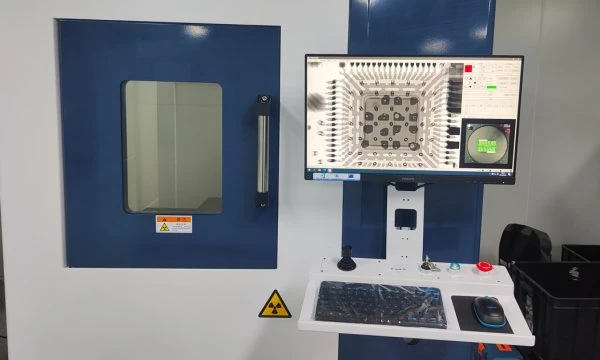
A CT detector array board should be reviewed as part of a detector-chain release boundary, not as a standalone claim that the PCB alone determines CT image performance.
The key engineering question before release is:
What does the board prove, and what still belongs to detector calibration or complete CT system validation?
A reliable release package separates:
- PCB design evidence
- fabrication and assembly evidence
- hidden-joint inspection evidence
- detector interface verification
- final imaging-system validation
A board can be manufacturable and electrically functional while still requiring additional detector and system-level qualification.
Quick Answer Before releasing a CT detector array board, review detector-chain ownership, readout boundaries, hidden-joint inspection access, HDI complexity, assembly evidence, and validation scope. PCB release confirms the board was built correctly; it does not independently prove final CT image quality.
What should engineers validate first on a CT detector array board?
The first review should establish five boundaries:
| Review area | Decision question | Release impact |
|---|---|---|
| Detector ownership | Does the PCB connect detectors, process signals, or control acquisition electronics? | Defines supplier responsibility |
| Readout chain | Where do analog signals become processed data? | Determines noise and interface review |
| Hidden joints | Can concealed connections be inspected reliably? | Affects assembly acceptance |
| HDI structure | Are microvias and layer transitions justified? | Controls manufacturing risk |
| Validation scope | What does the first build actually prove? | Prevents overclaiming |
A common release problem is unclear ownership. A CT detector module may include sensing elements, ASICs, connectors, analog front ends, and processing electronics. The PCB review must identify which portion belongs to the board supplier.
Where does the PCB responsibility end in a CT detector chain?
The board responsibility usually sits around:
- electrical connection integrity
- signal routing quality
- power distribution
- grounding strategy
- assembly quality
- inspection coverage
- manufacturing repeatability
The board does not independently prove:
- detector sensitivity
- clinical image quality
- reconstruction performance
- patient-use readiness
CT detector performance depends on the complete chain, including detector material, electronics, calibration, mechanical integration, and imaging algorithms. Research examples of CT detector modules show that detector arrays combine sensing elements with readout and acquisition electronics, requiring both component-level and system-level evaluation.
CT detector array board release decision matrix
| Decision point | Evidence to review | Typical release question |
|---|---|---|
| Stackup definition | Layer construction, materials, impedance requirements | Is the PCB build frozen and manufacturable? |
| HDI implementation | Microvia structure, capture pads, sequential build-up | Does density justify process complexity? |
| Detector interface | Connector, pad, ASIC, or sensor attachment details | Is the detector handoff clearly defined? |
| Hidden joints | X-ray inspection capability, package access | Can concealed defects be evaluated? |
| Assembly records | AOI, X-ray, solder process data | Was the released design built consistently? |
| Functional testing | Electrical continuity, power-up, interface checks | Does the assembled board operate as intended? |
| System validation | CT imaging tests and calibration | Is the complete imaging chain qualified? |
How should hidden-joint inspection be planned?
Hidden joints become a major release topic when CT detector boards include:
- BGA packages
- LGA interfaces
- fine-pitch packages
- dense connector regions
- stacked HDI structures
Visual inspection cannot confirm every concealed connection. The inspection strategy should be defined before production.
A practical review asks:
- Which joints cannot be visually inspected?
- What X-ray inspection coverage is available?
- Are inspection criteria documented?
- Are defects evaluated against assembly requirements?
X-ray inspection improves visibility into hidden structures, but it does not replace functional testing or system validation.
How should HDI and via complexity be reviewed?
High-density interconnect can support compact detector electronics, but every additional manufacturing step creates another process dependency.
Review:
| HDI feature | Engineering concern |
|---|---|
| Microvias | Reliability and process control |
| Blind/buried vias | Registration and fabrication capability |
| Fine-pitch escape routing | Assembly yield |
| Dense power delivery | Thermal and electrical stability |
| Complex stackups | Manufacturing repeatability |
The release package should show why the chosen structure is required by the detector interface or routing density.
A complex stackup without a clear electrical or mechanical reason creates unnecessary manufacturing exposure.
What validation evidence should be included before release?
A complete release package should separate evidence into stages.
1. PCB fabrication evidence
Includes:
- released Gerber or manufacturing data
- approved stackup
- material definitions
- impedance requirements
- fabrication inspection records
2. Assembly evidence
Includes:
- component traceability
- solder process records
- AOI results
- X-ray inspection results
- assembly defect review
3. Electrical verification
Includes:
- continuity testing
- isolation checks where applicable
- power-up verification
- interface communication checks
4. Detector and CT system validation
Includes:
- detector calibration
- image-quality evaluation
- system-level performance testing
Clinical and imaging validation belongs to the complete system. Detector-array acceptance and commissioning workflows typically require documented testing, baseline establishment, and ongoing quality checks rather than a single manufacturing sign-off.
What supplier checklist should be completed before CT detector array board release?
Use this checklist during supplier review:
| Checklist item | Confirmed |
|---|---|
| Board role inside CT detector chain defined | ☐ |
| Detector-to-PCB ownership boundary documented | ☐ |
| Stackup and materials frozen | ☐ |
| HDI requirements reviewed with manufacturer | ☐ |
| Hidden-joint inspection method defined | ☐ |
| Assembly inspection records planned | ☐ |
| Functional test requirements documented | ☐ |
| System validation ownership assigned | ☐ |
| Change-control process established | ☐ |
What usually causes CT detector board release delays?
The most common delays are not caused by one isolated PCB defect. They usually come from unclear evidence ownership.
Typical causes include:
- unclear detector interface responsibility
- inspection methods defined too late
- HDI complexity exceeding manufacturing assumptions
- missing assembly documentation
- confusing PCB verification with CT system qualification
A strong release package makes every claim traceable to the correct validation stage.
Next steps with APTPCB
If your CT detector-array project is blocked by detector ownership questions, hidden-joint inspection concerns, HDI manufacturability, or unclear release evidence, send the stackup, Gerbers, BOM, and validation expectations to [email protected] or upload them through the quote page.
APTPCB engineering review can help identify whether the main release challenge is:
- PCB design maturity
- manufacturing capability
- assembly inspection coverage
- validation ownership
Additional resources:
FAQ
Does a CT detector array board prove CT image quality?
No. The PCB release proves board-level manufacturing and assembly requirements. Final image quality requires complete CT system validation.
Is X-ray inspection the same as functional testing?
No. X-ray inspection evaluates hidden structures. Functional testing evaluates electrical operation.
Does every CT detector board require the same HDI design?
No. HDI requirements depend on detector interfaces, routing density, signal requirements, and manufacturing capability.
What is the most important release document?
There is no single document. A reliable package combines design data, manufacturing evidence, inspection results, and validation ownership.
Public references
Author and review information
- Author: APTPCB medical-imaging content team
- Technical review: CT detector-chain, inspection, and PCBA engineering team
- Last updated: 2026-04-08