
Quick Answer (30 seconds)
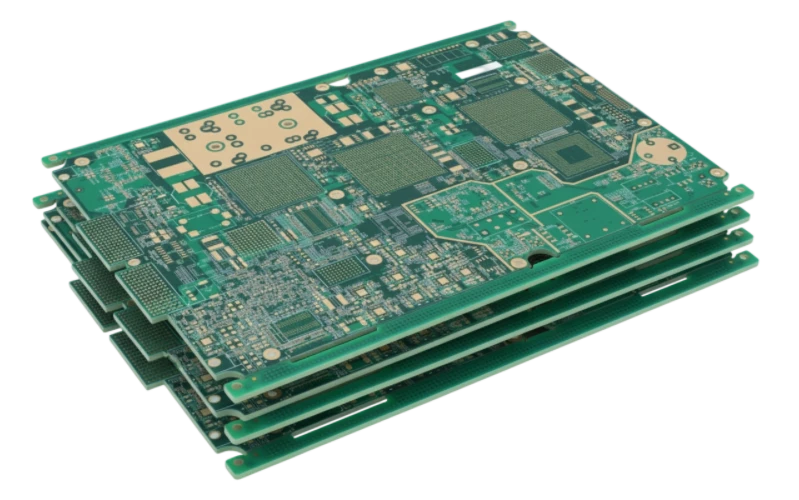
Designing and manufacturing a Data Center Switch PCB requires strict adherence to signal integrity protocols to support throughputs like 400G, 800G, or 1.6T. Unlike standard networking boards, these units demand ultra-low loss materials and precise fabrication tolerances.
- Material: Must use Low-Loss or Ultra-Low-Loss laminates (e.g., Panasonic Megtron 7/8, Isola Tachyon) with Df < 0.004 @ 10GHz.
- Layer Count: Typically 20 to 40+ layers to accommodate dense routing and power planes.
- Signal Integrity: Backdrilling is mandatory for vias on high-speed lines (>25 Gbps) to reduce stub resonance; stub length must be < 10 mils (0.25mm).
- Impedance Control: Tight tolerance of ±5% or ±7% is standard for differential pairs (85Ω or 100Ω).
- Thermal Management: Heavy copper (2oz+) on inner layers and coin insertion or thermal via farms are often required for high-wattage ASICs.
- Validation: 100% TDR (Time Domain Reflectometry) testing and VNA (Vector Network Analyzer) testing for insertion loss are critical.
When Data Center Switch PCB applies (and when it doesn’t)
High-performance switch architectures dictate specific PCB requirements that differ significantly from general electronics.
This specification applies when:
- Designing Top-of-Rack (ToR), End-of-Row (EoR), or Core switches for a Cloud Data Center PCB infrastructure.
- The system utilizes SerDes speeds of 56G, 112G, or 224G PAM4.
- You are building hardware for a Colocation Data Center PCB environment requiring 99.999% uptime reliability.
- The board density requires High Density Interconnect (HDI) structures, such as 2+N+2 or 3+N+3 stackups.
- Thermal dissipation requirements exceed 300W per ASIC, necessitating advanced cooling integration within the PCB.
This specification does not apply when:
- Designing standard Gigabit Ethernet switches for small office/home office (SOHO) use (standard FR-4 is sufficient).
- Building low-speed management boards or Data Center Backup PCB units where signal frequencies are below 1 GHz.
- Cost is the primary driver over performance; Data Center Switch PCB materials are significantly more expensive than standard TG170.
- The application is a Container Data Center PCB environment focused solely on low-power edge computing nodes without high-throughput switching needs.
Rules & specifications
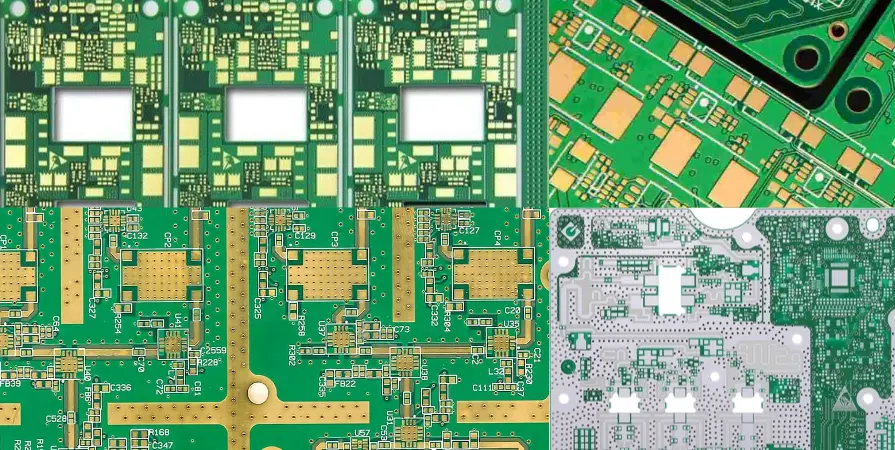
To ensure signal integrity and mechanical reliability in a Data Center Switch PCB, engineers must adhere to rigid design and manufacturing rules.
| Rule | Recommended Value/Range | Why it matters | How to verify | If ignored |
|---|---|---|---|---|
| Dielectric Material | Df ≤ 0.003, Dk ≤ 3.6 | Minimizes signal attenuation and phase delay at high frequencies (25GHz+). | Review IPC-4101 sheet & Megtron PCB materials. | High insertion loss; link failure at max speed. |
| Backdrill Stub Length | ≤ 8-10 mils (0.20-0.25mm) | Long stubs act as antennas, causing signal reflection and resonance. | Microsection analysis (cross-section). | Severe signal jitter; high Bit Error Rate (BER). |
| Impedance Tolerance | ±5% (High Speed), ±10% (Power) | Ensures matching between driver, transmission line, and receiver. | TDR Testing coupons. | Signal reflection; data corruption. |
| Copper Surface Roughness | VLP or HVLP (Rz ≤ 2µm) | Skin effect at high frequencies forces current to surface; roughness increases loss. | SEM (Scanning Electron Microscope) of foil. | Increased conductor loss; signal degradation. |
| Layer Registration | ±3 mils (0.075mm) | Misalignment affects impedance and can cause shorts in dense BGAs. | X-Ray inspection. | Open/short circuits; impedance discontinuities. |
| Aspect Ratio (Plating) | 12:1 to 16:1 (Max 20:1) | Ensures sufficient plating thickness in deep vias for connectivity. | Cross-section measurement. | Barrel cracks; intermittent open circuits during thermal cycling. |
| Glass Weave Style | Spread Glass (1067/1078/1086) | Prevents Fiber Weave Effect (skew) where differential pairs see different Dk. | Material datasheet verification. | Timing skew; differential signal collapse. |
| Solder Mask Web | ≥ 3 mils (0.075mm) | Prevents solder bridging between fine-pitch BGA pads. | AOI (Automated Optical Inspection). | Solder bridges; short circuits during assembly. |
| Via-in-Pad Plating | VIPPO (Filled & Capped) | Required for fine-pitch BGAs to route signals out without dog-bone fanouts. | Visual inspection & Cross-section. | Solder voids; poor BGA joint reliability. |
| Bow and Twist | ≤ 0.5% (IPC Class 3) | Critical for flat assembly of large BGA packages (ASICs). | Warp measurement gauge. | BGA soldering defects (head-in-pillow). |
Implementation steps
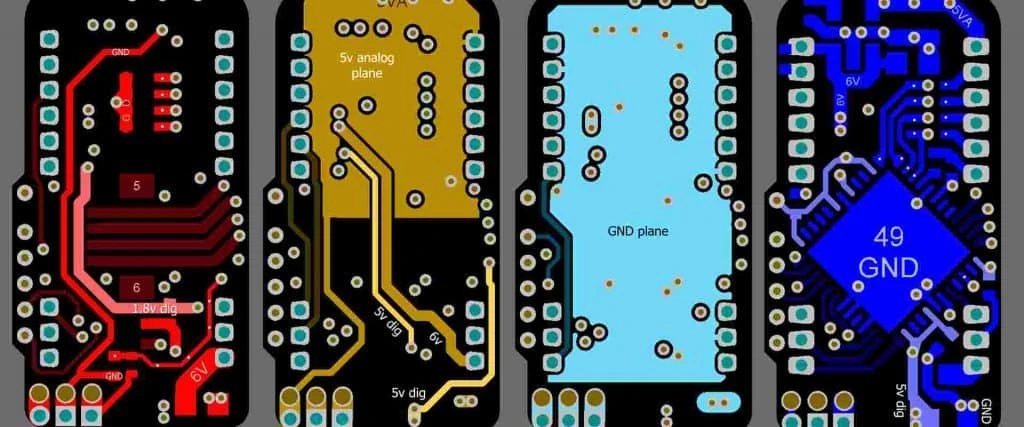
Moving from a schematic to a physical Data Center Switch PCB involves a sequence of precise engineering and manufacturing steps.
Material Selection & Stackup Definition
- Action: Select a material like Megtron 7 or Isola Tachyon. Define a symmetrical stackup (e.g., 24 layers) balancing signal and power layers.
- Key Parameter: Resin content > 50% to prevent starvation.
- Acceptance Check: Verify stackup thickness meets mechanical constraints (usually < 3.0mm for backplane connectors).
Impedance Modeling
- Action: Calculate trace widths and spacing for required impedances (90Ω USB, 100Ω Diff Pair). Use a field solver.
- Key Parameter: Dielectric constant (Dk) at the operating frequency (e.g., 14 GHz for 28 Gbps Nyquist).
- Acceptance Check: Use an Impedance Calculator to validate theoretical values against manufacturing capabilities.
BGA Fan-out & Escape Routing
- Action: Route signals from the main switch ASIC. Use "skip-layer" routing for high-speed signals to minimize crosstalk.
- Key Parameter: Trace-to-trace spacing > 3W (3x trace width) to reduce crosstalk.
- Acceptance Check: No acute angles; smooth routing paths.
Power Integrity (PI) Design
- Action: Design power planes for low voltage/high current rails (e.g., 0.8V @ 200A). Place decoupling capacitors close to ASIC pins.
- Key Parameter: Plane resistance and loop inductance.
- Acceptance Check: DC Drop simulation showing < 3% voltage drop at load.
Backdrill Definition
- Action: Identify all high-speed vias that transition signal layers and require stub removal. Generate a specific drill file for backdrilling.
- Key Parameter: "Must Not Cut" layer distance (safety margin usually 6-8 mils).
- Acceptance Check: Gerber files clearly indicate backdrill locations and depth.
DFM Review
- Action: Submit design data to APTPCB (APTPCB PCB Factory) for Design for Manufacturing analysis.
- Key Parameter: Minimum drill size vs. board thickness (Aspect Ratio).
- Acceptance Check: DFM Guidelines report shows zero critical violations.
Fabrication & Lamination
- Action: Sequential lamination (if HDI) or single lamination. Pressing cycles must be controlled to prevent material stress.
- Key Parameter: Press temperature profile and vacuum pressure.
- Acceptance Check: C-Scan or X-Ray to check for delamination or misalignment.
Plating & Surface Finish
- Action: Apply copper plating followed by surface finish. ENIG or ENEPIG is preferred for flat pads and wire bonding support.
- Key Parameter: Nickel thickness (118-236 µin) and Gold thickness (2-5 µin).
- Acceptance Check: XRF measurement of finish thickness.
Electrical Testing
- Action: Perform Flying Probe or Bed of Nails testing.
- Key Parameter: Continuity resistance < 10Ω, Isolation > 10MΩ.
- Acceptance Check: 100% Pass on netlist verification.
Failure modes & troubleshooting
Even with robust designs, issues can arise during the fabrication or operation of a Data Center Switch PCB.
Symptom: High Bit Error Rate (BER) on specific channels
- Cause: Excessive via stub length due to missed backdrilling or insufficient depth.
- Check: Microsection the failing via to measure stub length.
- Fix: Adjust backdrill depth parameters in future runs.
- Prevention: clearly mark backdrill layers in ODB++ data.
Symptom: Signal Skew (Timing mismatch)
- Cause: Fiber Weave Effect; one leg of a differential pair runs over glass, the other over resin.
- Check: Inspect board surface and laminate type.
- Fix: Rotate design 10 degrees (zig-zag routing) or use spread glass (1067/1078).
- Prevention: Specify "Spread Glass" or "Mechanically Spread" fabric in fabrication notes.
Symptom: Intermittent Open Circuits at High Temp
- Cause: Barrel cracks in plated through-holes (PTH) due to Z-axis expansion mismatch.
- Check: Thermal cycling test followed by cross-section.
- Fix: Use high Tg (>180°C) and low CTE-Z material.
- Prevention: Ensure aspect ratio is within manufacturer limits (e.g., < 16:1).
Symptom: BGA "Head-in-Pillow" Defects
- Cause: PCB warpage during reflow prevents ball from coalescing with paste.
- Check: Shadow Moiré measurement of bare board flatness.
- Fix: Balance copper distribution on all layers.
- Prevention: Use low-stress lamination cycles and symmetrical stackups.
Symptom: Impedance Out of Spec
- Cause: Over-etching of traces (traces are narrower than designed).
- Check: Cross-section trace width measurement.
- Fix: Adjust etch compensation factors at the CAM station.
- Prevention: Include impedance coupons on the panel rail for batch verification.
Symptom: Delamination / Blistering
- Cause: Moisture trapped in the board turns to steam during reflow.
- Check: Inspect for bubbles between layers.
- Fix: Bake boards at 120°C for 4-6 hours before assembly.
- Prevention: Store PCBs in vacuum-sealed bags with desiccant (MSL controls).
Symptom: Conductive Anodic Filament (CAF) Growth
- Cause: Electrochemical migration along glass fibers causing shorts.
- Check: High voltage isolation testing.
- Fix: Increase hole-to-hole spacing.
- Prevention: Use CAF-resistant materials (Anti-CAF).
Design decisions
Troubleshooting often leads back to initial design trade-offs. When configuring a Data Center Switch PCB, the balance between cost and performance is critical.
Material vs. Cost: Using Megtron 7 for all layers provides the best performance but is costly. A hybrid stackup (using Megtron for high-speed signal layers and standard FR-4 for power/ground) can reduce costs, but it introduces risks of warping due to different CTE values. APTPCB generally recommends a homogeneous material build for 20+ layer boards to ensure flatness.
HDI vs. Through-Hole: While through-hole vias are cheaper, they consume routing space on all layers. For high-density switch chips (256+ lanes), HDI (Blind/Buried vias) is often unavoidable to escape the BGA field. This increases lead time and cost but is necessary for signal integrity and miniaturization.
Surface Finish: HASL is not an option for these boards due to unevenness. ENIG is standard, but for ultra-high-frequency applications, Immersion Silver or ENEPIG may be preferred to avoid the "nickel effect" on signal loss, though they have shorter shelf lives.
FAQ
Q: What is the maximum layer count APTPCB can handle for a Data Center Switch PCB? A: We regularly manufacture boards up to 60 layers. For switch applications, 20 to 34 layers is the most common range to accommodate dense routing and power requirements.
Q: Is backdrilling absolutely necessary for 10Gbps switches? A: Not always strictly necessary for 10Gbps if the stackup is optimized, but it is highly recommended. For 25Gbps and above (including 56G/112G PAM4), backdrilling is mandatory to remove resonant stubs.
Q: Can I use standard FR-4 for a Cloud Data Center PCB? A: Generally, no. Standard FR-4 has a Loss Tangent (Df) that is too high (~0.020), causing excessive signal loss. You need Mid-Loss or Low-Loss materials (Df < 0.010 or < 0.005).
Q: How do you handle thermal management for 400W+ ASICs? A: We use thick copper (2oz, 3oz) on inner layers, thermal via farms under the component, and can embed copper coins (coin-in-board) technology to conduct heat directly to the chassis.
Q: What is the lead time for a prototype Data Center Switch PCB? A: Due to the complexity (lamination cycles, backdrilling), standard lead time is 10-15 working days. Expedited services can reduce this to 7-8 days depending on material availability.
Q: How do you verify the impedance on these boards? A: We place test coupons on the production panel rails that mimic the actual traces. These are tested using TDR (Time Domain Reflectometry) to ensure they meet the ±5% or ±10% spec.
Q: What is the difference between Megtron 6 and Megtron 7? A: Megtron 7 has even lower transmission loss and better heat resistance than Megtron 6, making it more suitable for 112G PAM4 applications and high-layer count boards.
Q: Do you support press-fit connectors? A: Yes, press-fit connectors are standard for data center backplanes. We hold tight hole tolerances (+/- 0.05mm) to ensure proper pin retention without damaging the plating.
Q: What data format should I send for manufacturing? A: ODB++ is preferred as it contains intelligent data regarding stackup, netlists, and drill types. Gerber X2 is also acceptable.
Q: How does fiber weave effect impact my design? A: At high speeds, if a trace runs parallel to a glass bundle, it sees a different Dk than a trace over resin. We recommend using "spread glass" styles or routing traces at a slight angle (10°) to mitigate this.
Related pages & tools
- Material Selection: Explore our High-Frequency PCB Materials to compare Megtron, Rogers, and Isola options.
- Manufacturing Capabilities: View our full PCB Manufacturing specs for layer counts and drill sizes.
- Design Tools: Use our Gerber Viewer to inspect your files before submission.
Glossary (key terms)
| Term | Definition | Context in Data Center Switch PCB |
|---|---|---|
| PAM4 | Pulse Amplitude Modulation 4-level | Encoding scheme doubling data rate (e.g., 112G) vs NRZ; requires higher SNR and cleaner PCB layout. |
| SerDes | Serializer/Deserializer | High-speed functional block converting parallel data to serial; the primary driver of PCB complexity. |
| Backdrilling | Controlled Depth Drilling | Removing the unused portion of a plated through-hole (stub) to reduce signal reflection. |
| Insertion Loss | Signal Attenuation | The loss of signal power as it travels; heavily dependent on PCB material Df and copper roughness. |
| Skew | Timing Difference | The time difference between two signals in a differential pair arriving at the receiver. |
| Dk / Df | Dielectric Constant / Dissipation Factor | Material properties determining signal speed (Dk) and signal loss (Df). |
| CTE | Coefficient of Thermal Expansion | How much the material expands with heat; critical for reliability of large BGAs and deep vias. |
| HDI | High Density Interconnect | Technology using microvias, blind vias, and buried vias to increase routing density. |
| VIPPO | Via-in-Pad Plated Over | Placing a via directly in a component pad, filling it, and plating over it to save space. |
| TDR | Time Domain Reflectometry | Measurement technique used to verify the characteristic impedance of PCB traces. |
Conclusion
Building a Data Center Switch PCB is not just about connecting components; it is about managing the physics of high-speed signal transmission. From selecting the right ultra-low-loss material to executing precise backdrilling and impedance control, every step impacts the final throughput and reliability of the network.
Whether you are prototyping a new 800G switch or scaling production for a hyperscale deployment, APTPCB provides the engineering support and advanced fabrication capabilities required for these complex architectures. Ensure your design is production-ready by consulting our engineering team early in the process.