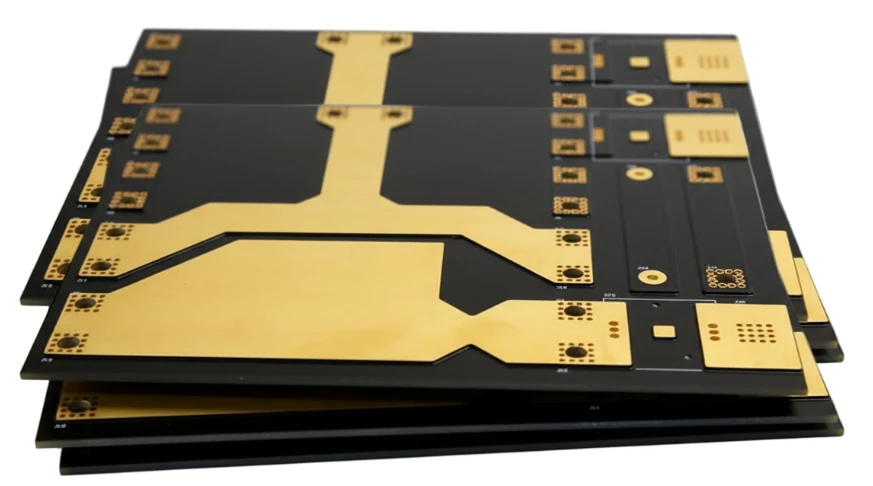
Dc Power Analyzer

Definition, scope, and who this guide is for

A DC Power Analyzer is a precision instrument designed to measure voltage, current, power, and efficiency in direct current circuits with high accuracy. Unlike a standard multimeter, a DC Power Analyzer provides simultaneous sampling of voltage and current waveforms, allowing for the calculation of power consumption over time, energy integration, and transient analysis. In the context of electronics manufacturing, the term refers specifically to the printed circuit board (PCB) and assembly (PCBA) that drives these instruments. These boards are the heart of test equipment used for electric vehicles (EVs), renewable energy inverters, and battery management systems.

For procurement managers and hardware engineers, sourcing the PCB for a DC Power Analyzer presents unique challenges compared to standard consumer electronics. The board must handle high currents (often requiring heavy copper) while maintaining extremely low noise floors for precise signal measurement. The manufacturing process requires strict impedance control, thermal management strategies, and high-reliability materials to ensure the final instrument maintains its calibration over years of service.

This guide is written for engineering leads and procurement specialists responsible for taking a DC Power Analyzer design from prototype to mass production. It moves beyond basic definitions to provide a structured decision-making framework. You will find specific material specifications, a breakdown of manufacturing risks, validation protocols, and a supplier qualification checklist. Whether you are building a standalone Benchtop Analyzer or an integrated Battery Analyzer PCB, this playbook ensures your manufacturing partner can meet the rigorous demands of precision instrumentation.

At APTPCB (APTPCB PCB Factory), we understand that the reliability of a test instrument depends entirely on the integrity of its foundation. This guide synthesizes years of manufacturing data to help you navigate the complexities of high-precision PCB fabrication and assembly, ensuring your final product delivers the accuracy your customers expect.

When to use DC Power Analyzer (and when a standard approach is better)

Understanding the scope of a DC Power Analyzer project is the first step in determining if you need specialized manufacturing processes or if standard fabrication is sufficient.

You should utilize a specialized DC Power Analyzer manufacturing approach when your device requires simultaneous high-current handling and micro-volt level precision. If your application involves characterizing wide-bandgap semiconductors (SiC or GaN), measuring standby power in IoT devices, or validating EV drivetrains, standard PCB fabrication tolerances are often too loose. These applications demand boards that can withstand thermal cycling without resistance drift and maintain signal integrity in noisy environments. A dedicated approach is also necessary when the board serves as a Power Analyzer PCB for compliance testing, where the instrument itself must be significantly more accurate than the device under test (DUT).

Conversely, a standard PCB approach is better if you are designing simple voltage monitoring circuits where transient analysis and high-speed sampling are not required. If the device is a simple "go/no-go" tester or a low-cost voltage indicator, the premium materials and tight tolerances associated with a professional DC Power Analyzer are unnecessary expenses. Similarly, if the current levels are low (under 1A) and the environment is thermally stable, standard FR4 materials and Class 2 manufacturing specs will likely suffice. However, for any application involving critical measurement data, treating the PCB as a precision component is the safest path.

DC Power Analyzer specifications (materials, stackup, tolerances)

DC Power Analyzer specifications (materials, stackup, tolerances)

Once you have determined that your project requires the rigor of a professional DC Power Analyzer, the next step is defining the specifications that will govern the manufacturing process. These specs must be frozen before the Request for Quote (RFQ) stage to avoid scope creep and quality issues.

Material and Substrate Requirements:

  • Base Material: High Tg FR4 (Tg > 170°C) is the baseline to prevent thermal expansion from affecting measurement accuracy. For higher frequency sampling, consider low-loss materials like Rogers or Isola.
  • Copper Weight: 2oz to 4oz copper is standard for the power paths to minimize voltage drop and self-heating. For extreme currents (100A+), consider heavy copper up to 6oz or busbar integration.
  • Dielectric Constant (Dk): Stable Dk materials are essential for the analog front-end sections to ensure consistent signal propagation.
  • Ionic Cleanliness: Specify strict cleanliness standards (e.g., < 1.56 µg/cm² NaCl equivalent) to prevent leakage currents that distort low-level measurements.

Stackup and Layout:

  • Layer Count: Typically 4 to 8 layers. Inner layers are used for solid ground planes to shield sensitive analog signals from digital switching noise.
  • Isolation: Physical separation (creepage and clearance) must meet safety standards (e.g., IEC 61010) for the rated voltage category (CAT III/IV).
  • Thermal Vias: extensive use of thermal vias under current shunts and power regulators to transfer heat to inner planes or bottom-side heatsinks.
  • Symmetry: Balanced stackup construction to prevent warpage, which is critical for large Benchtop Analyzer mainboards.

Tolerances and Finishes:

  • Impedance Control: ±5% to ±10% tolerance on differential pairs for high-speed data interfaces (USB, Ethernet) and analog signal lines.
  • Hole Wall Thickness: Minimum 25µm (1 mil) copper plating in vias to ensure reliability under thermal cycling.
  • Surface Finish: ENIG (Electroless Nickel Immersion Gold) is preferred for its flat surface, which aids in the placement of fine-pitch components and provides excellent contact resistance for test points.
  • Solder Mask: LPI (Liquid Photoimageable) mask with high dielectric strength. Color should be matte green or black to reduce glare during manual inspection, though green is standard for best inspection contrast.
  • Silkscreen: Clear labeling of all test points, safety warnings, and fuse ratings is mandatory for instrument safety.

DC Power Analyzer manufacturing risks (root causes and prevention)

Defining specifications is only half the battle; understanding where the manufacturing process can fail is critical for risk mitigation. A DC Power Analyzer PCB faces specific threats related to its dual nature of handling power and precision signals.

1. Thermal Mismatch and Delamination

  • Risk: High currents cause rapid heating of copper tracks, while the laminate expands at a different rate. This can lead to delamination or barrel cracks in vias.
  • Root Cause: CTE (Coefficient of Thermal Expansion) mismatch between heavy copper and standard prepreg.
  • Detection: Thermal shock testing and microsection analysis.
  • Prevention: Use high-Tg materials and ensure proper "copper balance" across the board to distribute thermal stress evenly.

2. Parasitic Capacitance/Inductance

  • Risk: Unintended coupling between power and sense lines creates measurement noise, rendering the AC Power Analyzer or DC functions inaccurate.
  • Root Cause: Poor layer stackup planning or insufficient spacing between high-voltage traces and sensitive inputs.
  • Detection: Signal integrity simulation and TDR (Time Domain Reflectometry) testing.
  • Prevention: Strict adherence to design rules regarding separation distances and the use of guard traces.

3. Leakage Current due to Contamination

  • Risk: Residues from flux or plating salts create high-resistance paths between traces, causing drift in voltage measurements.
  • Root Cause: Inadequate washing processes after etching or soldering.
  • Detection: Ionic contamination testing (ROSE test).
  • Prevention: Specify "No-Clean" flux carefully or require aggressive aqueous cleaning cycles with deionized water.

4. Heavy Copper Etching Undercut

  • Risk: When etching thick copper (3oz+), the chemical eats sideways as well as down, reducing the effective trace width.
  • Root Cause: Isotropic nature of wet etchants.
  • Detection: Automated Optical Inspection (AOI) and cross-sectioning.
  • Prevention: Apply etch compensation factors in the CAM engineering stage (increasing trace width on the film) to ensure the final trace meets the current-carrying requirement.

5. Plated Through Hole (PTH) Reliability

  • Risk: Vias connecting power planes fail open during operation.
  • Root Cause: Insufficient plating thickness or rough drilling in thick copper cores.
  • Detection: Continuity testing under load.
  • Prevention: Specify minimum 25µm plating and require desmear processes optimized for high-Tg materials.

6. Component Placement Accuracy

  • Risk: Misalignment of precision shunt resistors or ADCs affects thermal distribution and accuracy.
  • Root Cause: Solder mask encroachment on pads or poor fiducial placement.
  • Detection: 3D AOI and X-Ray inspection.
  • Prevention: Ensure solder mask expansion is adequate (typically 2-4 mils) and use high-precision pick-and-place machines.

7. Warpage

  • Risk: The board does not fit into the Benchtop Analyzer chassis or stresses solder joints.
  • Root Cause: Unbalanced copper distribution between top and bottom layers.
  • Detection: Bow and twist measurement.
  • Prevention: Copper pouring on open areas to balance the stackup and using stiffeners if necessary.

8. Solder Voiding in Thermal Pads

  • Risk: Air pockets under power components prevent heat transfer, leading to overheating and drift.
  • Root Cause: Incorrect stencil aperture design for large pads.
  • Detection: X-Ray inspection.
  • Prevention: Window-pane design for stencil apertures to allow outgassing during reflow.

DC Power Analyzer validation and acceptance (tests and pass criteria)

DC Power Analyzer validation and acceptance (tests and pass criteria)

To ensure the manufactured DC Power Analyzer boards meet the design intent, a rigorous validation plan is required. This moves beyond standard electrical testing into performance verification.

1. Electrical Continuity and Isolation Test

  • Objective: Verify no shorts or opens exist.
  • Method: Flying probe or bed-of-nails fixture.
  • Criteria: 100% pass. Isolation resistance > 100 MΩ at 500V DC (or as per safety spec).

2. Impedance Verification

  • Objective: Confirm signal integrity for high-speed digital and analog lines.
  • Method: TDR (Time Domain Reflectometry) on test coupons or actual traces.
  • Criteria: Measured impedance within ±10% (or ±5% if specified) of design value.

3. Thermal Stress Test (Interconnect Stress Test - IST)

  • Objective: Validate via reliability under thermal cycling.
  • Method: Cycle coupons between ambient and 260°C (reflow temp) multiple times.
  • Criteria: Resistance change < 10% after specified cycles; no barrel cracks in microsection.

4. Ionic Cleanliness Test

  • Objective: Ensure board surface is free of conductive residues.
  • Method: ROSE (Resistivity of Solvent Extract) test.
  • Criteria: < 1.56 µg/cm² NaCl equivalent (IPC-TM-650).

5. High Current Load Test (First Article)

  • Objective: Verify current carrying capacity and thermal rise.
  • Method: Apply rated current to power rails and monitor temperature with IR camera.
  • Criteria: Temperature rise < 20°C (or design limit) at steady state; no trace fusing.

6. Solderability Test

  • Objective: Ensure pads will accept solder reliably during assembly.
  • Method: Dip and look or wetting balance test.
  • Criteria: > 95% coverage of the pad surface with a smooth, continuous solder coating.

7. Dimensional Verification

  • Objective: Ensure fit within the enclosure.
  • Method: CMM (Coordinate Measuring Machine) or calibrated calipers.
  • Criteria: Outline dimensions within ±0.1mm; mounting hole locations within ±0.075mm.

8. Microsection Analysis

  • Objective: Verify internal stackup and plating quality.
  • Method: Cross-sectioning a sample board.
  • Criteria: Copper thickness meets spec (e.g., 2oz + plating); dielectric thickness correct; no voids in laminate.

DC Power Analyzer supplier qualification checklist (the manufacturing process. These specs must be frozen before Request for Quote (RFQ), audit, traceability)

Selecting the right partner is as important as the design itself. Use this checklist to vet potential suppliers for your DC Power Analyzer project.

Group 1: RFQ Inputs (What you must provide)

  • Gerber Files (RS-274X or X2): Complete set including all copper layers, solder mask, silk, and drill files.
  • Fabrication Drawing: Specifying material (Tg, brand), stackup, impedance requirements, and tolerances.
  • IPC Class: Clearly state IPC-6012 Class 2 or Class 3 requirements.
  • Netlist: IPC-356 netlist for electrical test comparison.
  • Drill Chart: Defining finished hole sizes and plating requirements.
  • Panelization: If assembly is automated, specify panel array and fiducials.
  • Special Notes: Highlight heavy copper areas, peelable mask, or specific cleanliness requirements.
  • Volume & EAU: Estimated Annual Usage to determine pricing tier.

Group 2: Capability Proof (What they must demonstrate)

  • Heavy Copper Experience: Evidence of manufacturing boards with >3oz copper.
  • Impedance Control: Ability to provide TDR reports and calculate stackups.
  • Material Stock: Availability of high-Tg FR4 and low-loss materials (Rogers/Isola) to avoid lead time delays.
  • Fine Pitch Capability: Ability to handle 0.4mm pitch BGAs or QFNs if used in the analyzer.
  • Certifications: ISO 9001 is mandatory; ISO 13485 or IATF 16949 is a plus for reliability.
  • Equipment List: Modern LDI (Laser Direct Imaging) for fine lines and automated plating lines.

Group 3: Quality System & Traceability

  • AOI Implementation: Is AOI used on every inner and outer layer?
  • X-Ray Inspection: Availability of X-Ray for checking BGA soldering and multilayer registration.
  • Traceability: Can they trace a specific board back to the raw material lot and operator?
  • Calibration: Are their E-test and measurement tools calibrated regularly?
  • NCMR Process: Do they have a formal process for Non-Conforming Material Reports?
  • UL Listing: Is the manufacturing site UL approved for the specific stackup/material combo?

Group 4: Change Control & Delivery

  • PCN Policy: Will they notify you before changing materials or processes?
  • DFM Support: Do they offer a detailed Design for Manufacturing review before production?
  • Packaging: ESD safe packaging with humidity indicator cards and desiccant.
  • Lead Time: Clear commitment on standard vs. expedited lead times.
  • Logistics: Experience shipping to your location (DDP/DAP terms).
  • Communication: Dedicated account manager or engineering support window.

How to choose DC Power Analyzer (trade-offs and decision rules)

When finalizing the design and sourcing strategy for a DC Power Analyzer, you will face several trade-offs. There is rarely a "perfect" board; there is only the right board for your specific constraints.

1. Heavy Copper vs. Thermal Vias

  • Decision Rule: If your primary constraint is current density in a small area, choose Heavy Copper (3oz+). It physically increases the conductor volume.
  • Trade-off: Heavy copper limits fine-line capability (minimum trace/space increases).
  • Alternative: If you have fine-pitch components mixed with power, use standard copper (1-2oz) with extensive Thermal Vias and external busbars or reinforced solder tracks.

2. Integrated vs. Modular Design

  • Decision Rule: If you prioritize signal integrity and noise immunity, choose a Modular Design (separate boards for power and logic).
  • Trade-off: Higher assembly cost and more interconnects (cables/connectors) which can be failure points.
  • Alternative: If you prioritize compactness and cost, choose an Integrated Design, but invest heavily in internal shielding layers and isolation slots.

3. High-Performance Material vs. FR4

  • Decision Rule: If your analyzer measures high-frequency AC (>100kHz) or requires extreme stability, choose Rogers/High-Speed Materials.
  • Trade-off: Significantly higher material cost and potentially longer lead times.
  • Alternative: If the analyzer is strictly DC or low frequency (<1kHz), standard High-Tg FR4 is sufficient and cost-effective.

4. Class 2 vs. Class 3 Manufacturing

  • Decision Rule: If the analyzer is for critical safety or aerospace applications, choose IPC Class 3. This ensures stricter plating thickness and inspection criteria.
  • Trade-off: Higher unit cost (20-30% premium) and lower yield.
  • Alternative: For standard lab equipment or Antenna Analyzer PCB hobbyist kits, IPC Class 2 provides a good balance of reliability and cost.

5. ENIG vs. HASL Surface Finish

  • Decision Rule: If you have fine-pitch components (BGAs, QFNs) or need flat contact pads, choose ENIG.
  • Trade-off: Slightly higher cost than HASL and risk of "black pad" if not controlled (though rare with good suppliers).
  • Alternative: If the board is purely through-hole power components, Lead-Free HASL is robust and cheaper.

DC Power Analyzer FAQ (cost, lead time, Design for Manufacturability (DFM) files, materials, testing)

Q: What are the primary cost drivers for a DC Power Analyzer PCB? A: The main cost drivers are copper weight, layer count, and material type. Increasing copper from 1oz to 3oz can increase board cost by 30-50% due to material costs and slower etching/plating processes. Using specialized high-frequency laminates also adds significant cost compared to standard FR4.

Q: How does lead time differ for heavy copper DC Power Analyzer boards? A: Standard PCBs typically have a lead time of 5-7 days. Heavy copper boards (>3oz) often require 10-12 days because the lamination and plating cycles are longer, and they may require multiple pressing cycles. Quick-turn options are available but carry a premium.

Q: What DFM files are critical for preventing manufacturing holds? A: Beyond standard Gerbers, providing a clear "Copper Weight Distribution" map is helpful. If you have mixed copper weights (e.g., 2oz inner, 3oz outer), this must be explicitly stated in the stackup file. ODB++ format is preferred as it includes intelligent data that reduces interpretation errors.

Q: Can I use standard FR4 materials for a high-precision DC Power Analyzer? A: Yes, but you must select "High Tg" FR4 (Tg > 170°C). Standard FR4 (Tg 130-140°C) may soften and expand too much under the thermal load of a power analyzer, causing stress on vias and potential measurement drift.

Q: What specific testing should I request for a Battery Analyzer PCB? A: Request 4-wire Kelvin test capability for the bare board test if possible, or at minimum, ensure 100% netlist testing. For battery applications, high-voltage isolation testing (Hi-Pot) is also recommended to ensure the dielectric can withstand potential voltage spikes from the battery pack.

Q: How do I define acceptance criteria for cosmetic defects? A: Reference IPC-A-600. For a DC Power Analyzer, functional defects (open/short, hole size) are zero-tolerance. Cosmetic defects like minor scratches on the solder mask away from conductors are usually acceptable per Class 2, but you should specify if you require a higher cosmetic standard for visible parts of a Benchtop Analyzer.

Q: Why is "copper balance" so important for these boards? A: DC Power Analyzers often have large copper planes for current handling. If these planes are not balanced (e.g., heavy copper on top, little on bottom), the board will bow or twist during reflow soldering. This warpage can make it impossible to mount the board into the chassis or cause solder joint fractures.

Q: Does APTPCB support DFM for mixed-signal Power Analyzer PCBs? A: Yes, APTPCB provides comprehensive DFM reviews. We check for trace width sufficiency for current, isolation gaps for voltage safety, and aspect ratios for drilling to ensure your design is manufacturable at scale.

  • Heavy Copper PCB Manufacturing: Learn more about the specific capabilities required to handle high currents in power analyzers, including copper weights up to 6oz.
  • High Frequency PCB Solutions: Explore material options like Rogers and Teflon that are essential for the high-speed signal acquisition sections of your analyzer.
  • PCB Stackup Design: Understand how to structure your layers to balance power planes and signal integrity, a critical step for noise reduction.
  • PCBA Testing and Quality: Review the testing protocols, including ICT and FCT, that ensure your assembled instrument meets its calibration standards.
  • Get a Quote: Ready to move forward? Use this tool to submit your files for a quick cost estimation and DFM check.

Request a quote for DC Power Analyzer (Design for Manufacturability (DFM) review + pricing)

Ready to validate your design? Submit your data to APTPCB for a comprehensive DFM review and competitive pricing. When requesting a quote for a DC Power Analyzer, please include your Gerber files, stackup details (especially copper weight requirements), and any specific testing protocols (like Hi-Pot or TDR).

Conclusion (next steps)

Building a reliable DC Power Analyzer requires more than just a good schematic; it demands a manufacturing strategy that respects the physics of high power and precision measurement. By defining strict material specifications, understanding the risks of heavy copper fabrication, and validating your supplier with a robust checklist, you can eliminate the most common causes of instrument failure. Whether you are prototyping a new Battery Analyzer PCB or scaling production for a Benchtop Analyzer, the choices you make in the PCB fabrication stage will define the accuracy and longevity of your product. Partnering with an experienced manufacturer like APTPCB ensures that your rigorous design requirements are translated faithfully into the final hardware.