
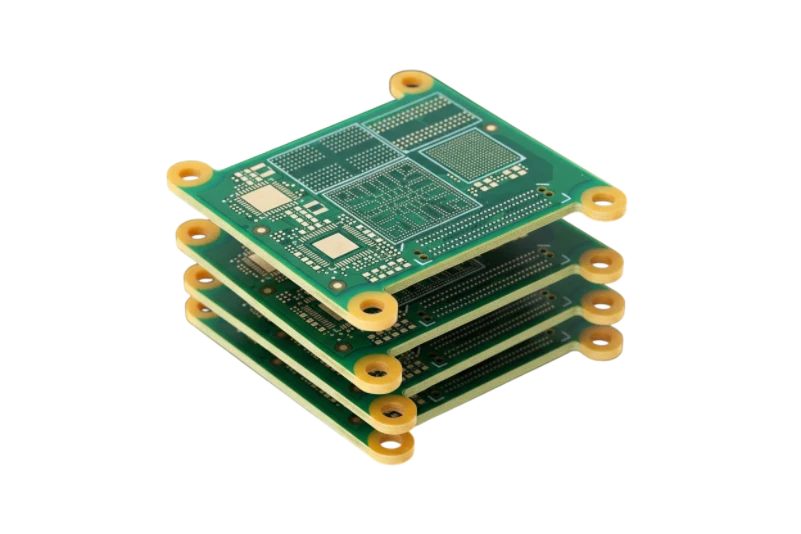
What is die attach on ceramic substrates and when should engineers use it?
Die attach on ceramic substrates is the process of bonding an unpackaged semiconductor die directly onto a ceramic carrier such as alumina (Al₂O₃) or aluminum nitride (AlN). The goal is to create a compact assembly with controlled thermal performance, electrical isolation, mechanical stability, and long-term reliability.
This approach is commonly selected for:
- High-power semiconductor modules where heat removal is the limiting design factor.
- LED arrays requiring efficient thermal paths.
- RF and microwave assemblies requiring stable dielectric properties.
- Aerospace, medical, and industrial electronics requiring harsh-environment reliability.
- Bare-die assemblies where silicon-to-substrate CTE matching reduces mechanical stress.
Ceramic substrates are not automatically the best solution for every design. They become valuable when thermal resistance, electrical isolation, frequency performance, or reliability requirements justify the additional material and processing cost.
A successful program requires alignment between four decisions:
- Ceramic material selection.
- Metallization technology.
- Die attach material.
- Manufacturing validation method.
How do you choose between Alumina and Aluminum Nitride ceramic substrates?
The ceramic material determines the thermal capability, cost structure, and application range.
| Material | Thermal conductivity | Typical use case | Engineering consideration |
|---|---|---|---|
| Alumina (96% Al₂O₃) | Approximately 24 W/mK | General ceramic PCBs, sensors, moderate-power electronics | Cost-effective and widely available |
| Aluminum Nitride (AlN) | Greater than 170 W/mK for high-grade material | Power modules, laser systems, high-density thermal designs | Higher material cost but superior heat spreading |
The correct choice depends on system thermal resistance, not only substrate conductivity. Engineers should define the required junction-to-case thermal path and evaluate the complete stack:
Die → attach layer → metallization → ceramic → heatsink/interface material.
Which die attach material should be specified for ceramic substrates?
The attach material affects thermal resistance, mechanical stress, operating temperature, and rework capability.
| Die attach method | Thermal capability | Strengths | Typical applications |
|---|---|---|---|
| Conductive epoxy | Moderate | Lower cost, flexible processing | Sensors, lower-power devices |
| Soft solder | Good | Reworkable and production-friendly | Industrial electronics |
| AuSn eutectic solder | High | Hermetic and stable at elevated temperatures | Ceramic packages, high reliability assemblies |
| Silver sintering | Very high | Excellent thermal performance and fatigue resistance | Power electronics and high-temperature applications |
The die backside metallization must match the attach system. Gold, silver, nickel, and other backside finishes can behave differently depending on solder, epoxy, or sintering chemistry.
What ceramic substrate metallization should be used for die attach?
The metallization layer connects the thermal, electrical, and mechanical requirements of the assembly.
| Metallization | Best fit | Key tradeoff |
|---|---|---|
| DBC (Direct Bonded Copper) | High-current power devices | Supports thick copper but has limited fine-line capability |
| DPC (Direct Plated Copper) | Fine-pitch LED, sensor, and RF designs | Better resolution with thinner copper structures |
| AMB (Active Metal Brazing) | Severe thermal cycling environments | Higher process complexity and cost |
The initial RFQ package should specify ceramic grade, copper thickness, surface finish, and metallization process. A request stating only “ceramic substrate” creates unnecessary manufacturing assumptions.
What specifications are required before quoting a ceramic die attach project?
A complete manufacturing package should define:
| Parameter | Example specification | Why it matters |
|---|---|---|
| Ceramic type | 96% Al₂O₃ or AlN | Determines thermal capability |
| Metallization | DBC, DPC, AMB | Controls current capacity and geometry |
| Surface finish | ENEPIG, plated Au, Ag | Affects wire bonding and solderability |
| Die attach material | Ag sinter, AuSn, epoxy | Controls thermal and mechanical performance |
| Bond line thickness | 30 µm ±10 µm | Controls thermal resistance and stress |
| Die placement | ±10 µm to ±50 µm depending on application | Ensures alignment and repeatability |
| Void specification | Example: <5% total void area | Prevents thermal hotspots |
| Shear strength | Defined by die size and reliability requirement | Confirms adhesion |
| Cleanliness requirement | Plasma cleaning before bonding | Protects wire bond reliability |
| Rework requirement | Defined before material selection | Determines process options |
What are the main die attach failure modes on ceramic substrates?
| Failure mode | Root cause | Detection method | Process control |
|---|---|---|---|
| Bond-line voiding | Trapped gases or poor material flow | X-ray inspection | Vacuum reflow, optimized thermal profile |
| Die tilt | Uneven dispense or placement force | Cross-section, 3D inspection | Controlled dispense pattern and placement parameters |
| Ceramic cracking | Thermal shock or mechanical stress | Visual inspection, thermal cycling | Controlled heating and cooling rates |
| Copper delamination | Weak metallization adhesion | C-SAM, peel testing | Qualified DBC/DPC/AMB process |
| Attach bleed contamination | Excess material volume | Optical inspection | Dispense control and cleaning process |
| Wire bond failures | Organic residue migration | Wire pull testing | Plasma cleaning before bonding |
How should the reflow and thermal profile for ceramic be developed?
Ceramic assemblies require different thermal profiling from standard FR4 assemblies because ceramic has high thermal conductivity and thermal mass.
A production profile should be developed using thermocouples attached directly to representative ceramic assemblies.
Key controls include:
- Controlled ramp rate to prevent thermal shock.
- Sufficient soak time for uniform temperature distribution.
- Peak temperature compatible with the attach material.
- Cooling rate appropriate for ceramic stress limits.
The final profile should be validated with actual production stack-up rather than copied from a standard PCB assembly process.
What validation tests prove a ceramic die attach process is production ready?
A qualification plan should combine mechanical, thermal, and inspection methods.
| Test | Purpose | Typical acceptance criteria |
|---|---|---|
| X-ray inspection | Measure die attach voiding | Meets specified void percentage |
| Die shear test | Verify mechanical attachment | Meets defined shear requirement |
| C-SAM inspection | Detect internal delamination | No critical interface separation |
| Thermal cycling | Evaluate reliability | No electrical failure or excessive thermal degradation |
| High-temperature storage | Measure aging effects | Controlled strength degradation |
| Cross-section analysis | Verify BLT and fillet geometry | Dimensions within specification |
| Wire pull test | Confirm bond pad cleanliness | Failure occurs in wire rather than interface |
| Thermal transient testing | Confirm thermal model | Measured Rth matches design target |
How should engineers qualify a die attach supplier?
A capable supplier should demonstrate both process equipment and process knowledge.
Supplier RFQ checklist
- Ceramic material capability including Al₂O₃ and AlN.
- Experience with DBC, DPC, or AMB substrates.
- Automated die placement capability.
- Controlled die attach dispensing or printing process.
- X-ray inspection capability.
- Thermal profile development experience.
- Plasma cleaning capability.
- Die shear testing capability.
- Traceability from substrate lot to finished assembly.
- Documented change-control process.
The supplier should also explain how they manage:
- Die size range.
- Placement accuracy.
- Bond-line thickness control.
- Attach material shelf life.
- Ceramic storage conditions.
- Failure analysis after field returns.
What are the key ceramic die attach design tradeoffs?
Alumina vs AlN
Alumina provides a cost-effective ceramic platform for many applications. AlN is selected when thermal conductivity requirements exceed what alumina can support.
Solder vs silver sintering
Solder provides easier manufacturing and potential rework. Silver sintering provides higher thermal performance and improved high-temperature capability.
DBC vs DPC
DBC supports thick copper and high-current applications. DPC supports finer geometry where precision routing is required.
Vacuum reflow vs standard processing
Vacuum processing improves void control and is commonly selected for high-reliability assemblies where thermal performance is critical.
Dispensing vs stencil printing
Dispensing supports complex layouts and varying die conditions. Printing supports higher-volume repeatable production.
FAQ: Die attach on ceramic substrates
Can a ceramic die attach assembly be reworked?
Rework depends on the attach material. Solder-based assemblies are generally more serviceable than silver-sintered assemblies, which are designed for permanent attachment.
How does ceramic reflow differ from FR4 reflow?
Ceramic requires a customized thermal profile because heat transfer behavior differs significantly from organic laminates.
Is underfill required for ceramic die attach?
Many ceramic die attach applications do not require underfill because ceramic CTE is closer to silicon than typical organic substrates. The requirement depends on the package structure and reliability target.
Why is plasma cleaning used before wire bonding?
Plasma cleaning removes surface contamination that can reduce wire bond strength after die attach processing.
Related pages & tools
- Ceramic PCB Manufacturing
- Covers ceramic material properties including Al₂O₃, AlN, DBC, and DPC options.
- Turnkey PCB Assembly
- Explains integrated manufacturing workflows combining substrate fabrication and assembly.
- High Thermal PCB Solutions
- Reviews thermal management alternatives when ceramic is not required.
- DFM Guidelines
- Helps prepare manufacturing data packages.
- X-Ray Inspection Services
- Details inspection methods for detecting die attach voids.
Request a quote
Ready to move forward? Request a Quote here. Submit your substrate drawings, die information, attach requirements, and validation targets for engineering review.
For the fastest response, include:
- Gerber files and manufacturing drawings.
- Die dimensions and placement coordinates.
- Ceramic substrate datasheet.
- Attach material requirements.
- Thermal performance targets.
- Expected production volume.
Conclusion
Reliable die attach on ceramic substrates depends on selecting the correct material stack, controlling the attachment process, and validating performance before production scaling. By defining ceramic grade, metallization, attach material, thermal profile, and inspection requirements early, engineering teams can reduce qualification delays and improve long-term reliability.
APTPCB supports ceramic substrate assembly programs with process planning, manufacturing review, and production-focused validation for high-performance electronic applications.