
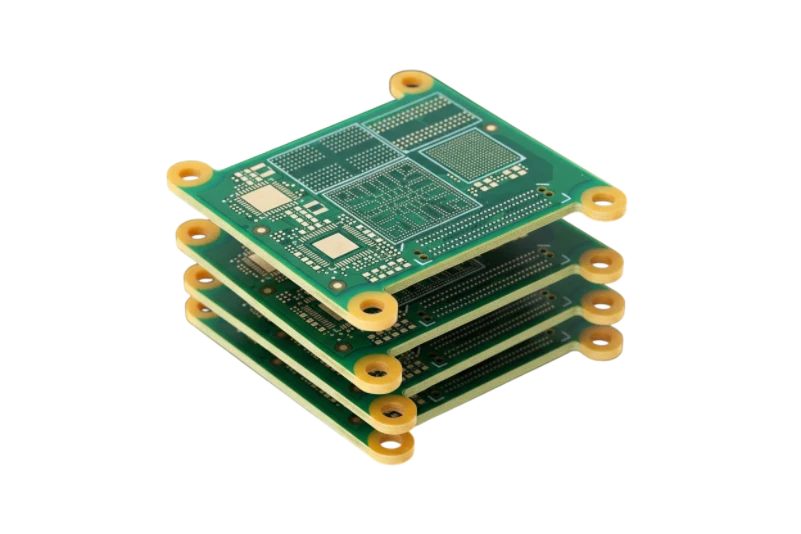
A PCB digital traveler is the controlled electronic record that follows a fabrication or assembly job through its approved route, linking product identity to materials, process events, inspections, deviations, rework, and final release. For buyers, its value is not that it is paperless; it is that the supplier can retrieve trustworthy evidence for the affected lot, panel, or unit.
Key Takeaways
- A traveler records execution history; it does not replace the ERP, QMS, design files, test specification, or Certificate of Conformance.
- Traceability may stop at the lot, panel, or individual board. Unit serialization is useful only when product risk, customer requirements, service history, or containment needs justify it.
- A barcode scan is not proof of full genealogy. Audit the records captured behind the identifier, including revisions, material lots, inspection results, and rework.
- Process gates can reduce skipped operations, but only when configured, validated, and connected to the relevant equipment or approval workflow.
- Retention periods and electronic-record controls should come from contracts, applicable regulations, and the manufacturer's quality system—not generic industry claims.
What is a PCB digital traveler?
A manufacturing traveler defines the route a job is expected to follow and records what actually happened. In PCB fabrication, that route can include material issue, imaging, lamination, drilling, plating, solder mask, surface finish, electrical test, final inspection, and packing. In PCBA, it can extend through solder-paste printing, placement, reflow, AOI, X-ray, programming, functional test, coating, rework, and release.
The record may be an MES function, an electronic device history record, a digital work-instruction application, or a controlled workflow assembled from several systems. Whatever the name, it should connect product identity and approved revisions to materials, execution, inspection, exceptions, and release.
Digital traveler vs MES, ERP, QMS, and CoC
These records overlap, but they are not interchangeable. Treating one document as proof of the entire quality system is a common supplier-audit error.
| System or record | Primary purpose | Typical information | What it does not prove by itself |
|---|---|---|---|
| Digital traveler | Control and document job execution | Route steps, status, timestamps, operators, equipment, inspections, holds, rework | That every source system is validated or every requirement was technically adequate |
| MES | Coordinate and monitor manufacturing operations | WIP, dispatching, recipes, machine data, genealogy, performance | Commercial order accuracy, design authority, or QMS effectiveness |
| ERP | Manage business and material planning | Sales order, purchase order, inventory, planning, shipment | Detailed shop-floor execution or test evidence |
| QMS | Control quality processes and records | Procedures, nonconformance, CAPA, audits, training, document control | The complete build history of a specific board unless records are linked |
| CoC | Declare conformity to specified requirements | Part number, lot, order, specification, authorized release | The underlying process history or raw inspection data |
The strongest implementation links these systems through stable identifiers. The purchase order and approved revision should connect to the traveler; nonconformances should connect to affected material; and the release record should point to the required inspection and test evidence.
Which traceability level does your PCB need?
More granularity is not automatically better. It adds marking, scanning, data storage, integration, and exception-handling work. Select the lowest level that still supports containment, compliance, field service, and risk control.
| Level | Identifier follows | Best suited to | Main limitation | Questions for the supplier |
|---|---|---|---|---|
| Job or lot | A production batch | Prototypes, low-risk builds, common-material containment | Affected panels or units may not be distinguishable | Can one lot contain split material, process, or test conditions? |
| Panel | Each manufacturing or assembly panel | Panel-specific process history, coupons, AOI, routing, yield analysis | Individual boards may lose identity after depanelization | How is panel identity preserved through routing and packing? |
| Unit | Each finished PCB or PCBA | Field returns, serialized equipment, narrow containment, service history | Requires durable marking and consistent scan discipline | When is the ID applied, and which earlier processes remain only lot-traceable? |
| Component-level genealogy | Serialized unit plus component/material lots | High-risk or contract-driven PCBA programs | Data volume and feeder/reel exceptions increase complexity | Are substitutions, split reels, moisture controls, and rework parts captured? |
Automotive, aerospace, defense, and medical work often has demanding traceability, but no industry label makes unit-level serialization universally mandatory. The applicable customer-specific requirements, quality agreement, drawing notes, purchase order, and risk analysis determine the required depth.
What are the IATF 16949 PCB traceability requirements?
IATF 16949 does not prescribe a PCB-specific record format or a fixed serialization level. Its supplemental identification and traceability clause (8.5.2.1 in the 2016 edition) asks the manufacturer to analyze traceability needs for each product, based on the risk to people and on the scope of a possible internal, customer, or field failure. It then expects a documented traceability plan that can find the affected product and supports the record retention the organization has defined. The OEM's customer-specific requirements usually add the detail. For a PCB or PCBA supplier, that translates into concrete RFQ questions:
| IATF expectation | What to ask the PCB supplier to show |
|---|---|
| Traceability analysis per product and risk | Which level (lot, panel, unit) is planned for this part number, and why |
| Documented traceability plan | The plan or control-plan section that covers identification for this route |
| Ability to segregate suspect product | A demonstration that a suspect laminate or paste lot can be traced forward to every shipped ID |
| Record retention | The retention period agreed for this program and how records are retrieved |
| Customer-specific requirements | How OEM CSR traceability rules are flowed into the traveler and marking |
The matrix later in this guide converts these expectations into minimum and stronger evidence levels. For lot-level controls on the bare board side, see the companion guide to PCB traceability and lot control.
What should a PCB traveler record?
Define the record package before quotation. Otherwise, a supplier may provide only a route-completion screen when the buyer expects material genealogy or raw test evidence.
| Record group | What to capture | Audit test |
|---|---|---|
| Product identity | Customer part number, supplier job, revision, quantity, lot/panel/unit ID, and route version | Confirm obsolete files and instructions cannot be released to active work |
| Material genealogy | Contract-required laminate, prepreg, copper, finish, component, solder, coating, and substitution records | Trace a shipped ID backward and a suspect material lot forward |
| Process events | Route status, timestamp, equipment or line, operator/system identity, and critical program or parameter revision | Compare traveler events with source-machine or controlled program records |
| Inspection and test | Required method, status, specification/program revision, quantity, result, and disposition | Retrieve linked raw data or reports when the contract requires them |
| Quality exceptions | Nonconformance, affected quantity, hold, disposition, rework, replaced material, retest, and approval | Verify the initial failure remains visible after correction |
| Final release | Completed operations, resolved holds, passed tests, document match, and release authority | Test how overrides and exceptions are authorized and recorded |
For a new design, align the record request with the DFM guidelines and the evidence available from PCBA testing services.
PCB traceability requirements matrix
Use this matrix to convert a vague request for “full traceability” into auditable requirements.
| Requirement | Minimum acceptable evidence | Stronger evidence when risk justifies it | Common gap |
|---|---|---|---|
| Design revision | Approved revision recorded against the job | Controlled file package and route revision with change history | Traveler shows part number but not revision |
| Material identity | Required material type and supplier lot linked to the job | Forward/backward genealogy with certificates where contracted | Certificate exists but cannot be tied to shipped boards |
| Route completion | Required operations, status, and timestamps | Configured sequence gates with controlled override reason | Operators can close steps without completing required data |
| Equipment/program | Equipment or line recorded for critical steps | Program or recipe revision automatically captured | Machine record and traveler use unrelated identifiers |
| Inspection/test | Pass/fail status and applicable method or program | Raw result linked to panel or unit identity | Only a final pass flag remains searchable |
| Nonconformance | NCR, quantity, disposition, and approval linked | Affected-unit mapping plus rework and retest history | Rework overwrites the initial failure |
| User attribution | Unique account or authenticated system identity | Role-based approval and electronic signature where required | Shared logins or uncontrolled supervisor overrides |
| Retention/retrieval | Contracted retention and readable export | Tested archival restore with format-migration controls | Data is retained but cannot be retrieved after a system change |
How do you assess data integrity and system controls?
Digital records can be incomplete or unreliable even when the interface looks modern. Audit the controls around the record, not the dashboard design.
- Unique identity and access: users should have individual accounts, appropriate roles, and controlled privileges. Shared operator logins weaken attribution.
- Time control: systems that contribute events should use synchronized clocks and preserve time-zone context where relevant.
- Revision control: routes, work instructions, inspection plans, and programs should identify the approved revision used for the job.
- Audit trail: material changes, status overrides, deleted or corrected entries, and approvals should remain attributable and reviewable.
- Interface handling: the manufacturer should define what happens when a scanner, machine connection, ERP interface, or test system is unavailable.
- Backup and recovery: backups are useful only if restore procedures are tested and the recovered records remain readable and complete.
- Retention and export: the period, format, ownership, and retrieval time should be contractual when they matter. Do not assume a fixed 15-year or indefinite rule across industries.
- Change management: software updates, workflow changes, and master-data changes should be assessed, approved, tested, and released under the quality system.
FDA 21 CFR Part 11 is relevant only when electronic records or signatures fall within its regulated scope and replace or support records required by applicable predicate rules. It is not a universal certification for every PCB digital traveler. When Part 11 or another regulated electronic-record framework applies, the responsible organization should define validation, audit-trail, signature, access, retention, and record-copy requirements for the actual intended use.
Supplier audit questions that reveal weak traceability
Ask for a controlled demonstration using a completed, anonymized job. A slide deck shows intended capability; a retrieved record shows whether the process works.
- Can the supplier trace one shipped ID backward to its revision, materials, route, inspections, exceptions, and release—and one material lot forward to every affected output?
- Which data is captured automatically, scanned, selected from a controlled list, or typed manually?
- Which steps are sequence-gated? Who can override a gate, and where is the reason recorded?
- How are split lots, partial quantities, scrapped panels, rework, and replacement components represented?
- Can the system distinguish the original failure, rework action, and retest result?
- What happens during network, scanner, machine-interface, or MES downtime?
- How are route and program revisions approved and matched to work in progress?
- How are records exported, and which records are delivered, audit-only, or not retained?
Red flags include screenshots without retrievable source records, shared accounts, editable completion dates, missing revision fields, unexplained manual overrides, rework that erases the failure history, and certificates that cannot be linked to shipped material.
Standards and references to review
The contract should identify the applicable revision and required evidence. A standard's presence in a supplier presentation does not automatically make every clause part of the order.
- IPC-1782 — Manufacturing and Supply Chain Traceability of Electronic Products
- ISA-95 / IEC 62264 — Enterprise-control system integration
- ISO 9001 — Quality management systems
- IATF 16949 — Automotive quality management system requirements, when applicable
- AS9100 — Aerospace quality management system requirements, when applicable
- ISO 13485 — Medical-device quality management systems, when applicable
- 21 CFR Part 11 — Electronic records and electronic signatures, when applicable
- IPC-A-600 — Acceptability of Printed Boards
- IPC-6012 — Qualification and Performance Specification for Rigid Printed Boards; bare-board records are usually tied to the class ordered under IPC-6012
- IPC-A-610 — Acceptability of Electronic Assemblies
- J-STD-001 — Requirements for Soldered Electrical and Electronic Assemblies
PCB digital traveler RFQ checklist
Product and identification
- Part number, revision, build quantity, panelization, and release status
- Required traceability level: job, lot, panel, unit, or component genealogy
- Marking content, format, location, durability, and customer serial-number rules
Manufacturing evidence
- Material lots and certificates required by contract
- Critical process steps, parameters, equipment, recipes, or program revisions to retain
- Inspection and test records, raw-data needs, sample sizes, and acceptance criteria
- Nonconformance, deviation, rework, retest, and concession records
Record controls and delivery
- Retention period and retrieval expectation
- Required file format, language, report template, and delivery timing
- Customer access, audit access, confidentiality, and data-ownership terms
- Electronic signatures, audit trails, validation, cybersecurity, or backup requirements when applicable
Commercial and change requirements
- Prototype and production quantities, forecast, schedule, and packaging
- Notification and approval rules for material, process, site, software, route, or equipment changes
If the design also needs advanced stackups, controlled impedance, HDI, via-in-pad, or special materials, include those requirements in the fabrication package and request an advanced PCB manufacturing review.
Request a traceability review before quotation
Send the drawing, revision, quantities, required traceability level, inspection plan, record-retention period, and customer reporting template with the RFQ. Ask APTPCB to confirm which identifiers and records can be captured, retained, and delivered for the proposed fabrication or assembly route. Any requirement not confirmed in the quotation and quality documentation should not be assumed.
FAQ
Is a PCB digital traveler the same as an MES?
No. The traveler is the job-specific route and execution record. An MES may create or manage that traveler while also handling WIP, dispatching, machine integration, genealogy, and production reporting.
Does a digital traveler guarantee that no defective PCB will ship?
No. It can improve visibility, enforce configured approvals, and preserve evidence, but it cannot compensate for an inadequate test plan, incorrect acceptance criteria, uncontrolled overrides, or an undetected failure mode.
What is the difference between traceability and genealogy?
Traceability is the ability to follow an item's history, location, and application. Genealogy describes the parent-child relationships among the finished item, subassemblies, components, materials, and process lots used to create it.
How long should digital traveler records be retained?
Use the period defined by applicable law, customer requirements, the quality agreement, and the manufacturer's controlled retention schedule. There is no single retention period that applies to all PCB or PCBA orders.
Does 21 CFR Part 11 apply to every medical PCB build?
No. Its application depends on whether the electronic records or signatures are used for records required by FDA predicate rules. The regulated organization must assess and document the scope for the intended use.
Does IATF 16949 require unit-level serialization of PCBs?
Not by itself. IATF 16949 requires a risk-based traceability analysis and plan; the depth (lot, panel, or unit) comes from that analysis and from the OEM's customer-specific requirements. Many automotive programs do require serialized PCBAs, but that requirement should appear in the contract or CSR.
What should I verify during a supplier audit?
Trace one shipped identifier backward to its revision, materials, process history, inspections, deviations, rework, and release; then trace one material lot forward to all affected output. Also test record retrieval, access control, audit trails, overrides, and downtime handling.
Conclusion
A strong PCB digital traveler is a connected evidence trail, not a set of electronic checkboxes. Define the required traceability level and record package before quotation, then audit retrieval, revision control, genealogy, exceptions, and data integrity against a real job.