
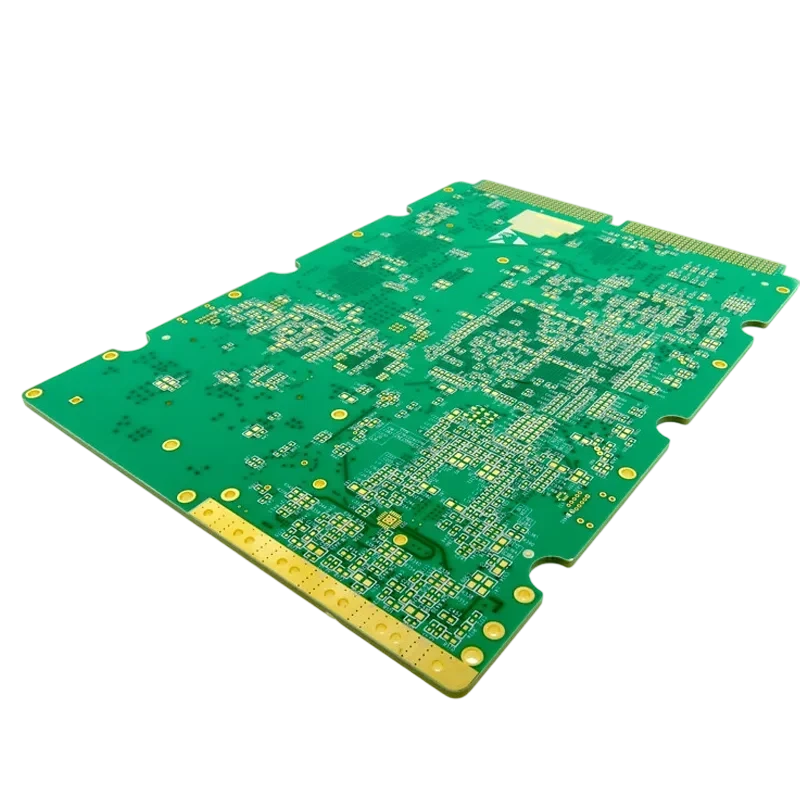
PCB dimensional inspection is the measured check that a printed circuit board, or an assembled PCBA, matches the dimensions and tolerances on its drawing: outline, hole sizes and positions, thickness, flatness, and fine features such as trace width and annular ring. The output is a dimensional inspection report that lists each characteristic, its nominal and tolerance, the measured value, and pass or fail.
Key Takeaways
- Definition Scope: Dimensional inspection goes beyond simple length and width; in PCB manufacturing, it includes hole sizes, trace widths, plating thickness, and bow/twist.
- Critical Metrics: Understanding tolerances (±), Cpk (process capability), and geometric dimensioning and tolerancing (GD&T) is essential for reliable production.
- Cost vs. Precision: Tighter tolerances always increase manufacturing costs; the goal is to balance design requirements with manufacturability.
- Validation Methods: Techniques range from manual calipers for prototypes to automated Video Measuring Systems (VMS) and CMM for mass production.
- Process Control: First Article Inspection (FAI) is the most critical step to catch dimensional errors before volume fabrication begins.
- Material Influence: Flexible and rigid-flex materials behave differently than standard FR4, requiring specialized inspection criteria.
- Documentation: Clear Gerber files and fabrication drawings are the baseline for any successful inspection strategy.
What does dimensional inspection cover for a PCB (scope & boundaries)?
Before diving into specific metrics, it is vital to establish exactly what dimensional inspection covers in electronics manufacturing. At its core, dimensional inspection is the quantitative verification of a physical product against its design specifications. For APTPCB (APTPCB PCB Factory), this is not merely about checking if the board fits inside an enclosure; it is about ensuring the internal and external geometry supports the electrical functionality.
The scope of dimensional inspection in PCBs is multi-layered. It begins with the macro dimensions, such as the overall board outline, mounting hole locations, and total board thickness. These ensure mechanical fit. However, the scope extends deeply into micro dimensions, which include trace width, spacing (air gap), annular ring size, and plating thickness. If these micro dimensions drift outside acceptable limits, the board may mechanically fit but electrically fail due to impedance mismatches or open circuits.
Furthermore, a complete guide must address geometric form. This includes flatness (bow and twist), perpendicularity of edges, and the position of drilled holes relative to the copper pads. In modern high-density interconnect (HDI) designs, the margin for error is measured in microns. Therefore, dimensional inspection is the bridge between a digital design file and a physical, functioning circuit board.
Which PCB dimensions and tolerances matter?
Understanding the scope leads us to the specific numbers and standards used to quantify physical accuracy. A robust inspection strategy relies on a set of defined metrics that translate vague requirements into pass/fail criteria.
| Metric | Why it matters | Typical Range / Influencing Factors | How to measure |
|---|---|---|---|
| Linear Tolerance | Defines the acceptable deviation for length, width, and slot dimensions. | ±0.10mm (Standard) to ±0.05mm (Precision). Dependent on routing method (CNC vs. Punch). | Calipers, Micrometers, or CMM (Coordinate Measuring Machine). |
| Hole Size Tolerance | Ensures components fit and vias conduct properly. | ±0.076mm (PTH), ±0.05mm (NPTH). Influenced by plating thickness and drill wear. | Pin gauges or Video Measuring Systems (VMS). |
| Bow and Twist | Prevents stress on solder joints and ensures the board sits flat in assembly. | < 0.75% for SMT; < 1.5% for THT. Affected by copper balance and stack-up symmetry. | Flat granite surface plate with feeler gauges or laser scanners. |
| Trace Width/Spacing | Critical for impedance control and current carrying capacity. | ±10% to ±20%. Controlled by etching chemistry and photo-imaging resolution. | Metallographic cross-section or high-magnification optical inspection. |
| Annular Ring | Ensures the drill hole remains within the copper pad (no breakout). | Class 2: 90° breakout allowed; Class 3: 0.05mm min internal. | X-ray inspection or cross-section analysis. |
| Board Thickness | Critical for edge connectors and enclosure fit. | ±10% is standard. Influenced by laminate tolerance and copper weight. | Micrometer (point-to-point measurement). |
| Copper Thickness | Determines current capacity and thermal management. | IPC Class 2/3 standards (e.g., average 20µm or 25µm in hole). | Cross-section (destructive) or CMI (non-destructive). |
CMM vs VMS vs gauges: which dimensional inspection method fits?
| Method | Best for | Contact? | Typical PCB use |
|---|---|---|---|
| Calipers, micrometers, pin gauges | Fast checks of outline, thickness, and hole sizes | Yes | Prototypes, incoming checks, quick FAI items |
| Video measuring system (VMS) / optical CMM | Small 2D features: hole position, slot width, pad and trace geometry | No | Flex and thin boards, fine features, first article |
| Coordinate measuring machine (CMM) with touch probe | 3D features and datum-based positional tolerances | Yes | Precision outlines, countersinks, mechanical interfaces, assembled hardware |
| Laser or optical flatness scanning | Bow and twist, coplanarity | No | Warpage on large or thin boards, pre-assembly checks |
| Cross-section (microsection) | Internal features: plating thickness, layer registration, dielectric | Destructive | Coupons and qualification samples |
| X-ray | Internal layer registration and hidden alignment | No | Multilayer and HDI registration checks |
CMM dimensional inspection gives the strongest datum-based evidence but takes longer to program. Most PCB programs combine optical measurement for small features with gauges or CMM for mechanical interfaces.
Dimensional inspection of PCB assemblies
Once components are mounted, the dimensional questions change. Inspecting an assembly (PCBA) usually checks component height and keep-out zones, connector position and alignment against the enclosure, press-fit pin protrusion and seating, standoff and hardware positions, and board flatness after reflow. These are mechanical-fit checks that the bare-board report does not cover. Name them on the assembly drawing so the assembler knows which features to measure and how many samples to report.
Selection guidance by scenario (trade-offs)
Once you know the metrics, you must apply them to your specific context, as not every board requires the same level of scrutiny. Different manufacturing scenarios dictate different inspection priorities and technologies.
1. Standard Rigid PCB (Consumer Electronics) For standard FR4 boards used in consumer goods, cost is the primary driver. The inspection focus is on the outline and hole sizes to ensure components fit.
- Trade-off: Use standard tolerances (±0.1mm).
- Method: Automated routing checks and batch sampling.
- Risk: Low risk of functional failure if dimensions vary slightly.
2. HDI and Fine Pitch Designs When using HDI PCB technology, trace widths and microvias are microscopic. A deviation of 10 microns can ruin the board.
- Trade-off: High inspection cost for high reliability.
- Method: Laser profilometry and 100% Automated Optical Inspection (AOI).
- Risk: Signal integrity failure if impedance traces are too narrow.
3. Flexible and Rigid-Flex Circuits Flex materials are unstable and can shrink or stretch during processing.
- Trade-off: Looser tolerances are often required compared to rigid boards.
- Method: Optical measurement (non-contact) is mandatory to avoid deforming the material during measurement.
- Risk: Dimensional instability causing coverlay misalignment.
4. RF and Microwave Applications For high-frequency boards, the geometry of the conductor determines the electrical performance.
- Trade-off: Extremely tight tolerance on etching (±0.015mm or better).
- Method: Cross-sectioning coupons on every panel to verify geometry.
- Risk: Frequency shift or signal loss.
5. Aerospace and Defense These sectors require strict adherence to IPC Class 3 standards.
- Trade-off: Documentation is as important as the product.
- Method: 100% dimensional verification with recorded data logs.
- Risk: Catastrophic system failure; zero defect tolerance.
6. Prototype / NPI (New Product Introduction) Speed is critical, but validation is necessary to scale.
- Trade-off: Manual inspection of key features rather than full automation setup.
- Method: First Article Inspection (FAI) reports.
- Risk: Missing a design error that propagates to mass production.
From design to manufacturing (implementation checkpoints)
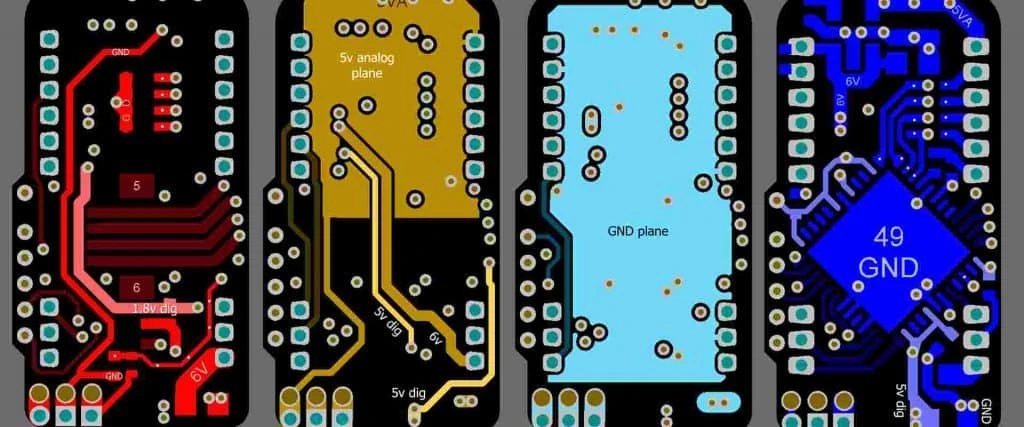
Selecting the right approach is useless if not implemented systematically throughout the product lifecycle. A comprehensive dimensional inspection guide must include checkpoints from the moment the file is created until the final shipment.
DFM Review (Design Phase):
- Recommendation: Verify that the tolerances specified in the drawing match the capabilities of the manufacturer.
- Risk: Specifying ±0.01mm on a standard router outline will cause delays or rejection.
- Acceptance: Engineering Query (EQ) confirmation.
Incoming Material Control:
- Recommendation: Measure the thickness of the raw laminate and copper foil before processing.
- Risk: Wrong dielectric thickness affects impedance.
- Acceptance: Certificate of Conformance (CoC) from laminate supplier.
Drilling Verification:
- Recommendation: Check drill bit wear and hole locations using X-ray after drilling but before plating.
- Risk: Drill wander causing breakout later in the process.
- Acceptance: X-ray drill check.
Etching and Layer Alignment:
- Recommendation: Use AOI to measure line widths and spacing immediately after etching.
- Risk: Over-etching reduces trace width, increasing resistance.
- Acceptance: AOI Pass/Fail report.
Lamination (Multilayer):
- Recommendation: Measure total thickness after pressing. Monitor for "press-out" (material squeezing out).
- Risk: Board too thick for edge connector.
- Acceptance: Micrometer check on panel edge.
Surface Finish and Plating:
- Recommendation: Measure plating thickness (HASL, ENIG, Hard Gold).
- Risk: Solderability issues or gold embrittlement.
- Acceptance: X-ray Fluorescence (XRF) measurement.
Profiling (Routing/V-Cut):
- Recommendation: Verify the final PCB profiling dimensions against the mechanical drawing.
- Risk: Board does not fit in the housing.
- Acceptance: CMM or specialized V-cut gauge.
First Article Inspection (FAI):
- Recommendation: A complete dimensional report of the first produced unit before running the rest of the batch.
- Risk: Systemic error affecting the whole lot.
- Acceptance: Signed FAI Report.
Final Quality Control (FQC):
- Recommendation: Visual and dimensional sampling based on AQL (Acceptable Quality Level).
- Risk: Shipping defective parts.
- Acceptance: PCB Quality Audit Report.
Common mistakes (and the correct approach)
Even with a solid process, errors can occur if the underlying assumptions about dimensional inspection are flawed. Avoiding these common pitfalls saves time and money.
Mistake 1: Over-Tolerancing
- Issue: Designers often apply a blanket tolerance (e.g., ±0.05mm) to the entire board outline when it is only needed for a specific connector cutout.
- Correction: Use Geometric Dimensioning and Tolerancing (GD&T) to apply tight tolerances only where necessary. This reduces manufacturing costs significantly.
Mistake 2: Ignoring Material Properties
- Issue: Failing to account for the thermal expansion or shrinkage of materials, especially in Flex PCB designs.
- Correction: Discuss scaling factors with APTPCB engineers during the EQ phase to compensate for material movement.
Mistake 3: Relying Solely on 2D Drawings
- Issue: Sending a PDF drawing that contradicts the Gerber files.
- Correction: The Gerber file is the master for manufacturing data. The drawing should only specify tolerances and special requirements, not redefine the geometry.
Mistake 4: Vague Measurement Datums
- Issue: Measuring dimensions from the edge of the board (which is routed and has a tolerance) rather than from a tooling hole or fiducial.
- Correction: Establish clear datums (reference points) that are consistent between the design and the inspection equipment.
Mistake 5: Confusing Visual Inspection with Dimensional Inspection
- Issue: Assuming that because a board "looks good" (clean solder mask, shiny finish), the dimensions are correct.
- Correction: Use an inspection criteria pcb checklist that separates cosmetic attributes from dimensional metrics.
Mistake 6: Skipping the FAI
- Issue: Approving mass production based on a prototype made months ago.
- Correction: Always require a new First Article Inspection if there is a revision change or a long gap between production runs.
FAQ
To address lingering uncertainties regarding dimensional verification, here are answers to the most frequently asked questions.
Q1: What is the standard tolerance for PCB outline dimensions? For standard CNC routing, the industry standard is typically ±0.10mm (±4 mils). For V-scoring, the tolerance is slightly looser due to the nature of the web thickness remaining.
Q2: How is bow and twist measured? The board is placed on a flat reference surface (granite plate). The maximum vertical displacement is measured and divided by the diagonal length of the board to get a percentage.
Q3: Can I request 100% dimensional inspection for my order? Yes, but it typically incurs an additional cost. Standard production relies on statistical sampling (AQL). 100% inspection is common for aerospace and medical applications.
Q4: What is the difference between a "reference dimension" and a "critical dimension"? A reference dimension is for information only and does not have a strict pass/fail tolerance. A critical dimension affects the fit, form, or function and must be verified.
Q5: How do you inspect internal layer alignment? We use X-ray inspection systems to look through the board and verify that the pads on internal layers align with the drilled holes.
Q6: Does surface finish thickness count towards the total board thickness? Yes, technically, but finishes like ENIG are very thin (microns). HASL (solder leveling) can add significant thickness (up to 30-50 microns) and varies across the pad.
Q7: What is a "visual inspection checklist"? This is a document used by QC operators to check for cosmetic defects (scratches, exposed copper, solder mask peeling) and basic dimensional features.
Q8: Why do my hole sizes measure smaller than the drill tool size? The drill tool size is the "drilled diameter." After drilling, copper plating is added to the hole walls, reducing the diameter to the "finished hole size."
Q9: What should a dimensional inspection report include? A dimensional inspection report should identify the part number, revision, and sample IDs, then list each characteristic with its drawing reference (balloon number), nominal value, tolerance, measured value, measurement method or instrument, and pass/fail result. It should also state the inspector, date, and any deviations. For first articles, this is usually part of the first article inspection package.
Related pages & tools
- PCB Quality System: Overview of the quality standards and certifications.
- First Article Inspection: Detailed explanation of the FAI process.
- PCB Profiling: Methods for cutting and shaping the PCB outline.
- HDI PCB Manufacturing: High-density interconnects requiring tight dimensional control.
- Flex PCB Capabilities: Specifics on flexible circuit tolerances.
Glossary (key terms)
| Term | Definition |
|---|---|
| AQL (Acceptable Quality Level) | A statistical standard used to determine the sample size for inspection and the number of allowable defects. |
| AOI (Automated Optical Inspection) | A system that uses cameras and image processing to detect defects in traces, soldering, and components. |
| Bow and Twist | A deviation from flatness. Bow is a cylindrical curvature; twist is a deformation where corners are not on the same plane. |
| CMM (Coordinate Measuring Machine) | A device that measures the geometry of physical objects by sensing discrete points on the surface with a probe. |
| Cpk (Process Capability Index) | A statistical measure of a process's ability to produce output within specification limits. |
| Datum | A theoretical exact plane, point, or axis from which a dimensional measurement is made. |
| FAI (First Article Inspection) | The validation of the first unit produced to ensure the manufacturing process yields a correct part. |
| GD&T | Geometric Dimensioning and Tolerancing; a system for defining and communicating engineering tolerances. |
| Gerber File | The standard file format used by the PCB industry software to describe the printed circuit board images. |
| IPC-A-600 | The industry standard for the acceptability of printed boards (visual and dimensional criteria). |
| Metrology | The scientific study of measurement. |
| Tolerance | The total amount a specific dimension is permitted to vary. |
| VMS (Video Measuring System) | A non-contact measurement system using optics and software to measure small features. |
Conclusion (next steps)
PCB dimensional inspection is how a drawing's tolerances become measured evidence. It is not just a checklist. From understanding the critical metrics like hole tolerance and trace width to selecting the right inspection method for your specific scenario, attention to detail prevents costly manufacturing failures.
Whether you are building a simple prototype or a complex aerospace system, the validation process remains the safeguard of your product's integrity. When submitting your data for a quote or DFM review to APTPCB, ensure you provide:
- Gerber Files: The master data for geometry.
- Fabrication Drawing: Specifying critical tolerances, stack-up, and materials.
- Inspection Criteria: Clearly defined pass/fail limits (e.g., IPC Class 2 or 3).
- Special Requirements: Any non-standard dimensional needs (e.g., controlled depth routing).
By aligning your design specifications with manufacturing capabilities, you ensure a smooth production run and a high-quality final product.