
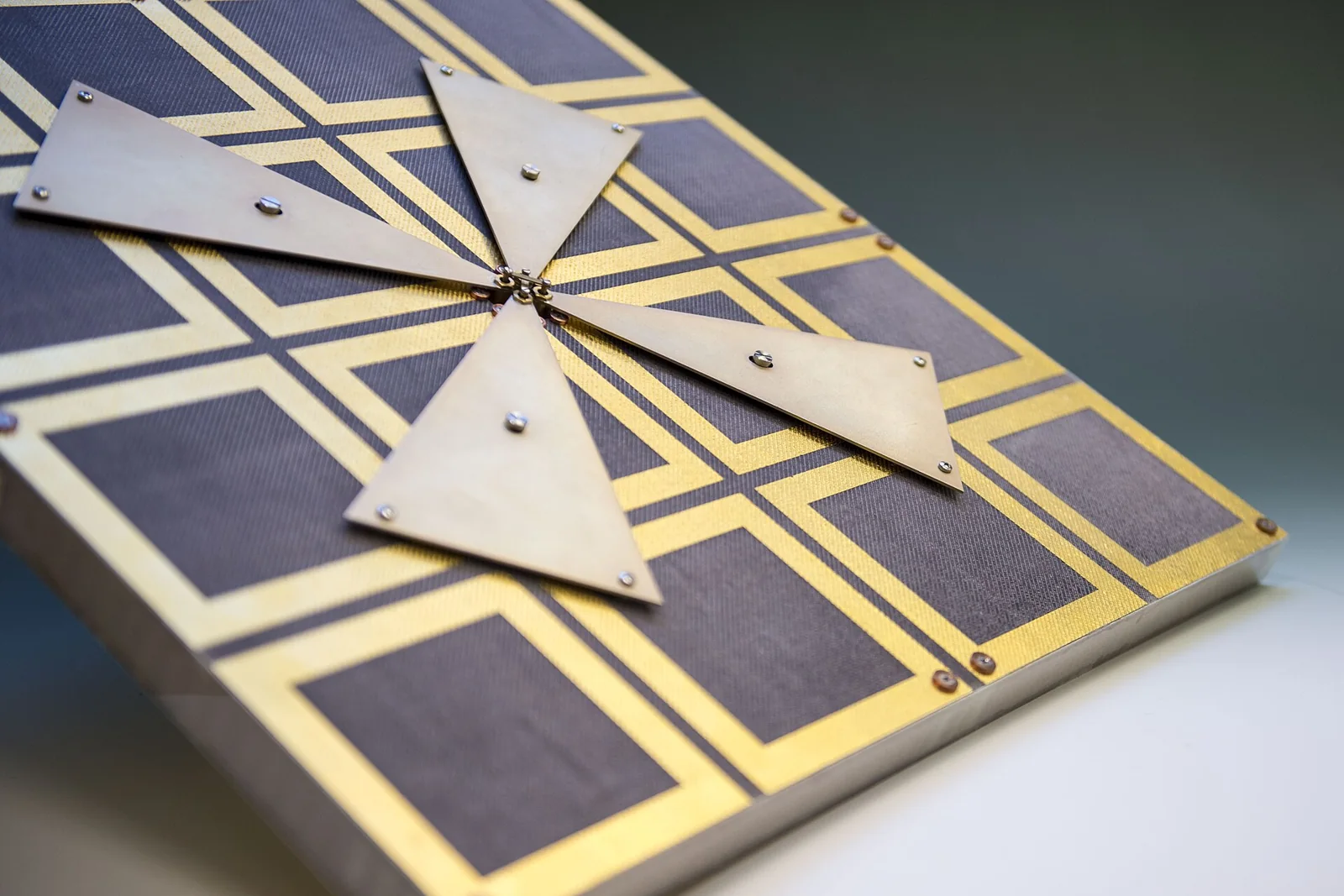
A distributed antenna system (DAS) PCB is an RF, power, control, or transport board used inside DAS head-end equipment, repeaters, remote units, active antenna nodes, or monitoring assemblies.
The correct PCB design depends on where the board sits in the architecture. A passive DAS may only require supporting electronics around RF distribution, while an active DAS remote unit may combine optical conversion, filtering, amplification, monitoring, power conversion, and thermal management.
This guide helps RF engineers, hardware teams, manufacturers, and sourcing teams define a DAS PCB that can be designed, manufactured, tested, and traced back to system requirements.
Key decisions before starting a DAS PCB design
A successful DAS PCB specification begins with decisions outside the layout tool.
| Decision area | Questions to answer | Design impact |
|---|---|---|
| DAS architecture | Passive, active, hybrid, or digital? | Determines RF, optical, digital, and power functions |
| Board boundary | What equipment does the PCB own? | Defines acceptance tests and troubleshooting limits |
| RF path | Which bands, directions, gain states, and power levels apply? | Controls components, isolation, and linearity requirements |
| Environment | Indoor, outdoor, sealed enclosure, temperature range? | Drives thermal and material selection |
| Manufacturing model | Prototype, production, field replacement? | Defines traceability and screening requirements |
How does DAS architecture affect PCB requirements?
DAS systems distribute wireless signals through different combinations of coaxial networks, fiber transport, active electronics, and digital processing.
| DAS architecture | Typical PCB role | Main PCB priorities |
|---|---|---|
| Passive DAS | Supports RF distribution equipment, monitoring, and power/control functions | Connector integrity, monitoring, power, and reliability |
| Active DAS | Remote units amplify, filter, convert, and control RF signals | RF chain performance, isolation, thermal design, and test access |
| Hybrid DAS | Combines active transport with passive RF distribution | Gain control, interfaces, and system boundary definition |
| Digital DAS | Uses digital transport before RF conversion | High-speed interfaces, clocks, synchronization, and RF conversion quality |
A DAS PCB supplier needs the architecture, interface definitions, and reference planes before quoting.
What should be defined in the DAS RF path table?
Every RF path should have a controlled definition before schematic release.
| Parameter | Why it matters |
|---|---|
| Frequency bands | Determines materials, filters, losses, and RF models |
| Direction | Separates uplink and downlink requirements |
| Input/output power | Determines linearity, compression, and thermal loading |
| Gain range | Defines amplifier and control requirements |
| Noise figure | Protects receive sensitivity |
| Isolation requirement | Prevents transmit leakage into sensitive paths |
| Return loss target | Controls impedance performance |
| Reference plane | Defines where measurements and acceptance apply |
A typical active DAS remote RF path may include:
- RF, optical, or digital input interface
- Filtering and duplexing
- LNA, attenuation, gain control, or PA stages
- Couplers and detectors
- Cable, connector, or antenna interface
Which PCB materials and stack-up choices matter for DAS RF performance?
A laminate family name alone is not a production specification. Release documentation should define:
- dielectric thickness
- copper thickness
- material grade
- finished impedance requirements
- surface finish
- fabrication tolerances
- RF coupon requirements
The high-frequency PCB stack-up should match frequency, loss budget, thermal requirements, assembly process, and supplier capability.
Critical RF structures include:
- controlled impedance transmission lines
- connector launches
- via transitions
- filter footprints
- shielding transitions
- antenna interfaces
Use PCB impedance control for structures that require controlled electrical performance.
A released PCB stack-up should define the actual construction, not only a material family.
What DAS PCB design choices reduce RF failures?
RF performance depends on the complete signal path.
| Design area | Primary concern | Verification method |
|---|---|---|
| RF launches | Connector-to-board discontinuity | VNA measurement and modeling |
| Layer transitions | Return-current disruption | Field simulation or coupon correlation |
| Isolation structures | TX/RX coupling | Isolation measurement |
| Filters | Loss, rejection, tuning variation | S-parameter testing |
| Shielding | Leakage and noise coupling | RF verification by operating mode |
| Digital interfaces | Clock and converter interference | Spectrum and mode testing |
High-power transmit paths, sensitive receive paths, clocks, converters, and switch-mode supplies should be physically and electrically reviewed together.
How should DAS power and thermal design be handled?
Remote DAS hardware often combines:
- RF amplifiers
- converters
- processors
- clocks
- monitoring circuits
- fans or thermal controls
Power design should cover:
- startup current
- standby operation
- transmit loading
- fault conditions
- protection states
- regulator stability
- conducted noise
Thermal design should follow the complete heat path:
package → copper → vias → thermal interface → chassis → ambient environment
A bench test at room temperature does not represent operation inside a sealed installed enclosure.
How is low-PIM performance controlled in DAS PCB assemblies?
Passive intermodulation (PIM) occurs when multiple RF signals interact with nonlinear junctions.
Potential sources include:
- damaged connectors
- contamination
- poor contact pressure
- unsuitable materials
- plating damage
- unstable solder joints
- mechanical stress
Low-PIM control requires coordination between PCB design, assembly, hardware selection, and installation.
| Area | Design requirement |
|---|---|
| Connectors | Specify approved RF connector types and installation process |
| Materials | Control plating, finishes, fasteners, and RF materials |
| Assembly | Control residues, debris, rework, and inspection |
| Testing | Define tones, power, reference plane, fixture, and limits |
A PIM measurement represents everything inside the defined test boundary: board, connector, cable, adapter, filter, and fixture.
What tests validate a DAS PCB?
DAS PCB testing should be divided into evidence levels.
| Test stage | Purpose | Typical measurements |
|---|---|---|
| Design verification | Prove engineering performance | S-parameters, gain, noise, isolation, linearity, thermal, spurious response |
| Production screening | Verify repeatable manufacturing | Inspection, current checks, RF functional tests, alarms, configuration checks |
| Site commissioning | Verify installed system | Line sweep, PIM, coverage validation, configuration checks |
Line sweep and PIM are different measurements.
Line sweep evaluates impedance behavior and discontinuities. PIM testing evaluates nonlinear RF behavior under multi-tone excitation.
A passing line sweep does not prove PIM performance, and passing PIM does not prove every impedance transition is correct.
The PCBA testing and quality process should define:
- instruments
- calibration requirements
- fixtures
- test software
- acceptance limits
- raw data retention
- failure analysis process
DAS PCB failure-mode decision table
| Failure symptom | Likely causes | First evidence |
|---|---|---|
| High insertion loss | Filter variation, launch loss, material mismatch, connector damage | VNA data and section isolation |
| Poor antenna-port return loss | Launch geometry, matching issue, enclosure interaction | TDR/DTF and mechanical review |
| Receive degradation during transmit | Isolation failure, PA leakage, rail coupling | Isolation and spectrum measurements |
| Gain changes with temperature | Thermal interface, bias drift, protection behavior | Temperature and gain correlation |
| Intermittent PIM failures | Loose connection, contamination, damaged contact | Controlled substitution testing |
| Mode-specific spurs | Clock, converter, firmware state, switching noise | Spectrum comparison by mode |
What should be included in a DAS PCB RFQ package?
A complete RFQ package should include:
System requirements
- DAS architecture
- equipment role
- RF bands
- uplink/downlink definitions
- operating modes
- gain and isolation requirements
- PIM requirements
PCB manufacturing package
- schematics
- fabrication files
- stack-up
- impedance requirements
- materials
- drawings
- BOM
- approved alternates
Mechanical and thermal package
- enclosure information
- shield requirements
- connector drawings
- heat sink details
- thermal interfaces
- environmental conditions
Validation package
- RF test requirements
- production screening requirements
- calibration requirements
- fixture requirements
- traceability requirements
- failure reporting requirements
Use the DFM guidelines before quotation.
APTPCB can review DAS PCB stack-ups, RF structures, assembly requirements, test access, and manufacturing data. Provide the RF path table and acceptance plan with PCB files to create a reliable quotation.
Standards and compliance boundary
Applicable references may include:
- TIA TSB-5018 — DAS infrastructure guidance
- ANSI/BICSI 006 — DAS design and implementation guidance
- NFPA 1225 — Emergency communication systems where adopted
- IFC Section 510 — Emergency responder communication requirements where adopted
- IPC-2221 — Printed board design
- IPC-6018 — High-frequency printed board qualification
- J-STD-001 — Soldered assembly requirements
- IPC-A-610 — Electronic assembly acceptability
PCB validation supports system development but does not replace installed DAS acceptance testing, building coverage testing, or authority approval.
Distributed Antenna System PCB FAQ
What is a DAS PCB?
A DAS PCB is an RF, power, control, or transport board used inside distributed antenna system equipment such as head-end units, repeaters, remote units, or active antenna nodes.
What PCB material is best for DAS?
There is no universal DAS PCB material. Selection depends on frequency, loss requirements, thermal conditions, fabrication capability, and assembly requirements.
Does every DAS PCB require controlled impedance?
Only RF and high-speed structures requiring defined electrical performance need controlled impedance. Other circuits follow their own electrical requirements.
Can line sweep replace PIM testing?
No. Line sweep measures impedance-related performance while PIM testing evaluates nonlinear RF behavior.
Does a PCB test prove DAS coverage?
No. Coverage depends on the complete installed system including cables, antennas, placement, configuration, interference, and building conditions.
What causes DAS PIM failures?
Common causes include contamination, damaged connectors, unstable contacts, unsuitable materials, mechanical stress, and assembly defects.
What information should be sent for a DAS PCB quote?
Provide architecture information, RF path definitions, stack-up requirements, mechanical constraints, testing requirements, and acceptance criteria.
For a build-ready DAS PCB review, provide the complete equipment boundary, RF path table, stack-up, mechanical interfaces, thermal requirements, PIM definition, and acceptance evidence with your PCB quote request.