
drop test instrumentation: what this playbook covers (and who it’s for)
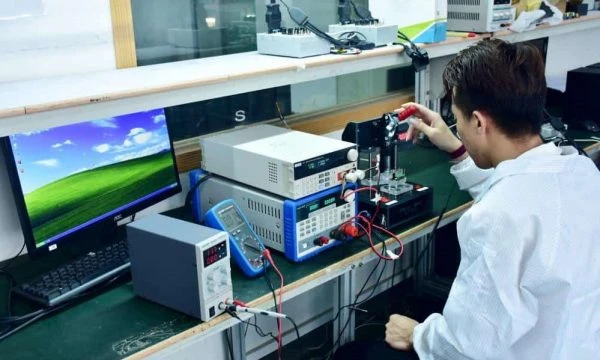
This guide is written for electronics engineers, reliability managers, and procurement leads responsible for sourcing PCBs used in high-shock environments or validation hardware. Specifically, it addresses the manufacturing requirements for drop test instrumentation—the specialized sensor boards, data acquisition (DAQ) units, and instrumented prototypes used to measure mechanical shock during product development.
When you are building the hardware that validates other hardware, failure is not an option. If your instrumentation PCB fails during a 1500G shock event, you lose critical data and waste expensive prototype cycles. This playbook focuses on the specific printed circuit board (PCB) specifications, material choices, and assembly techniques required to ensure your measurement systems yield accurate, repeatable data without becoming the failure point themselves.
We move beyond basic IPC standards to discuss the practical realities of high-G force survivability. You will find actionable checklists for specifying rigid and flex circuits that host accelerometers and strain gauges, along with a risk assessment framework to prevent common failure modes like pad cratering and trace fracturing.
At APTPCB (APTPCB PCB Factory), we understand that the integrity of your test data depends entirely on the integrity of the board capturing it. This guide helps you bridge the gap between a theoretical test plan and a physical, manufacturable PCB that survives the drop.
When drop test instrumentation is the right approach (and when it isn’t)
Understanding when to invest in specialized instrumentation PCBs versus standard prototypes is critical for budget and timeline management.
It is the right approach when:
- You are validating handheld devices: Smartphones, scanners, and remote controls require precise quantification of impact forces to predict field failure rates.
- You need to correlate simulation with reality: Finite Element Analysis (FEA) models are only as good as their inputs. Physical drop test instrumentation provides the empirical data needed to tune these models.
- You are testing high-mass components: Large BGAs or heavy inductors are prone to solder joint fatigue. Instrumented boards with strain gauges near these components are essential to measure board flexure.
- Regulatory compliance is mandatory: Industries like aerospace and automotive often require documented evidence of shock survivability (e.g., MIL-STD-810), necessitating robust data logging hardware.
It might not be the right approach when:
- The product is stationary: For server racks or desktop units that rarely move, standard vibration testing may be more relevant than high-G drop instrumentation.
- Cost is the only driver: Instrumented test boards are expensive due to the need for high-speed sensors and robust build qualities. If a simple pass/fail functional test suffices, full instrumentation may be overkill.
- The design is in early alpha: If the mechanical enclosure is still changing drastically, precise instrumentation data may be obsolete before it is analyzed.
Specs & requirements (before quoting)
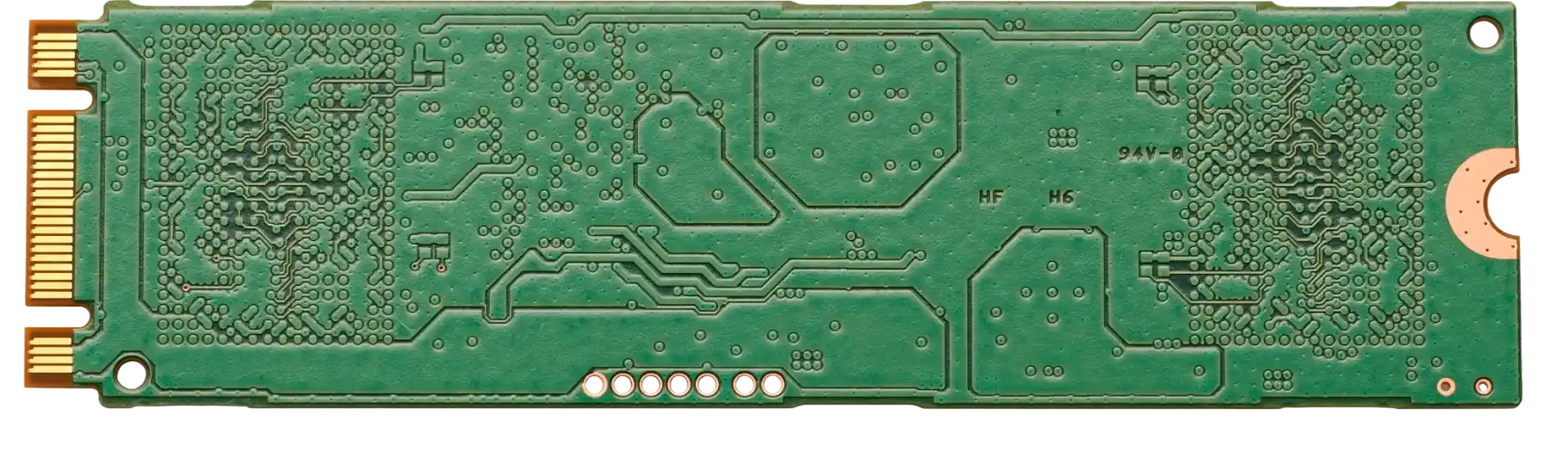
To get an accurate quote and a reliable board, you must move beyond generic Gerber files. Drop test instrumentation requires specific callouts to ensure signal integrity during the chaotic noise of an impact event.
Base Material (Laminate) Selection:
- Specify High-Tg FR4 (Tg > 170°C) as a baseline to maintain stiffness.
- For high-speed DAQ boards, consider low-loss materials (like Rogers or Megtron) to preserve the rise time of shock pulses.
- Target: Tg ≥ 170°C, Td ≥ 340°C.
Copper Foil Type:
- Request "Reverse Treated Foil" (RTF) or "Very Low Profile" (VLP) copper to improve adhesion and reduce signal loss, but more importantly, consider rolled annealed copper for flex sections to withstand dynamic flexing.
- Target: Adhesion strength > 1.0 N/mm.
Solder Mask Webbing:
- Ensure sufficient solder mask dams between pads, especially for fine-pitch accelerometers (LGA/BGA packages).
- Target: Minimum 3-4 mil solder mask dam to prevent solder bridging during the shock of the drop.
Surface Finish:
- ENIG (Electroless Nickel Immersion Gold): Preferred for flatness, which is critical for mounting small MEMS accelerometers.
- OSP (Organic Solderability Preservative): Sometimes preferred for drop reliability of the solder joint itself (nickel in ENIG can be brittle), but has a shorter shelf life.
- Target: ENIG for instrumentation sensors; OSP for the DUT (Device Under Test) if studying solder joint failure.
Via Structure and Plugging:
- Open vias near BGA pads can steal solder and weaken joints.
- Requirement: VIPPO (Via-in-Pad Plated Over) or fully plugged and capped vias for any high-stress component areas.
- Target: IPC-4761 Type VII filled vias.
Strain Gauge Lands:
- If the board will host strain gauges, define specific areas free of solder mask and silk screen to allow for proper bonding of the gauge.
- Target: Defined "keep-out" zones in the solder mask layer for gauge placement.
Trace Routing and Geometry:
- Avoid 90-degree corners on traces carrying critical sensor data; use 45-degree or curved routing to reduce stress concentration points.
- Target: Teardrops on all via-to-trace transitions to prevent cracking during board flexure.
Mechanical Mounting Holes:
- Instrumentation boards must be rigidly mounted to the fixture.
- Target: Non-plated through holes (NPTH) with sufficient clearance for screw heads and washers, ensuring no copper is crushed during tightening.
Component Securing (Underfill/Staking):
- While this is an assembly step, the PCB must be designed to accept it.
- Target: Designate "underfill flow" areas around large BGAs or heavy connectors in the assembly drawing.
Test Points:
- Robust test points are needed for oscilloscope probes.
- Target: Reinforced test loops or surface pads that can accept soldered wires without lifting off the board during a drop.
Impedance Control:
- Shock sensors often output high-frequency analog signals or high-speed digital data (I2C/SPI/LVDS).
- Target: ±10% impedance control on sensor data lines.
Environmental Coating:
- If the drop test is combined with humidity or temperature cycling.
- Target: Specification for conformal coating compatibility (masking requirements for connectors).
Hidden risks (root causes & prevention)
Scaling from a single prototype to a batch of drop test instrumentation boards introduces risks that are often invisible in standard manufacturing.
1. Pad Cratering (The Silent Killer)
- Risk: The resin beneath the copper pad fractures during the high G-force of a drop, disconnecting the component while the solder joint remains intact.
- Why it happens: Excessive board flexure transfers stress to the rigid solder joint, pulling the copper pad away from the laminate.
- How to detect: Cross-section analysis or dye-and-pry testing after a drop event. Electrical testing may show intermittent failures.
- Prevention: Use "Non-Solder Mask Defined" (NSMD) pads to reduce stress, and add teardrops to all pad-trace junctions.
2. Intermetallic Compound (IMC) Brittleness
- Risk: Solder joints shatter upon impact.
- Why it happens: Excessive gold thickness in ENIG finishes or prolonged reflow times create a thick, brittle IMC layer that cannot absorb shock energy.
- How to detect: Shear testing of components; failure occurs at the IMC interface rather than in the bulk solder.
- Prevention: Strictly control gold thickness (2-3 micro-inches) and optimize reflow profiles to minimize thermal excursion.
3. Ceramic Capacitor Cracking
- Risk: MLCCs (Multi-Layer Ceramic Capacitors) crack, causing short circuits or open circuits.
- Why it happens: Board bending during the drop puts the rigid ceramic body under tension.
- How to detect: X-ray inspection often misses hairline cracks; functional failure is the usual indicator. Acoustic microscopy is the gold standard for detection.
- Prevention: Use "soft termination" or "flex-term" capacitors. Orient capacitors parallel to the direction of minimum flexure.
4. Connector Discontinuity
- Risk: Data cables or board-to-board connectors momentarily disconnect during impact (chatter).
- Why it happens: The spring force of the contact is overcome by the G-force.
- How to detect: Monitor signal lines for microsecond-level interruptions during the drop test.
- Prevention: Specify high-retention connectors, locking mechanisms, or solder-down connectors instead of headers.
5. Trace Fracture at Vias
- Risk: Internal traces break where they connect to via barrels.
- Why it happens: Z-axis expansion or board twisting shears the copper connection.
- How to detect: Resistance changes in daisy-chain test structures.
- Prevention: Use larger annular rings and ensure high-quality copper plating (Class 3 plating thickness).
6. Sensor Saturation/Clipping
- Risk: The accelerometer hits its maximum range (rail-to-rail) and fails to record the peak G-force.
- Why it happens: Underspecified sensor range (e.g., using a 50G sensor for a 500G event).
- How to detect: Flat-topped waveforms in the data log.
- Prevention: Select sensors with a range 20-50% higher than the expected peak shock.
7. Battery Disconnection
- Risk: Battery contacts bounce, causing the instrumentation to reset mid-drop.
- Why it happens: Spring contacts are insufficient for high-G loads.
- How to detect: Device resets or corrupted data files.
- Prevention: Use soldered battery tabs or extremely high-force battery holders.
8. Delamination of Rigid-Flex Interfaces
- Risk: The rigid and flex layers separate.
- Why it happens: Shear forces at the transition zone during impact.
- How to detect: Visual inspection or impedance discontinuities.
- Prevention: Use "bikini coverlay" or graduated stiffeners to smooth the transition from rigid to flex.
9. Data Write Latency
- Risk: Data is lost because the write speed to flash memory is too slow to capture the high-speed transient.
- Why it happens: Poor selection of memory interface or controller.
- How to detect: Gaps in data logs.
- Prevention: Use high-speed circular buffers in RAM and write to non-volatile storage post-event.
10. Strain Gauge Debonding
- Risk: The strain gauge peels off the PCB.
- Why it happens: Poor surface preparation or incorrect adhesive.
- How to detect: Erratic or drifting strain readings.
- Prevention: Follow strict surface preparation protocols (abrading, cleaning) and use adhesives rated for the expected temperature and shock range.
Validation plan (what to test, when, and what “pass” means)
Before deploying your instrumentation into a full qualification campaign, you must validate the instrumentation itself.
Baseline Noise Floor Measurement
- Objective: Ensure the electronics are quiet enough to detect subtle vibrations.
- Method: Record sensor data while the board is stationary on a vibration isolation table.
- Acceptance: Noise floor < 1% of the measurement range.
Static Calibration Check
- Objective: Verify sensor accuracy at 1G.
- Method: Flip the board on all three axes (+X, -X, +Y, -Y, +Z, -Z) and measure gravity.
- Acceptance: ±1G reading within sensor tolerance (typically ±2%).
Sine Sweep Vibration Test
- Objective: Identify resonant frequencies of the instrumentation board itself.
- Method: Sweep from 10Hz to 2000Hz at low G.
- Acceptance: No resonances within the bandwidth of interest for the drop test.
Shock Calibration (Low Level)
- Objective: Verify dynamic response.
- Method: Subject the board to a controlled low-G shock (e.g., 50G) on a shock table.
- Acceptance: Measured peak matches the reference accelerometer within ±5%.
High-G Survivability Test
- Objective: Ensure the instrumentation survives the maximum expected drop.
- Method: Drop the instrumentation board (without the DUT if possible) at 1.5x the target G-force.
- Acceptance: Device remains functional, no mechanical damage, data is successfully logged.
Daisy Chain Continuity Monitoring
- Objective: Validate PCB interconnect reliability.
- Method: Use a specialized daisy-chain PCB design and monitor resistance during drops.
- Acceptance: No resistance spikes > 1000 ohms for duration > 1 microsecond (IPC-9701 standard).
Dye and Pry Analysis (Destructive)
- Objective: Check for pad cratering or solder cracks on a sample unit.
- Method: Inject dye under components, pry them off, and inspect for dye penetration.
- Acceptance: No dye penetration into the solder joint fracture interface (indicates pre-existing cracks).
Cross-Sectioning (Micro-section)
- Objective: Verify via quality and plating integrity.
- Method: Slice the PCB through critical vias and inspect under a microscope.
- Acceptance: No barrel cracks, knee cracks, or plating separation.
Thermal Cycling Pre-Conditioning
- Objective: Simulate aging before drop testing (optional but recommended).
- Method: Cycle from -40°C to +85°C for 100 cycles.
- Acceptance: No degradation in electrical performance before the drop test begins.
Humidity Bias Testing PCB Verification
- Objective: Ensure the board can withstand environmental chambers if drops are performed in humid conditions.
- Method: 85°C / 85% RH with bias voltage applied.
- Acceptance: No dendritic growth or insulation resistance failure.
Data Integrity Check
- Objective: Verify data storage reliability under shock.
- Method: Write a known pattern to memory during a drop event.
- Acceptance: Read back matches the written pattern 100%.
Fixture Fit Check
- Objective: Ensure the board mounts flat without induced stress.
- Method: Use pressure-sensitive film between the PCB and the fixture.
- Acceptance: Uniform pressure distribution; no high spots that could cause pre-loading.
Supplier checklist (RFQ + audit questions)
When sourcing PCBs for drop test instrumentation, standard consumer-grade quality is insufficient. Use this checklist to vet suppliers like APTPCB.
RFQ Inputs (What you send)
- Material Spec: Explicitly state Tg, Td, and brand preference (e.g., Isola 370HR) if necessary.
- Stackup Drawing: Define copper weights and dielectric thicknesses to control stiffness.
- Drill Chart: Clearly identify filled/capped vias vs. standard vias.
- Surface Finish: Specify ENIG thickness range (e.g., 2-4 micro-inches).
- Impedance Requirements: List target impedances and reference layers.
- Solder Mask: Define "keep-out" areas for strain gauges or underfill.
- Tolerances: Tighter outline tolerances (±0.1mm) for precise fixture fitting.
- Testing: Request 100% Net List electrical test.
- Marking: Request serialization for traceability of each board.
- IPC Class: Specify IPC Class 2 or Class 3 (Class 3 recommended for instrumentation).
Capability Proof (What they must show)
- Via Filling: Can they demonstrate reliable VIPPO (Via-in-Pad) processes?
- Fine Pitch: Capability for 0.4mm or 0.35mm pitch BGAs (common for MEMS sensors).
- Rigid-Flex: Experience with dynamic flex applications if using flex tails.
- Controlled Impedance: Do they provide TDR (Time Domain Reflectometry) reports?
- Cleanliness: Ability to meet ionic cleanliness standards (critical for high-impedance sensors).
- Cross-Sectioning: Do they perform micro-sections on every production panel?
- Certifications: ISO 9001 is a minimum; IATF 16949 is a plus for reliability.
- Material Stock: Do they stock high-reliability laminates to avoid lead time delays?
Quality System & Traceability
- Lot Control: Can they trace a specific board back to the raw material batch?
- Solderability Testing: Do they perform solderability tests on the finish?
- AOI (Automated Optical Inspection): Is AOI used on inner layers, not just outer layers?
- Warp/Twist: Do they measure and report bow and twist (critical for sensor flatness)?
- X-Ray: Availability of X-ray for checking BGA assembly (if they offer PCBA).
- NCMR: What is their process for Non-Conforming Material Reports?
Change Control & Delivery
- PCN (Process Change Notification): Will they notify you before changing materials or chemistry?
- EQ (Engineering Query) Process: Do they review data and ask questions before starting (a good sign)?
- Packaging: Do they use vacuum-sealed, ESD-safe packaging with desiccant?
- Lead Time: Can they support quick-turn prototypes (3-5 days) and scale to production?
- DFM Support: Do they offer a detailed Design for Manufacturing review prior to fabrication?
- Shipping: Do they use shock-watch labels on shipping boxes for sensitive assemblies?
Decision guidance (trade-offs you can actually choose)
Engineering is the art of compromise. Here are the trade-offs specific to drop test instrumentation.
Rigid vs. Rigid-Flex
- If you prioritize signal integrity and compactness: Choose Rigid-Flex. It eliminates connectors (a failure point) and allows sensors to be placed in tight spaces.
- If you prioritize cost and speed: Choose Rigid PCBs with cables. It is cheaper and faster to fabricate, but cables introduce noise and mechanical weakness.
ENIG vs. OSP Surface Finish
- If you prioritize sensor flatness and wire bonding: Choose ENIG. It provides a flat, conductive surface ideal for MEMS and contact pads.
- If you prioritize solder joint drop reliability: Choose OSP. It eliminates the brittle nickel-gold interface, often resulting in better drop test survival for BGAs.
Underfill vs. Corner Bonding
- If you prioritize maximum survivability: Choose Full Underfill. It distributes stress across the entire component area.
- If you prioritize reworkability: Choose Corner Bonding (Staking). It secures the component but allows for easier removal if the sensor fails.
Thick vs. Thin PCB
- If you prioritize board stiffness (less flexing): Choose a Thicker PCB (2.4mm or 3.2mm). This reduces strain on components but increases mass (which affects the drop dynamics).
- If you prioritize mimicking the end product: Choose the Standard Thickness (1.6mm or 1.0mm). This ensures the test represents reality, even if it risks component failure.
Embedded Capacitance vs. Discrete Caps
- If you prioritize power integrity during shock: Choose Embedded Capacitance materials. They provide instant charge delivery without the risk of capacitor cracking.
- If you prioritize cost: Choose Discrete MLCCs, but use soft-termination types and careful placement.
Connector vs. Soldered Wires
- If you prioritize reliability: Choose Directly Soldered Wires with strain relief. Connectors are the most common failure point in drop tests.
- If you prioritize modularity: Choose Locking Connectors (e.g., Molex Pico-Lock), but validate them separately.
FAQ
Q: What is the best IPC standard for drop test boards? A: IPC-6012 Class 3 is the baseline for high reliability. For the testing methodology itself, refer to JEDEC JESD22-B111, which is the industry standard for board-level drop test qualification.
Q: Can I use standard FR4 for high-G testing? A: Yes, standard FR4 is commonly used, but "High-Tg" FR4 is recommended to prevent pad lifting during soldering and to maintain mechanical properties at temperature extremes.
Q: How do I prevent cables from affecting the drop test results? A: Cables add mass and drag. Use fine-gauge wire (30-32 AWG) for sensor signals and ensure they are routed to a "strain relief" point on the fixture, not pulling directly on the PCB.
Q: What is an "alt accelerated life test" in this context? A: An alt accelerated life test (Accelerated Life Testing) goes beyond simple drops. It combines vibration, temperature cycling, and voltage bias to precipitate failures faster. Your instrumentation PCB must be robust enough to survive these combined stresses, not just the impact.
Q: Should I use lead-free or leaded solder for instrumentation? A: While consumer products are lead-free (SAC305), many reliability engineers prefer leaded solder (SnPb) for test instrumentation because it is more ductile and less prone to brittle fracture during shock. However, check regulatory compliance for your region.
Q: How does humidity bias testing pcb requirements affect material choice? A: If your drop testing happens in a humid environment, you must ensure the PCB material has a low Moisture Absorption rate (e.g., <0.15%) and is free of ionic contamination to prevent electrochemical migration (dendrites) under bias.
Q: What is the role of teardrops in drop test PCBs? A: Teardrops add copper at the junction of the trace and the pad/via. This reinforcement prevents the trace from cracking at the connection point when the board flexes during impact. They are mandatory for high-reliability designs.
Q: Can APTPCB help with the layout of strain gauges? A: While we are a manufacturer, our DFM team can review your layout to ensure the "keep-out" zones for strain gauges are correctly defined in the solder mask layer, ensuring a clean surface for bonding.
Related pages & tools
- Rigid-Flex PCB Capabilities – Essential for instrumentation that must fit into complex, compact housings without reliable connectors.
- Testing & Quality Assurance – Explore how we validate manufacturing quality, including cross-sectioning and electrical testing.
- BGA & Fine Pitch Assembly – Critical info for placing the MEMS accelerometers used in drop testing.
- DFM Guidelines – Design rules to ensure your robust instrumentation board is actually manufacturable.
- High Speed PCB – Requirements for Data Acquisition (DAQ) boards that process high-frequency shock signals.
Request a quote
Ready to build instrumentation that survives the test? Request a Quote from APTPCB today. Our engineering team will perform a full DFM review to identify potential reliability risks before production begins.
To get the most accurate DFM and pricing, please provide:
- Gerber Files: RS-274X format.
- Fabrication Drawing: Including stackup, drill chart, and special notes (e.g., "Class 3 Plating").
- Assembly Drawing: If PCBA is required, clearly mark underfill locations and sensor orientation.
- Bill of Materials (BOM): With manufacturer part numbers for all critical sensors and connectors.
- Test Requirements: Specify if you need TDR reports or specific ionic cleanliness levels.
Conclusion
Successful drop test instrumentation is about more than just capturing data; it is about trusting that data. By selecting the right materials, reinforcing critical features like vias and pads, and validating the manufacturing process, you ensure that your test equipment is never the weak link. Whether you are validating a new smartphone or an aerospace component, the PCB is the foundation of your reliability strategy. Follow the specs, manage the risks, and partner with a manufacturer who understands the physics of failure.