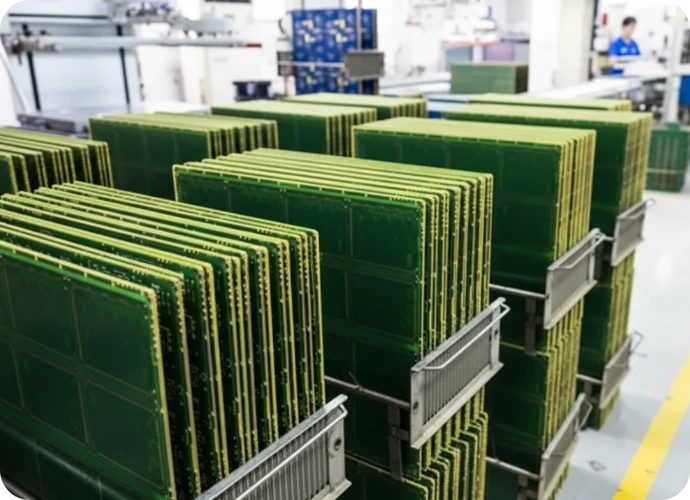
Dual Sim Emergency Communicator PCB

dual sim emergency communicator pcb: what this playbook covers (and who it’s for)

This playbook is designed for hardware engineers, product managers, and procurement leads tasked with bringing a dual sim emergency communicator pcb to mass production. In the world of critical safety devices—whether for lone worker safety, elderly monitoring, or tactical response—redundancy is not a luxury; it is a baseline requirement. The dual SIM architecture ensures that if one network fails, the device seamlessly switches to another, maintaining the lifeline when it matters most.

However, integrating dual cellular paths alongside GPS, Bluetooth, and potentially health sensors creates a dense, interference-prone environment. This guide moves beyond basic datasheet specs to address the practical realities of manufacturing these complex boards. You will find actionable criteria for material selection, a breakdown of hidden risks that cause field failures, and a rigorous validation plan to ensure every unit performs in harsh conditions.

We also provide a buyer-ready checklist to help you audit suppliers effectively. Whether you are working with APTPCB (APTPCB PCB Factory) or another vendor, this framework ensures you ask the right questions to secure a reliable supply chain. The goal is to help you transition from a functional prototype to a scalable, defect-free product without the typical "trial and error" delays.

When dual sim emergency communicator pcb is the right approach (and when it isn’t)

Understanding the scope of this guide requires first establishing when a dual SIM architecture is strictly necessary versus when a simpler design might suffice.

It is the right approach when:

  • Network Redundancy is Critical: The device operates in remote or variable signal areas where a single carrier cannot guarantee 100% uptime.
  • Cross-Border Roaming: The device tracks assets or personnel moving across international borders, requiring different local carriers to avoid exorbitant roaming charges or signal loss.
  • Mission-Critical Data: The application involves life-safety data, such as a blood oxygen emergency pcb module transmitting vital signs, where packet loss is unacceptable.
  • Anti-Jamming/Security: In security applications, having a backup frequency or carrier adds a layer of resilience against intentional signal disruption.

It might not be the right approach when:

  • Cost is the Primary Driver: Dual SIM adds component cost (extra slot, complex routing, potentially more expensive modem) and PCB real estate.
  • Ultra-Miniature Form Factor: If the device is the size of a coin, fitting two physical SIMs (even nano-SIMs) and the associated routing might be physically impossible without moving to expensive eSIM solutions or HDI technology.
  • Stationary Urban Use: If the device is fixed in a location with excellent coverage from a single major carrier, the second SIM adds complexity with diminishing returns.

Specs & requirements (before quoting)

Specs & requirements (before quoting)

Once you have determined that a dual sim emergency communicator pcb is the correct path, you must freeze specific requirements to get an accurate quote and DFM (Design for Manufacturability) review.

  • Base Material & Tg: Specify FR-4 with High Tg (Tg ≥ 170°C). Emergency devices often sit in hot vehicles or run at high power during transmission. High Tg prevents pad cratering and barrel cracks during thermal stress.
  • Dielectric Constant (Dk) Stability: For RF lines (LTE/5G/GPS), request materials with stable Dk (e.g., Isola 370HR or Panasonic Megtron for higher frequencies) to ensure consistent impedance.
  • Stackup & Impedance Control: Define specific impedance targets: 50Ω ±5% for RF antenna traces, 90Ω ±10% for USB differential pairs, and 100Ω for any high-speed digital interfaces.
  • Surface Finish: Mandate ENIG (Electroless Nickel Immersion Gold). It offers excellent planarity for fine-pitch modem modules and SIM connectors, and better corrosion resistance than OSP for devices used outdoors.
  • Copper Weight: Standard 1oz (35µm) is usually sufficient, but if the device includes a high-power siren or strobe, specify 2oz on power layers to manage current density and heat.
  • Minimum Trace/Space: Aim for 4/4 mil or 5/5 mil to keep costs standard. If you are integrating a body cam low power pcb circuit with high-density BGAs, you may need 3/3 mil, which pushes into HDI territory.
  • Via Types: Clearly state if you need blind or buried vias. For dual SIM routing in tight spaces, via-in-pad (VIPPO) might be necessary but will increase cost.
  • Cleanliness Standards: Specify IPC-6012 Class 2 as a baseline, or Class 3 for life-critical medical/aerospace applications. Require ionic contamination testing to prevent electrochemical migration (dendrite growth) in humid environments.
  • Soldermask Color: Matte Green or Matte Black. Matte finishes reduce glare during automated optical inspection (AOI), reducing false failure flags during assembly.
  • SIM Slot Mechanics: Define the specific SIM connector part number early. Footprints vary wildly. Specify if it needs to be a "ruggedized" connector with extra hold-down tabs for drop resistance.
  • Thermal Management: Define required thermal vias under the modem and power management IC (PMIC). Specify if a heatsink paste or thermal pad area needs to be kept clear of soldermask.
  • Panelization: Request V-score or tab-routing based on your enclosure design. If the PCB has overhanging components (like a side-entry SIM tray), the panel layout must accommodate this to prevent damage during depanelization.

Hidden risks (root causes & prevention)

Defining requirements is step one; anticipating where those requirements fail during mass production is step two.

  1. Risk: RF Desense from SIM Clocks

    • Why it happens: The clock lines for the SIM cards are high-frequency digital signals. If routed too close to the LTE or GPS antenna feedlines, they generate harmonic noise that "deafens" the receiver.
    • Detection: Poor receiver sensitivity (TIS) in specific bands during prototype testing.
    • Prevention: Buried routing for SIM clock lines sandwiched between ground planes. Add 10-33pF filter capacitors close to the SIM socket.
  2. Risk: SIM Card Mechanical Disconnects

    • Why it happens: Emergency communicators are dropped. The inertia of the SIM card can compress the springs momentarily, causing a reset or "Insert SIM" error.
    • Detection: Drop testing (1.5m to concrete) while the device is active/streaming.
    • Prevention: Use "locking" or "tray-based" SIM holders rather than "push-push" types which can unlatch on impact. Orient the holder so the drop force doesn't align with the unlatching mechanism.
  3. Risk: Power Starvation During Transmission

    • Why it happens: Cellular modems draw high current bursts (2A+). If traces are too thin or vias too few, voltage droop occurs, causing the modem to reset.
    • Detection: Oscilloscope monitoring of the V_BATT rail during max power transmission bursts.
    • Prevention: Use wide power planes, not traces. Place large tantalum or polymer capacitors (low ESR) immediately adjacent to the modem power pins.
  4. Risk: Thermal Throttling

    • Why it happens: Dual SIM implies active cellular connection. Continuous searching for signal generates heat. If the PCB cannot dissipate this, the modem firmware throttles performance.
    • Detection: Thermal chamber testing at max operating temperature.
    • Prevention: Design a continuous ground plane on the layer beneath the modem. Use dense thermal via stitching to transfer heat to the chassis or a heatsink.
  5. Risk: Electrochemical Migration (ECM)

    • Why it happens: Emergency devices are used in rain/sweat. Flux residues + humidity + voltage = dendrite growth causing shorts.
    • Detection: Temperature-Humidity-Bias (THB) testing.
    • Prevention: Require strict washing processes at the fab. Specify "No-Clean" flux only if the process is validated; otherwise, require full wash and ionic contamination testing.
  6. Risk: Component Warpage (PoP/BGA)

    • Why it happens: Thin PCBs (0.8mm or 1.0mm) used for weight reduction warp during reflow, causing open joints on fine-pitch BGAs.
    • Detection: Shadow Moiré measurement or high rates of "head-in-pillow" defects.
    • Prevention: Balance copper distribution on all layers. Use a higher Tg material. Use reflow carriers/pallets during assembly.
  7. Risk: Antenna Detuning

    • Why it happens: The plastic enclosure or battery proximity shifts the antenna frequency. PCB revision changes (ground plane shape) can also detune it.
    • Detection: VNA measurements of the assembled unit, not just the bare board.
    • Prevention: Reserve a "Pi-network" (series-shunt-series) matching circuit on the antenna line to allow tuning adjustments without respining the PCB.
  8. Risk: Supply Chain Counterfeits

    • Why it happens: Modems and high-end PMICs are targets for gray market recycling.
    • Detection: Visual inspection of markings, X-ray comparison with "Golden Sample".
    • Prevention: Buy only from authorized distributors. Require traceability documentation from the PCBA partner.
  9. Risk: Battery Life Degradation

    • Why it happens: High leakage current on the PCB due to poor isolation or component choice drains the battery even in standby.
    • Detection: Micro-amp precision current measurement in sleep mode.
    • Prevention: rigorous selection of low-leakage capacitors and ESD diodes. Clean PCB surface to prevent leakage paths.
  10. Risk: Regulatory Failure (EMC)

    • Why it happens: Unshielded switching regulators radiate noise that exceeds FCC/CE limits.
    • Detection: Pre-compliance EMC scanning.
    • Prevention: Layout switch-mode power supplies with tight loops. Use shielded inductors. Reserve space for shielding cans over noisy sections.

Validation plan (what to test, when, and what “pass” means)

Validation plan (what to test, when, and what “pass” means)

To mitigate the risks above, a structured validation plan is essential before approving the full production run of your dual sim emergency communicator pcb.

  1. Objective: Verify Impedance Control

    • Method: TDR (Time Domain Reflectometry) on test coupons and actual PCB traces (RF and USB).
    • Acceptance Criteria: Measured impedance must be within ±10% (or ±5% for RF) of the design target.
  2. Objective: Confirm Thermal Reliability

    • Method: Thermal Shock Test. -40°C to +85°C, 100 cycles, 30-minute dwell.
    • Acceptance Criteria: No delamination, no via cracks, change in resistance <10%.
  3. Objective: Validate RF Performance

    • Method: Total Isotropic Sensitivity (TIS) and Total Radiated Power (TRP) in an anechoic chamber.
    • Acceptance Criteria: Values must meet carrier certification requirements (e.g., PTCRB). No degradation when switching between SIM 1 and SIM 2.
  4. Objective: Assess Mechanical Durability

    • Method: Drop Test. 6 faces, 4 corners from 1.2m onto steel/concrete.
    • Acceptance Criteria: Device remains functional. SIM card does not dislodge. No BGA solder fractures.
  5. Objective: Check Power Integrity

    • Method: Transient load testing. Step load from 0A to 2A (simulating TX burst).
    • Acceptance Criteria: Voltage ripple <50mV. No brownout resets.
  6. Objective: Verify Assembly Quality

    • Method: X-Ray Inspection (AXI) of Modem and BGA components.
    • Acceptance Criteria: Voiding <25% of pad area. No bridging or insufficient solder.
  7. Objective: Ensure Cleanliness

    • Method: Ionic Contamination Test (ROSE test).
    • Acceptance Criteria: <1.56 µg/cm² NaCl equivalent (standard) or stricter based on specific industry requirements.
  8. Objective: Functional Logic

    • Method: Automated Functional Test (FCT). Cycle SIM switching 500 times.
    • Acceptance Criteria: 100% successful switch rate. No logic lockups.
  9. Objective: Environmental Protection

    • Method: Salt Mist Spray (if applicable for marine/outdoor use).
    • Acceptance Criteria: No corrosion on exposed contacts (gold fingers/USB).
  10. Objective: Battery Safety

    • Method: Short circuit and overcharge protection test on the PCBA level.
    • Acceptance Criteria: Protection circuit trips correctly; no smoke or fire.
  11. Objective: Signal Integrity for Sensors

    • Method: Noise floor measurement on sensor lines (e.g., for blood oxygen emergency pcb analog front ends).
    • Acceptance Criteria: Noise levels below sensor datasheet threshold for accurate reading.
  12. Objective: Firmware Flash Reliability

    • Method: Mass flash programming verification.
    • Acceptance Criteria: 100% verify pass. Checksum matches.

Supplier checklist (RFQ + audit questions)

Use this checklist when engaging with APTPCB or any manufacturing partner to ensure they are equipped to handle the complexity of this project.

RFQ Inputs (What you send)

  • Gerber Files (RS-274X): Including all copper, soldermask, silk, drill, and paste layers.
  • IPC Netlist: For electrical continuity verification.
  • Stackup Drawing: Specifying material type (e.g., Isola 370HR), layer order, copper thickness, and impedance requirements.
  • Drill Chart: Defining hole sizes, tolerances, and plating status (PTH/NPTH).
  • Pick & Place File (XY Data): For assembly quoting.
  • BOM (Bill of Materials): With approved manufacturer part numbers (AML) and acceptable alternates.
  • Test Requirements: Specific instructions for ICT/FCT fixtures.
  • Volume & EAU: Estimated Annual Usage to determine pricing tiers.
  • Special Processes: Note any requirements for conformal coating, potting, or selective soldering.
  • Packaging Specs: ESD trays, vacuum sealing, humidity indicator cards.

Capability Proof (What they must show)

  • Impedance Control Reports: Examples of TDR reports from previous similar runs.
  • Minimum Feature Size: Proof of capability for your trace/space (e.g., 3/3 mil) and BGA pitch (e.g., 0.4mm).
  • RF Experience: Case studies or examples of manufacturing cellular/GPS devices.
  • Rigid-Flex Capability: If your design uses rigid-flex, ask for their specific equipment list for coverlay alignment.
  • Via-in-Pad: Capability for resin plugging and capping (VIPPO) if your design requires it.
  • Certifications: ISO 9001 is mandatory; ISO 13485 (Medical) or IATF 16949 (Auto) is a bonus for reliability.

Quality System & Traceability

  • AOI Implementation: Is AOI used on 100% of layers (inner and outer) and 100% of PCBA?
  • X-Ray Availability: Do they have in-house 3D X-Ray for BGA inspection?
  • Material Certificates: Can they provide CoC (Certificate of Conformance) for the raw laminate?
  • Traceability Level: Can they trace a specific board serial number to the date code of the components used?
  • SPI (Solder Paste Inspection): Is 3D SPI used to prevent solder volume issues before placement?
  • Rework Standards: Do they follow IPC-7711/7721 for rework, or is rework forbidden for this project?

Change Control & Delivery

  • PCN Policy: Will they notify you before changing any raw material or sub-supplier?
  • EQ Handling: What is their process for Engineering Questions (EQ)? Do they offer DFM suggestions?
  • Buffer Stock: Are they willing to hold finished goods inventory (Kanban) for rapid delivery?
  • Failure Analysis: If a field failure occurs, what is their timeline and process for a root cause analysis report (8D)?
  • Lead Time: Clear definition of standard vs. quick-turn lead times.
  • Logistics: Experience shipping to your specific target countries (handling customs/duties).

Decision guidance (trade-offs you can actually choose)

Engineering is the art of compromise. Here are the trade-offs specific to dual sim emergency communicator pcb designs.

  • If you prioritize Signal Integrity over Cost: Choose Rogers or Megtron materials for the RF layers.
    • Otherwise: Use standard FR-4 and accept slightly higher signal loss, compensating with better antenna placement or amplification.
  • If you prioritize Compact Size over Serviceability: Choose eSIM + Nano SIM or Dual eSIM.
    • Otherwise: Stick to dual physical Nano-SIM slots, which are user-replaceable but take up significantly more board space.
  • If you prioritize Battery Life over Data Speed: Choose NB-IoT / Cat-M1 modems.
    • Otherwise: Choose Cat-1 or Cat-4 LTE for video/voice capability, accepting higher power consumption and thermal challenges.
  • If you prioritize Durability over Thickness: Choose Rigid PCB with thicker core.
    • Otherwise: Choose Rigid-Flex to fold the device into a small housing, but accept higher manufacturing costs and fragility during assembly.
  • If you prioritize Cost over Latency: Choose Single Modem with Dual SIM Switch.
    • Otherwise: Choose Dual Active Modems (DSDA) for instant failover, doubling the modem cost and power budget.
  • If you prioritize Field Reliability over Production Yield: Choose Underfill for BGAs.
    • Otherwise: Skip underfill to save process time, but risk solder fatigue in drop scenarios.

FAQ

Q: Can I put SIM slots on opposite sides of the PCB to save space? A: Yes, but this complicates assembly. It requires a "double-sided reflow" process where heavy components on the first side must be glued or light enough not to fall off during the second pass.

Q: How does impedance control affect the dual SIM function? A: Impedance control primarily affects the antenna lines (RF). If the trace impedance mismatches the antenna (usually 50Ω), signal reflects back, reducing range and increasing power consumption, which can cause dropped calls in emergencies.

Q: What is the best surface finish for SIM contacts? A: Hard Gold is best for the actual contact fingers if they are part of the PCB (edge connector). For soldered SIM holders, ENIG is the standard choice for flatness and reliability.

Q: Do I need blind/buried vias for a dual SIM board? A: Not necessarily. If the board is large enough, through-hole vias work. However, for compact devices like a body cam low power pcb, blind vias are often needed to route dense signals without blocking inner layers.

Q: How do I prevent the "buzzing" noise in audio during transmission? A: This is TDMA noise. Use differential routing for audio lines, shield the audio section with a ground guard ring, and place ferrite beads on the microphone lines.

Q: Can APTPCB handle the sourcing of specific SIM connectors? A: Yes, turnkey assembly services include sourcing. You should specify the exact part number (e.g., from Molex or Amphenol) to ensure the footprint matches the PCB layout.

Q: What is the impact of integrating a blood oxygen sensor? A: A blood oxygen emergency pcb section requires clean analog power. You must separate the noisy digital ground of the modem from the quiet analog ground of the sensor to get accurate readings.

Q: How thick should the PCB be? A: 1.6mm is standard and most robust. 1.0mm or 0.8mm is common for handhelds but requires fixtures during assembly to prevent warping.

  • Communication Equipment PCB – Understand the broader requirements for telecom and network device manufacturing.
  • High Frequency PCB – Deep dive into materials and processes for RF, LTE, and GPS signal integrity.
  • Rigid-Flex PCB – Explore solutions for folding PCBs into compact emergency device enclosures.
  • Turnkey Assembly – Learn how to streamline sourcing, fabrication, and assembly into one workflow.
  • Testing & Quality – Details on ICT, FCT, and environmental testing protocols available at APTPCB.

Request a quote

Ready to move forward? APTPCB offers comprehensive DFM reviews to catch routing and stackup issues before they become costly scrap. When requesting your quote, please include your Gerber files, BOM, and a brief description of your testing requirements (especially for impedance and drop protection) to get the most accurate pricing and lead time.

Conclusion

Building a dual sim emergency communicator pcb is about more than just connecting components; it is about engineering trust. Every trace width, via placement, and material choice contributes to a device that must work when everything else fails. By adhering to strict requirements for impedance and thermal management, anticipating risks like RF desense and mechanical shock, and validating with a rigorous test plan, you secure the reliability your end-users depend on. Use the checklist provided to vet your suppliers and ensure that your production scales without compromising safety.