
Designing an interconnect board for Embedded Multi-die Interconnect Bridge (EMIB) interconnect board design quick answer (30 seconds)
Designing an interconnect board for Embedded Multi-die Interconnect Bridge (EMIB) applications requires strict adherence to high-density integration (HDI) standards and thermal management protocols.
- Trace Width/Space: Must support ultra-fine routing, typically requiring line width/space (L/S) below 10/10 µm for substrates or 40/40 µm for the main PCB interface.
- Material Selection: Use ultra-low loss materials (e.g., Megtron 7 or specialized ABF films) to minimize signal attenuation at high speeds.
- Warpage Control: Maintain board flatness within <0.1% (diagonal) to prevent bridge cracking or bump disconnects during reflow.
- Microvia Reliability: Aspect ratios should not exceed 0.8:1 for blind vias to ensure complete plating coverage and structural integrity.
- Thermal Management: Incorporate dense thermal via arrays or copper coins, as EMIB packages generate significant localized heat.
- Impedance Control: Strict ±5% tolerance is required for differential pairs routing through the bridge interface.
When Designing an interconnect board for Embedded Multi-die Interconnect Bridge (EMIB) interconnect board design applies (and when it doesn’t)
Understanding when to utilize EMIB-style interconnect architecture versus standard packaging is critical for cost and performance optimization.
When to use EMIB interconnect board design:
- Heterogeneous Integration: When combining dies from different process nodes (e.g., 10nm CPU + 28nm SerDes) into a single package.
- High-Bandwidth Memory (HBM): When applications require massive data throughput between the processor and memory stacks.
- Space Constraints: When the Z-height must be minimized, as EMIB eliminates the need for a full silicon interposer.
- Signal Integrity Demands: When routing signals over short distances with lower latency than standard organic substrates can provide.
When NOT to use it:
- Low-Cost Consumer Electronics: The fabrication cost and complexity exceed the budget for standard IoT or mobile devices.
- Low I/O Count: If standard wire-bonding or flip-chip BGA can handle the pin count, EMIB is overkill.
- Extreme High Power: While EMIB handles heat well, massive power ASICs might still require full silicon interposers or liquid cooling solutions not inherent to the board design itself.
- Rapid Prototyping: The lead time for EMIB-compatible substrates and tooling is significantly longer than standard rigid PCBs.
Designing an interconnect board for Embedded Multi-die Interconnect Bridge (EMIB) interconnect board design rules and specifications (key parameters and limits)
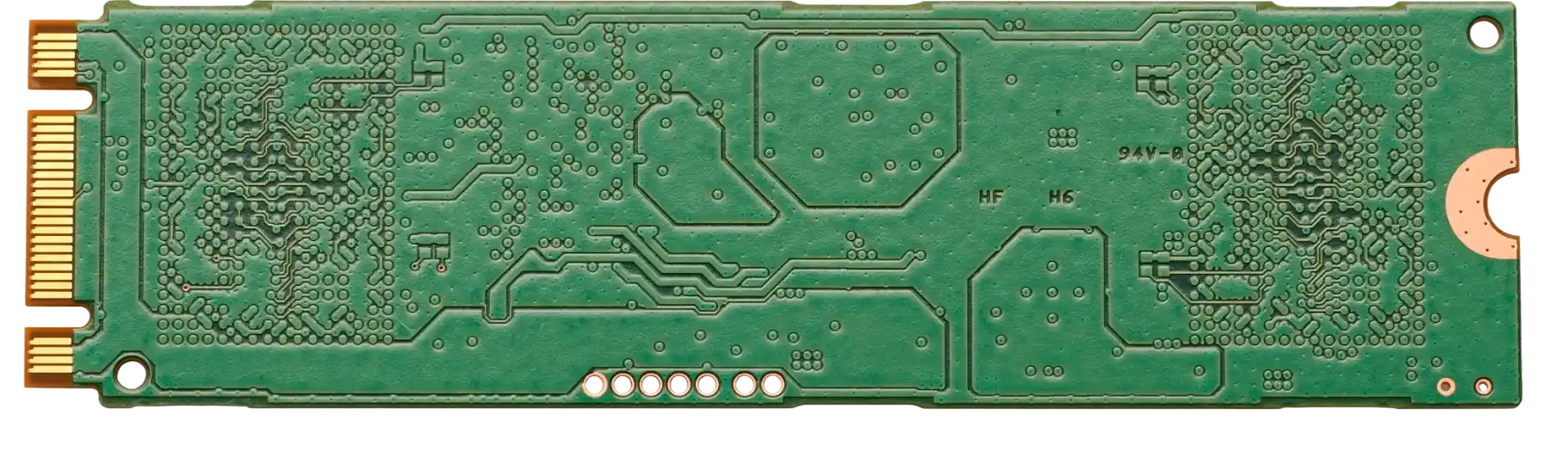
Successful EMIB interconnect board design relies on precise specifications. Deviating from these values often results in yield loss during assembly.
| Rule Category | Recommended Value/Range | Why it matters | How to verify | If ignored |
|---|---|---|---|---|
| Trace Width/Space (L/S) | 5µm/5µm (Substrate) 40µm/40µm (PCB) |
Essential for routing high-density I/O from the bridge. | AOI (Automated Optical Inspection) | Short circuits or inability to route all signals. |
| Microvia Diameter | 50µm - 75µm | Allows for high-density vertical interconnects (HDI). | Cross-section analysis | Via fatigue or open circuits under thermal cycling. |
| Dielectric Constant (Dk) | < 3.0 @ 10GHz | Reduces signal propagation delay and crosstalk. | TDR (Time Domain Reflectometry) | Signal integrity degradation and timing errors. |
| Dissipation Factor (Df) | < 0.002 @ 10GHz | Minimizes signal loss (insertion loss) over distance. | VNA (Vector Network Analyzer) | Excessive attenuation; data transmission failure. |
| Copper Thickness | 12µm - 18µm (0.3oz - 0.5oz) | Balances current carrying capacity with fine-line etching capability. | X-Ray Fluorescence (XRF) | Over-etching (open traces) or under-etching (shorts). |
| Solder Mask Opening | 1:1 with pad or NSMD | Ensures proper bump seating and underfill flow. | AOI / Microscope | Solder bridging or poor joint reliability. |
| Warpage / Flatness | < 0.1% (Diagonal) | Critical for aligning the bridge and dies during assembly. | Shadow Moiré Interferometry | Component misalignment, cold solder joints, or die cracking. |
| Impedance Tolerance | 85Ω / 100Ω ± 5% | Matches driver/receiver impedance to prevent reflections. | Impedance Coupon Test | Signal reflection, jitter, and data corruption. |
| Pad Surface Finish | ENEPIG or SOP | Provides a flat, bondable surface for fine-pitch bumps. | XRF / SEM | Poor wetting or "black pad" defects. |
| Thermal Via Pitch | 0.3mm - 0.5mm | Maximizes heat transfer away from the embedded bridge. | Drill file check | Overheating, throttling, or device failure. |
Designing an interconnect board for Embedded Multi-die Interconnect Bridge (EMIB) interconnect board design implementation steps (process checkpoints)
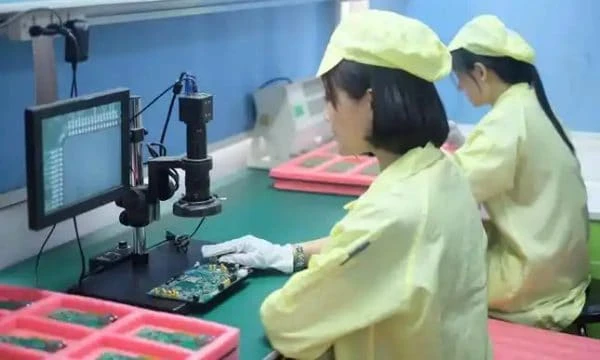
Implementing an EMIB interconnect board design involves a rigorous workflow to ensure the organic substrate or PCB can support the embedded bridge technology.
Architecture & Stackup Definition:
- Action: Define the layer count and material stackup.
- Parameter: Select high-speed materials (e.g., Megtron materials) compatible with multiple lamination cycles.
- Check: Verify CTE (Coefficient of Thermal Expansion) matching between layers.
Bridge Cavity Planning:
- Action: Design the cavity or recess area where the silicon bridge will be embedded (if applicable) or define the landing pattern for the EMIB package.
- Parameter: Cavity depth tolerance ±10µm.
- Check: Ensure clearance for die attach adhesive.
Fan-Out Routing Strategy:
- Action: Route signals from the fine-pitch bridge bumps to the coarser PCB layers.
- Parameter: Use staggered microvias to save space.
- Check: Confirm no acute angles in high-speed traces.
Power Integrity (PI) Analysis:
- Action: Simulate voltage drop (IR drop) across the power delivery network.
- Parameter: Target <5% DC voltage drop at the load.
- Check: Verify sufficient decoupling capacitor placement near the bridge interface.
Signal Integrity (SI) Simulation:
- Action: Simulate insertion loss and return loss for critical high-speed lanes.
- Parameter: Return loss < -10dB up to Nyquist frequency.
- Check: Adjust trace geometry if impedance targets are missed.
Thermal Stress Simulation:
- Action: Model the heat dissipation path through the board.
- Parameter: Max junction temperature (Tj) < 105°C (or specific die limit).
- Check: Add copper coins or thermal via farms if hotspots exist.
DFM Review (Design for Manufacturing):
- Action: Submit Gerber files to APTPCB for a manufacturability check.
- Parameter: Min trace/space, aspect ratios, and mask slivers.
- Check: Resolve all DFM flags before fabrication release.
Fabrication & Test:
- Action: Manufacture the bare board using advanced PCB manufacturing techniques.
- Parameter: 100% electrical test (flying probe).
- Check: Validate impedance coupons and physical dimensions.
Designing an interconnect board for Embedded Multi-die Interconnect Bridge (EMIB) interconnect board design troubleshooting (failure modes and fixes)
Even with robust design, issues can arise during fabrication or assembly. Here is how to troubleshoot common EMIB interconnect board failures.
1. Symptom: Open Circuits at Microvias
- Cause: Incomplete plating due to high aspect ratio or trapped debris; thermal expansion mismatch causing barrel cracks.
- Check: Cross-section analysis (SEM) of the failed via.
- Fix: Reduce aspect ratio to <0.8:1; switch to copper-filled stacked vias.
- Prevention: Use materials with lower Z-axis CTE.
2. Symptom: Board Warpage During Reflow
- Cause: Unbalanced copper distribution or asymmetric stackup; incorrect material Tg.
- Check: Shadow Moiré measurement at room temp vs. reflow temp.
- Fix: Balance copper area on top/bottom layers; use a dummy copper mesh (thieving).
- Prevention: Simulate stackup curl before layout; use high-Tg materials.
3. Symptom: Signal Integrity Loss (High BER)
- Cause: Impedance mismatch at the bridge-to-PCB transition; fiber weave effect.
- Check: TDR measurement; inspect glass weave type.
- Fix: Back-drill stubs; use "spread glass" or rotate routing 10 degrees.
- Prevention: Specify spread glass fabric (e.g., 1067/1086) in fabrication notes.
4. Symptom: Solder Bridging Under Fine-Pitch Components
- Cause: Solder mask registration error or excessive stencil aperture.
- Check: Inspect solder mask alignment; review stencil thickness.
- Fix: Tighten solder mask dams; reduce stencil aperture area by 10-15%.
- Prevention: Use Laser Direct Imaging (LDI) for solder mask application.
5. Symptom: Delamination of Layers
- Cause: Moisture absorption or poor bonding between resin and copper.
- Check: C-SAM (Scanning Acoustic Microscopy) to locate voids.
- Fix: Bake boards before assembly; improve oxide treatment on inner layers.
- Prevention: Store boards in vacuum-sealed bags with desiccant; select high-reliability bondply.
6. Symptom: "Black Pad" or Non-Wetting
- Cause: Corrosion of the nickel layer in ENIG/ENEPIG finishes.
- Check: SEM/EDX analysis of the pad surface.
- Fix: Control the gold immersion bath chemistry strictly.
- Prevention: Audit the surface finish process; consider OSP if shelf life permits.
How to choose Designing an interconnect board for Embedded Multi-die Interconnect Bridge (EMIB) interconnect board design (design decisions and trade-offs)
Choosing the right interconnect strategy involves comparing EMIB interconnect board design against alternative packaging technologies like Silicon Interposers (2.5D) or standard Fan-Out Wafer Level Packaging (FOWLP).
EMIB vs. Silicon Interposer:
- Cost: EMIB is generally lower cost because it uses a small silicon bridge only where needed, rather than a large, expensive silicon interposer reticle.
- Performance: Silicon interposers offer slightly higher density for massive routing, but EMIB provides better electrical performance for specific high-speed links due to shorter paths.
- Complexity: EMIB requires complex organic substrate manufacturing. If your manufacturer cannot handle <10µm features, a silicon interposer might be a safer (albeit pricier) bet.
EMIB vs. Standard HDI PCB:
- Density: Standard HDI PCB technology typically limits L/S to ~40µm. EMIB substrates push this down to <10µm locally.
- Application: Use standard HDI for the mainboard. Use EMIB-compatible substrates for the package itself.
- Thermal: EMIB structures concentrate heat. Standard HDI spreads it more evenly but cannot support the bandwidth.
Decision Framework:
- Bandwidth Requirement: If >500 Gbps between dies, choose EMIB or Interposer.
- Cost Sensitivity: If budget is tight but performance is key, EMIB is the "middle ground" winner.
- Supply Chain: Ensure your PCB/Substrate vendor (like APTPCB) has the advanced equipment for fine-line lithography and laser drilling.
Designing an interconnect board for Embedded Multi-die Interconnect Bridge (EMIB) interconnect board design FAQ (cost, lead time, common defects, acceptance criteria, Design for Manufacturability (DFM) files)
1. What is the typical cost driver for EMIB interconnect board design? The primary cost drivers are the layer count (often 10+ layers), the use of advanced low-loss materials (like ABF or Megtron), and the yield loss associated with ultra-fine line etching. Expect costs to be 3-5x higher than standard FR4 HDI boards.
2. What is the lead time for manufacturing EMIB-compatible substrates? Due to the complexity of sequential lamination and precise imaging, lead times typically range from 4 to 8 weeks for prototypes. Standard PCBs might take 1-2 weeks, but the high-density nature of EMIB substrates requires additional processing time.
3. What materials are best for EMIB interconnect board design? Ajinomoto Build-up Film (ABF) is the industry standard for the buildup layers due to its flatness and fine-line capability. For the core, high-Tg materials like Megtron 7 or Tachyon 100G are recommended to match the electrical performance requirements.
4. How do I test an EMIB interconnect board? Testing requires specialized equipment. Standard bed-of-nails testing is often impossible due to pitch density. Flying probe testing is used for prototypes, while specialized automated optical inspection (AOI) and contactless continuity testing are used for volume production.
5. What are the acceptance criteria for EMIB board flatness? The industry standard (JEDEC) typically requires warpage to be less than 0.1% of the diagonal dimension at room temperature and during the reflow profile. Exceeding this leads to "head-in-pillow" defects or bridge cracking.
6. What files are needed for a DFM review of an EMIB design? You must provide ODB++ or Gerber X2 files, a detailed stackup drawing specifying material types and dielectric thicknesses, a netlist (IPC-356) for electrical test verification, and a drill drawing defining blind/buried via structures.
7. Can APTPCB manufacture the silicon bridge itself? No, APTPCB (APTPCB PCB Factory) specializes in the high-density organic substrate and the main PCB that houses the package. The silicon bridge is manufactured by semiconductor foundries. We handle the board-level integration and substrate fabrication.
8. How does EMIB design impact thermal management? The localized silicon bridge creates a high heat flux density. The board design must include optimized thermal paths, such as copper-filled vias directly under the bridge area, to transfer heat to the system heatsink or internal ground planes.
9. What is the minimum microvia pitch for these designs? For the organic substrate supporting EMIB, microvia pitch can go as low as 80µm-100µm. On the main PCB interface, a pitch of 0.4mm or 0.35mm is common for the BGA fan-out.
10. How do I prevent impedance discontinuities at the bridge interface? Maintain a continuous reference plane (ground) beneath the high-speed signals entering the bridge region. Avoid crossing split planes and ensure the transition from PCB trace to package bump is modeled in 3D field solvers.
Resources for Designing an interconnect board for Embedded Multi-die Interconnect Bridge (EMIB) interconnect board design (related pages and tools)
- HDI PCB Capabilities: Explore high-density interconnect technologies essential for EMIB support.
- Advanced PCB Manufacturing: Learn about fine-line etching and laser drilling processes.
- Megtron PCB Materials: Specifications for low-loss materials used in high-speed designs.
- Impedance Calculator: Verify your trace width and spacing for controlled impedance.
- DFM Guidelines: General design rules to ensure manufacturability.
Designing an interconnect board for Embedded Multi-die Interconnect Bridge (EMIB) interconnect board design glossary (key terms)
| Term | Definition |
|---|---|
| EMIB | Embedded Multi-die Interconnect Bridge; a 2.5D packaging technology using a silicon bridge. |
| Substrate | The organic board (often ABF-based) that interfaces between the silicon dies and the main PCB. |
| Microvia | A laser-drilled hole (typically <150µm) connecting adjacent layers in HDI boards. |
| RDL | Redistribution Layer; metal layers that route signals from the die pads to the substrate bumps. |
| TSV | Through-Silicon Via; a vertical connection passing completely through a silicon wafer (used in interposers, less in EMIB). |
| CTE | Coefficient of Thermal Expansion; the rate at which a material expands with heat. Mismatch causes warpage. |
| Underfill | Epoxy material injected under the die/bridge to distribute mechanical stress and protect bumps. |
| Bump Pitch | The center-to-center distance between adjacent solder bumps or pads. |
| L/S | Line/Space; the width of a trace and the gap to the next trace (e.g., 5/5 µm). |
| SerDes | Serializer/Deserializer; high-speed functional blocks often connected via EMIB bridges. |
| Interposer | An electrical interface routing between one socket or connection to another (silicon or organic). |
| Warpage | The distortion of the board flatness, critical in large package assembly. |
Request a quote for Designing an interconnect board for Embedded Multi-die Interconnect Bridge (EMIB) interconnect board design
Ready to move your high-density design from concept to production? APTPCB provides comprehensive DFM reviews and precision manufacturing for advanced interconnect boards.
To get an accurate quote and DFM analysis, please prepare:
- Gerber RS-274X or ODB++ files: Complete layer data.
- Stackup Drawing: Specify material (e.g., Megtron 7, ABF), copper weight, and dielectric thickness.
- Drill Files: Define blind, buried, and through-hole vias.
- Impedance Requirements: List target impedance and reference layers.
- Volume & Lead Time: Prototype quantity vs. mass production targets.
Conclusion (next steps)
Mastering EMIB interconnect board design requires a shift from standard PCB rules to semiconductor-like precision. By strictly controlling trace geometries, selecting ultra-low loss materials, and managing thermal warpage, you can successfully deploy high-performance heterogeneous packages. Whether you are prototyping a new AI accelerator or a high-speed networking module, adhering to these specifications ensures your design is manufacturable and reliable.