
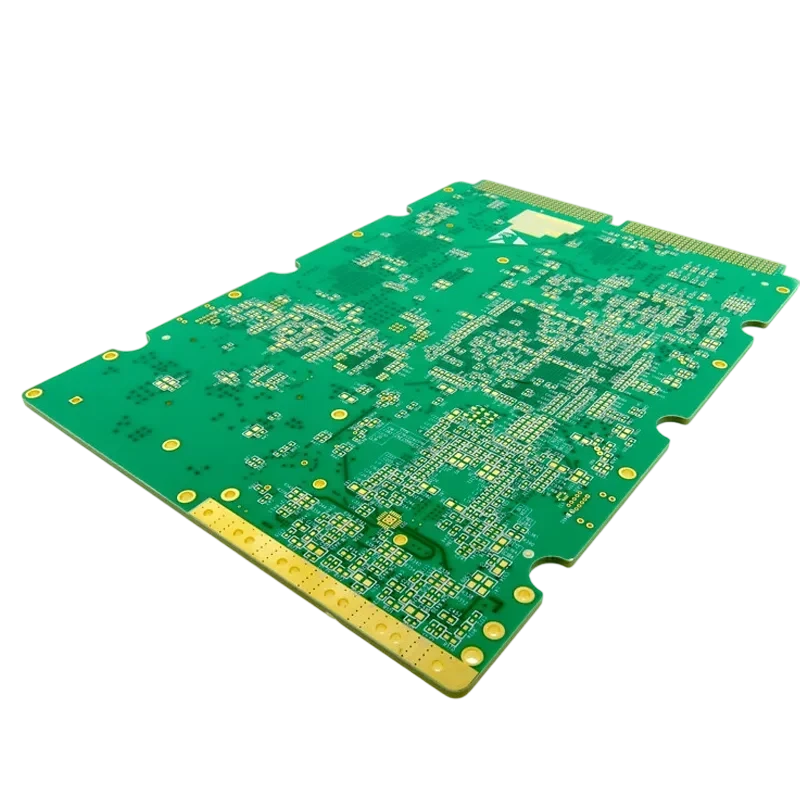
Engineers developing heterogeneous integration packages often face a critical bottleneck: sourcing EMIB interconnect board low volume prototypes without committing to mass production quantities. Unlike standard PCBs, Embedded Multi-die Interconnect Bridge (EMIB) substrates require precise cavity formation, extreme flatness control, and advanced material handling to support the silicon bridge that connects multiple dies.
At APTPCB (APTPCB PCB Factory), we understand that the transition from simulation to physical hardware requires flexible manufacturing capabilities. This guide covers the essential specifications, process steps, and troubleshooting protocols for successfully fabricating EMIB-ready substrates in small batches. Whether you are validating a chiplet architecture or testing a new high-performance computing (HPC) design, these rules will help you navigate the complexities of advanced packaging substrates.
roduction quantities. Unlike standard PCBs, Embedded Multi-die Interconnect Bridge (EMIB) interconnect board low volume quick answer (30 seconds)
For engineers needing a quick feasibility check, here are the core realities of manufacturing EMIB interconnect board low volume runs:
- Cavity Precision is Non-Negotiable: The substrate must feature a cavity for the silicon bridge with depth tolerances typically within ±10µm to ±15µm to ensure planar die placement.
- Material Selection Drives Cost: Low-loss materials like ABF (Ajinomoto Build-up Film) or high-grade BT (Bismaleimide Triazine) are standard; standard FR4 is rarely sufficient for the signal integrity required by the bridge interface.
- NRE is Higher than Standard HDI: Even for low volume, the Non-Recurring Engineering (NRE) costs are significant due to laser programming for cavities and specialized lamination fixtures.
- Alignment Marks are Critical: You must include specific fiducials around the bridge cavity to allow the assembly equipment (and the PCB fab's imaging systems) to align layers within <5µm accuracy.
- Warpage Control: The substrate must maintain flatness (coplanarity) under 0.1% across the package area to prevent bridge cracking during reflow.
- Lead Time: Expect 4 to 6 weeks for EMIB interconnect board low volume prototypes due to the sequential lamination and verification steps required.
When roduction quantities. Unlike standard PCBs, Embedded Multi-die Interconnect Bridge (EMIB) interconnect board low volume applies (and when it doesn’t)
Understanding when to utilize an embedded bridge architecture versus a standard interposer or organic substrate is vital for project success.
When to use EMIB interconnect board low volume
- Heterogeneous Integration Prototyping: When combining dies from different process nodes (e.g., a 5nm CPU with a 14nm I/O die) and you need to validate the interconnect performance physically.
- High-Bandwidth Memory (HBM) Testing: When your design requires extremely dense routing between a processor and HBM stacks that exceeds the capabilities of standard HDI PCB technology.
- Cost-Sensitive High Performance: When a full silicon interposer (2.5D) is too expensive for the application, and you want to test the cost-effectiveness of the bridge approach on a small scale.
- Form Factor Constraints: When the Z-height must be minimized, and embedding the interconnect bridge into the substrate helps reduce the overall package profile.
When NOT to use it
- Simple Die-to-Die Communication: If standard organic substrate routing (RDL) can handle the data rates, EMIB adds unnecessary cost and complexity.
- Ultra-Low Cost Consumer Goods: The manufacturing steps for cavity creation and bridge embedding are generally too costly for disposable consumer electronics.
- Rapid 24-Hour Turnaround: The complexity of EMIB interconnect board low volume fabrication prevents "quick turn" speeds typical of standard rigid boards.
- Loose Tolerance Designs: If your design cannot tolerate strict design rules regarding keep-out zones and microvia aspect ratios, the yield will be near zero.
roduction quantities. Unlike standard PCBs, Embedded Multi-die Interconnect Bridge (EMIB) interconnect board low volume rules and specifications (key parameters and limits)
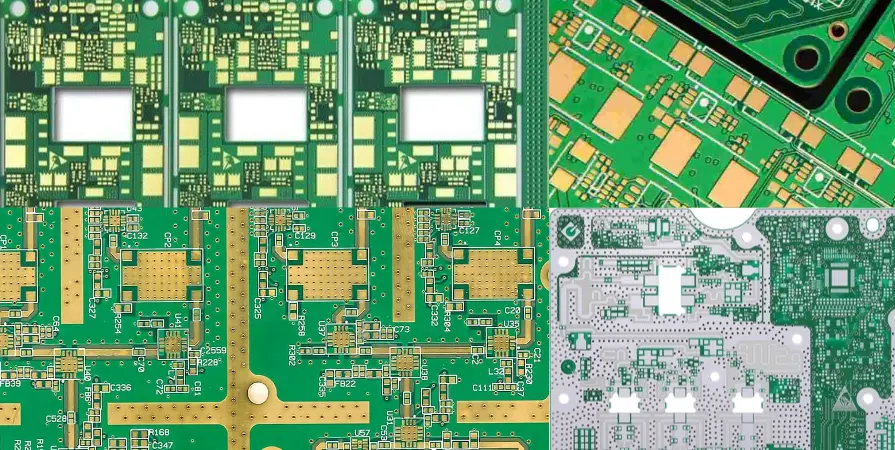
To ensure manufacturability, your design data must adhere to strict parameters. The following table outlines the critical rules for EMIB interconnect board low volume fabrication.
| Rule Category | Recommended Value/Range | Why it matters | How to verify | If ignored |
|---|---|---|---|---|
| Cavity Depth Tolerance | ±10µm to ±15µm | Ensures the silicon bridge sits flush with the substrate surface for successful die attachment. | Laser profilometry or cross-section analysis. | Bridge protrudes or sinks, causing open connections or die cracking. |
| Cavity X/Y Tolerance | ±30µm | Ensures the bridge fits into the slot without shifting or stress. | AOI (Automated Optical Inspection) and CMM. | Bridge cannot be inserted or floats excessively during assembly. |
| Dielectric Material | Low Dk/Df (e.g., ABF, Megtron 6/7) | Minimizes signal loss for high-speed signals traversing the bridge. | Material datasheet and impedance testing. | Signal integrity failure at high frequencies (25Gbps+). |
| Line Width/Space (L/S) | 15µm/15µm (Substrate RDL) | Required to fan out high-density bumps from the bridge. | SEM (Scanning Electron Microscope) or high-res AOI. | Short circuits or inability to route all signals. |
| Microvia Aspect Ratio | 0.8:1 to 1:1 | Ensures reliable plating in small blind vias. | Cross-sectioning coupons. | Incomplete plating leading to intermittent open circuits. |
| Surface Finish | ENEPIG or SOP (Solder on Pad) | Provides a flat, wire-bondable, and solderable surface for fine-pitch assembly. | X-Ray Fluorescence (XRF) for thickness. | Poor joint reliability or "black pad" defects. |
| Warpage (Bow/Twist) | < 0.1% (Room Temp & Reflow) | Critical for the assembly of large dies and bridges. | Shadow Moiré interferometry. | Assembly failure; dies will not make contact with all bumps. |
| Registration Accuracy | < 10µm (Layer to Layer) | Ensures vias connect to the correct inner layer pads in dense designs. | X-Ray drill alignment verification. | Internal shorts or opens; scrap board. |
| Solder Mask Opening | 1:1 or slightly larger than pad (NSMD) | Defines the soldering area for flip-chip bumps. | AOI. | Solder bridging or insufficient solder volume. |
| Copper Thickness | 12µm to 18µm (Base) | Thinner copper allows for finer etching of dense lines. | Cross-section. | Over-etching or under-etching of fine lines. |
roduction quantities. Unlike standard PCBs, Embedded Multi-die Interconnect Bridge (EMIB) interconnect board low volume implementation steps (process checkpoints)
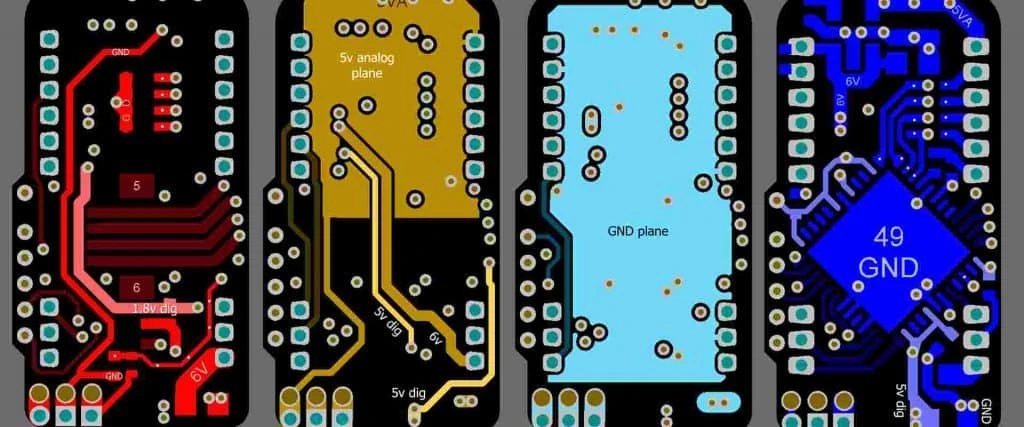
Fabricating these boards requires a modified flow compared to standard PCBs. Here is the step-by-step process for EMIB interconnect board low volume execution.
- Stackup & Material Definition:
- Action: Select a core material with a CTE (Coefficient of Thermal Expansion) closely matched to silicon (approx. 3-5 ppm/°C) if possible, or use high-modulus organic materials.
- Check: Verify material availability for small batches.
- Inner Layer Circuitization:
- Action: Process inner layers using semi-additive processes (SAP) or modified semi-additive processes (mSAP) to achieve fine line widths.
- Check: AOI inspection for shorts/opens before lamination.
- Cavity Formation:
- Action: Create the cavity for the bridge using CO2/UV laser ablation or controlled depth mechanical routing. This is the most critical step in EMIB interconnect board low volume production.
- Check: Measure cavity depth at 5 points (corners + center) to ensure uniformity.
- Lamination Cycle:
- Action: Laminate the buildup layers. If the bridge is embedded during lamination (rare for simple substrates, common for advanced), ensure resin flow does not fill the contact pads.
- Check: X-ray inspection to verify layer alignment post-press.
- Laser Drilling & Plating:
- Action: Drill microvias to connect the bridge landing pads to the rest of the substrate.
- Check: Desmear quality check to ensure clean copper connectivity.
- Surface Finishing:
- Action: Apply ENEPIG (Electroless Nickel Electroless Palladium Immersion Gold) for a robust interface.
- Check: Verify gold and palladium thickness using XRF.
- Electrical Testing:
- Action: Perform flying probe testing tailored for fine pitch.
- Check: 100% net list verification against IPC-356D data.
- Final Quality Control (FQC):
- Action: Inspect for cosmetic defects, warpage, and cavity cleanliness.
- Check: Generate a First Article Inspection (FAI) report.
roduction quantities. Unlike standard PCBs, Embedded Multi-die Interconnect Bridge (EMIB) interconnect board low volume troubleshooting (failure modes and fixes)
Even with careful planning, defects can occur. Use this guide to troubleshoot common issues in EMIB interconnect board low volume runs.
1. Cavity Depth Variation
- Symptom: The silicon bridge sits too high (interfering with the top die) or too low (connection failure).
- Cause: Inconsistent laser power or variations in dielectric thickness.
- Fix: Calibrate laser depth using a sacrificial coupon from the same production panel.
- Prevention: Use materials with tight thickness tolerances and implement real-time depth sensing during routing.
2. Substrate Warpage
- Symptom: The board curls during reflow, causing bridge or die misalignment.
- Cause: Asymmetric copper distribution or mismatched CTE between core and buildup layers.
- Fix: Use a heavy copper balancing pattern on unused layers (thieving) to equalize stress.
- Prevention: Simulate stackup stress during the design phase; use low-CTE core materials.
3. Microvia Cracking
- Symptom: Intermittent signal failure after thermal cycling.
- Cause: Z-axis expansion of the dielectric stresses the copper plating.
- Fix: Increase plating ductility or switch to a material with lower Z-axis CTE.
- Prevention: Adhere to strict aspect ratio rules (0.8:1) to ensure robust plating.
4. Pad Oxidation / Poor Solderability
- Symptom: Solder bumps do not wet to the pads inside the cavity or on the surface.
- Cause: Contamination remaining from the cavity formation process or poor surface finish deposition.
- Fix: Plasma cleaning prior to surface finish application.
- Prevention: Implement strict cleaning cycles and time-limits between process steps.
5. Registration Errors
- Symptom: Vias are drilled slightly off-center, breaking the annular ring.
- Cause: Material scaling (shrinkage/expansion) during lamination.
- Fix: Apply scaling factors to the drill data based on historical material behavior.
- Prevention: Use X-ray optimization for drill alignment on every panel.
How to choose roduction quantities. Unlike standard PCBs, Embedded Multi-die Interconnect Bridge (EMIB) interconnect board low volume (design decisions and trade-offs)
When specifying an EMIB interconnect board low volume project, you are often choosing between different advanced packaging technologies. Here is how to make the right choice.
EMIB Substrate vs. Silicon Interposer (2.5D)
- Cost: EMIB substrates are generally lower cost than full silicon interposers because silicon is only used for the small bridge, not the entire base.
- Performance: Silicon interposers offer slightly higher density, but EMIB provides better electrical performance for power delivery (since the die connects directly to the organic substrate for power).
- Low Volume Availability: Silicon interposers often require wafer-level processing which has high minimums. EMIB substrates can be manufactured in panel form, making EMIB interconnect board low volume runs more accessible at PCB fabs like APTPCB.
Material Selection: ABF vs. BT vs. High-Tg FR4
- ABF (Ajinomoto Build-up Film): The gold standard for high-performance computing. Excellent flatness and fine-line capability but expensive and fragile.
- BT (Bismaleimide Triazine): Good balance of cost and mechanical stability. Often used for memory packages.
- High-Tg FR4: Generally not recommended for EMIB due to surface roughness and CTE mismatch, unless the bridge interconnect density is very low.
Supplier Capability
Choose a partner capable of NPI small batch PCB manufacturing who specifically lists cavity PCB or embedded component capabilities. Standard PCB shops lack the metrology equipment to verify ±10µm cavity depths.
roduction quantities. Unlike standard PCBs, Embedded Multi-die Interconnect Bridge (EMIB) interconnect board low volume FAQ (cost, lead time, common defects, acceptance criteria, Design for Manufacturability (DFM) files)
Q: What is the typical cost driver for EMIB interconnect board low volume? A: The primary cost drivers are the material (ABF/specialized prepreg), the laser processing time for cavities, and the yield loss associated with fine-pitch processing. NRE charges for tooling and test fixtures are also higher than standard PCBs.
Q: What is the standard lead time for these prototypes? A: A typical EMIB interconnect board low volume run takes 4 to 6 weeks. This includes engineering questions (EQ), lamination cycles, and complex testing. Expedited services are rarely available due to the physics of the process.
Q: Can I use standard Gerber files for EMIB designs? A: While Gerber X2 is acceptable, ODB++ or IPC-2581 is preferred. These formats contain intelligent data regarding layer stackup and net connectivity, which is crucial for verifying cavity placement and depth.
Q: How do you test the connections to the embedded bridge? A: Since the bridge is often assembled later, the substrate is tested for continuity up to the landing pads. We use specialized flying probe testers capable of hitting pads as small as 50µm.
Q: What are the acceptance criteria for the cavity? A: Acceptance is based on depth (Z-axis), X/Y dimensions, and bottom flatness. The bottom of the cavity must be free of resin residue and have exposed pads (if designed) that are clean and solderable.
Q: Does APTPCB handle the silicon bridge assembly? A: APTPCB focuses on fabricating the high-precision interconnect board (substrate). The actual placement of the silicon bridge and dies is typically handled by an OSAT (Outsourced Semiconductor Assembly and Test) provider, though we can assist with DFM to ensure our boards fit their assembly lines.
Q: What is the minimum volume for an order? A: For EMIB interconnect board low volume, we can process as few as 5-10 panels. This allows for a yield of several dozen to a few hundred units depending on the package size.
Q: How does DFM differ for EMIB boards? A: DFM guidelines for EMIB focus heavily on material movement (scaling), cavity aspect ratios, and copper balance. Standard PCB DFM checks are insufficient; you need a review that considers 3D features.
Q: Can you manufacture "low-loss EMIB interconnect board" variants? A: Yes. We utilize low-loss materials like Panasonic Megtron 6/7 or Isola Tachyon to ensure the substrate does not become the bottleneck for high-speed signals entering or exiting the bridge.
Q: What happens if the cavity is too deep? A: If the cavity is too deep, the bridge will sit too low. This requires the assembly process to use excessive solder or underfill, which can lead to unpredictable RF performance or mechanical failure.
Resources for roduction quantities. Unlike standard PCBs, Embedded Multi-die Interconnect Bridge (EMIB) interconnect board low volume (related pages and tools)
- Advanced PCB Manufacturing: Explore our capabilities for complex substrates and non-standard builds.
- HDI PCB Technology: Understand the microvia and fine-line technologies that form the foundation of EMIB substrates.
- NPI Small Batch Manufacturing: Learn how we handle low-volume, high-complexity orders without mass production commitments.
roduction quantities. Unlike standard PCBs, Embedded Multi-die Interconnect Bridge (EMIB) interconnect board low volume glossary (key terms)
| Term | Definition |
|---|---|
| EMIB | Embedded Multi-die Interconnect Bridge. A technology using a silicon bridge embedded in a substrate to connect dies. |
| Cavity PCB | A PCB with a recessed area (cavity) created by laser or mechanical routing to house a component. |
| RDL (Re-distribution Layer) | Metal layers on a die or substrate that route I/O pads to other locations. |
| UBM (Under Bump Metallization) | The metal layer interface between the copper pad and the solder bump. |
| Bump Pitch | The center-to-center distance between adjacent solder bumps. |
| CTE (Coefficient of Thermal Expansion) | A measure of how much a material expands when heated. Mismatch causes warpage. |
| ABF | Ajinomoto Build-up Film. A dominant insulation material for high-end IC substrates. |
| Keep-out Zone (KOZ) | An area around the cavity or bridge where no other components or traces can be placed. |
| Fiducial | An optical alignment mark used by machines to align layers or place components. |
| Planarity | The degree of flatness of a surface. Critical for the cavity floor. |
| mSAP | Modified Semi-Additive Process. A manufacturing method for creating very fine copper traces (<25µm). |
| Interposer | An electrical interface routing between one socket or connection to another (often silicon or glass). |
Request a quote for roduction quantities. Unlike standard PCBs, Embedded Multi-die Interconnect Bridge (EMIB) interconnect board low volume
Ready to validate your advanced package design? APTPCB provides specialized DFM reviews for EMIB interconnect board low volume projects to identify potential yield risks before fabrication begins.
To get an accurate quote, please provide:
- Gerber/ODB++ Files: Including specific layers defining the cavity area.
- Stackup Drawing: Specifying materials (e.g., ABF, BT) and dielectric thicknesses.
- Cavity Drawing: Detailed X, Y, and Z dimensions with tolerances.
- Quantity: The number of pieces or panels required for your NPI run.
Conclusion (next steps)
Successfully executing an EMIB interconnect board low volume build requires a manufacturing partner who treats your prototype with the rigor of an aerospace product. By controlling cavity depth, managing material warpage, and adhering to strict DFM rules, you can achieve the high-density interconnect performance of mass-produced silicon bridges in a low-volume environment. Ensure your data package is complete, validate your material choices, and proceed with a fabrication plan designed for advanced heterogeneous integration.