
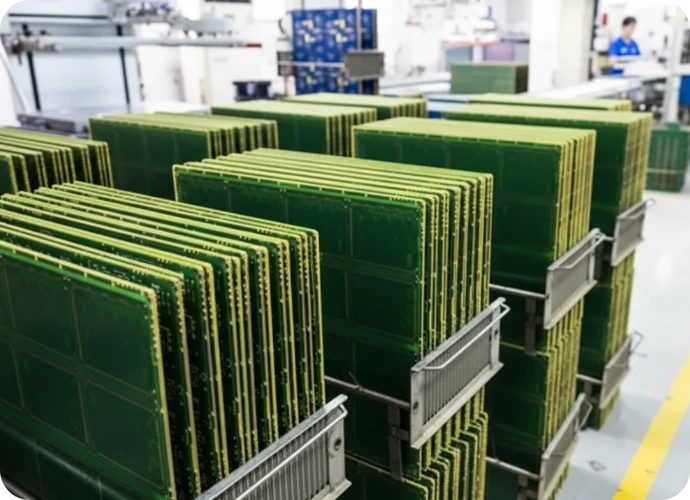
Designing or maintaining an Ethereum Mining PCB requires handling extreme thermal loads and continuous high-current power delivery. Although the Ethereum network has transitioned to Proof-of-Stake (PoS), the hardware class defined by "mining PCBs"—specifically multi-GPU backplanes, riser cards, and specialized ASIC controllers—remains critical for mining alternative Ethash coins (like ETC) and high-performance AI compute clusters. This guide covers the engineering standards required to prevent catastrophic board failures under 24/7 load.
Quick Answer (30 seconds)
For a durable Ethereum Mining PCB, engineers must prioritize power integrity and thermal dissipation over component density.
- Copper Weight: Use at least 2oz (70µm) copper on inner power layers; 3oz+ is recommended for backplanes handling >1000W.
- Material Selection: High-Tg FR4 (Tg > 170°C) is mandatory to prevent delamination during prolonged heat exposure.
- PCIe Integrity: Maintain strict 85Ω or 100Ω differential impedance for PCIe data lines to prevent GPU dropouts.
- Connector Rating: Verify that 12V power connectors (PCIe 6-pin/8-pin) are rated for high-current cycles and reinforced with through-hole anchors.
- Thermal Management: Implement aggressive thermal vias under MOSFETs and power regulators.
- Validation: Perform Automated Optical Inspection (AOI) and E-Test to ensure no shorts exist in high-current paths before power-up.
When Ethereum Mining PCB applies (and when it doesn’t)
Understanding the specific use case helps in selecting the right materials and stackup from APTPCB (APTPCB PCB Factory).
When it applies
- Multi-GPU Rigs: Custom backplanes or motherboards designed to host 6–12 GPUs via PCIe risers for mining or rendering.
- ASIC Hashboards: Specialized boards for Ethash algorithms (e.g., Ethereum Classic) requiring high-density power regulation.
- High-Power Distribution: Breakout boards converting server PSU output to multiple PCIe connectors.
- AI Compute Clusters: Hardware originally designed for mining that is repurposed for machine learning tasks requiring similar power density.
- Repair & Refurbishment: Troubleshooting legacy mining hardware for resale or repurposing.
When it doesn’t apply
- Standard Office PCs: Standard ATX motherboards lack the trace width and thermal capacity for sustained multi-GPU loads.
- Low-Power IoT Devices: The heavy copper and thermal requirements are unnecessary and cost-prohibitive.
- Single-GPU Gaming Setups: Standard consumer PCBs are sufficient; specialized mining specs add unnecessary cost.
- CPU-Only Servers: These require different topology focused on memory bandwidth rather than PCIe lane distribution.
Rules & specifications
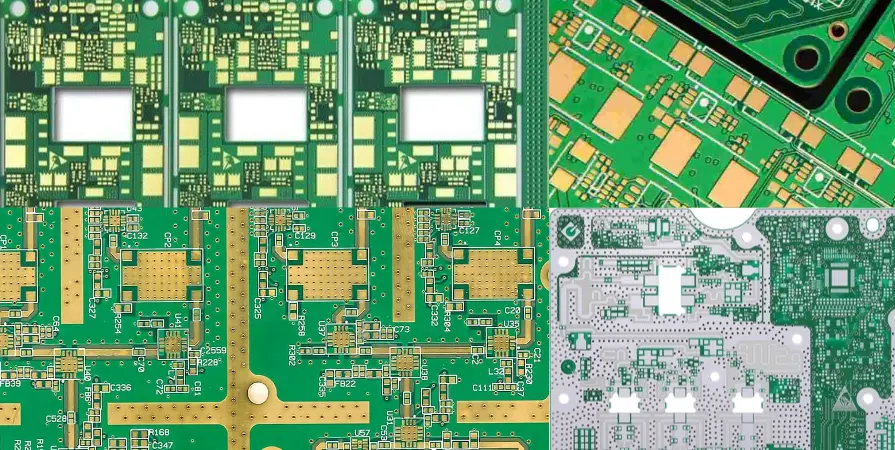
The following table outlines the critical design rules for an Ethereum Mining PCB. Ignoring these often leads to burnt traces or unstable hashrates.
| Rule | Recommended Value/Range | Why it matters | How to verify | If ignored |
|---|---|---|---|---|
| Base Material Tg | > 170°C (High Tg FR4) | Prevents PCB softening and delamination at high operating temps (80°C+). | Check datasheet (e.g., Isola 370HR). | Board warps, vias crack, permanent failure. |
| Inner Copper Weight | 2oz (70µm) minimum | Reduces resistance in power planes (VCC/GND), lowering voltage drop and heat. | Microsection analysis. | Voltage droop causes GPU instability; traces burn. |
| Outer Copper Weight | 1oz - 2oz | Balances etching precision for PCIe traces with current capacity. | Cross-section measurement. | Poor signal integrity or overheated surface traces. |
| PCIe Impedance | 85Ω or 100Ω ±10% | Ensures error-free data transfer between CPU and GPUs. | Use an Impedance Calculator and TDR test. | GPUs are not detected or crash under load. |
| Via Current Rating | 0.3mm via = ~1.5A (approx) | Single vias cannot handle mining currents; arrays are needed. | IPC-2152 calculator. | Vias act as fuses and blow open. |
| Trace Width (Power) | > 40 mil per Amp (rule of thumb) | Prevents trace overheating. | IPC-2221 calculator. | Traces lift off the board or fuse. |
| Solder Mask Dam | > 4 mil | Prevents solder bridging on fine-pitch components like controller ICs. | DFM check. | Short circuits during assembly. |
| Surface Finish | ENIG (Electroless Nickel Immersion Gold) | Provides flat surface for BGA/QFN and oxidation resistance. | Visual inspection. | Poor solder joints on controller chips. |
| Thermal Vias | 0.3mm hole, 0.6mm pitch | Transfers heat from power components to inner ground planes. | X-ray inspection. | MOSFETs overheat and fail. |
| Connector Plating | Hard Gold (>30µin) for fingers | Withstands repeated insertion of riser cards. | Plating thickness test. | Contact oxidation leads to fire risk. |
Implementation steps
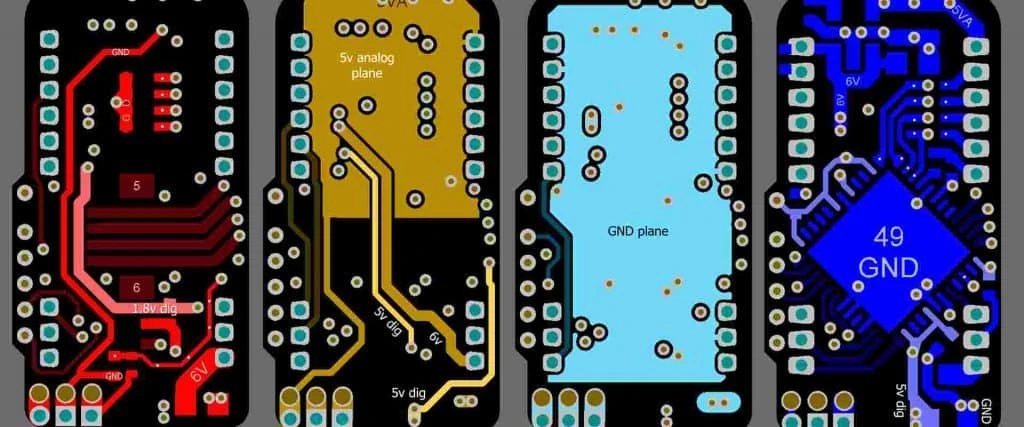
Follow these steps to move a GPU Mining PCB or controller board from concept to production.
Define Power Budget: Calculate the total amperage required on the 12V rail. For a 6-GPU rig, this can exceed 100A. Ensure the input connectors (e.g., multiple PCIe 6-pin or server bus bars) can physically handle this load.
Select Layer Stackup: Choose a 4-layer or 6-layer stackup. Dedicate internal layers strictly to Ground and Power planes to act as heat spreaders. Consult APTPCB engineering for available heavy-copper stackups.
Place Critical Components: Position 12V power connectors near the edge but close to the load to minimize trace length. Place PCIe slots with enough spacing for airflow if GPUs are directly mounted.
Route High-Speed Signals (PCIe): Route PCIe TX/RX pairs first. Keep them short, length-matched, and referenced to a solid ground plane. Avoid crossing split planes.
Route Power Planes: Use polygons (pours) rather than thin traces for 12V and GND. Ensure "neck-down" areas (where traces pass between pins) do not become current bottlenecks.
Add Thermal Relief: Place thermal via arrays under all power MOSFETs and inductors. Do not use thermal relief spokes on high-current pads; use direct connection (flood over) for maximum current flow, even if it makes soldering harder.
Design Rule Check (DRC): Run DRC with constraints set for high voltage clearance (creepage) and minimum trace widths.
Prototype Manufacturing: Order a small batch. Specify "High Tg" and "Controlled Impedance" in the fabrication notes.
Bench Testing: Power up the bare board without GPUs first. Check voltage rails. Then add one GPU, then scale up. Monitor PCB temperature with a thermal camera.
Failure modes & troubleshooting
Mining environments are harsh. Here is how to diagnose common failures in Ethereum Mining PCBs and Mining Rig PCBs.
1. Symptom: Burnt 12V Connector
- Cause: High contact resistance due to poor quality connector or insufficient copper at the pad.
- Check: Inspect for discoloration or melted plastic.
- Fix: Replace with high-current rated connectors (e.g., Molex Mini-Fit Jr. HCS).
- Prevention: Use multiple connectors to split the current load.
2. Symptom: GPU Not Detected (Code 43 or missing)
- Cause: PCIe signal integrity loss or voltage drop on the riser power.
- Check: Measure 3.3V and 12V at the riser slot. Check PCIe capacitors for damage.
- Fix: Replace riser or repair broken trace.
- Prevention: Route PCIe traces with strict impedance control.
3. Symptom: Random Reboots / Instability
- Cause: Voltage ripple (V-droop) on the 12V rail during DAG generation or heavy compute.
- Check: Use an oscilloscope to check 12V rail stability.
- Fix: Add bulk capacitance (electrolytic or polymer capacitors) near the load.
- Prevention: Use wider power planes and heavier copper.
4. Symptom: PCB Delamination (Blistering)
- Cause: Operating temperature exceeded the material's Tg.
- Check: Visual bubbles or separation of layers.
- Fix: The board is permanently damaged; replace it.
- Prevention: Specify Isola PCB materials or equivalent High-Tg substrates.
5. Symptom: MOSFET Explosion
- Cause: Thermal runaway due to insufficient heat sinking.
- Check: Visual damage to VRM area.
- Fix: Replace MOSFET and driver; check gate resistors.
- Prevention: Increase thermal via count and use active cooling.
6. Symptom: Intermittent Connection on Riser
- Cause: Oxidation on gold fingers or USB connector wear.
- Check: Wiggle the cable; observe link status.
- Fix: Clean contacts with isopropyl alcohol; replace cable.
- Prevention: Use Hard Gold plating on edge connectors.
Design decisions
When engineering a Mining Controller PCB or backplane, specific trade-offs must be made.
Heavy Copper vs. Cost Standard 1oz copper is cheaper but will heat up significantly under mining loads (50A+). Moving to 2oz or 3oz increases cost but is essential for safety and longevity. For a mining rig running 24/7, the cost of downtime exceeds the extra PCB cost.
Direct Plug vs. Riser Cables Designing a "riser-less" motherboard (where GPUs plug directly into the PCB) eliminates cabling points of failure (USB cables, riser PCBs). However, it requires a much larger, more expensive PCB and limits physical spacing options for cooling.
Soldermask Color While aesthetic, black soldermask makes visual inspection of traces difficult. Matte Green or Blue is preferred for maintenance-heavy boards like Bitcoin Mining PCBs or Ethereum equivalents, as it allows easier troubleshooting of burnt traces.
Connector Selection Standard ATX connectors are often rated for only 9A per pin. Mining loads can exceed this. Using server-grade bus bars or screw terminals for the main 12V input is a robust design decision for high-power distribution boards.
FAQ
1. Can I still mine Ethereum with these PCBs? No, Ethereum switched to Proof-of-Stake (PoS). However, Ethereum Mining PCBs are still used for mining Ethereum Classic (ETC), Ravencoin (RVN), and for high-performance GPU rendering or AI compute clusters.
2. What is the best PCB material for mining rigs? High-Tg FR4 (Tg 170°C or higher) is the standard. Standard FR4 (Tg 130-140°C) may soften and fail under the continuous heat of a mining rig.
3. Why do mining PCBs burn out so often? They operate at maximum capacity 24/7. Most failures are due to undersized traces or connectors that cannot handle the sustained amperage, leading to thermal runaway.
4. How thick should the copper be? For power distribution boards, 2oz or 3oz is recommended. For logic-only controller boards, 1oz is sufficient.
5. What is the difference between a Mining PCB and a Gaming PCB? Mining PCBs prioritize PCIe slot count and power delivery stability over features like audio, RGB, or extreme memory overclocking support.
6. Can APTPCB manufacture heavy copper mining boards? Yes, we specialize in heavy copper PCBs and can support up to 6oz copper for extreme power applications. See our PCB Manufacturing capabilities.
7. How do I control impedance for PCIe risers? You must calculate trace width and spacing based on your stackup to achieve 85Ω or 100Ω differential impedance.
8. Is ENIG necessary for mining boards? ENIG is highly recommended for flat pads on fine-pitch components and better corrosion resistance compared to HASL, especially in humid mining farm environments.
9. What is a "Mining Pool PCB"? This term is often a misnomer. It usually refers to the controller hardware (like a Raspberry Pi or custom board) that manages the rig's connection to the mining pool server.
10. How do I repair a burnt trace on a mining PCB? Scrape away the soldermask, clean the area, and solder a thick copper wire (jumper) across the damaged section to bypass the burnt trace. Ensure the wire gauge can handle the current.
11. Do I need blind or buried vias? Usually no. Through-hole vias are cheaper and sufficient for the complexity of most mining backplanes. Blind vias are only needed for extremely high-density designs.
12. What is the lead time for a custom mining backplane? Standard prototypes can be done in 24-48 hours. Production runs typically take 5-10 days depending on complexity.
13. Can I use aluminum PCBs for mining? Aluminum PCBs are great for heat dissipation but are single-layer or simple dual-layer. They are used for LED lights or simple power distribution, not for complex multi-layer boards with PCIe routing.
Related pages & tools
- Isola PCB Materials: Explore high-Tg materials suitable for high-temperature mining environments.
- Impedance Calculator: Calculate the correct trace width for PCIe data lines.
- DFM Guidelines: Ensure your design is manufacturable before sending files.
- PCB Manufacturing: Overview of our capabilities for high-current and multi-layer boards.
Glossary (key terms)
| Term | Definition |
|---|---|
| PCIe Lane | A pair of differential signaling traces (TX/RX) used for high-speed data transfer between GPU and CPU. |
| Tg (Glass Transition Temp) | The temperature at which the PCB substrate turns from a hard, glassy state to a soft, rubbery state. |
| Heavy Copper | PCB copper thickness greater than 2oz (70µm), used for high-current applications. |
| Differential Impedance | The impedance between two conductors (like PCIe pairs) that must be controlled to prevent signal reflection. |
| Riser Card | A small PCB that extends the PCIe slot, allowing GPUs to be mounted away from the motherboard for cooling. |
| VRM (Voltage Regulator Module) | Circuitry that converts 12V input to the lower voltages (approx 1V) needed by the GPU core. |
| Thermal Relief | A spoke pattern connecting a pad to a plane to make soldering easier; often removed in high-current designs to maximize flow. |
| Backplane | A PCB with connectors but little active logic, used to distribute power and signals to multiple daughtercards (GPUs). |
| Ethash | The Proof-of-Work algorithm originally used by Ethereum, now used by Ethereum Classic and others. |
| AOI (Automated Optical Inspection) | A camera-based inspection method used during manufacturing to catch surface defects. |
| Creepage | The shortest distance between two conductive parts along the surface of the insulating material. |
| Hashboard | The specific PCB inside an ASIC miner that contains the hashing chips. |
Conclusion
While the era of Ethereum PoW is over, the engineering principles behind Ethereum Mining PCBs remain the gold standard for high-current, high-heat electronics. Whether you are designing a new AI compute cluster, a Mining Controller PCB, or repairing legacy GPU Mining PCBs, success depends on robust power planes, thermal management, and signal integrity.
APTPCB provides the heavy copper capabilities and high-Tg materials necessary to build boards that survive the harshest continuous loads. Ensure your next design is built to last.