
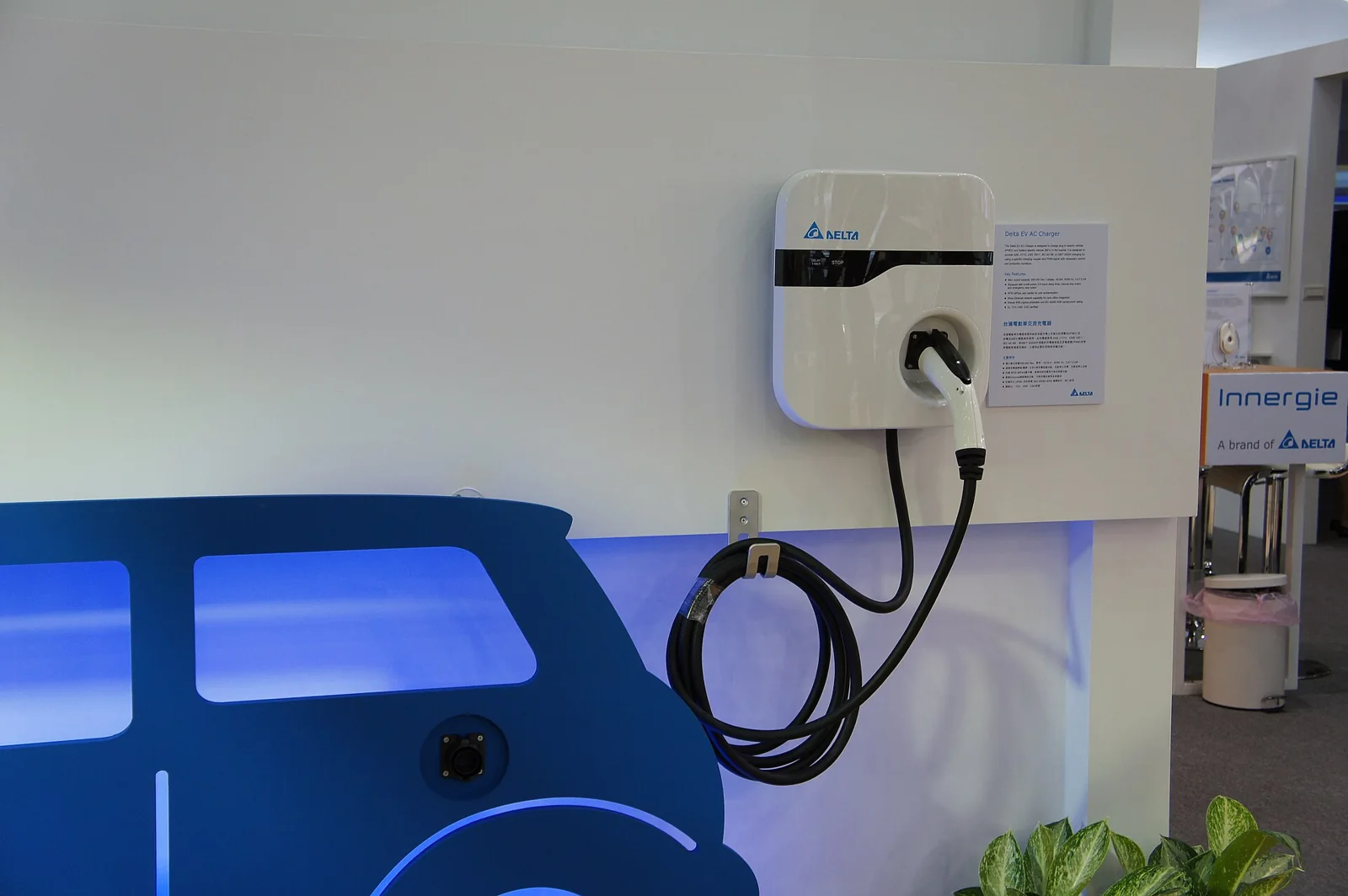
An EV charger PCB is not one standard board type. Charging equipment may contain control boards, safety monitoring boards, metering boards, communication gateways, auxiliary power supplies, and high-power conversion assemblies. The correct PCB architecture depends on whether the product is an AC EVSE, an on-board charger, or a DC fast charger.
Key decisions before selecting an EV charger PCB supplier
| Decision area | Buyer input required | Supplier impact |
|---|---|---|
| Charger architecture | AC EVSE, OBC, DC fast charger, power module, controller, meter, communication board | Determines PCB technology, assembly process, testing, and qualification scope |
| Electrical boundary | Voltage, current, transient conditions, insulation class, environmental conditions | Determines stack-up, spacing, materials, protection, and validation |
| Current path | Terminals, contactors, busbars, power modules, cooling method | Determines copper structure, thermal design, joints, and inspection |
| Communication scope | Control pilot, ISO 15118, OCPP, CAN, Ethernet, RS-485 | Determines interfaces, isolation, firmware, and test requirements |
| Production evidence | Required inspection, test data, traceability, and change control | Determines fixtures, records, and manufacturing workflow |
What is an EV charger PCB?
EV charger PCB design begins with identifying where power conversion happens.
| Product architecture | Charging conversion location | Typical PCB responsibility | Main design concerns |
|---|---|---|---|
| AC EVSE / wallbox | Vehicle on-board charger | Control pilot, protection monitoring, contactor control, metering, communication, auxiliary power | Isolation barriers, surge paths, sensing accuracy, contamination, thermal behavior |
| On-board charger | Vehicle | AC input, PFC, DC/DC conversion, gate drive, control, sensing | Automotive environment, vibration, fast switching, thermal interfaces |
| DC fast charger | Charging cabinet | PFC, isolated DC/DC, power modules, supervisory control, metering, vehicle communication | High DC voltage, switching noise, cooling, power-loop design |
This guide focuses on charging-infrastructure PCB manufacturing. For vehicle-mounted converters, see the on-board charger PCB guide. For broader EV electronics sourcing, see electric vehicle PCB assembly.
How do AC EVSE and DC fast-charger PCBs differ?
AC EVSE primarily manages safe power delivery. The vehicle performs battery conversion through its on-board charger.
DC fast chargers perform power conversion outside the vehicle. The cabinet normally distributes responsibilities among power modules, control boards, communication boards, cooling systems, and protection hardware.
| Design factor | AC EVSE PCB | DC fast charger PCB |
|---|---|---|
| Main function | Safe connection, monitoring, metering, communication | Power conversion and controlled DC delivery |
| Primary risks | Isolation, contactor heating, sensing, communication | Switching transients, thermal stress, power loops, high-energy faults |
| Manufacturing focus | Safety partitions, connectors, relay interfaces | Power electronics assembly, thermal interfaces, high-current structures |
| Validation evidence | Functional states, protection response, communication tests | Thermal maps, switching waveforms, insulation tests, protection validation |
Which PCBs are inside an EV charging system?
A supplier evaluation should review each board domain separately.
| Board type | Freeze before RFQ | Manufacturing evidence |
|---|---|---|
| Mains switching board | Protection architecture, contactors, terminals, insulation boundaries | Assembly inspection, continuity, functional testing, thermal data |
| Metering board | Accuracy requirements, sensing method, calibration process | Calibration records, correlation data, traceability |
| Safety controller | Fault states, watchdog behavior, firmware revision | Functional test, fault simulation, programming records |
| Communication board | ISO 15118, OCPP, CAN, Ethernet, wireless requirements | Interface validation, firmware records, network tests |
| Auxiliary power board | Input range, isolation requirements, output rails | Load testing, protection testing, insulation checks |
| DC power module | Topology, switching conditions, cooling method | Waveforms, thermal validation, assembly evidence |
How should EV charger PCB isolation and creepage be specified?
High-voltage PCB spacing cannot be selected from voltage alone. The design must consider:
- Working voltage and waveform
- Transient or impulse voltage
- Insulation function
- Pollution degree
- CTI/material group
- Altitude
- Enclosure conditions
- Coating or potting assumptions
- Slots, cutouts, connectors, and hardware
Creepage and clearance requirements must be reviewed across every copper layer, component pad, via, connector, mounting feature, and contamination path.
Conformal coating may support insulation requirements only when the material, process, coverage, inspection, and qualification requirements are defined.
How are current capacity and thermal performance evaluated?
Copper weight does not define charger PCB current capability by itself. The complete electrical and thermal path must be reviewed.
| Parameter | Evaluation point |
|---|---|
| Copper structure | Layer count, copper thickness, plane area, neck-downs |
| Terminals and connectors | Contact resistance, mechanical support, heating |
| Vias | Electrical capacity, thermal transfer, reliability |
| Current sensing | Kelvin routing and noise control |
| Power loops | Switching loop inductance and return paths |
| Cooling interface | Flatness, TIM, pressure, airflow, temperature rise |
Use heavy copper PCB or high-thermal PCB structures when the electrical and thermal model requires them.
What communication interfaces affect EV charger PCB design?
Charging communication involves several separate systems:
- Control pilot and proximity circuits define charging states and safety behavior.
- ISO 15118 supports vehicle-to-charger high-level communication.
- OCPP connects charging equipment with backend management systems.
- CAN, Ethernet, RS-485, and wireless interfaces connect internal modules.
PCB requirements include connector protection, isolation components, signal integrity, common-mode control, controlled impedance where required, RF layout considerations, and production test access.
What manufacturing controls matter for EV charger PCB assembly?
Bare PCB fabrication requirements
Specify:
- Stack-up
- Laminate material
- Copper thickness
- Finished board thickness
- Surface finish
- Controlled impedance requirements
- Slots and routed isolation barriers
- Material documentation
- Approved substitutions
Assembly requirements
Define:
- Moisture-sensitive component handling
- High-mass component support
- Selective soldering
- Press-fit requirements
- Cleaning process
- Coating or potting requirements
- Torque and mechanical assembly controls
- Thermal interface materials
- Serialization and genealogy
Use an early DFM review to resolve manufacturability issues before tooling and qualification.
Which tests should an EV charger PCBA include?
| Test | Purpose |
|---|---|
| SPI and AOI | Detect assembly placement and visible solder defects |
| X-ray | Inspect hidden joints and selected power packages |
| ICT/electrical test | Detect opens, shorts, and selected circuit faults |
| Functional test | Verify charging states, communication, sensing, and protection behavior |
| Insulation testing | Verify specified electrical barriers |
| Ground-bond testing | Verify protective-earth paths where applicable |
| Thermal/load testing | Confirm temperature and voltage-drop performance |
| EMC/protocol testing | Validate system-level compliance |
APTPCB's testing and quality overview can help structure manufacturing evidence discussions.
What EV charger PCB failures should suppliers help prevent?
| Failure mode | Possible cause | Required evidence |
|---|---|---|
| Contactor overheating | Poor current path, weak joints, thermal overload | Thermal data, joint inspection, load testing |
| Insulation failure | Spacing violation, contamination, coating defect | Barrier review, cleanliness records, insulation testing |
| Metering drift | Shunt heating, routing errors, calibration issues | Calibration records and temperature correlation |
| Communication failure | Noise coupling, weak isolation, power instability | Interface tests and event records |
| Power-stage overheating | Poor loop design, thermal interface failure | Waveform and thermal validation |
| Field traceability failure | Missing genealogy or uncontrolled changes | Revision history and production records |
What drives EV charger PCB cost and lead time?
The largest cost drivers include:
- Layer count and materials
- Heavy copper requirements
- High-voltage isolation features
- Routed slots and special fabrication
- Mixed SMT/THT assembly
- Large connectors and power components
- Cleaning, coating, and potting
- Test fixtures
- Calibration requirements
- Traceability systems
- Qualification requirements
What should be included in an EV charger PCB RFQ?
Product architecture
- AC EVSE, DC fast charger, controller, meter, communication, HMI, or power module
- Voltage/current range
- Cooling method
- Target market and certification requirements
Manufacturing package
- Gerber, ODB++, or IPC-2581 files
- BOM and approved vendor list
- Centroid data
- Drawings
- Schematics
- Stack-up requirements
- Isolation boundaries
- Mechanical requirements
Test and production requirements
- SPI, AOI, X-ray, ICT, functional testing
- Calibration requirements
- Firmware revision control
- Serialization
- Traceability
- Rework rules
- Change notification requirements
Which EV charger standards should be considered?
Applicable references may include:
- IEC 61851 series for conductive charging systems
- IEC 62196 series for connectors and vehicle interfaces
- ISO 15118 series for vehicle communication
- IEC 60664-1 for insulation coordination
- IEC 62955 for residual DC detection
- SAE J1772 and SAE J3400 where applicable
- UL 2594 for EV supply equipment
- UL 2202 for DC charging equipment
- UL 2231 series for personnel protection
- IPC-6012, IPC-A-600, IPC-A-610, and J-STD-001 when invoked by contract
The equipment manufacturer remains responsible for charging architecture, safety design, firmware, cybersecurity, certification, EMC, thermal validation, and field performance.
EV Charger PCB FAQ
What is an EV charger PCB?
It is a PCB used for control, protection, communication, metering, auxiliary power, or power conversion inside EV charging equipment.
Is an AC EVSE the same as an on-board charger?
No. AC EVSE supplies controlled AC power. The vehicle on-board charger performs AC-to-DC conversion.
Does every EV charger PCB require heavy copper?
No. Copper selection depends on the actual current path and thermal requirements.
What is the difference between ISO 15118 and OCPP?
ISO 15118 handles vehicle-to-charger communication. OCPP handles charger-to-backend communication.
What should be included in an EV charger PCB quote request?
Include complete design files, electrical requirements, manufacturing requirements, testing expectations, traceability requirements, and change-control rules.
Request an EV charger PCB manufacturing review
Send the board architecture, released design data, insulation basis, materials, current paths, thermal requirements, assembly requirements, firmware controls, testing requirements, quantities, and change-control rules.