
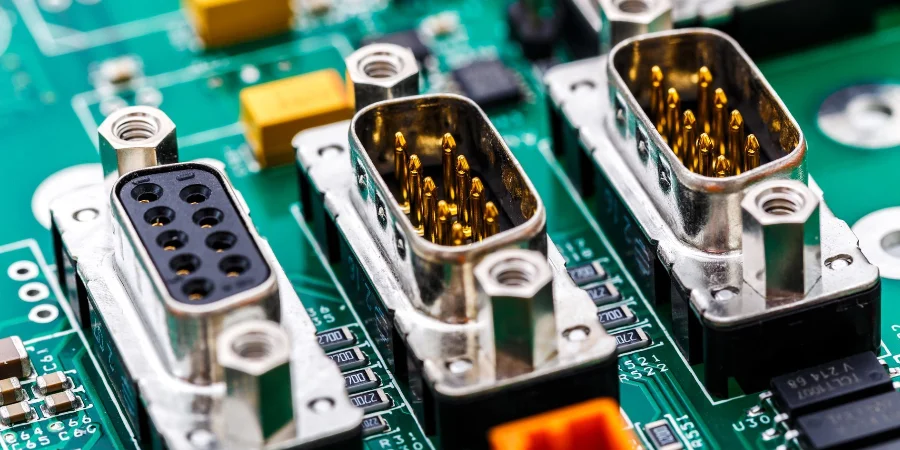
A farm management PCB is the control electronics behind irrigation systems, greenhouse equipment, livestock monitoring, agricultural machinery, pumps, valves, sensors, and field automation equipment.
The right design depends on where the controller operates, how it is powered, what connects to it, how technicians service it, and what failures are acceptable. A greenhouse controller, tractor-mounted ECU, and outdoor wireless sensor node may all be called agricultural electronics, but they require different PCB materials, protection methods, validation plans, and PCBA sourcing requirements.
What should be defined before designing a farm management PCB?
Start with the deployment environment instead of selecting a “rugged PCB” construction first.
| Application | Main environmental and electrical concerns | PCB/PCBA design priorities |
|---|---|---|
| Greenhouse or barn controller | Condensation, dust, cleaning chemicals, relay noise, animal waste gases | Protected I/O, contamination control, coating compatibility, connector selection |
| Irrigation controller | Wet connectors, long cables, motor switching, surge events, ground differences | Power protection, transient suppression, cable strategy, isolation review |
| Outdoor sensor node | Temperature cycling, condensation, battery limits, RF performance | Low-power design, antenna layout, corrosion protection, enclosure compatibility |
| Agricultural vehicle controller | Vibration, shock, supply transients, harness faults | Mechanical support, power filtering, locking connectors, communication protection |
| Waste or biogas equipment | Corrosive gases, contamination, restricted service access | Material compatibility, sealing strategy, installation-specific safety review |
A PCB manufacturer needs these conditions before quoting because environmental assumptions affect:
- laminate selection;
- copper thickness;
- connector choice;
- coating or potting process;
- assembly cleanliness;
- inspection requirements;
- validation testing.
How do you choose PCB protection for agricultural environments?
Agricultural electronics reliability comes from a protection stack. No single material creates a field-ready controller.
| Protection layer | Engineering decision | Evidence to define |
|---|---|---|
| Enclosure | How moisture, dust, and contaminants are controlled | IP target, gasket design, cable entries, drainage, venting |
| PCB assembly cleanliness | How contamination is controlled before protection | Cleaning process, ionic residue limits, handling controls |
| Conformal coating | Whether moisture and contamination protection is required | Material type, thickness, coverage, masking, inspection |
| Potting | Whether full encapsulation is justified | Resin, thermal path, repair limits, cure process |
| Connectors | How field interfaces survive exposure | Sealing, plating, locking, strain relief |
| Mechanical design | How vibration and cable loads are managed | Mounting, support points, shock and vibration requirements |
Conformal coating can improve resistance to moisture, contamination, and corrosion, but it does not replace enclosure design, connector protection, electrical spacing, or assembly cleanliness. The selected coating process should be qualified on the production assembly.
Use the PCB conformal coating service page when defining material, masking, inspection, and repair requirements.
Which PCB materials and construction choices are suitable for farm controllers?
PCB construction should follow electrical and environmental requirements.
High-Tg laminate
High-Tg laminate can improve thermal stability of the laminate system, but Tg alone does not define equipment operating temperature. Components, solder joints, connectors, coating, enclosure temperature, and validation results determine actual limits.
Heavy copper
A heavy copper PCB can support high-current paths, thermal spreading, and power distribution. Specify copper thickness by circuit function rather than applying heavy copper everywhere.
Evaluate:
- continuous current;
- peak current;
- duty cycle;
- allowed temperature rise;
- connector ratings;
- thermal path;
- manufacturing capability.
Surface finish
ENIG, HASL, and other finishes should be selected according to assembly requirements, storage conditions, contact functions, corrosion exposure, and cost targets. Surface finish alone does not determine agricultural reliability.
How should farm PCB power protection be designed?
Agricultural controllers frequently connect to inductive loads and long field wiring:
- pumps;
- motors;
- valves;
- heaters;
- solenoids;
- sensors;
- communication networks.
The power design review should answer:
| Question | Design evidence |
|---|---|
| What power range exists? | Nominal voltage, tolerance, startup behavior, brownout conditions |
| What faults are possible? | Reverse polarity, short circuits, wiring errors |
| What transients occur? | Surge sources, switching events, cable coupling |
| Where does fault current return? | Grounding and protection path diagrams |
| What happens during failure? | Reset behavior, recovery, safe state |
TVS diodes, MOVs, filters, isolation, and snubbers address different electrical problems. Component selection should match the interface voltage, waveform, repetition rate, source impedance, and acceptable failure mode.
How should agricultural PCB connectors and communications be protected?
Long agricultural cables can introduce:
- ESD;
- surge energy;
- common-mode noise;
- ground offsets;
- signal integrity problems.
Review every external interface from the connector inward.
| Interface | Design requirements |
|---|---|
| Power input | Protection devices, filtering, grounding, fault behavior |
| Sensors | Accuracy, cable length, shielding, protection, diagnostics |
| Motors and valves | Switching protection, current handling, recovery behavior |
| Wired communication | Termination, common-mode range, shielding, transient protection |
| Wireless systems | Antenna placement, enclosure effect, final RF testing |
For vehicle-mounted agricultural electronics, communication labels such as CAN, J1939, or ISOBUS should correspond to actual physical-layer requirements and validation plans.
Serviceability should be decided before coating or potting. Define:
- accessible test points;
- replacement strategy;
- connector labeling;
- programming access;
- repair limits.
What are the most common farm PCB failure modes?
| Field failure | Likely causes | Engineering response |
|---|---|---|
| Sensor drift or intermittent readings | Condensation, contamination, corrosion, leakage currents | Cleanliness control, coating qualification, enclosure review |
| Controller resets | Supply dips, switching noise, grounding issues | Power capture, transient testing, recovery verification |
| Communication failures | Cable faults, ESD, termination errors, noise coupling | Interface protection review and cable testing |
| Cracked solder joints | Vibration, shock, unsupported components | Mechanical support and vibration validation |
| Overheating | Current overload, connector resistance, enclosure heat | Thermal measurement and load testing |
| Coating failures | Poor preparation, incompatible materials, incorrect cure | Process qualification and inspection records |
What validation tests should a farm management PCBA pass?
Testing should reproduce the actual product environment.
A practical validation matrix connects each requirement to:
| Requirement | Test evidence |
|---|---|
| Moisture exposure | Temperature-humidity cycling, condensation testing |
| Mechanical environment | Vibration, shock, connector loading |
| Electrical disturbances | ESD, burst, surge, power interruption |
| Chemical exposure | Material compatibility testing where required |
| Communication reliability | Cable tests, fault injection, recovery verification |
| Thermal performance | Worst-case load and temperature measurement |
Use testing and quality control to define inspection, functional testing, traceability, and acceptance records.
What should be included in a farm PCB RFQ package?
A complete quotation package reduces supplier assumptions.
Product and environment information
Include:
- equipment function;
- installation location;
- temperature and humidity range;
- condensation exposure;
- vibration and shock conditions;
- dust, water, fertilizer, chemical, or gas exposure;
- enclosure details;
- cable and connector information.
Electrical requirements
Provide:
- input voltage range;
- load characteristics;
- transient conditions;
- grounding strategy;
- communication interfaces;
- sensor and actuator requirements;
- required fault behavior.
Manufacturing documents
Provide:
- Gerber or ODB++ files;
- fabrication drawing;
- stackup requirements;
- BOM with manufacturer part numbers;
- approved substitutions;
- assembly drawings;
- programming files;
- test procedures;
- coating or potting drawings.
Qualification requirements
Define:
- applicable standards;
- sample quantities;
- test conditions;
- acceptance criteria;
- inspection records;
- traceability requirements;
- change-control expectations.
Which standards apply to agricultural PCB assemblies?
Applicable standards depend on equipment type, market, safety function, voltage, communication system, and customer requirements.
Common references include:
- IEC 60529 — Degrees of protection provided by enclosures
- IEC 60068 series — Environmental testing
- IEC 61000-4-2, IEC 61000-4-4, IEC 61000-4-5 — ESD, burst, and surge immunity
- ISO 14982 — Electromagnetic compatibility for agricultural machinery
- ISO 25119 series — Safety-related control systems for agricultural machinery
- ISO 11783 series — Agricultural communication networks
- IPC-CC-830 — Qualification of electrical insulating compounds
- IPC-A-610 — Acceptability of electronic assemblies
- J-STD-001 — Soldered electrical and electronic assemblies
The PCB/PCBA supplier manufactures and tests against the released package. The product owner remains responsible for system safety, enclosure performance, installation conditions, software behavior, and final compliance.
Farm management PCB FAQ
Does every agricultural PCB require conformal coating?
No. Coating should be selected according to moisture, contamination, voltage spacing, service requirements, and failure consequences. The exact coating process should be qualified on the production assembly.
Is IP67 a PCB rating?
No. IP ratings apply to complete equipment enclosures. A PCB or PCBA should not be described as IP67 without enclosure-level testing.
Is high-Tg FR-4 always required?
No. Select laminate materials based on thermal, mechanical, electrical, fabrication, and reliability requirements.
When is heavy copper useful?
Heavy copper is useful for justified high-current or thermal applications. Copper thickness should match electrical calculations and manufacturing capability.
What information does a PCBA supplier need for quotation?
Provide controlled manufacturing files, BOM, environmental conditions, electrical requirements, testing requirements, coating details, and acceptance criteria.
Request a farm management PCB/PCBA review
Send the board package, deployment environment, enclosure information, cable details, power requirements, coating or potting requirements, and validation plan. APTPCB can review manufacturability, assembly requirements, testing needs, and quotation gaps before production.