
Time-to-market is often the deciding factor between a product's success and obsolescence, making fast turn pcb fabrication a critical capability for modern electronics engineering. Whether you are validating a new IoT design or rushing a replacement board for industrial machinery, the ability to accelerate the manufacturing process without sacrificing quality is paramount. At APTPCB (APTPCB PCB Factory), we understand that speed is not just about rushing machines; it is about optimized workflows, precise engineering questions (EQ), and rapid material handling. This guide serves as a central hub for understanding the nuances of expedited printed circuit board manufacturing, from initial definition to final acceptance.
Key Takeaways
Before diving into the technical details, here are the core principles that govern successful rapid fabrication.
- Definition Scope: fast turn pcb typically refers to production timelines ranging from 24 hours to 5 days, distinct from standard 2-3 week lead times.
- Critical Metric: On-time delivery rate is as important as speed; a 24-hour turn is useless if it arrives late or defective.
- Material Availability: Speed relies heavily on using stock materials (like standard FR4) rather than exotic substrates with long procurement cycles.
- Testing Reality: Expedited service should never skip electrical testing (E-test); validation is even more critical when processes are accelerated.
- Design Maturity: A quick turn pcb prototype requires cleaner data than standard production because there is zero buffer time for engineering queries.
- Cost Trade-off: Expect a premium for expedited services, often calculated based on the hours saved compared to standard production.
- Validation: Always perform a First Article Inspection (FAI) or digital stackup verification before the clock starts ticking.
What fast turn pcb really means (scope & boundaries)
Having established the key takeaways, we must first define the operational boundaries of fast turn pcb to avoid misalignment between design expectations and manufacturing reality.
In the industry, "fast turn" or "quick turn" is not merely a marketing term; it is a specific operational track within the fab house. It involves dedicated production lines or prioritized slots in plating and etching baths. The scope generally covers rigid PCBs (2 to roughly 40 layers), HDI boards, and sometimes simple flex circuits, provided the materials are in stock.
The boundary lies where physics cannot be rushed. For instance, lamination cycles for high-layer counts require specific cure times that cannot be shortened without risking delamination. Similarly, quick turn pcb vs standard lead time: what changes in fab is primarily the queue time (waiting between steps) rather than the process time itself. In a fast turn scenario, a board moves immediately from drilling to plating, whereas in standard production, it might wait in a rack for batching. Understanding this distinction helps engineers realize that "fast" means "prioritized efficiency," not "skipping chemistry."
fast turn pcb metrics that matter (how to evaluate quality)
Once the scope is defined, measuring the success of a fast turn pcb project requires tracking specific metrics beyond just the delivery date.
Quality in rapid manufacturing is multidimensional. If a board arrives in 24 hours but fails continuity testing, the effective speed is zero. Therefore, evaluating a vendor or a project’s success depends on the following quantifiable data points.
| Metric | Why it matters | Typical range or influencing factors | How to measure |
|---|---|---|---|
| Turnaround Time (TAT) | Defines the "fast" in fast turn. | 24 hours (2-layer) to 5 days (complex HDI). | Time from EQ approval to shipment dispatch. |
| On-Time Delivery (OTD) | Reliability of the schedule. | Target > 98%. Weather and logistics can impact this. | Percentage of orders shipped by the promised timestamp. |
| EQ Response Time | Engineering delays kill speed. | < 2 hours for fast turn projects. | Time elapsed between CAM engineer query and designer reply. |
| First Pass Yield (FPY) | Indicates process stability under speed. | > 95% for prototypes. | (Good boards / Total panels started) * 100. |
| Layer Registration | Critical for multilayer stackups. | +/- 3 mil (standard) to +/- 1 mil (advanced). | X-ray inspection or microsection analysis. |
| Impedance Tolerance | Signal integrity verification. | +/- 10% (standard) or +/- 5% (precision). | TDR (Time Domain Reflectometry) coupons. |
How to choose fast turn pcb: selection guidance by scenario (trade-offs)
Understanding these metrics allows engineers to choose the right fast turn pcb strategy based on the specific constraints of their project scenario.
Not every project requires 24-hour turnaround, and over-specifying speed can unnecessarily inflate costs. Conversely, under-valuing speed in critical phases can delay product launches. Below are common scenarios and how to balance the trade-offs.
Scenario 1: Proof-of-Concept (PoC)
- Goal: Validate a schematic idea physically.
- Recommendation: Choose a 2-4 layer build with standard FR4 and HASL finish.
- Trade-off: Accept looser tolerances to maximize speed and minimize cost.
- Focus: Functional connectivity over long-term reliability.
Scenario 2: Hardware Validation Test (HVT)
- Goal: Test form, fit, and function with near-final materials.
- Recommendation: Use the exact stackup intended for mass production.
- Trade-off: Lead time increases slightly (3-5 days) to ensure impedance control is correct.
- Focus: Signal integrity and mechanical fit.
Scenario 3: NPI (New Product Introduction) Pilot Run
- Goal: Verify the manufacturing process before volume.
- Recommendation: Utilize NPI small batch manufacturing services.
- Trade-off: Slower than a pure prototype run but includes full DFM and yield analysis.
- Focus: Yield optimization and assembly readiness.
Scenario 4: Emergency Line Down (Replacement Parts)
- Goal: Replace a broken controller in an industrial machine immediately.
- Recommendation: "Expedited" service (24h) regardless of cost.
- Trade-off: Extremely high cost premium; limited to in-stock materials.
- Focus: Absolute speed to restore operations.
Scenario 5: High-Frequency RF Prototyping
- Goal: Test RF performance.
- Recommendation: Ensure the fab has Rogers or Teflon material in stock before ordering.
- Trade-off: If material is not in stock, "fast turn" is impossible due to procurement time.
- Focus: Material properties (DK/Df) over raw speed.
Scenario 6: Complex HDI Iteration
- Goal: Debug a high-density interconnect design (blind/buried vias).
- Recommendation: Allow 5-7 days. 24h is risky for laser drilling and sequential lamination.
- Trade-off: Speed is sacrificed for the structural integrity of microvias.
- Focus: Interconnect reliability.
fast turn pcb implementation checkpoints (design to manufacturing)
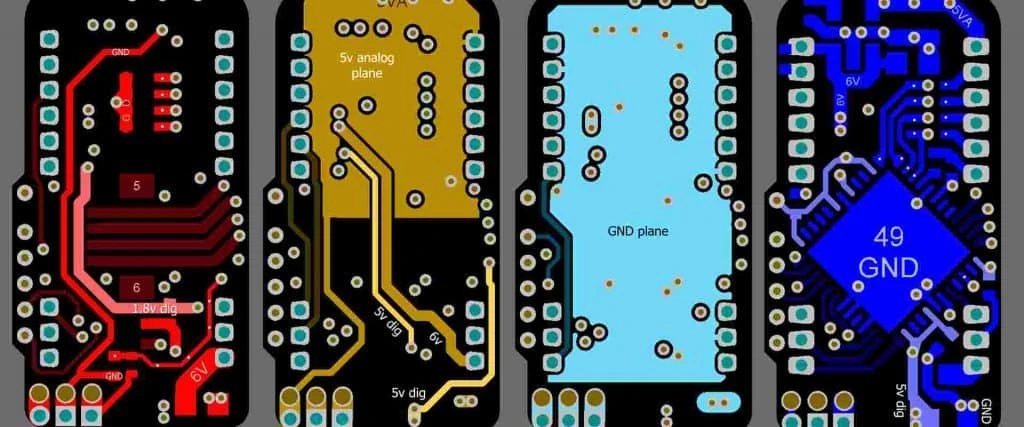
After selecting the right strategy, execution follows a strict sequence of checkpoints to ensure the fast turn pcb moves smoothly from design software to the shipping dock.
Missing a single file or specification can put a "hold" on your order, instantly negating the benefit of paying for expedited service. Follow this checklist to ensure a frictionless process.
- Data Package Completeness: Ensure your zip file includes Gerbers (RS-274X or X2), Drill files (NC Drill), and a clear IPC netlist.
- DFM Pre-Check: Run a preliminary check against DFM guidelines to catch minimum trace/space violations before submission.
- Material Specification: Explicitly state "Standard FR4" or specific brands (e.g., Isola 370HR) only if you have confirmed stock availability.
- Stackup Definition: Provide a clear layer stackup diagram including copper weight and dielectric thickness. Ambiguity here causes immediate delays.
- Drill Chart Verification: Check that drill symbols match the drill file and that plated vs. non-plated holes are clearly defined.
- Engineering Query (EQ) Contact: Designate a technical contact who is available 24/7 during the initial CAM review to answer questions immediately.
- Impedance Requirements: If impedance control is needed, clearly list the target traces and reference layers.
- Surface Finish Selection: Choose standard finishes like ENIG or HASL for speed; specialty finishes (like Hard Gold or ENEPIG) may add days.
- Testing Protocols: Confirm that 100% E-test (Flying Probe) is included in the quote.
- Shipping Instructions: Verify the delivery address and contact number are correct to avoid logistics delays after fabrication is complete.
fast turn pcb common mistakes (and the correct approach)
Even with a solid implementation plan, common errors can derail a fast turn pcb project, turning a 2-day job into a week-long struggle.
Identifying these pitfalls early saves budget and frustration.
- Mistake 1: Assuming "Standard" implies "Fast".
- Correction: Standard lead times are often 2 weeks. You must explicitly request and pay for "Quick Turn" or "Expedited" service.
- Mistake 2: Ignoring the EQ email.
- Correction: The clock often pauses when an Engineering Query is sent. Monitor your inbox closely after submission.
- Mistake 3: Specifying non-stock materials.
- Correction: Always check the vendor's inventory list. If you need a specific Arlon or Rogers laminate, confirm it is on the shelf before ordering.
- Mistake 4: Unrealistic tolerances.
- Correction: Demanding +/- 3% impedance tolerance on a 24-hour turn is risky. Stick to standard IPC Class 2 tolerances unless absolutely necessary.
- Mistake 5: Forgetting the Drill File.
- Correction: It happens more often than expected. Gerbers show the pads, but the NC Drill file tells the machine where to bore the holes.
- Mistake 6: Changing the design after submission.
- Correction: In fast turn, the board might be etched within hours of file approval. Changes usually require scrapping the batch and restarting.
- Mistake 7: Neglecting Via-in-Pad requirements.
- Correction: If your BGA requires via-in-pad (VIPPO), this adds plating steps (capping). Ensure this is accounted for in the lead time.
- Mistake 8: Overlooking the Silkscreen.
- Correction: Tiny text (< 30 mil height) can blur. While not fatal to function, it looks unprofessional. Adhere to minimum character width rules.
fast turn pcb FAQ (cost, lead time, materials, testing, acceptance criteria)
Beyond these common mistakes, specific questions often arise regarding the nuances of fast turn pcb procurement.
Q1: How is the cost calculated for a quick turn pcb lead time and pricing guide? Pricing is a function of base material cost, layer count, and an "expedite multiplier." The multiplier increases as the lead time decreases (e.g., 24h turn might be 2x or 3x the standard price) because it disrupts standard production flow.
Q2: Does fast turn pcb include electrical testing? Yes, reputable manufacturers like APTPCB always include E-test (usually Flying Probe for prototypes) even for 24-hour turns. Never accept a board that hasn't been electrically validated.
Q3: What are the material restrictions for 24-hour turnaround? Generally, you are restricted to materials currently in stock at the factory. This usually means standard Tg150 or Tg170 FR4. High-frequency or metal-core materials may require 3+ days even on an expedited track.
Q4: Can I get a quick turn pcb prototype with blind and buried vias? Yes, but "quick" is relative. While a standard board takes 24-48 hours, HDI boards with blind/buried vias require sequential lamination cycles, pushing the fastest realistic turn to 4-6 days.
Q5: What are the acceptance criteria for fast turn boards? Acceptance is typically based on IPC-A-600 Class 2 standards. This covers criteria for conductor width, hole breakout, solder mask registration, and surface finish quality.
Q6: How does quick turn pcb vs standard lead time: what changes in fab? The chemistry and physics remain the same. The difference is queue management. Fast turn boards jump to the front of every line (drilling, plating, AOI), eliminating wait times between processes.
Q7: Is assembly (PCBA) included in the fast turn timeline? Usually, PCB fabrication and assembly are quoted separately. However, turnkey services can combine them. Be sure to clarify if the "3-day turn" covers just the bare board or the populated board.
Q8: What happens if the manufacturer misses the deadline? Most policies refund the "expedite fee" portion of the cost, reverting the price to the standard lead time rate.
Q9: Can I use heavy copper (3oz+) in a fast turn project? Heavy copper requires longer etching and plating times. While faster than standard, it typically cannot be done in 24 hours due to the physical time required to deposit or remove that much copper.
Q10: Do I need to provide a netlist for fast turn? It is highly recommended. A netlist allows the CAM engineer to verify that your Gerber graphics match your schematic intent before manufacturing begins.
Resources for fast turn pcb (related pages and tools)
To support your answers to these questions, utilize these related resources to deepen your understanding of the manufacturing capabilities.
- Service Overview: Explore our dedicated quick turn pcb services page for specific capability limits.
- Quality Assurance: Learn about our validation steps in first article inspection.
- Design Prep: Use our DFM guidelines to prepare your files for error-free manufacturing.
- Glossary: Refer to the glossary terms for broader industry definitions.
fast turn pcb glossary (key terms)
Finally, clarifying the terminology used throughout this guide ensures clear communication between designers and fabricators.
| Term | Definition |
|---|---|
| CAM (Computer-Aided Manufacturing) | The engineering stage where design files are prepped for production machines. |
| Gerber X2 | An advanced file format that includes layer structure and attribute data, reducing ambiguity. |
| NPI (New Product Introduction) | The phase covering prototyping and pilot runs before mass production. |
| Stackup | The arrangement of copper layers and insulating material (prepreg/core) in the PCB. |
| Fiducial | Optical markers on the PCB used by assembly machines for alignment. |
| Flying Probe Test | A fixtureless method of electrical testing ideal for prototypes and small batches. |
| Solder Mask Dam | The thin bridge of solder mask between adjacent pads, critical for preventing solder bridges. |
| Aspect Ratio | The ratio of the PCB thickness to the diameter of the drilled hole (critical for plating). |
| Panelization | Grouping multiple PCB units onto a larger panel for efficient manufacturing and assembly. |
| Via-in-Pad | A design technique where a via is placed directly in a component pad, often requiring filling and capping. |
| Tg (Glass Transition Temp) | The temperature at which the PCB base material begins to soften and lose rigidity. |
| EQ (Engineering Query) | Questions raised by the manufacturer regarding discrepancies in the design files. |
Conclusion (next steps)
Mastering fast turn pcb procurement is about more than just demanding speed; it is about aligning your design data, material choices, and expectations with the physical realities of manufacturing. By focusing on the metrics of on-time delivery and yield, and by avoiding common pitfalls like missing drill files or ambiguous stackups, you can reliably accelerate your development cycle.
When you are ready to move from design to physical board, ensure you have the following ready for your quote:
- Complete Gerber files (including drill and outline).
- Desired quantity and lead time (e.g., 5 pcs, 3 days).
- Material specifications (Tg, copper weight).
- Surface finish requirements.
- Any special constraints (impedance control, blind vias).
APTPCB is equipped to handle your most time-critical projects, ensuring that "fast" never compromises "functional."