
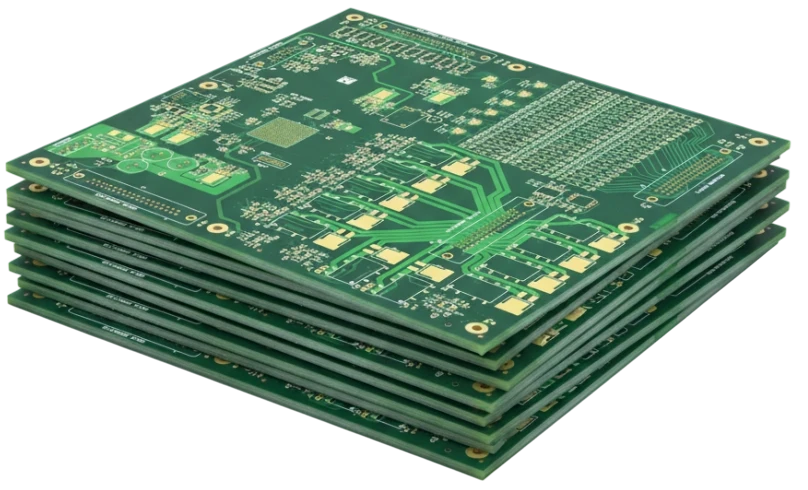
A Fetal Monitor PCB is not simply a circuit carrier. It is the signal-processing foundation for a medical device that must reliably capture weak biological signals, maintain patient isolation, and operate continuously in a clinical environment.
For engineers, NPI teams, and procurement managers, the key decision is not only whether a supplier can fabricate a PCB. The decision is whether the supplier can consistently manufacture a board that preserves signal quality, supports regulatory validation, and remains reliable throughout a medical product lifecycle.
This guide focuses on the engineering decisions that affect sourcing success: PCB construction, risk control, validation testing, and supplier qualification.
What PCB requirements define a fetal monitor?
A fetal monitor typically combines sensitive analog acquisition with digital processing, display systems, communication interfaces, and power management. The PCB must support:
- Fetal heart rate signal acquisition from ultrasound or Doppler sensing
- Uterine contraction measurement through TOCO sensors
- Low-noise analog amplification and filtering
- Isolation between patient-connected circuits and power domains
- Long-term operation in hospitals
- EMC performance in electrically noisy environments
A typical architecture uses a mixed-signal PCB where analog front-end sections require careful separation from processors, switching power supplies, wireless modules, and display interfaces.
Which Fetal Monitor PCB specifications should be defined before RFQ?
A supplier quote is only meaningful when the fabrication requirements are clearly defined.
| Parameter | Typical Requirement | Why It Matters |
|---|---|---|
| PCB Material | High-Tg FR4, Tg ≥170°C | Improves thermal reliability and reduces expansion stress |
| Layer Count | Commonly 4–8 layers | Enables controlled grounding, shielding, and routing |
| Copper Weight | 1 oz (35µm) standard; 2 oz for higher-current areas | Supports power distribution requirements |
| Surface Finish | ENIG | Provides flat pads for fine-pitch assembly and corrosion resistance |
| Impedance Control | 50Ω single-ended, 90Ω/100Ω differential where required | Maintains signal integrity for high-speed interfaces |
| IPC Standard | IPC-6012 Class 2 or Class 3 depending on risk level | Defines inspection and reliability expectations |
| Cleanliness | Ionic contamination testing, typically <1.56 µg/cm² NaCl equivalent | Reduces leakage and corrosion risk |
| Via Protection | Tented or plugged vias where appropriate | Prevents contamination and solder defects |
| Traceability | Material lots, production records, inspection reports | Supports medical quality documentation |
The final stackup should be reviewed before production because analog performance depends on dielectric thickness, return paths, and grounding strategy.
How should engineers choose between PCB options?
The correct PCB configuration depends on product risk, lifecycle requirements, and manufacturing goals.
| Decision | Option A | Option B | Selection Guidance |
|---|---|---|---|
| Reliability Class | IPC Class 2 | IPC Class 3 | Choose Class 3 when failure consequences are high or regulatory requirements demand increased inspection |
| Board Structure | Rigid PCB | Rigid-flex PCB | Rigid-flex can reduce connectors in compact portable designs |
| Surface Finish | ENIG | ENEPIG | ENIG fits most applications; ENEPIG is used where wire bonding or additional surface protection is required |
| Material | High-Tg FR4 | Specialized high-frequency laminate | Use advanced materials only where RF or signal requirements justify cost |
| Production Model | Prototype supplier | Production manufacturing partner | Select a supplier that supports transition from NPI to volume production |
What are the main Fetal Monitor PCB failure modes?
Signal noise and analog measurement errors
Failure mechanism: Digital switching activity couples into fetal signal paths.
Root causes:
- Poor layer stackup
- Incorrect return current paths
- Mixed analog and digital routing
- Insufficient grounding strategy
Engineering controls:
- Separate sensitive analog areas from digital switching sections
- Use continuous reference planes
- Control high-speed routing impedance
- Validate signal-to-noise performance during prototype testing
Electrochemical migration and contamination
Failure mechanism: Ionic contamination creates conductive paths over time.
Root causes:
- Residual flux
- Poor cleaning processes
- Humidity exposure
Engineering controls:
- Require cleanliness testing
- Review washing processes
- Consider conformal coating where environmental conditions require it
Thermal cycling and via reliability
Failure mechanism: Plated through-hole failures appear after repeated thermal stress.
Root causes:
- Low-quality laminate selection
- Insufficient copper plating
- Excessive thermal expansion
Engineering controls:
- Specify High-Tg materials
- Verify copper plating thickness
- Perform thermal stress evaluation
Isolation and leakage failures
Failure mechanism: The PCB fails electrical safety testing.
Root causes:
- Insufficient creepage and clearance
- Contamination between isolated circuits
- Poor power-domain separation
Engineering controls:
- Design according to IEC 60601-1 requirements
- Review isolation barriers during PCB layout
- Perform Hi-Pot testing before production release
What validation tests should a medical PCB supplier provide?
A qualified supplier should provide objective evidence, not only capability statements.
| Test | Purpose | Example Acceptance Criteria |
|---|---|---|
| Electrical Test | Detect opens and shorts | 100% production electrical test |
| TDR Impedance Test | Verify controlled impedance | Within ±10% of target impedance |
| Microsection Analysis | Confirm internal construction | No plating cracks; verified copper thickness |
| Ionic Cleanliness Test | Prevent corrosion and leakage | Within specified contamination limit |
| Thermal Stress Test | Verify laminate reliability | No delamination or blistering |
| Dimensional Inspection | Confirm mechanical fit | Within drawing tolerances |
| Warp and Twist Test | Support SMT assembly | Typically below 0.75% |
| Hi-Pot Test | Verify isolation barriers | No breakdown at specified voltage |
How do you qualify a Fetal Monitor PCB supplier?
Use a supplier review process that evaluates manufacturing evidence, not only price.
RFQ package requirements
Provide:
- Gerber files (RS-274X or X2)
- Drill files
- IPC netlist
- Fabrication drawing
- Layer stackup requirements
- Material specifications
- Surface finish requirements
- Controlled impedance requirements
- Production quantity and lifecycle expectations
Supplier capability checklist
| Capability Area | Verification Item |
|---|---|
| Medical Quality | ISO 13485 certification |
| Manufacturing Control | AOI, electrical testing, process documentation |
| Signal Integrity | Controlled impedance capability and TDR reports |
| Reliability | Microsection analysis and material certification |
| Traceability | Lot tracking and Certificate of Conformance |
| Production Scale | Prototype and mass-production support |
| Engineering Support | DFM review before fabrication |
What should engineers ask before approving a PCB factory?
Before production approval, confirm:
- Can the supplier maintain the specified laminate brand and grade?
- Are material substitutions controlled through formal notification?
- Are impedance test coupons included with production panels?
- Can the factory provide inspection records for medical builds?
- Are non-conforming materials handled through documented procedures?
- Can the supplier support design changes during NPI?
A medical PCB supplier should function as a manufacturing partner, not only a fabrication source.
FAQ: Fetal Monitor PCB sourcing questions
What is the difference between a Fetal Monitor PCB and an Anesthesia Monitor PCB?
Both are medical-grade boards, but their signal challenges differ. Anesthesia Monitor PCBs commonly integrate gas measurement and ventilation-related controls, while fetal monitor designs focus heavily on low-level biological signal acquisition.
Why is High-Tg FR4 used for medical PCBs?
High-Tg materials provide improved thermal stability during assembly and operation. They reduce expansion-related stress that can damage plated holes and internal structures.
Can a Fetal Monitor PCB use HASL finish?
ENIG is generally preferred because it provides a flatter surface for fine-pitch components and improved corrosion resistance.
How is PCB noise reduced in fetal monitoring systems?
Use multi-layer designs with dedicated reference planes, controlled signal routing, and physical separation between analog acquisition circuits and digital switching sections.
What files are required for PCB DFM review?
A complete review normally requires Gerber files, drill files, IPC netlist data, fabrication drawings, and stackup information.
Related pages & tools
- Medical PCB Manufacturing – Understand the broader capabilities and certifications required for medical-grade electronics.
- Rigid-Flex PCB Technology – Explore how to eliminate connectors and improve reliability in portable medical devices.
- HDI PCB Solutions – Learn how High Density Interconnects allow for smaller, more powerful monitoring devices.
- PCB Quality Control System – Review the specific inspection steps (AOI, X-Ray, Microsection) that ensure zero defects.
- Turnkey PCB Assembly – See how combining fabrication and assembly simplifies the supply chain for medical devices.
Request a quote
Ready to validate your Fetal Monitor PCB design? APTPCB provides DFM review support to identify manufacturing risks before production.
Prepare:
- Gerber files
- Fabrication drawing with stackup and materials
- Required quantity
- Impedance and reliability requirements
- Medical quality requirements
Click here to upload your files and get a quote
Conclusion
Selecting a Fetal Monitor PCB supplier requires balancing signal performance, medical reliability, manufacturability, and lifecycle support. The strongest sourcing decisions come from suppliers that can demonstrate controlled processes, validated testing, and consistent production quality.
A properly engineered PCB helps ensure that fetal monitoring equipment delivers dependable measurements from prototype development through long-term clinical deployment.