
Definition, scope, and who this guide is for
A Fiber Optic Sensor PCB is a specialized printed circuit board designed to interface directly with optical fibers or to process signals derived from optical phenomena. Unlike standard boards that manage purely electrical signals, these PCBs must bridge the gap between the optical domain (light intensity, phase, or wavelength) and the electrical domain (voltage and current). They typically house sensitive photodiodes, transimpedance amplifiers (TIAs), and laser diodes. The primary function is to convert light signals from sensors—such as Fiber Bragg Gratings (FBG) or distributed temperature sensors—into readable digital data for industrial monitoring, medical diagnostics, or high-security perimeters.
This guide is written for procurement leads, hardware engineers, and product managers who are moving a sensor design from prototype to mass production. You are likely dealing with challenges related to signal integrity, precise mechanical alignment for optical couplers, and thermal stability. The decision context here is critical: a failure in a Fiber Optic Sensor PCB usually isn't just a blown fuse; it is a loss of data integrity that can compromise an entire monitoring system.
At APTPCB (APTPCB PCB Factory), we see many designs fail not because the schematic was wrong, but because the manufacturing specifications did not account for the physical realities of optical interfacing. This playbook removes the guesswork. It provides the specific material requirements, risk mitigation strategies, and validation protocols necessary to procure these boards safely. We will focus on the unique needs of fiber optics while briefly contrasting them with alternative sensing technologies like Microwave Sensor PCB or PIR Sensor PCB options.
When to use Fiber Optic Sensor PCB (and when a standard approach is better)
Understanding the manufacturing requirements starts with confirming that a Fiber Optic Sensor PCB is actually the correct solution for the deployment environment.
Use a Fiber Optic Sensor PCB when:
- EMI/RFI Immunity is non-negotiable: In high-voltage environments (like power substations) or areas with heavy RF noise, copper-based sensors fail. Fiber optics are immune to electromagnetic interference.
- Long-distance monitoring is required: If the sensor head is kilometers away from the processing unit (e.g., pipeline monitoring), fiber is the only viable medium. The PCB at the receiver end must handle low-level signals with extreme precision.
- Explosive environments exist: Fiber sensors are passive and generate no heat or sparks at the sensing point. The PCB remains in the safe zone, processing the light.
- High bandwidth/sensitivity is needed: For applications detecting minute vibrations (Shock Sensor PCB applications) or rapid temperature shifts, the bandwidth of optical sensors often outperforms standard electrical transducers.
Use a standard sensor PCB (Copper/Wireless) when:
- Cost is the primary driver: A standard Door Sensor PCB using a magnetic reed switch or a basic PIR Sensor PCB (Passive Infrared) is significantly cheaper to manufacture and assemble than an optical system.
- Line-of-sight is available: For perimeter security, a Barrier Sensor PCB using infrared beams or microwave technology might be sufficient and easier to install than burying fiber cable.
- Power is available locally: If you can easily power a microcontroller at the sensor edge, a standard wireless IoT sensor is often less complex than running fiber cabling back to a central Fiber Optic Sensor PCB.
Fiber Optic Sensor PCB specifications (materials, stackup, tolerances)
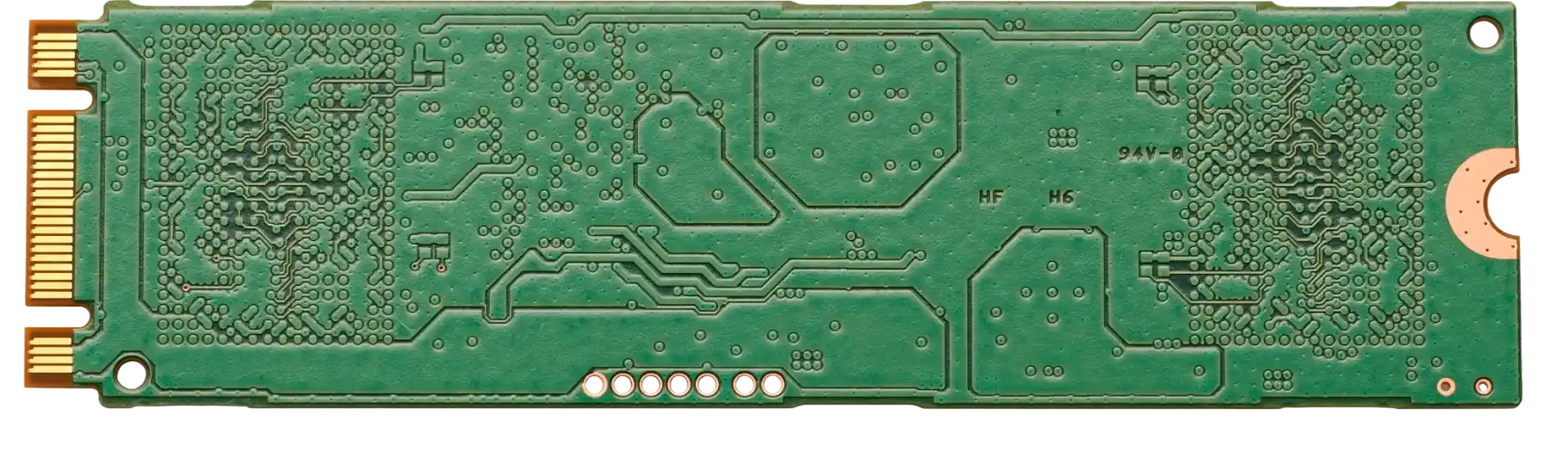
Once the decision to use fiber optics is confirmed, the manufacturing specifications must be defined to support the sensitive analog front-end circuitry.
- Base Material (Laminate):
- Standard: High-Tg FR4 (Tg > 170°C) is the baseline to prevent thermal expansion from shifting optical alignments.
- High-Performance: For high-speed data links (>10 Gbps) or extremely low-noise applications, specify Rogers 4000 series or Panasonic Megtron 6. These materials have lower Dielectric Constant (Dk) and Dissipation Factor (Df).
- Copper Weight:
- Signal Layers: 0.5 oz or 1 oz. Avoid heavy copper on signal layers to maintain fine line width impedance control.
- Power/Ground: 1 oz or 2 oz to provide a solid reference plane and thermal dissipation for laser drivers.
- Stackup & Impedance Control:
- Structure: Minimum 4-layer, preferably 6-layer. Signal layers must be sandwiched between ground planes to shield the sensitive TIA circuits from noise.
- Impedance: 50Ω single-ended for RF traces; 100Ω differential for high-speed data lines (LVDS/CML). Tolerance must be tight: ±5% or ±7% (standard is ±10%).
- Surface Finish:
- Requirement: ENIG (Electroless Nickel Immersion Gold) or ENEPIG.
- Reasoning: HASL is too uneven for the precise placement of photodiodes or optical transceiver modules. ENIG provides the flat surface required for wire bonding or fine-pitch BGA components.
- Mechanical Drilling & Routing:
- Tolerance: Outline tolerance ±0.10mm. Mounting hole tolerance ±0.05mm.
- Critical Feature: If the PCB mounts directly into a housing that aligns the fiber, the distance from the mounting hole to the photodiode pad is a Critical-to-Quality (CTQ) dimension.
- Solder Mask:
- Color: Matte Green or Matte Black.
- Reasoning: Matte finishes reduce light reflection, which can be critical if there are open optical elements on the board. Black is preferred for optical isolation.
- Cleanliness:
- Spec: IPC-6012 Class 3 cleanliness levels.
- Reasoning: Residues can outgas and fog optical lenses or fiber tips over time.
- Via Technology:
- Requirement: Tented or plugged vias under components (Via-in-Pad) if using high-density BGA sensors.
- Thermal Vias: Extensive thermal via stitching under the laser diode or LED driver to shunt heat away immediately.
- Trace Width/Spacing:
- Minimum: 4 mil / 4 mil (0.1mm) is standard for high-density areas.
- Separation: Analog receive paths must be physically separated from digital switching noise by at least 3x the trace width (3W rule).
Fiber Optic Sensor PCB manufacturing risks (root causes and prevention)
High-precision specifications are useless if the manufacturing process introduces uncontrolled variables. Here are the specific risks associated with Fiber Optic Sensor PCB production.
- Risk: Photodiode Misalignment
- Root Cause: Poor registration of the solder mask or inaccurate pick-and-place data reference.
- Detection: Automated Optical Inspection (AOI) fails to catch minor shifts; functional test shows low signal amplitude.
- Prevention: Use "Global Fiducials" and "Local Fiducials" specifically near the optical component pads. Require the PCB fab to use Laser Direct Imaging (LDI) for solder mask alignment better than ±35µm.
- Risk: Signal Noise (Low SNR)
- Root Cause: Inadequate isolation between the noisy digital ground and the quiet analog ground.
- Detection: High noise floor seen on the oscilloscope during prototype testing.
- Prevention: Design split ground planes with a single bridge point (star ground). Specify "remove unconnected copper" in the analog zone to prevent it from acting as an antenna.
- Risk: Thermal Drift
- Root Cause: CTE (Coefficient of Thermal Expansion) mismatch between the PCB substrate and the ceramic optical package.
- Detection: Sensor works at room temperature but drifts or fails at 60°C.
- Prevention: Use materials with low z-axis expansion. For extreme precision, consider a Ceramic PCB or Metal Core PCB for the sensor sub-assembly to match the CTE of the optical components.
- Risk: Flux Residue Contamination
- Root Cause: No-clean flux residue left near optical interfaces outgasses or physically blocks light.
- Detection: Gradual signal degradation over weeks.
- Prevention: Specify a wash process even for no-clean fluxes if optical ports are open. Use aggressive ionic contamination testing.
- Risk: Impedance Mismatch
- Root Cause: Etching variations changing trace width; prepreg thickness variation.
- Detection: Signal reflections (TDR measurement) causing data errors.
- Prevention: Request a TDR (Time Domain Reflectometry) coupon report with every shipment. Do not rely on theoretical calculations alone.
- Risk: Delamination under Thermal Shock
- Root Cause: Moisture trapped in the PCB expands during reflow or operation.
- Detection: Blistering visible after assembly.
- Prevention: Bake PCBs for 4 hours at 120°C before assembly. Use high-Tg materials that withstand multiple reflow cycles.
- Risk: Mechanical Stress on Fiber Connectors
- Root Cause: PCB flexing cracks the solder joints of heavy optical transceivers (SFP/SFP+ cages).
- Detection: Intermittent connection when the enclosure is touched.
- Prevention: Add mechanical support ribs or use a thicker PCB (2.0mm or 2.4mm) if the board is large.
- Risk: Incomplete Plating in Vias
- Root Cause: High aspect ratio (thick board, small holes) prevents plating solution flow.
- Detection: Open circuits after thermal cycling.
- Prevention: Keep aspect ratio below 8:1 for standard production or pay for advanced plating capabilities.
Fiber Optic Sensor PCB validation and acceptance (tests and pass criteria)
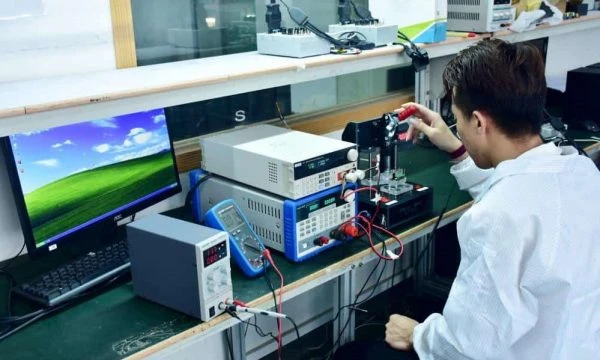
To ensure the Fiber Optic Sensor PCB meets performance standards, the validation plan must go beyond standard electrical continuity.
- Impedance Verification (TDR):
- Objective: Confirm high-speed traces match design (50Ω/100Ω).
- Method: Time Domain Reflectometry on test coupons.
- Acceptance Criteria: Measured impedance within ±10% (or ±5% if specified) of target.
- Ionic Contamination Test:
- Objective: Ensure board cleanliness for optical safety.
- Method: ROSE test (Resistivity of Solvent Extract).
- Acceptance Criteria: < 1.56 µg/cm² NaCl equivalent (standard) or < 0.75 µg/cm² (high reliability).
- Solderability Test:
- Objective: Ensure pads will accept solder perfectly for sensitive optical components.
- Method: IPC-J-STD-003, edge dip or wetting balance.
- Acceptance Criteria: > 95% coverage, smooth coating, no de-wetting.
- Thermal Stress / Interconnect Stress Test (IST):
- Objective: Verify via reliability under heat.
- Method: 6 cycles at 260°C (simulating reflow).
- Acceptance Criteria: Change in resistance < 10%. No barrel cracks in microsections.
- Dimensional Stability (CMM):
- Objective: Verify mounting holes relative to sensor pads.
- Method: Coordinate Measuring Machine (CMM).
- Acceptance Criteria: Deviations must be within ±0.05mm (or as per drawing).
- Warp and Twist:
- Objective: Ensure board is flat for optical alignment.
- Method: IPC-TM-650 2.4.22.
- Acceptance Criteria: < 0.75% (standard) or < 0.5% (strict) across the diagonal.
- Peel Strength:
- Objective: Ensure pads don't lift during rework of expensive optical modules.
- Method: IPC-TM-650 2.4.8.
- Acceptance Criteria: > 1.05 N/mm (6 lb/in) after thermal stress.
- Microsection Analysis:
- Objective: Verify stackup and plating thickness.
- Method: Cross-sectioning.
- Acceptance Criteria: Copper thickness meets IPC Class 2/3; dielectric thickness matches stackup design.
Fiber Optic Sensor PCB supplier qualification checklist (RFQ, audit, traceability)
Use this checklist to vet potential partners like APTPCB. A supplier must demonstrate specific capabilities for mixed-signal and optical integration.
Group 1: RFQ Inputs (What you must send)
- Gerber files (RS-274X or X2) with clear outline and drill data.
- Fabrication drawing specifying IPC Class (2 or 3) and dimensional tolerances.
- Stackup definition (dielectric materials, copper weights, impedance targets).
- Drill chart distinguishing between plated and non-plated holes.
- "Read Me" file highlighting critical areas (e.g., "Do not trim silkscreen on U4").
- Volume projections (Prototype vs. Mass Production quantities).
- Panelization requirements (if you have specific assembly rails needed).
- Surface finish requirement (Explicitly state ENIG).
Group 2: Capability Proof (What they must show)
- Experience with Rogers/Panasonic high-frequency materials.
- Capability for LDI (Laser Direct Imaging) for tight solder mask registration.
- In-house Impedance Control lab (TDR testing).
- Minimum trace/space capability of at least 3.5mil/3.5mil.
- Aspect ratio capability of at least 10:1 (for thick boards).
- Automated optical inspection (AOI) integrated into the line.
Group 3: Quality System & Traceability
- ISO 9001 certification (mandatory); ISO 13485 (if medical); AS9100 (if aerospace).
- UL certification for the specific stackup/material combination.
- Material certificates (CoC) available for every batch (laminate, copper, gold).
- System to track which operator performed which step.
- Calibration records for CMM and electrical test equipment.
- Documented procedure for handling non-conforming material (MRB).
Group 4: Change Control & Delivery
- Commitment to "No Changes" (Process/Material) without written approval.
- Vacuum packing with desiccant and humidity indicator cards (HIC).
- Edge protectors for shipment to prevent corner damage.
- First Article Inspection (FAI) report format agreement.
- Clear escalation path for engineering queries (EQ).
How to choose Fiber Optic Sensor PCB (trade-offs and decision rules)
Engineering is the art of compromise. When selecting the architecture for your Fiber Optic Sensor PCB, you will face trade-offs.
- Material Cost vs. Signal Integrity:
- Rule: If your signal frequency is < 1GHz and traces are short (< 2 inches), use High-Tg FR4.
- Rule: If signal frequency is > 5GHz or traces are long, you must use Rogers or Megtron, despite the 3x-5x cost increase. Lossy FR4 will destroy your signal budget.
- Integration vs. Modularity:
- Rule: If the sensor is a "black box" (e.g., a pre-packaged Microwave Sensor PCB module), use a simple carrier PCB.
- Rule: If you are building the sensor discrete (photodiode + TIA on board), you need a complex, noise-controlled Fiber Optic Sensor PCB.
- Rigid vs. Rigid-Flex:
- Rule: If the sensor must fit into a tight, curved housing (common in medical probes), use Rigid-Flex PCB.
- Rule: If space permits, use a standard Rigid PCB with a connector. Rigid-Flex costs 2x-3x more and has longer lead times.
- Sensitivity vs. Noise Immunity:
- Rule: For maximum sensitivity (e.g., a Shock Sensor PCB detecting micro-vibrations), place the amplifier as close to the sensor as possible, even if it complicates the layout.
- Rule: If the environment is extremely noisy, prioritize differential signaling and shielding over raw gain.
- Optical vs. Traditional Sensors:
- Rule: If you need to detect motion through walls, a Microwave Sensor PCB is better than fiber.
- Rule: If you need to detect intrusion over a 10km fence, a Fiber Optic Sensor PCB (using distributed acoustic sensing) is superior to installing 1000 individual Barrier Sensor PCB units.
Fiber Optic Sensor PCB FAQ (cost, lead time, Design for Manufacturability (DFM) files, materials, testing)
Q: What is the primary cost driver for a Fiber Optic Sensor PCB? The base laminate material and the layer count. Using high-frequency materials like Rogers 4350B instead of FR4 can double the bare board cost. Additionally, blind/buried vias required for high-density routing add significant processing cost.
Q: What is the standard lead time for Fiber Optic Sensor PCB prototypes? Standard lead time is typically 5–8 working days for standard FR4 designs. If specialized high-frequency materials are required, lead time may extend to 10–15 days depending on material stock availability. Quick-turn options (24-48 hours) are available for standard materials.
Q: What DFM files for Fiber Optic Sensor PCB are required for a quote? You must provide Gerber files (all layers), a drill file, and a detailed IPC netlist. Crucially, include a stackup drawing that specifies the dielectric constant (Dk) required for impedance control, as this dictates the manufacturer's material selection.
Q: Can I use standard FR4 materials for Fiber Optic Sensor PCB applications? Yes, but only for the digital processing sections or low-speed optical links. For the analog front-end (photodiode to amplifier) or high-speed data links (>1Gbps), standard FR4 may introduce too much signal loss and dispersion.
Q: What testing protocols for Fiber Optic Sensor PCB ensure reliability? Beyond standard E-test (Open/Short), you should request TDR (Impedance) testing and Ionic Contamination testing. For critical applications, request a microsection analysis to verify plating thickness and hole wall quality.
Q: How does a Fiber Optic Sensor PCB compare to a PIR Sensor PCB for security? A PIR Sensor PCB detects heat signatures in a short, line-of-sight range (passive). A Fiber Optic Sensor PCB can detect vibrations or strain over kilometers of buried cable (active/passive), making it superior for perimeter fences but overkill for indoor room monitoring.
Q: What are the acceptance criteria for Fiber Optic Sensor PCB surface finish? The surface must be ENIG or ENEPIG with a gold thickness of 2-5µin. The critical acceptance criterion is flatness; there should be no "black pad" defects, and the surface must be planar enough to support fine-pitch wire bonding if required.
Q: Why is DFM review critical before ordering a Fiber Optic Sensor PCB? DFM (Design for Manufacturing) identifies issues like acid traps, slivers, or impedance mismatches before production. In fiber optic boards, DFM ensures that the mechanical clearance for optical connectors (like LC or SC types) is sufficient and that thermal relief is adequate for laser diodes.
Resources for Fiber Optic Sensor PCB (related pages and tools)
- High Frequency PCB Manufacturing: Essential reading for understanding the material properties (Rogers, Teflon) often required for the high-speed signal paths in fiber optic sensors.
- PCBA AOI Inspection: Learn how we validate the precise placement of small components, which is critical when aligning photodiodes on your sensor board.
- Rigid-Flex PCB Capabilities: Many fiber optic sensors require the PCB to fold into compact optical modules; this page details the design rules for those flexible sections.
- Impedance Calculator Tool: Use this tool to estimate your trace widths for 50Ω and 100Ω lines before submitting your design for final DFM.
- PCB Quality System: Understand the certifications and quality gates (IPC Class 2/3) that protect your production run from defects.
Request a quote for Fiber Optic Sensor PCB (Design for Manufacturability (DFM) review + pricing)
Ready to move your sensor design to production? Get a comprehensive DFM review and accurate pricing from engineers who understand optical integration.
Checklist for your Quote Request:
- Gerber Files: RS-274X format preferred.
- Stackup: Specify impedance requirements and material preference (FR4 vs. Rogers).
- Quantities: Prototype (5-10) and Production (1000+) estimates.
- Special Requirements: Note any specific cleanliness specs or tolerance needs.
Click here to Request a Quote & DFM Review – Our team typically responds within 24 hours with a full technical assessment.
Conclusion (next steps)
Successfully deploying a Fiber Optic Sensor PCB requires more than just a good circuit design; it demands a manufacturing strategy that respects the physics of light and high-speed signals. By strictly defining your material specifications, validating impedance and cleanliness, and auditing your supplier for specific capabilities, you eliminate the most common failure points. Whether you are building a distributed acoustic sensor or a high-speed optical transceiver, the guidelines in this playbook provide the foundation for a reliable, scalable product. APTPCB stands ready to support your transition from prototype to mass production with the precision your technology demands.