
As electronic products become thinner, lighter and more integrated, flexible and rigid-flex PCBs are rapidly replacing traditional rigid board and cable assemblies. For OEMs and hardware teams, the real challenge is no longer whether to use flex, but how to implement it with the right balance of reliability, cost, and manufacturability.
APTPCB combines mature rigid PCB production with dedicated flex and rigid-flex capabilities, allowing you to move from early prototypes to stable mass production under one roof. The sections below outline how we approach flex technology as a manufacturing partner, not just a bare-board supplier.
Why Flex & Rigid-Flex PCBs Are Reshaping Modern Electronics
As form factors become more compact and mechanical envelopes more complex, conventional rigid boards and cable harnesses struggle to keep up. Flex and rigid-flex PCB architectures allow engineers to route signals in three dimensions, wrap circuits around mechanical structures, and eliminate bulky connectors. This shift enables new product categories in wearables, medical devices, aerospace, automotive, and consumer electronics.
At APTPCB, our flex PCB manufacturing approach focuses on turning these architectural advantages into repeatable, production-ready designs. We work with your mechanical, electrical, and reliability constraints to define flex and rigid-flex structures that support aggressive miniaturization without sacrificing long-term robustness.
Key Design & Application Benefits
- 3D Routing Inside Tight Enclosures: Flex circuits bend and fold along chassis walls, hinges, and curves, drastically improving space utilization compared with flat rigid boards.
- Reduced Connectors and Harnesses: Integrated flex interconnects replace multiple connectors and cable assemblies, cutting part count and potential failure points.
- Higher Reliability Under Motion: Properly designed flex sections tolerate vibration, shock, and repeated flexing better than discrete wiring or connector-based links.
- Space and Weight Savings: Ultra-thin dielectric layers and copper foils help reduce overall system thickness and weight, critical for wearables and mobile devices.
- Cleaner, Faster Assembly: With fewer harnesses and manual wiring operations, assembly lines become easier to standardize, automate, and inspect.
- Improved Industrial Design Freedom: Designers gain the freedom to prioritize ergonomics, optics and user experience, knowing that the electronics can route around the mechanical concept rather than dictate it.
Consistent Performance and Reliability
By treating flex and rigid-flex as core architectural tools rather than last-minute add-ons, APTPCB helps customers achieve consistent electrical and mechanical performance across product generations. Every design is reviewed for bend behavior, strain distribution, and assembly handling, and then validated through AOI, electrical testing, and application-specific reliability checks. This ensures that the same compelling form factor that wins users also stands up to real-world usage, shipping, and environmental stress.
How to Select the Right Flex PCB Manufacturer for Your Project
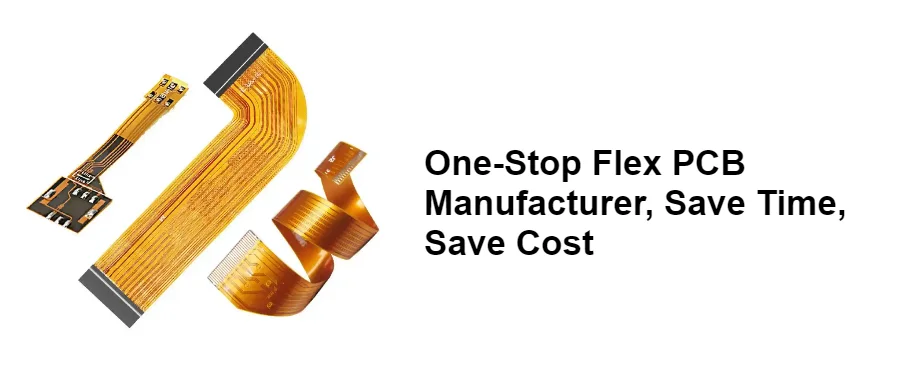
Selecting among flex PCB manufacturers is not the same as buying commodity rigid boards. Flex and rigid-flex builds involve more sensitive materials, tighter process windows, and a closer interplay between design and fabrication. Choosing an underqualified supplier often results in higher scrap, delayed launches, or latent failures that surface only after deployment.
APTPCB encourages customers to treat the manufacturer as a technical partner from day one. By understanding your performance goals, regulatory requirements, and volume forecasts, we can help you evaluate whether a given flex structure is realistic for your budget and risk tolerance.
Key Evaluation Criteria for Flex PCB Manufacturers
- Documented Flex & Rigid-Flex Experience: Look for completed projects involving multilayer flex, complex rigid-flex structures, and dynamic bend applications in fields like medical, industrial, and aerospace.
- Material and Stack-Up Guidance: A capable manufacturer should recommend base films (PI, PET, LCP), coverlays, adhesives, and stiffeners tailored to your temperature range, bend radius, and lifetime requirements.
- Dedicated Flex Processes and Equipment: Laser drilling, fine-line imaging, controlled lamination, and precision registration must be tuned specifically for flexible materials and thin constructions.
- Quality Systems and Testing Infrastructure: Implementation of IPC standards, ISO 9001 or higher-level certifications, AOI, flying-probe testing, and when needed X-ray and high-pot testing for critical applications.
- DFM/DFA Collaboration: The manufacturer should proactively review your design for manufacturability and assembly, highlighting risks in bend areas, rigid–flex interfaces, pad designs, and panelization.
- Scalability and Lead Time Options: The same factory should be able to support quick-turn samples, pilot runs, and mature volume production without forcing you to redesign for a different process or supplier.
Consistent Performance and Reliability
By evaluating flex PCB manufacturers against these criteria, OEMs can significantly reduce technical and schedule risk. APTPCB aligns process capability, material choice, and design rules from the outset so that prototypes, pilot builds, and volume runs all share the same underlying manufacturing assumptions. This continuity helps ensure that what passes engineering validation can be reproduced at scale with consistent performance and predictable quality.
APTPCB’s Core Flex & Rigid-Flex Manufacturing Capabilities
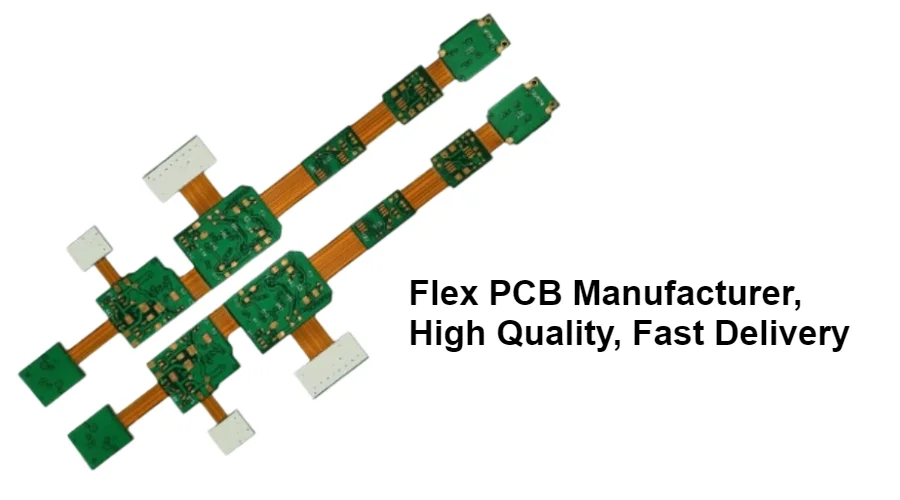
APTPCB’s flex and rigid-flex manufacturing lines are built to support a wide range of complexity, from simple one-layer flex jumpers to multilayer rigid-flex boards used in demanding environments. We combine this with our existing rigid PCB expertise so that customers can cover an entire product portfolio with a single, integrated manufacturing partner.
Our process development focuses on stable, repeatable builds rather than one-off “hero boards.” That means every stack-up, lamination cycle, and surface finish is chosen with long-term production in mind.
Key Manufacturing Capabilities at APTPCB
- Single- and Double-Layer Flex PCBs: Economical solutions for simple interconnects and harness replacements, ideal for consumer and industrial applications.
- Multilayer Flex PCBs (3–8 Layers): High-density routing in thin, bendable structures supporting differential pairs, shielding, and controlled impedance.
- Multilayer Rigid-Flex PCBs: Integrated FR-4 and flex regions with up to ~20 total layers, suitable for compact modules in medical, automotive, aerospace, and industrial systems.
- Flexible Material Portfolio: Support for polyimide (PI) as the primary base, plus PET and LCP where specific RF, thermal, or mechanical behavior is required.
- Advanced Surface Finishes: ENIG, ENEPIG, OSP, and soft/hard gold, selected based on component pitch, wire-bonding needs, and expected mating cycles.
- Process & Quality Controls: Laser drilling, CCD alignment, fine-line imaging, AOI, flying-probe testing, and adherence to IPC and ISO 9001 standards for consistent yield.
Consistent Performance and Reliability
By combining these capabilities with disciplined process control, APTPCB delivers high-yield, repeatable production for both flex and rigid-flex assemblies. We monitor defect trends, dimensional behavior, and lamination outcomes over time, feeding data back into design and stack-up recommendations. This data-driven approach helps maintain signal integrity, mechanical reliability, and cosmetic quality across multiple builds and product lifecycles.
Designing Flex PCBs for Reliability and Manufacturability
A flex PCB can work flawlessly in simulation and still fail in the field if bending, assembly handling, and material behavior are not fully considered. Successful designs take into account not only where copper and components go, but also how the circuit will be bent, folded, assembled, and serviced over its lifetime.
At APTPCB, our engineers review flex and rigid-flex designs with both reliability and manufacturability in mind. This includes dynamic bend analysis, stress concentration checks, and an evaluation of how the design will behave under real assembly processes such as SMT, reflow, and connector insertion.
Key Flex PCB Design Practices
- Controlled Bend Areas: Keep vias, pads, and components out of dynamic bend regions; use smooth, curved routing rather than sharp corners in these zones.
- Reinforced Pad and Trace Transitions: Apply teardrops, filleted corners, and proper land patterns at critical joints to reduce stress concentrations and copper cracking risk.
- Balanced Copper and Layer Count: Use the minimum copper thickness and number of layers in bending sections while reserving thicker copper or extra planes for static areas that handle higher currents.
- Coverlay and Stiffener Optimization: Select coverlay materials and thickness to support the required bend radius, and place stiffeners strategically near connectors and high-stress termination points.
- Assembly-Friendly Panelization: Work with carriers and panel designs that keep flex circuits stable during SMT, reflow, and test, avoiding overstretching or accidental over-bending.
- Aligned Design Rules and Capability: Match trace/space, drill sizes, and tolerance assumptions to what the manufacturing line can consistently produce, instead of pushing every parameter to absolute limits.
Consistent Performance and Reliability
By incorporating these practices early, OEMs dramatically improve first-pass yield and long-term field performance of flex assemblies. APTPCB’s DFM/DFA feedback helps designers avoid common pitfalls—such as vias in bend zones or overly stiff stacks—that might otherwise cause cracks, delamination, or intermittent electrical faults. The result is a flex PCB that not only meets electrical specifications but also withstands production handling, shipping, and real-world usage with confidence.
Partnering with APTPCB from Prototype to Mass Production
Bringing a flex or rigid-flex design to market usually involves several stages: concept validation, prototype runs, pilot production, and long-term volume builds. Using different suppliers at each stage often introduces inconsistencies in materials, stack-ups, and process windows, leading to redesigns or unexpected cost jumps.
APTPCB’s goal is to provide a single, stable manufacturing path from the first prototype through end-of-life, adjusting the build strategy as your volume, cost targets, and reliability requirements evolve.
Key Collaboration Stages with APTPCB
- Early Engineering Engagement: We review your initial flex or rigid-flex concepts, suggesting realistic stack-ups, bend radii, and material choices based on your mechanical and electrical requirements.
- Prototype Builds with Fast Feedback: Small batches are fabricated and assembled using production-ready processes, allowing you to validate fit, function, and handling behavior under realistic conditions.
- Pilot Production and Reliability Testing: Medium-volume runs are used to confirm yield, refine test coverage, and complete any required reliability testing (temperature cycling, vibration, bend cycling, and more).
- Scaled Volume Manufacturing: Once the design is stable, we optimize panelization, material lot sizes, and test strategies to balance unit cost, lead time, and quality assurance.
- Ongoing Optimization Across Product Life: As cost pressures, component availability, or new requirements emerge, we work with you to adjust materials, stack-ups, or processes without compromising reliability.
Consistent Performance and Reliability
By partnering with APTPCB across all stages of the product lifecycle, OEMs benefit from a consistent understanding of design intent, process capability, and quality expectations. Lessons learned in early prototypes are captured and applied to later builds, while volume-production data feeds back into future design decisions. This closed-loop collaboration helps maintain stable electrical performance, mechanical robustness, and predictable cost structures across multiple generations of flex and rigid-flex products.