
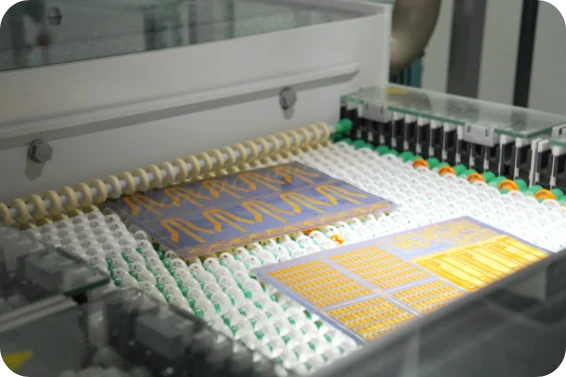
Reliability in flexible electronics is rarely about the substrate material itself; it is almost always about the connections. When a flexible circuit fails, it usually happens where a rigid element meets a flexible one—specifically at the junction between a copper trace and a solder pad. Implementing flex pcb teardrop and pad anchoring best practices is the single most effective engineering strategy to prevent cracked traces, lifted pads, and intermittent failures during dynamic bending or thermal stress. Unlike rigid boards, where adhesion to FR4 is strong, copper on Polyimide (PI) is prone to peeling, making these mechanical reinforcements mandatory rather than optional.
What this guide covers (and who it’s for)
This guide is designed for Engineering Managers, PCB Designers, and Procurement Leads who need to transition a flexible design from prototype to mass production without suffering yield losses due to mechanical stress.
While many designers treat teardrops as a manufacturing afterthought to improve drill registration, in the world of flex circuits, they are critical structural elements. This playbook moves beyond basic definitions to provide a procurement-ready framework. We will cover how to specify geometry to prevent stress risers, how to validate supplier capabilities regarding coverlay registration, and how to audit a flex pcb manufacturer like APTPCB (APTPCB PCB Factory) to ensure these features are fabricated correctly.
You will find actionable specifications for pad spurs (anchors), teardrop ratios, and coverlay overlap requirements. We also provide a risk assessment framework to identify where your current design might be vulnerable to pad lifting or trace cracking, ensuring your product survives both the assembly process and end-use flexing.
When to use teardrops and pad anchoring (and when not to)
Building on the scope defined above, it is vital to recognize that mechanical reinforcement is necessary for almost every flexible circuit, but the intensity of the application dictates the strictness of the design rules.
flex pcb teardrop and pad anchoring best practices are the absolute right approach when:
- Dynamic Flexing is Required: If the PCB connects a moving part (e.g., a print head, a hinge, or a wearable device), stress accumulates at the trace-to-pad interface. Without teardrops, the transition is abrupt, creating a fracture point.
- Manual Soldering is Expected: Hand soldering applies localized heat and mechanical pressure. Polyimide adhesives soften at soldering temperatures, making pads easy to lift. Anchors (spurs) physically trap the pad under the coverlay to prevent lifting.
- Small Annular Rings are Used: In high-density designs, the drill hole leaves very little copper remaining on the pad. Teardrops provide additional copper area to ensure a robust connection even if the drill is slightly off-center.
- Component Repairability is Needed: If you anticipate reworking components, anchored pads are essential to ensure the pads do not peel off the substrate during desoldering.
When it might be overkill (but still recommended):
- Static "Flex-to-Install" Applications: If the flex is bent once during assembly and never moves again, and the components are machine-assembled (SMT), you might get away with standard IPC Class 2 teardrops. However, pad anchoring remains critical even here to survive the reflow oven.
- Rigid-Flex Rigid Sections: In the rigid sections of a rigid-flex board, standard rigid design rules apply. The strict anchoring rules discussed here apply specifically to the flexible layers and the transition zones.
Specs & requirements (before quoting)
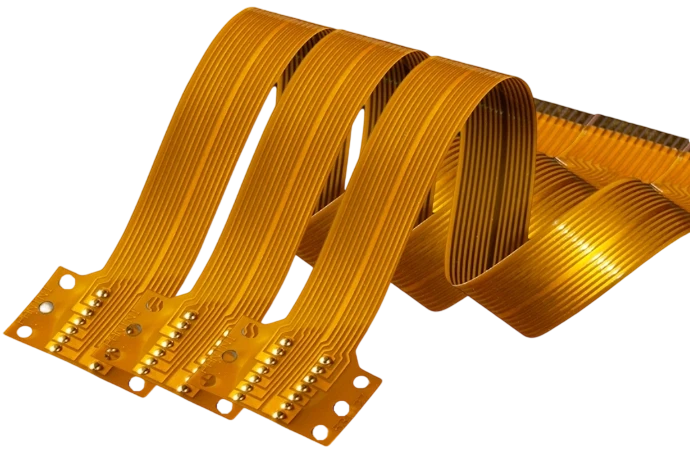
To ensure your supplier delivers a robust product, you cannot rely on default settings. You must explicitly define the parameters for flex pcb teardrop and pad anchoring best practices in your fabrication notes.
- Teardrop Geometry: Specify that teardrops must be filleted (curved) rather than straight-line tapers to distribute stress evenly.
- Teardrop Size Ratio: Define the teardrop width to be at least 1.2x to 1.5x the trace width at the junction point.
- Pad Anchoring (Spurs/Rabbit Ears): Require "spurs" or "tabs" on all unconnected pads or pads connected to thin traces. These are copper extensions that go under the coverlay.
- Anchor Dimensions: Specify anchor length (typically 0.15mm to 0.25mm) and ensure they are covered by the coverlay by at least 0.10mm.
- Coverlay Opening Registration: Define a tolerance for coverlay openings (e.g., ±0.05mm or ±0.075mm) to ensure the coverlay actually overlaps the anchors and teardrops as intended.
- Trace-to-Pad Interface: Require a gradual transition. The angle between the trace and the pad entry should be maximized; avoid 90-degree entries without large fillets.
- Copper Type: Specify Rolled Annealed (RA) copper for dynamic flex applications, as its grain structure resists cracking better than Electro-Deposited (ED) copper.
- Plating Overlap: Ensure the surface finish (ENIG, Immersion Silver) covers the exposed pad area but does not necessarily need to extend under the coverlay, although the copper must.
- Drill Breakout Allowance: Explicitly state "No drill breakout allowed at trace junction" (Class 3 requirement) if high reliability is needed.
- Adhesive Type: If using adhesive-based coverlay, specify a high-performance acrylic or epoxy adhesive that maintains bond strength at soldering temperatures.
- Stiffener Integration: If stiffeners are used near pads, define the distance between the stiffener edge and the pad anchor to prevent stress concentration points.
- IPC Standard: Reference IPC-2223 (Sectional Design Standard for Flexible Printed Boards) Class 2 or Class 3 for acceptance criteria regarding teardrops and annular rings.
Manufacturing risks (root causes & prevention)
Even with good specifications, manufacturing variables can undermine flex pcb teardrop and pad anchoring best practices. Understanding these risks helps you detect issues before they become field failures.
Risk: Coverlay Misalignment Exposing Anchors
- Why it happens: Flexible materials shrink and stretch during processing. If the coverlay shifts, the "anchor" meant to be trapped under the polyimide might be exposed in the solder mask opening.
- Detection: Visual inspection shows the "spur" is visible and plated.
- Prevention: Increase the anchor length or improve coverlay registration tolerance requirements.
Risk: "Acid Trap" in Sharp Teardrops
- Why it happens: If teardrops are designed with acute angles (sharp crevices), etchant chemistry can get trapped, slowly corroding the copper over time.
- Detection: Long-term reliability testing or SEM analysis.
- Prevention: Ensure all teardrops use smooth, radiused fillets rather than sharp triangular shapes.
Risk: Stress Concentration at Anchor Points
- Why it happens: If the anchor is too large or stiff compared to the surrounding flex area, it can create a localized stiff point where the trace cracks after the anchor.
- Detection: Dynamic bend testing reveals cracks immediately adjacent to the pad.
- Prevention: Use rounded anchors and ensure flex pcb trace routing guidelines for dynamic bending are followed (e.g., curving traces).
Risk: Pad Lifting During Rework
- Why it happens: Despite anchors, excessive heat breaks the adhesive bond.
- Detection: Pads peel off during manual component replacement.
- Prevention: Use larger anchors (T-bone shape) and train technicians on proper thermal profiles for flex rework.
Risk: Drill Breakout Severing the Teardrop
- Why it happens: Mechanical drilling on flex has lower accuracy than on rigid boards due to material movement.
- Detection: Cross-sectioning shows the hole cutting into the trace/teardrop junction.
- Prevention: Use laser drilling for tighter tolerance or increase the annular ring size significantly.
Risk: Incompatible Stiffener Placement
- Why it happens: A stiffener edge ends exactly at the pad/teardrop junction, creating a fulcrum point.
- Detection: Cracks appear exactly at the stiffener edge line.
- Prevention: Review how to design stiffener for flex pcb; ensure stiffeners overlap the pad area or end well before the trace junction.
Risk: Coverlay Adhesive Squeeze-Out
- Why it happens: During lamination, adhesive flows onto the pad land, reducing solderable area.
- Detection: Poor solder wetting or "skip" defects.
- Prevention: Adjust lamination pressure/damming or use Laser Direct Imaging (LDI) for solder mask instead of coverlay for fine pitch.
Risk: Insufficient Copper Thickness in Holes
- Why it happens: Plating solution doesn't circulate well in small vias on flex.
- Detection: Open circuits after thermal cycling.
- Prevention: Specify minimum hole wall copper thickness (e.g., 20µm or 25µm).
Validation & acceptance (tests and pass criteria)

To confirm that your flex pcb teardrop and pad anchoring best practices are effective, you must implement a validation plan that goes beyond standard electrical testing.
Objective: Verify Pad Adhesion (Peel Strength)
- Method: IPC-TM-650 2.4.8 Peel Strength test on test coupons.
- Acceptance Criteria: Minimum peel strength met (e.g., 0.7 N/mm) after thermal stress.
Objective: Verify Teardrop Integrity
- Method: Microsectioning (Cross-section) of vias and pads.
- Acceptance Criteria: No breakout at the trace-to-pad junction; teardrop fillet is fully intact; at least 90° of the hole circumference has annular ring.
Objective: Verify Anchor Effectiveness
- Method: Solder Float Test (IPC-TM-650 2.6.8). Float the sample in molten solder (288°C) for 10 seconds.
- Acceptance Criteria: No pad lifting, blistering, or delamination of the coverlay around the anchors.
Objective: Verify Dynamic Reliability
- Method: MIT Folding Endurance Test or IPC-TM-650 2.4.3 Flexural Fatigue.
- Acceptance Criteria: Resistance change <10% after X cycles (e.g., 10,000 cycles) at the specified bend radius.
Objective: Verify Coverlay Registration
- Method: Optical measurement (AOI or comparator).
- Acceptance Criteria: Coverlay overlaps the anchor by at least 0.05mm (or specified value) and does not encroach on the solderable land.
Objective: Verify Reworkability
- Method: Simulate component replacement (solder/desolder cycle 3 times).
- Acceptance Criteria: Pads remain attached; no lifting of the anchor from the substrate.
Objective: Verify Trace Routing Compliance
- Method: Design Rule Check (DRC) and visual inspection.
- Acceptance Criteria: Traces enter pads perpendicularly or with large fillets; no acute angles.
Objective: Verify Plating Quality
- Method: X-Ray Fluorescence (XRF) for surface finish thickness.
- Acceptance Criteria: ENIG/Immersion Silver thickness within spec to ensure solderability.
Supplier checklist (RFQ + audit questions)
Use this checklist when engaging a supplier like APTPCB to ensure they can execute flex pcb teardrop and pad anchoring best practices.
RFQ Inputs (What you send)
- Gerber files with teardrops already generated (preferred) or instructions for the CAM engineer to add them.
- Drawing specifying "All unconnected pads must have anchoring spurs."
- Stackup diagram specifying PI thickness, copper weight, and adhesive type.
- Requirement for "Coverlay overlap on pad anchors: Min 0.10mm."
- Reference to IPC-2223 Class 2 or 3.
- flex pcb bend radius rules for the specific application (static vs. dynamic).
- Surface finish requirements (ENIG is preferred for flatness).
- Stiffener locations and materials (FR4, PI, SS).
Capability Proof (What they must show)
- What is your minimum annular ring for flex circuits? (Target: 4-6 mil for mechanical drilling).
- Can you perform Laser Direct Imaging (LDI) for coverlay/mask alignment?
- Do you have automated teardrop generation software (e.g., Genesis/InCAM)?
- What is your registration tolerance for coverlay punching vs. laser cutting?
- Can you handle "filleted" trace routing in your CAM process?
- Do you offer RA (Rolled Annealed) copper as a standard option?
Quality System & Traceability
- Do you perform microsections on every production panel?
- How do you inspect for coverlay misalignment (AOI or manual)?
- Can you provide a First Article Inspection (FAI) report showing anchor dimensions?
- Do you have an in-house bend testing lab?
- Are you ISO 9001 and UL certified for Flex PCBs?
- How do you track material batches (PI/Adhesive) to finished lots?
Change Control & Delivery
- Will you notify us if you change the coverlay lamination process?
- Can you provide a DFM report highlighting "missing teardrops" before production?
- What is the standard lead time for prototypes with complex anchoring?
- Do you have a procedure for handling "breakout" waivers?
- How are panels packaged to prevent bending damage during shipping?
- Do you archive CAM data for future revisions?
Decision guidance (trade-offs you can choose)
Implementing flex pcb teardrop and pad anchoring best practices involves trade-offs between reliability, density, and cost.
Teardrop Size vs. Routing Density:
- If you prioritize reliability: Use large, "snowman" style teardrops.
- If you prioritize density: Use smaller, filleted teardrops, but upgrade to laser drilling to improve registration accuracy.
- Trade-off: Laser drilling is more expensive but allows for smaller capture pads.
Coverlay vs. Flexible Solder Mask:
- If you prioritize mechanical strength: Choose Polyimide Coverlay. It is stronger and holds anchors better.
- If you prioritize fine pitch: Choose Flexible Photoimageable Solder Mask (LPI). It allows tighter dams but offers less mechanical holding force for pads.
- Trade-off: coverlay vs solder mask on flex pcb is a classic debate; coverlay is better for dynamic flex, mask is better for dense SMT.
Anchor Shape (T-Bone vs. Rounded):
- If you prioritize max adhesion: Use "T-Bone" or "Rabbit Ear" anchors (wide tabs).
- If you prioritize signal integrity/space: Use simple rounded elongations.
- Trade-off: T-bones take up more routing space and can reduce clearance to nearby traces.
Manual Teardrops vs. Supplier-Added:
- If you prioritize control: Add teardrops in your CAD tool. You see exactly what you get.
- If you prioritize speed: Let the supplier add them during CAM.
- Trade-off: Supplier algorithms are good, but they might violate your specific spacing rules if not checked.
Stiffener Placement:
- If you prioritize connector reliability: Place stiffeners under the connector area.
- If you prioritize flexibility: Minimize stiffener usage.
- Trade-off: Stiffeners protect the pads but create a stress concentration point at their edge.
FAQ
Q: Can I use standard rigid PCB teardrops on flex? A: You can, but they are often insufficient. Flex teardrops should be larger and more curved (filleted) to handle the unique stresses of bending and the lower adhesion of copper to polyimide.
Q: Do vias need anchors if they are plated through? A: Yes. While the plating barrel provides some mechanical strength, the surface pad can still lift or crack at the knee. Anchors provide insurance, especially for vias in dynamic areas.
Q: What is the best coverlay overlap for anchors? A: A minimum of 0.10mm (4 mil) overlap is recommended to securely trap the anchor. Less than this risks the anchor slipping out if the coverlay shifts during lamination.
Q: Does APTPCB check for missing teardrops during DFM? A: Yes, a competent flex pcb manufacturer will flag missing teardrops or acute trace angles as a reliability risk during the pre-production engineering review.
Q: How do I design anchors for fine-pitch BGA pads on flex? A: For BGAs, there is often no room for external anchors. In this case, use "solder mask defined" (SMD) pads where the coverlay overlaps the pad edge, or use resin-filled vias in pads to anchor the structure.
Q: What is the difference between "filleting" and "teardropping"? A: They are similar. Teardropping usually refers to the pad-trace junction. Filleting refers to rounding any corner in the trace routing. Both are essential for flex pcb trace routing guidelines for dynamic bending.
Q: Can I use "cross-hatching" on ground planes to help with anchoring? A: Cross-hatching helps with flexibility and adhesion of large copper areas, but it doesn't replace the need for specific anchors on individual component pads.
Q: Why is RA copper better for anchoring? A: Rolled Annealed copper has a horizontal grain structure that is more ductile. It stretches slightly before cracking, whereas ED copper is brittle and can fracture at the anchor point under stress.
Related pages & tools
- Flex PCB Capabilities – Review the specific manufacturing limits for trace width, spacing, and drill sizes to ensure your teardrops fit.
- Rigid-Flex PCB – Understand how anchoring requirements differ in the transition zone between rigid and flexible layers.
- DFM Guidelines – Access detailed design rules to prevent common layout errors before you submit your files.
- PCB Quality System – Learn about the inspection processes (AOI, microsectioning) used to validate teardrop and anchor integrity.
- Get a Quote – Submit your Gerber files for a comprehensive DFM review to see if your anchoring strategy is production-ready.
Conclusion (next steps)
Mastering flex pcb teardrop and pad anchoring best practices is the difference between a prototype that works on the bench and a product that survives in the field. By treating teardrops and anchors as critical mechanical features rather than just manufacturing aids, you protect your design against the inherent weaknesses of flexible materials.
The key takeaways are:
- Specify Geometry: Don't leave teardrop size to chance; define ratios and fillet radii.
- Anchor Everything: Use spurs/tabs on all unconnected or single-trace pads.
- Validate Process: Ensure your supplier can hold coverlay registration tolerances to keep anchors trapped.
- Audit the Supplier: Use the checklist to verify APTPCB or your chosen partner has the inspection loops in place.
Ready to validate your flex design? Send your Gerber files, stackup details, and a note referencing "IPC-2223 Class 3 Anchoring" to APTPCB. Our engineering team will perform a full DFM review to optimize your teardrops and anchors for mass production yield.
Teardrop and anchor geometries should be checked against our flex PCB fabrication design rules.