
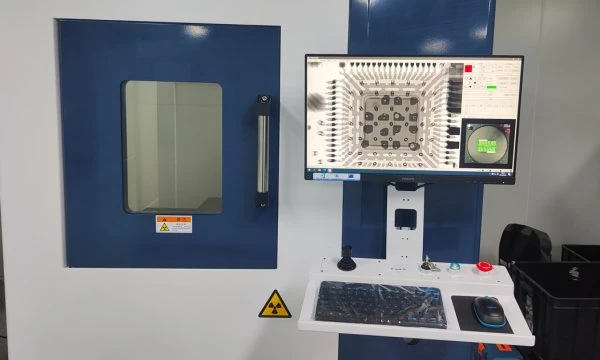
- Flux-free soldering should be treated as a residue-control and process-boundary decision, not as a shortcut way to claim advanced-system performance.
- The first review question is whether the assembly is genuinely vacuum-sensitive or residue-sensitive enough to justify the added process burden.
- Surface finish, solder family, profiling, inspection, and release handoff all matter more than generic "clean assembly" wording.
- Public NASA and ASTM sources support outgassing-screening context; they do not prove that a finished PCB assembly is automatically ready for cryogenic, quantum, or other extreme-use programs.
- If the board still lacks a stable process flow, inspection ladder, or finish plan, "flux-free" is not yet the main engineering milestone.
Quick Answer
Flux-free soldering belongs in a PCB assembly review when the product is sensitive to residues, vacuum exposure, difficult post-cleaning access, or tightly controlled surface conditions. The safer engineering posture is to review cleanliness goals, oxide-control method, finish choice, profiling, hidden-joint inspection, and release evidence together instead of treating flux-free language as proof of final system performance.
Table of Contents
- What should engineers review first?
- When is flux-free soldering justified?
- What changes in the assembly plan?
- How do finish and material choices affect the review?
- Why inspection and release handoff matter more than slogans
- What should be frozen before pilot build?
- Next steps with APTPCB
- FAQ
- Public references
- Author and review information
What should engineers review first?
Start with residue sensitivity, vacuum sensitivity, access for cleaning or inspection, and the real purpose of the soldered interface.
The original mistake many teams make is to begin with a process label. The safer sequence is:
- confirm why residues are a problem in this assembly
- confirm whether post-solder cleaning is impractical, incomplete, or risky
- confirm what surface condition the mating, bonding, or sensitive area actually needs
- confirm how the board will still be inspected and released after assembly
NASA's public vacuum outgassing database and ASTM E595 are useful public anchors because they keep outgassing language in screening context. They do not turn every low-residue or flux-free board into a proven vacuum-qualified product.
When is flux-free soldering justified?
Conclusion: Because some assemblies are more sensitive to trapped residues, inaccessible joints, and vacuum exposure than ordinary commercial electronics.
Flux-free or residue-sensitive assembly review is often justified when:
- the assembly includes areas that are hard to clean after soldering
- the product will operate in a vacuum-sensitive or low-outgassing environment
- the interface must stay clean for later bonding, contact, or protected enclosure assembly
- the board contains dense underside or hidden-joint structures where residues are hard to verify or remove
- the release path already depends on stricter cleanliness discipline than a generic no-clean workflow
It is usually not justified just because the topic sounds advanced. If the board is a normal room-temperature controller, general digital board, or serviceable industrial assembly, a standard controlled soldering and cleaning route may still be the better choice.
| Review question | Why it matters | What to confirm first |
|---|---|---|
| Is the assembly residue-sensitive? | Not every board benefits from flux-free complexity | Sensitive regions, inaccessible areas, later interface needs |
| Is vacuum or low-outgassing context real? | Public outgassing language is screening context, not branding | Materials list, enclosure context, review criteria |
| Can the joints still be inspected well? | Hidden-joint risk does not disappear when flux is removed | X-ray access, first-build inspection plan, release evidence |
| Is the process stable enough to repeat? | Flux-free language is weak without profiling and handoff discipline | Paste or preform choice, profile review, inspection ladder |
What changes in the assembly plan?
Conclusion: Because removing flux shifts more burden onto preparation, oxide control, and process discipline.
In a normal SMT article, teams often talk first about reflow settings. For this topic, the more useful planning order is:
- surface condition and handling control
- solder family or preform choice
- profile review on the actual board
- hidden-joint and post-assembly inspection
- release handoff and evidence packaging
The comparison below makes the shift clearer: a conventional no-clean SMT route depends more heavily on standard flux activity, while a flux-free or residue-sensitive route moves more control burden into surface preparation, oxide management, inspection planning, and release evidence.
Figure: Traditional SMT / no-clean flow versus a flux-free or residue-sensitive assembly review flow. The point is not that one route is universally better, but that removing conventional flux activity usually pushes more engineering effort into preparation, process control, hidden-joint verification, and traceable release evidence.
Indium's public reflow guidance is important here because it reinforces one key rule: the profile must be matched to the actual solder-paste specification and measured on the real assembly. That keeps the article away from unsafe generic thermal recipes.
The process review should therefore ask:
- how will oxides be controlled if conventional flux activity is reduced or removed?
- what board features make wetting or inspection difficult?
- which joints can be visually checked and which require X-ray?
- what first-build evidence will prove the chosen route is stable enough to continue?
A common failure pattern in this review lane is to remove conventional flux activity in the process description before the assembly team has frozen the oxide-control method, finish behavior, and hidden-joint inspection plan. The board may look cleaner on paper, yet the real process burden has only been moved upstream into preparation and verification. When those controls are still vague, the result is not a cleaner release package. It is a weaker one, because the team has changed the process label without fully defining how wetting, inspection, and handoff confidence will be maintained.
How do finish and material choices affect the review?
Conclusion: Because flux-free discussion is really about surface behavior and assembly compatibility, not one magic oven step.
Surface finish matters because the board may need to balance:
- good solderability
- controlled storage and handling behavior
- bond-aware or mixed-assembly compatibility
- possible contact or interface cleanliness demands
A conservative finish-selection posture is:
ENIGis the general planar assembly default when broad solderability and durability matterENEPIGbecomes relevant when soldering and bond-aware regions must coexist- one finish should not be promoted as the universal answer unless the board's actual duty zones justify it
IPC-4556 is the public metadata anchor for ENEPIG identity, which is enough to safely name the finish family without pretending the public TOC exposes full process rules.
| Finish review pressure | Safe engineering posture |
|---|---|
| General assembly pads | Prefer a planar, assembly-stable finish matched to the process route |
| Mixed solder plus bond-sensitive areas | Review ENEPIG or selective finish zoning only when the board really needs it |
| Storage and handling exposure | Keep finish life and handling route tied to the actual build flow |
| Sensitive interfaces | Treat them as separate zones, not as a reason to overcomplicate the whole board |
Why inspection and release handoff matter more than slogans
Conclusion: Because "flux-free" does not replace inspection, profiling, or release evidence.
A conservative release path can still include:
- stencil and deposit control
- SPI or other upstream print verification
- measured profile review
- X-ray for hidden-joint visibility where needed
- first-article confirmation
- final release handoff with traceable evidence
This layered flow is more credible than broad claims like "zero residue means reliability." Public outgassing and standards metadata do not prove a finished board is qualified. They only help justify why the review needs stronger cleanliness and screening discipline.
If the draft ever starts to promise:
- cryogenic reliability
- quantum-system performance
- vacuum readiness by default
- universal low-void results
then the article has already stepped outside the source boundary.
What should be frozen before pilot build?
Conclusion: Because pilot build should confirm a controlled route, not invent one on the fly.
Before pilot build, freeze:
- why the assembly is residue-sensitive or vacuum-sensitive
- which surface-finish route the board will use
- how the soldered interfaces will be profiled and inspected
- which joints require hidden-joint inspection
- what release evidence the team will accept from first build
If those points are still vague, the project is not really at flux-free pilot stage yet. It is still at process-definition stage.
Next steps with APTPCB
If residue control, vacuum exposure, or interface cleanliness is the reason you are evaluating a flux-free route, send your Gerbers, BOM, assembly notes, finish plan, and any outgassing or cleanliness constraints to [email protected], or submit them on the quote page. APTPCB's process and CAM team can review the build package and return DFM feedback within 24 hours.
If the route is not fully defined yet, use PCB surface finishes for finish selection, BGA / QFN / fine-pitch assembly for dense hidden-joint risk, X-ray inspection for concealed-joint evidence, and first article inspection when first-build confirmation still needs to be formalized.
FAQ
Does flux-free soldering automatically mean vacuum-qualified assembly?
No. It only means the process is being reviewed with stronger attention to residues, surface condition, and outgassing-sensitive context.
Is flux-free soldering only relevant for quantum hardware?
No. The same review posture can also matter for other residue-sensitive, protected, or vacuum-sensitive assemblies.
Does ENEPIG always belong in a flux-free design?
No. ENEPIG is one finish family that can fit mixed solder and bond-aware zones, but it is not a universal default.
Can I publish exact vacuum or reflow numbers from a generic process article?
No. Those values need exact primary evidence tied to the named material, paste, and assembly context.
What is the most useful first step?
Define why residues are a real risk, then review finish, profiling, inspection, and release handoff as one connected release path.
Public references
NASA Goddard vacuum outgassing database
Supports the article's use of outgassing as screening and method context rather than automatic assembly approval.ASTM E595 standard page
Supports the article's use ofASTM E595as the public method anchor for vacuum-outgassing screening.Indium: matching a reflow profile to a solder paste spec
Supports the article's rule that profiling must stay tied to the actual paste and assembly context.IPC-4556 table of contents
Supports the article's use ofENEPIGas a public finish-standard identity anchor.
Author and review information
- Author: APTPCB Manufacturing and Process Content Team
- Technical review: PCB assembly process-control and inspection engineering team
- Last updated: 2026-04-12